



Why Best Jewelry Marketing Is Essential for Your Store's Success

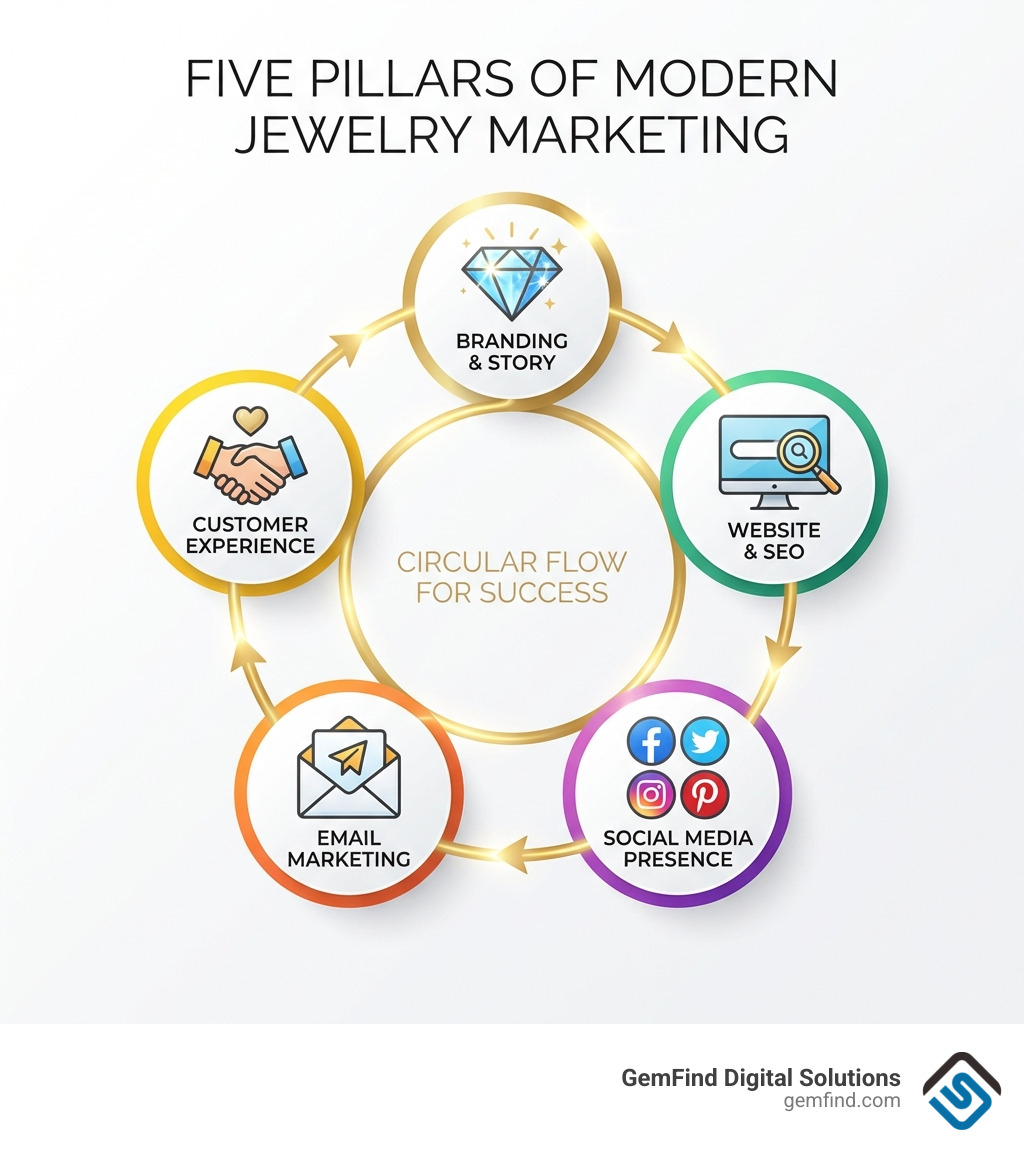
Best jewelry marketing combines visual storytelling, emotional connection, and strategic digital presence to transform browsers into buyers. Here are the core strategies that drive results:
- Build a Strong Brand Identity - Craft a unique story and consistent visual presence that sets you apart
- Optimize Your Website & SEO - Create a mobile-friendly e-commerce site that ranks in local and organic search
- Leverage Social Media - Use Instagram, Pinterest, and TikTok to showcase your pieces with high-quality visuals
- Master Email Marketing - Segment your audience and send personalized campaigns with exclusive offers
- Measure and Adapt - Track KPIs like ROI, conversion rates, and customer lifetime value to refine your approach
The global jewelry market reached $353.25 billion in 2023 and continues to grow at 4.7% annually. But growth alone doesn't guarantee success. The jewelry industry is unique because customers aren't just buying products—they're buying emotions, memories, and milestones. A diamond engagement ring symbolizes forever. A custom necklace captures a grandmother's legacy. These purchases are deeply personal, which means your marketing must connect on an emotional level, not just showcase features.
The shift to digital has changed everything. Today's jewelry buyers research online before visiting a store, compare prices across multiple sites, and expect seamless experiences from findy to checkout. They want to see 360-degree product views, read authentic reviews, and virtually try on pieces before making high-value purchases. If your store lacks a robust online presence, you're invisible to most potential customers.
Traditional marketing tactics alone won't cut it anymore. You need integrated strategies that blend stunning photography, search engine optimization, social media engagement, and data-driven campaigns. The jewelry stores thriving today are those that master both the art of emotional storytelling and the science of digital marketing.
I'm Morgan Price, and I've spent years helping jewelry brands build high-quality digital presences through strategic SEO and link-building that drives real results. Throughout this guide, I'll show you exactly how to implement the best jewelry marketing strategies that convert browsers into loyal customers. Let's start with the foundation: building a brand identity that sparkles.
Foundations of a Sparkling Brand Identity
At its heart, jewelry marketing is about emotional selling. People often buy jewelry not because they need it, but because of how it makes them feel. These aren't just transactions; they're moments of joy, celebration, and connection. In fact, research suggests that 95% of purchasing decisions are made in the subconscious mind, underscoring the power of emotional appeal in our industry.
To truly stand out, we need to define our Unique Selling Proposition (USP). What makes our jewelry, our brand, our service, uniquely ours? Is it our commitment to sustainable materials and ethical sourcing, a growing demand among conscious consumers? Perhaps it's our bespoke custom design services, allowing customers to bring their visions to life. Or maybe it's our exceptional craftsmanship, passed down through generations.
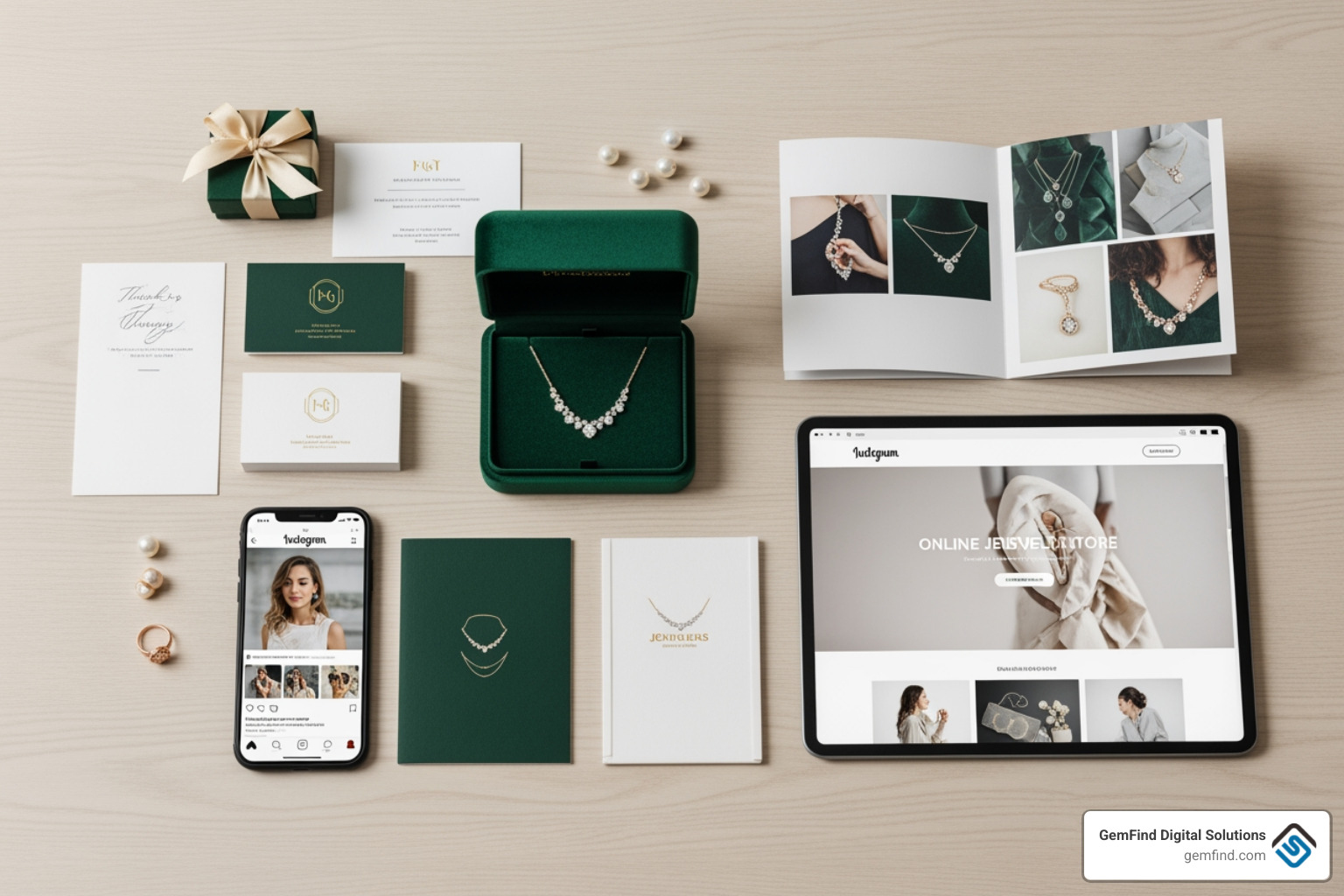
A consistent brand image is paramount. This means our logo, color scheme, tone of voice, and messaging should be cohesive across all platforms. Every touchpoint, from our website to our social media posts and even our packaging, should reflect who we are. This consistency builds trust and helps customers recognize and remember us. We believe in The Impact of Digital Brand Storytelling, and a strong brand voice is key to telling that story effectively. Learning How to Sell Your Brand is about more than just moving products; it's about connecting with our audience on a deeper level.
Why Jewelry Marketing is Unique
Jewelry marketing fundamentally differs from general marketing strategies due to the inherent nature of the product and the purchasing journey. Unlike everyday consumer goods, jewelry often represents high-value purchases tied to significant life events. An engagement ring is a symbol of eternal love, an anniversary gift marks years of devotion, and a graduation present celebrates achievement. These are milestone moments, not impulse buys.
Because of this, building trust is paramount. Customers need to feel confident in the quality, authenticity, and ethical sourcing of the pieces they are investing in. This means our marketing must prioritize storytelling over simply listing features. We don't just sell a diamond; we sell the promise, the memory, the legacy it represents. It's a visual-first industry, where beauty and detail are key, demanding immaculate presentation at every turn.
Defining Your Unique Selling Proposition (USP)
Defining our Unique Selling Proposition (USP) is like finding the secret ingredient in our grandma's famous recipe – it's what makes us special! It's about highlighting what makes our brand different and why customers should choose us.

For many jewelry businesses, this could be exceptional craftsmanship, where every piece is a work of art. Are we handcrafted, offering unique, one-of-a-kind pieces, or do we provide mass-produced items with consistent quality? Perhaps we specialize in locally sourced gems, appealing to customers who value provenance and community.
Our USP should contribute to a story-driven identity. This narrative could be about our founder's journey, the inspiration behind our designs, or our commitment to ethical practices. By clearly articulating our USP, we not only differentiate ourselves but also provide a compelling reason for customers to connect with our brand emotionally. This is how we use our unique selling propositions in our marketing efforts – by weaving them into every message and visual we share.
Building Your Digital Showroom: Website & SEO
Our website isn't just a brochure; it's our primary showroom, open 24/7. To achieve the best jewelry marketing results, we need a robust e-commerce platform that offers an exceptional user experience (UX). This means a mobile-first design, as Google prioritizes mobile versions of websites for ranking. Our site must be fast, responsive, and visually appealing on any device.
High-quality product visuals are non-negotiable. Customers can't touch or try on pieces online (yet!), so stunning images and videos are crucial. Integrating customer reviews also builds trust and provides social proof. A secure checkout process (SSL) is fundamental, ensuring our customers feel safe making high-value purchases. For those starting or revamping their online presence, these Tips for Creating a Successful E-commerce Jewelry Website are invaluable.
E-commerce businesses possess significant advantages over traditional retail stores. We often have lower overheads, allowing us to offer more competitive pricing or invest more heavily in marketing. We can also showcase an almost limitless inventory, far exceeding what a physical store can display. This vast selection, combined with features like virtual try-on tools, helps alleviate customer concerns when selling jewelry online. These tools allow customers to visualize how a piece looks before buying, boosting confidence and reducing returns by an impressive 64%, with 61% of shoppers preferring retailers that offer AR experiences.
Optimizing Your Website for the Best Jewelry Marketing Results
Optimizing our website for the best jewelry marketing results involves several technical and user-focused best practices. First, fast loading speeds are critical. Google has made page experience standards, including page speed, a major ranking factor. A slow site frustrates visitors and can lead to higher bounce rates.
Intuitive navigation is equally important. Customers should easily find what they're looking for, whether browsing by collection, material, or price. Our product descriptions need to be more than just specs; they should blend important details with compelling storytelling, creating emotional appeal. High-resolution images are essential, but going further with 360-degree product viewers significantly improves the online shopping experience. This allows customers to inspect every angle, just as they would in a physical store.
For high-value items like diamonds, offering a Virtual Diamond List on Your Website can be a game-changer, providing transparency and detailed information. Furthermore, custom jewelry creator tools, like those offered by leading online jewelers, empower customers to design their own unique pieces. This personalization not only improves the shopping experience but also helps alleviate concerns about purchasing something so personal online, boosting conversion rates by up to 94% with 3D/AR content.
Mastering SEO to Attract Qualified Buyers
Mastering Search Engine Optimization (SEO) is fundamental to attracting qualified buyers and improving online visibility for our jewelry stores. Think of it this way: if our website is our digital showroom, SEO is the signpost that directs customers right to our door.
For local jewelry businesses, Local SEO is a non-negotiable. This involves optimizing our online presence to attract customers in our immediate geographic area. Claiming and optimizing our Google Business Profile is the first step, ensuring our store appears in "near me" searches. Given that 85% of people use search engines to find local stores or service providers, local SEO directly translates to foot traffic and online inquiries.
Organic SEO, on the other hand, focuses on ranking for broader, non-local keywords. This requires meticulous keyword research to understand what our potential customers are searching for (e.g., "diamond stud earrings," "gold necklace designs"). We then integrate these keywords naturally into our website content, product descriptions, and blog posts. Content marketing, through a well-maintained blog, allows us to provide valuable information (e.g., "Guide to Choosing an Engagement Ring," "Caring for Your Fine Jewelry"), which not only attracts organic traffic but also positions us as industry experts. Building high-quality backlinks from reputable sites also signals authority to search engines, further boosting our rankings. For a deeper dive into this, explore Top SEO Strategies for Dominating the Jewelry Industry.
Captivating Your Audience with Content and Social Media
In the visually-driven world of jewelry, captivating content is our currency. Visual storytelling is paramount, changing static product shots into narratives that resonate with our audience. This starts with professional photography. Products with high-quality photos are nearly twice as likely to convert than those with low-quality photos, emphasizing the direct impact of visuals on our bottom line. That's why we always stress Why Your Website Needs a Professional Photographer.
But it's not just about static images. Videography plays an increasingly vital role. Explainer videos can showcase intricate details, demonstrate how a piece is worn, or even offer behind-the-scenes glimpses into our craftsmanship, building authenticity and connection. Viewers retain an impressive 95% of information in videos, making it an incredibly effective medium. Short-form videos, particularly unboxing videos, have exploded in popularity on platforms like TikTok, with the #unboxing hashtag garnering over 45 billion views. This user-generated content (UGC) is a goldmine for jewelry marketing. It acts as powerful social proof, as consumer-generated content influences the purchasing decisions of 79% of people, fostering a sense of community and trust around our brand.
Leveraging Social Media for the Best Jewelry Marketing
Social media platforms are indispensable tools for the best jewelry marketing, especially given their visual nature. Each platform offers unique opportunities to connect with our audience and showcase our dazzling pieces.
- Instagram: This platform remains a powerhouse for jewelry, with 81% of users researching products and services here. Our strategy should focus on high-quality images and videos, shoppable posts, relevant hashtag strategies, and engaging contests or giveaways. For a deep dive, check out Mastering Instagram Marketing for Jewelry Stores in 2025.
- Pinterest: A visual findy engine, Pinterest is ideal for showcasing product designs and trends. Over 70% of Pinterest users discover new jewelry products and brands on the platform. Interestingly, jewelry images without human faces get repinned 23% more frequently than those with them. Online stores like Brilliance leverage Pinterest effectively, boasting millions of monthly viewers. We can create themed boards, lifestyle images, and infographics to inspire and drive traffic.
- Facebook: With 3 billion monthly active users, Facebook offers incredible reach. While organic reach can be low (around 1.65%), its robust advertising capabilities allow for highly targeted campaigns based on demographics and interests. We can use engaging visuals, compelling ad copy, and customer testimonials to reach potential buyers.
- TikTok: This platform, with over 1 billion monthly active users, is perfect for short-form, engaging videos. We can showcase products, trends, and behind-the-scenes content, and participate in trending challenges to captivate a younger audience.
The Power of Influencer and Community Marketing
Influencer marketing has become a cornerstone of the best jewelry marketing strategies. Instead of solely relying on traditional advertising, we can tap into the authentic connections influencers have with their followers. The influencer market is projected to reach around $33 billion in 2025, highlighting its significant impact.
Our focus should often be on micro-influencers—those with smaller but highly engaged followings within the jewelry niche. They bring up to 60% more engagement than celebrities and macro-influencers, leading to more authentic partnerships. We can learn How Micro-Influencers Can Bring Customers to Your Store and collaborate effectively by ensuring their audience aligns with our target market and that their content feels genuine.
Community engagement and events also play a crucial role. Hosting trunk shows, participating in local craft fairs, or collaborating with other local businesses for cross-promotional offers can significantly boost our brand's visibility and sales. Remember the "Swift Effect"? When Taylor Swift was seen wearing a Wove friendship bracelet, their website traffic surged by 5,000%, and sales spiked by over 470%. While not every brand will get a celebrity endorsement, fostering community around our products creates similar buzz and loyalty.
Driving Sales & Nurturing Loyalty: The Best Jewelry Marketing Campaigns
Once we've captured attention, the next step in the best jewelry marketing is to drive sales and foster long-term loyalty. This involves a multi-pronged approach that nurtures leads through the entire customer journey, as outlined in A Marketing Funnel for Selling Jewelry Online.
Email marketing remains a powerhouse, boasting an average Return on Investment (ROI) of $42 for every $1 spent, making it one of the most effective channels. Retargeting ads are crucial for re-engaging interested shoppers who didn't convert on their first visit. Limited-time promotions and exclusive collections create a sense of urgency, encouraging quicker purchase decisions.
Beyond initial sales, excellent customer service is paramount for jewelry businesses. It's not just about a single transaction; it's about building relationships. Being responsive, personalizing interactions, and going above and beyond cultivates loyalty and encourages repeat business. Finally, collecting online reviews is vital. Positive reviews act as powerful social proof, alleviating concerns for new buyers and demonstrating our commitment to quality and satisfaction.
Crafting High-Converting Email Campaigns
Crafting high-converting email campaigns is an art and a science, and a cornerstone of effective jewelry marketing. The key is to make every email feel personal and valuable. We start with audience segmentation, dividing our email list based on customer behavior, preferences, or purchase history. This allows us to send custom messages that resonate deeply.
A well-designed welcome series for new subscribers can introduce our brand story and showcase popular collections. Abandoned cart recovery emails are particularly effective, gently reminding customers of items they left behind and often offering an incentive to complete the purchase. Remember the Brilliance pop-up that generated $360,000 in five months from a 10% discount code for email sign-ups? That's the power of a strategic email list. For comprehensive guidance, refer to Effective Email Marketing Strategies for Jewelers: A Comprehensive Guide.
We should also sprinkle in exclusive offers, sneak peeks of new collections, and personalized recommendations based on past purchases or browsing history. Our emails should be visually stunning, reflecting the beauty of our jewelry, and always include a clear call to action.
Using Promotions and Retargeting to Boost Sales
To boost sales and keep our brand top-of-mind, we strategically deploy limited-time promotions and use retargeting ads. Flash sales and exclusive collections create a powerful sense of urgency, motivating customers to make a purchase before an opportunity slips away. These are particularly effective during holiday campaigns, such as Valentine's Day or Mother's Day, when jewelry is a popular gift choice.
Retargeting ads are an incredibly efficient way to re-engage shoppers who have shown interest but haven't yet converted. Have you ever browsed a product online, only to see an ad for it pop up later on a different website or social media platform? That's retargeting in action! It allows us to display recently viewed items, offer targeted discounts, or showcase complementary pieces to shoppers who previously visited our site. This gentle nudge reminds them of their interest and can often be the push they need to complete a purchase. For more on this, check out Why Remarketing Ads on Facebook Work.
Measuring Success and Planning for Growth
In the dynamic world of jewelry marketing, simply launching campaigns isn't enough; we need to know if they're actually working. That's where measuring success and creating a robust marketing plan comes in. We carefully track Key Performance Indicators (KPIs) like website traffic, conversion rates, customer acquisition cost (CAC), and customer lifetime value (LTV) to understand the effectiveness of our efforts. We aim to measure the Return on Investment (ROI) across all our marketing efforts, as detailed in How to Measure ROI Across All of Your Marketing Efforts.
A crucial metric, especially for high-end and luxury jewelry, is Media Impact Value (MIV). MIV quantifies the monetary value of placements and mentions across various Voices—Owned Media, Partners, Influencers, Celebrities, and Media—allowing us to understand which PR and marketing strategies are truly moving the needle. It provides a standardized way to measure brand performance across diverse campaigns, giving us insights beyond traditional engagement metrics.
Creating Your Jewelry Marketing Plan
A well-structured jewelry marketing plan is our roadmap to success. It starts with thorough market research to understand the competitive landscape, identify trends, and pinpoint our ideal customer. Next, we define clear, measurable goals. Are we aiming for increased brand awareness, higher website traffic, more in-store visits, or boosted online sales?
Setting a realistic budget is crucial, ensuring we allocate resources effectively across different channels. Identifying our target personas helps us tailor our messaging and choose the most appropriate marketing channels. For comprehensive guidance, our blog post on Crafting a Winning Digital Marketing Plan for Your Jewelry Store offers invaluable insights. This plan isn't static; it's a living document that we regularly review and adjust based on performance data.
Learning from Industry Leaders
When it comes to the best jewelry marketing, there's much to learn from industry leaders. Brands like Tiffany & Co., Pandora, and Bulgari consistently execute campaigns that resonate, often by blending traditional prestige with innovative digital techniques.
| Brand | Primary Marketing Focus | Key Takeaways & Strategies | MIV Examples |
|---|---|---|---|
| Tiffany & Co. | Legacy & Storytelling | Emphasizes its 180+ year history, iconic blue box, and association with timeless luxury. Uses high-profile celebrity ambassadors and major film placements to blend tradition with modern appeal. | High MIV generated from celebrity partnerships like the "About Love" campaign and placements on major red carpets like the Oscars. |
| Pandora | Personalization & Affordability | Focuses on customizable charm bracelets that allow customers to tell their own stories. Markets "unforgettable moments" and leverages seasonal gifting, influencer collaborations, and franchise partnerships (e.g., Disney). | MIV is driven by collaborations with major franchises and a wide network of influencers showcasing their personalized bracelet builds, creating authentic, user-centric content. |
| Bulgari | Luxury & Celebrity | Leverages its Roman heritage, bold designs, and deep connection to Hollywood glamour. Uses A-list global ambassadors (e.g., Zendaya, Anne Hathaway) and focuses on exclusive high-jewelry events. | Generates massive MIV from brand ambassadors wearing high jewelry at premier events like the Cannes Film Festival or the Met Gala, and through features in top-tier luxury publications. |


