


Why Your Jewelry Website Design Matters More Than Ever
Best jewelry website design combines high-quality product imagery, intuitive navigation, mobile responsiveness, and seamless e-commerce functionality. The most effective jewelry websites use:
- Minimalist layouts with ample white space to let jewelry shine
- Professional photography with zoom and 360-degree product views
- Interactive tools like ring builders and diamond search filters
- Mobile-first design for smooth shopping on any device
- Trust signals including customer reviews, security badges, and clear return policies
Your website is often the first impression potential customers have of your jewelry brand. It needs to communicate who you are, make people remember you, and help visitors understand if they've found what they're looking for. All of this happens through color, shape, and other design elements.
A high-performing jewelry website reaches a broader audience beyond your physical store. With more consumers shopping online, a well-designed site ensures you're not missing out on potential customers. Your website serves as a platform to tell your brand's story, showcase your collections, and build relationships with your clientele.
But the design of your website goes beyond aesthetics. It's about creating an intuitive, user-friendly experience that guides visitors from the moment they land on your page to the point of purchase. For jewelry retailers and manufacturers, a robust and visually stunning e-commerce platform isn't just nice to have—it's a necessity.
The difference between a generic template and a specialized jewelry website can mean the difference between browsers and buyers. High-quality imagery is non-negotiable. Professional photography showcases your pieces in the best light. Features like product zoom, wishlist functionality, and quick view options significantly improve the shopping experience.
For engagement rings, custom watches, or personalized pieces, templates with robust customization features can help a customer on the brink of sale decide to buy. A flawless experience across all devices—from desktop to smartphone—is essential for today's discerning luxury buyer.
I'm Morgan Price, and through years of strategic digital marketing work, I've helped countless jewelry brands identify the best jewelry website design practices that drive real results and sustainable growth. In this guide, I'll walk you through proven design ideas that can transform your jewelry website from ordinary to extraordinary.
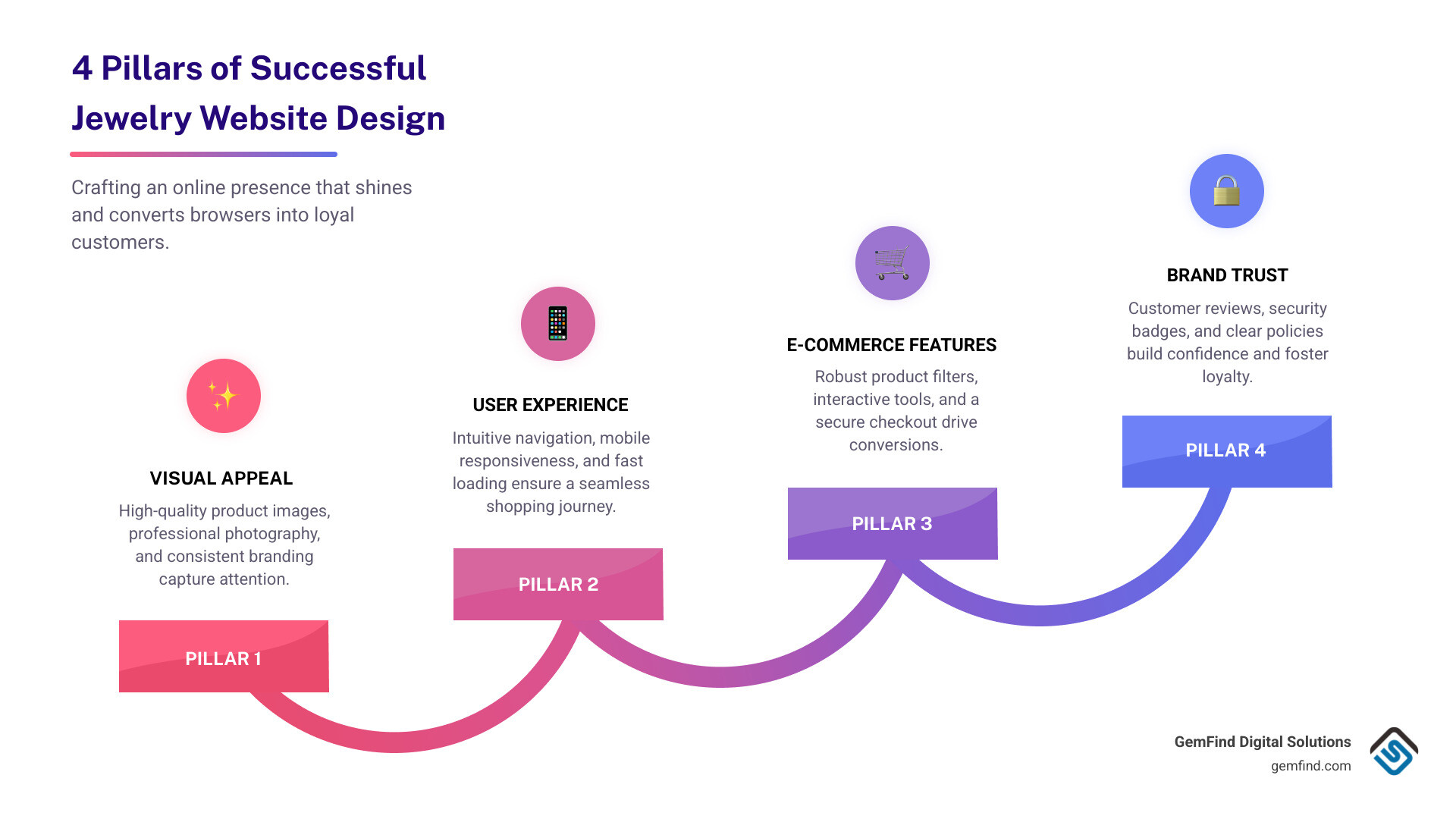
Core Principles of Visually Stunning Jewelry Websites
A great website shows the world who you are, makes people remember you, and helps potential customers understand if they found what they were looking for. This is especially true for the jewelry industry, where visual appeal and perceived value are paramount. To truly stand out, your website needs to be a masterpiece of visual design and seamless functionality.
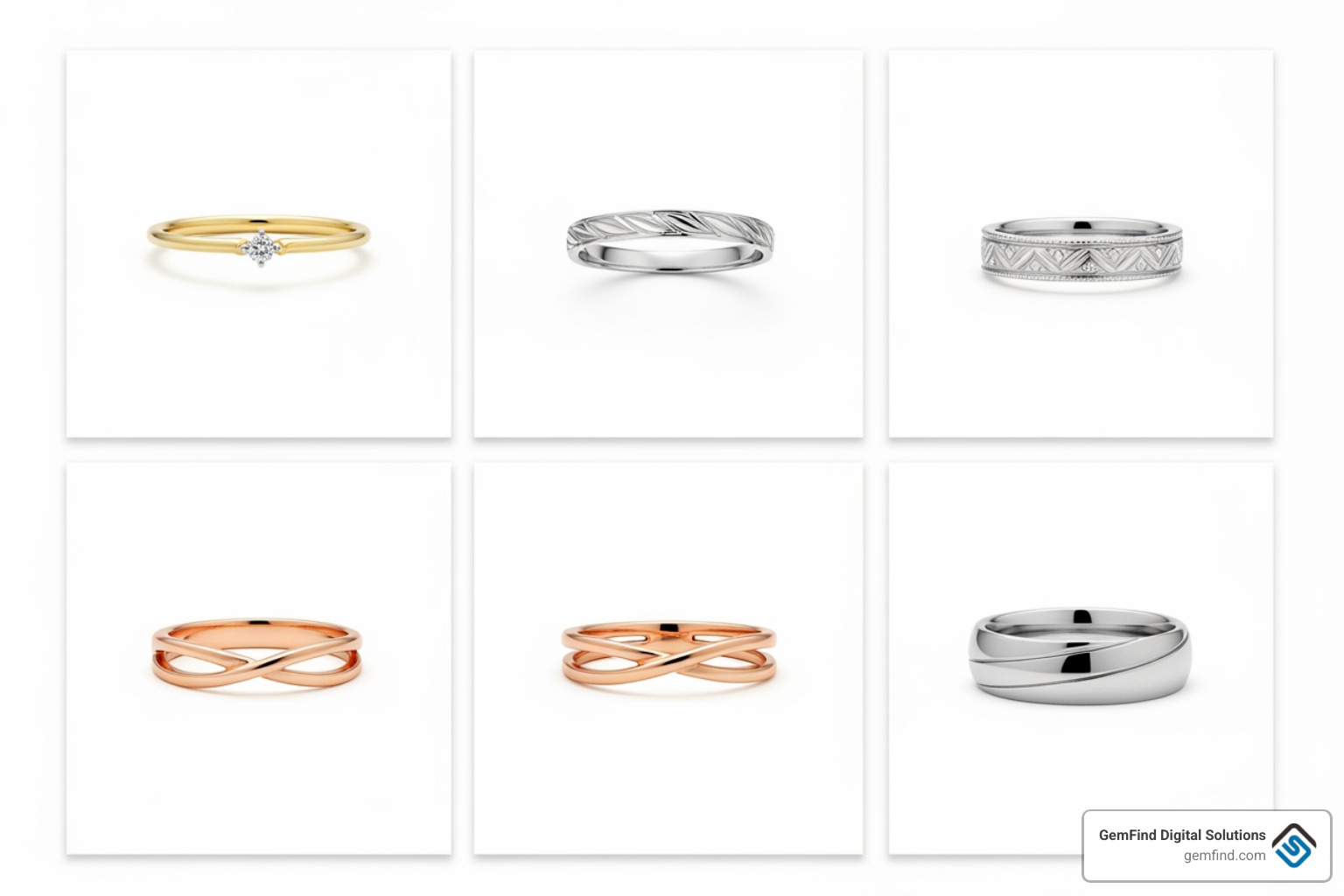
The essential design elements that make a jewelry website both visually appealing and effective include a clean aesthetic, high-quality imagery, intuitive navigation, and a consistent brand identity. These elements work together to build credibility and optimize for conversions, turning browsers into loyal customers.
The Power of High-Quality Imagery and Videography
When it comes to jewelry, a picture truly is worth a thousand words—or in this case, a thousand sales. High-quality imagery is non-negotiable. Customers need to see gemstone details and metal finishes clearly, which means investing in professional photography is paramount. GemFind always advises clients to prioritize this. Your website needs a professional photographer to capture the true sparkle and craftsmanship of your pieces.
Beyond static images, modern jewelry websites benefit immensely from:
- Product Zoom: This is non-negotiable. Customers need to zoom in on gemstone details and metal finishes clearly.
- 360-degree Views: Allowing customers to rotate a piece gives them a comprehensive understanding of its design.
- Lifestyle Photos: Showcase how your jewelry looks when worn. This helps customers visualize themselves with the pieces, turning abstract beauty into relatable desire.
- High-Resolution Video: Video backgrounds and short product videos can add a premium feel, especially for luxury brands. They help convey the sparkle and craftsmanship in a dynamic way.
- Photography Galleries: Quality templates should have built-in gallery features like lightbox popups and multiple product views. Lookbook layouts are also excellent for styled product photography.
These elements collectively optimize product photography and imagery, ensuring your jewelry is showcased effectively online.
Creating a Neat User Experience (UX)
User experience (UX) plays a critical role in the design of a successful jewelry website. It is about creating an intuitive, user-friendly experience that guides visitors from findy to purchase. A website with poor UX can lead to high bounce rates and lost sales. A simple and well-organized website can improve your sales significantly.
Key UX considerations for the best jewelry website design include:
- Minimalist Layouts with White Space: This allows your jewelry to be the star. Cluttered designs distract from the delicate beauty of your products. Luxury brands often leverage this, sometimes opting for dark backgrounds with neat typography to create a sophisticated aesthetic.
- Mobile-First Design: Modern jewelry templates are mobile responsive by default because your customers shop on phones constantly—this is not optional anymore. A flawless experience across all devices, from desktop to smartphone, is essential for today's discerning luxury buyer. Product zoom, filtering, and checkout must all function smoothly on smaller screens.
- Intuitive Menus and Navigation: A clear and concise menu structure, along with breadcrumb navigation, helps users understand where they are on your site and easily move between categories.
- Fast Page Speed: Slow loading times frustrate users and can lead to them abandoning your site. Optimizing images and code is crucial for a speedy experience.
Weaving Your Brand Story Through Design
Your website is a powerful platform to tell your brand's story. Design elements communicate who you are, making people remember you. This brand storytelling through design can build trust and credibility with potential customers.
Consider these elements:
- Consistent Color Palette: Choose colors that reflect your brand's personality—sophisticated shades like gold, black, and deep jewel tones for luxury, or warmer, artisan aesthetics for handmade pieces. Consistency in design elements such as fonts, colors, and layouts creates a unified and professional appearance.
- Neat Typography: Distinctive typography contributes to your brand's identity and reinforces the luxury image.
- Brand Voice: The language used throughout your site, from product descriptions to your "About Us" page, should align with your visual aesthetic.
- About Us Page: This is a fantastic opportunity to share your brand's history, values, and passion for jewelry. For example, a purpose-driven brand can effectively communicate how it integrates charitable giving into its core identity, while others may use this space to highlight their unique collections and promotional approach.
- Showcasing Brand Values: Whether it is ethical sourcing, custom craftsmanship, or a unique design philosophy, let your website design subtly (or overtly) convey what makes your brand special. This is also how you can best showcase your custom jewelry pieces on your website.
Essential Features for a Modern Jewelry E-commerce Site
Beyond aesthetics, the functionality of your jewelry website is key to driving sales and engaging customers. Modern e-commerce sites need robust features that cater specifically to the nuances of selling high-value, often personalized, items.
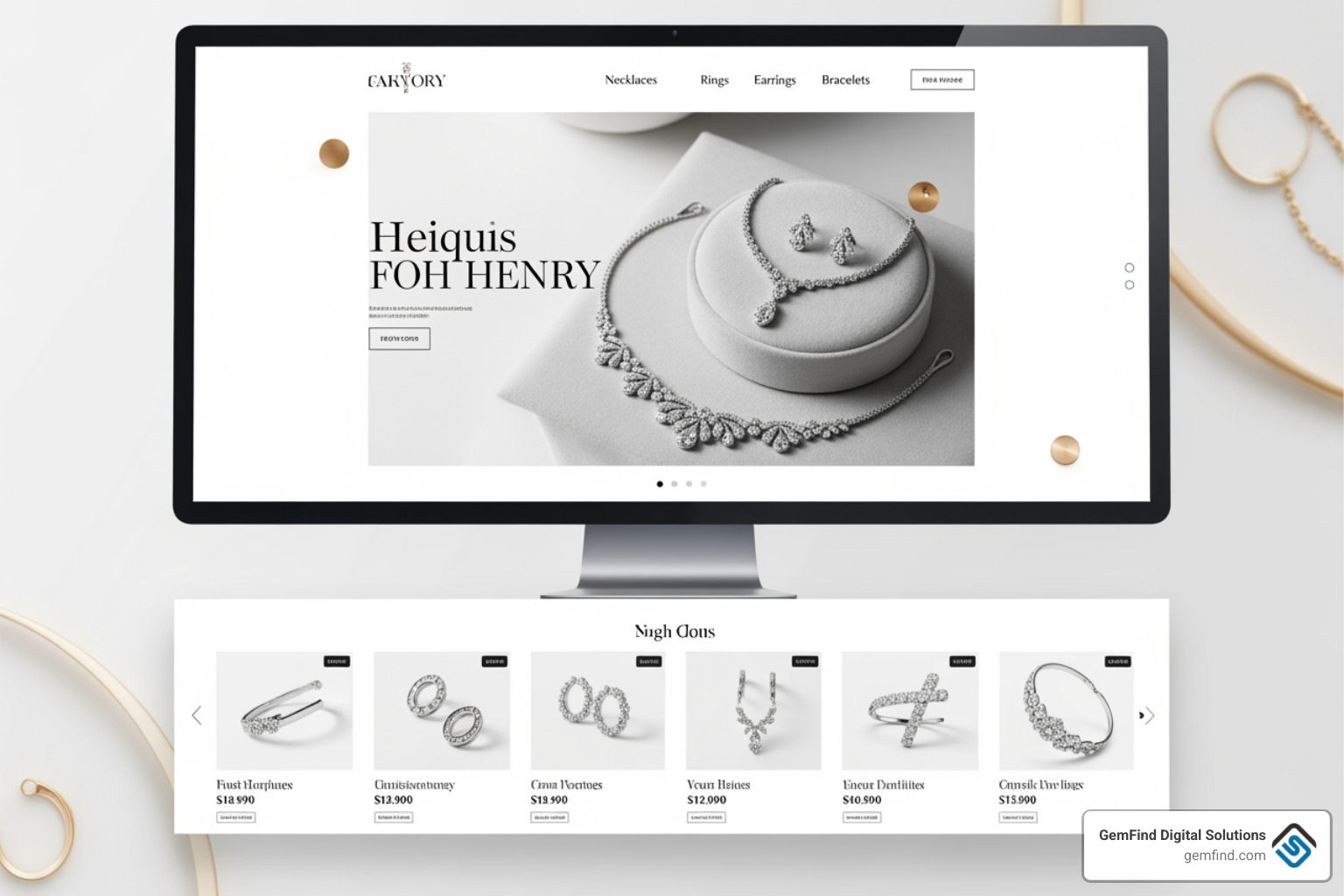
Interactive Tools for a Custom Experience
Jewelry is often deeply personal, and modern websites must offer interactive tools that allow customers to create or visualize their perfect piece. These features are crucial for a successful jewelry website, especially when dealing with complex purchases like engagement rings.
- Ring Builders: These tools allow customers to design their own rings by selecting settings, metals, diamonds, and gemstones. Solutions like GemFind's RingBuilder® are essential for boosting engagement ring sales and helping clients confidently select engagement rings and fine jewelry online.
- Diamond Search Filters: For loose diamonds, robust search tools that filter by cut, carat, clarity, and color are invaluable. This helps customers quickly find exactly what they are looking for, often integrating with large diamond marketplaces like Rapnet and VDB.
- Engraving Previews: If you offer personalized engraving, allowing customers to preview the text in different fonts directly on the product image can significantly improve their confidence in the purchase.
- Product Customizers: Beyond rings, customizers for watches or other personalized accessories allow customers to explore different options and visualize the final product.
- Virtual Try-On Technology: While more advanced, virtual try-on features can bridge the gap between online shopping and the in-store experience, allowing customers to "see" how a piece looks on them.
Streamlining the Shopping and Checkout Process
Once a customer finds what they love, the path to purchase must be seamless and secure. A clunky checkout process is a surefire way to lose a sale.
- Advanced Product Filtering: Customers need to quickly find what they are looking for. Filtering options for price range, metal type, gemstone, and collection are critical. Shopify apps, for example, can add advanced filtering options that work smoothly with your chosen theme.
- Quick View and Wishlists: These functionalities improve the shopping experience significantly. Quick view allows customers to see product details without leaving the category page, while wishlists encourage them to save items for future consideration.
- Secure Payment Gateways: Offer multiple payment options, including popular choices like Amazon Pay, Google Pay, and Apple Pay, to improve customer satisfaction. Ensure your shopping cart and checkout process are seamless and secure, as a smooth Shopify checkout process can produce more online sales for jewelry stores.
- Guest Checkout Option: While account creation can be beneficial, forcing it can deter first-time buyers. Offering a guest checkout streamlines the process.
Building Trust and Engagement
Trust and credibility are paramount in the luxury goods market. Your website design must incorporate features that reassure customers of your legitimacy and commitment to service.
- Customer Reviews and Testimonials: These act as powerful social proof. Displaying genuine reviews builds confidence in your products and brand.
- Security Badges (SSL): Clearly visible security indicators, especially during checkout, assure customers that their personal and financial information is protected. GemFind ensures clients have proper SSL setup.
- Live Chat Support: Ensuring your website includes features that allow customers to easily contact you is vital. A live chat feature provides instant support, answering questions and resolving concerns in real time, which can be a huge benefit for your jewelry store's website.
- Clear Return Policies: Transparent policies regarding returns, exchanges, and warranties reduce purchase anxiety and build trust.
Your Blueprint for the Best Jewelry Website Design
Creating the best jewelry website design does not have to be overwhelming. With the right strategy and tools, you can build an online presence that truly sparkles.
Choosing the Right E-commerce Platform
Selecting the right e-commerce platform is foundational for your jewelry website. It needs to support your current needs while offering room for future growth.
- Key Considerations: Think about scalability (can it handle increased traffic and inventory?), security (is it robust enough for high-value transactions?), and ease of use (how easily can you manage products, orders, and content?).
- Platform Options: Shopify dominates the jewelry e-commerce space because it handles inventory management and payment processing without requiring extensive technical knowledge. For those comfortable with WordPress, WooCommerce offers more customization. BigCommerce and Squarespace can also work well for smaller collections. The platform choice depends on your product catalog size and technical comfort level.
- How GemFind Helps: GemFind specializes in web design for jewelers and is a Shopify Plus Partner. The team brings over 25 years of experience building websites for jewelry retailers, offering custom solutions and integrations that truly make your e-commerce presence shine. They can help you choose the platform that is right for jewelers and implement the best solution for your brand.
Finding the Perfect Template for the Best Jewelry Website Design
Once you have a platform, the next step is choosing a template. This forms the visual and structural backbone of your site.
- Free vs. Premium Themes: Free templates offer basic functionality but often come with limited support and updates. Premium themes, typically ranging from $50 to $300 for a lifetime license (or $15-40/month for subscriptions), offer better mobile optimization, conversion-focused layouts, regular security patches, and customer support. They usually provide advanced product display features that jewelry sites truly need.
- Mobile Responsiveness: As mentioned earlier, this is non-negotiable. Modern jewelry templates are mobile responsive by default. Always test the demo on your actual phone before committing to a theme.
- Customization Options: Most modern templates offer drag-and-drop customization through page builders, allowing you to adjust colors, fonts, and layouts visually without coding. For complex changes like custom filtering or unique product displays, you might need a developer.
-
Key Features in a Jewelry Template: Look for templates with:
- High-resolution image and video support
- Product zoom functionality
- Advanced filters for price, metal type, gemstone, and style
- Neat typography that matches your brand
- Built-in gallery features like lightbox popups and multiple product views
- Wishlist functionality and quick view options
GemFind's custom and ready-made templates are designed with these specific features in mind, ensuring your jewelry collection shines.
Where to Find Inspiration for the Best Jewelry Website Design
Even with the best tools, a little inspiration goes a long way. Looking at real examples helps you understand what truly works.
- Curated Galleries: Websites like Siteinspire and Lapa Ninja offer a treasure trove of design ideas across various industries. Dribbble also showcases stunning jewelry website UI/UX concepts.
- Design Trends: Keep an eye on current web design trends, but always filter them through your brand's unique identity. Minimalist designs with lots of white space are consistently effective for jewelry.
- Visual Findy: Explore GemFind's portfolio and case studies to see how the team has helped other jewelry brands achieve their online vision. You can also look at examples like those found in "31 of the Best Jewellery Website Design Examples" for visual cues on product photography, filtering systems, and mobile shopping experiences.
- Competitor Analysis: Observing other successful jewelry brands (without copying them directly) can provide insights into effective layouts, feature sets, and visual merchandising strategies.
Frequently Asked Questions about Jewelry Website Design
We often hear similar questions from jewelers looking to improve their online presence. Let's address some of the most common ones.
How much does a professional jewelry website cost?
The cost of a professional jewelry website can vary significantly based on your needs and desired level of customization.
- Template Costs: If you opt for a premium template, you're looking at $50-$300 for a lifetime license, or $15-$40 per month for subscription-based themes. Free templates are available, but they often lack advanced features and dedicated support.
- Custom Design Costs: A fully custom-designed website built from the ground up by an agency will be a much larger investment, potentially ranging from several thousands to tens of thousands of dollars, depending on complexity and features. This covers design, development, and integration of specialized jewelry modules.
- Ongoing Maintenance Fees: Don't forget about ongoing costs! These include hosting (which can range from $10-$100+ per month), software updates, security patches, and routine bug fixes. Budgeting for both initial creation and ongoing management is crucial for website longevity.
- Value of Investment: While a professional website might seem like a significant outlay, it's an investment in your brand's future. The right website can significantly increase your reach, build customer trust, and ultimately drive sales, making the initial cost well worth it.
How can I make my jewelry website mobile-friendly?
Making your jewelry website mobile-friendly is no longer an option—it's a necessity. Most jewelry purchases happen on phones now, so a flawless experience across all devices is essential.
- Responsive Design: This is the foundation. A responsive website automatically adjusts its layout and content to fit any screen size, from desktops to tablets and smartphones. All modern templates are built with responsiveness in mind.
- Touch-Friendly Navigation: Ensure buttons, menus, and links are large enough to be easily tapped on a touchscreen. Avoid small, fiddly elements.
- Optimized Images for Speed: Large, unoptimized images can significantly slow down your mobile site. Compress images without sacrificing quality to ensure fast loading times.
- Simplified Mobile Checkout: Streamline your checkout process for mobile users. Minimize form fields, offer autofill options, and ensure payment gateways are mobile-optimized.
- Testing on Multiple Devices: Always test your website's functionality and appearance on various mobile devices and browsers before launching. Check that product zoom, filtering, and checkout all function smoothly on smaller screens.
What are the most common design mistakes to avoid?
Even with the best intentions, some common design mistakes can hurt your jewelry website's performance and conversion rates. We've seen many reasons visitors are leaving websites, and here are the top ones to avoid:
- Poor-Quality Photography: As we've emphasized, this is the biggest mistake. Blurry, inconsistent, or poorly lit product images instantly detract from the perceived value of your jewelry.
- Cluttered Layouts: Too much text, too many images, or too many calls to action on one page can overwhelm visitors and make your site look unprofessional. Accept white space!
- Slow Loading Times: In today's digital world, users expect websites to load almost instantly. Slow sites lead to frustration and high bounce rates.
- Complicated Navigation: If users can't easily find what they're looking for, they'll leave. Overly complex menus, hidden categories, or unclear calls to action are major deterrents.
- Lack of Trust Signals: Absence of customer reviews, security badges, clear contact information, or transparent policies can make visitors hesitant to make a purchase, especially for high-value items.
Conclusion: Crafting a Website That Shines
The journey to creating the best jewelry website design is an investment in your brand's future. We've explored the core principles that make a website visually stunning and effective: from the non-negotiable power of high-quality imagery and a seamless user experience to the art of weaving your unique brand story through design.
We've also dug into the essential features that modern jewelry e-commerce sites need, such as interactive tools that offer a custom experience and streamlined shopping processes that build trust and engagement. Choosing the right platform and template, and knowing where to draw inspiration, are crucial steps in this blueprint.
A professional website design isn't just about looking good; it's about creating an intuitive, trustworthy, and engaging online storefront that converts visitors into loyal customers. It's about ensuring your digital presence sparkles just as brightly as your exquisite merchandise.
For a website that truly reflects the quality and unique sparkle of your jewelry, working with an industry-specific expert like us at GemFind Digital Solutions can make all the difference. With over 25 years of experience and specialized tools for jewelers, we understand the nuances of this dazzling industry. Let us help you craft an online experience that captivates and converts.


