



Why Google Ads Should Be Your Jewelry Store's Next Best Friend
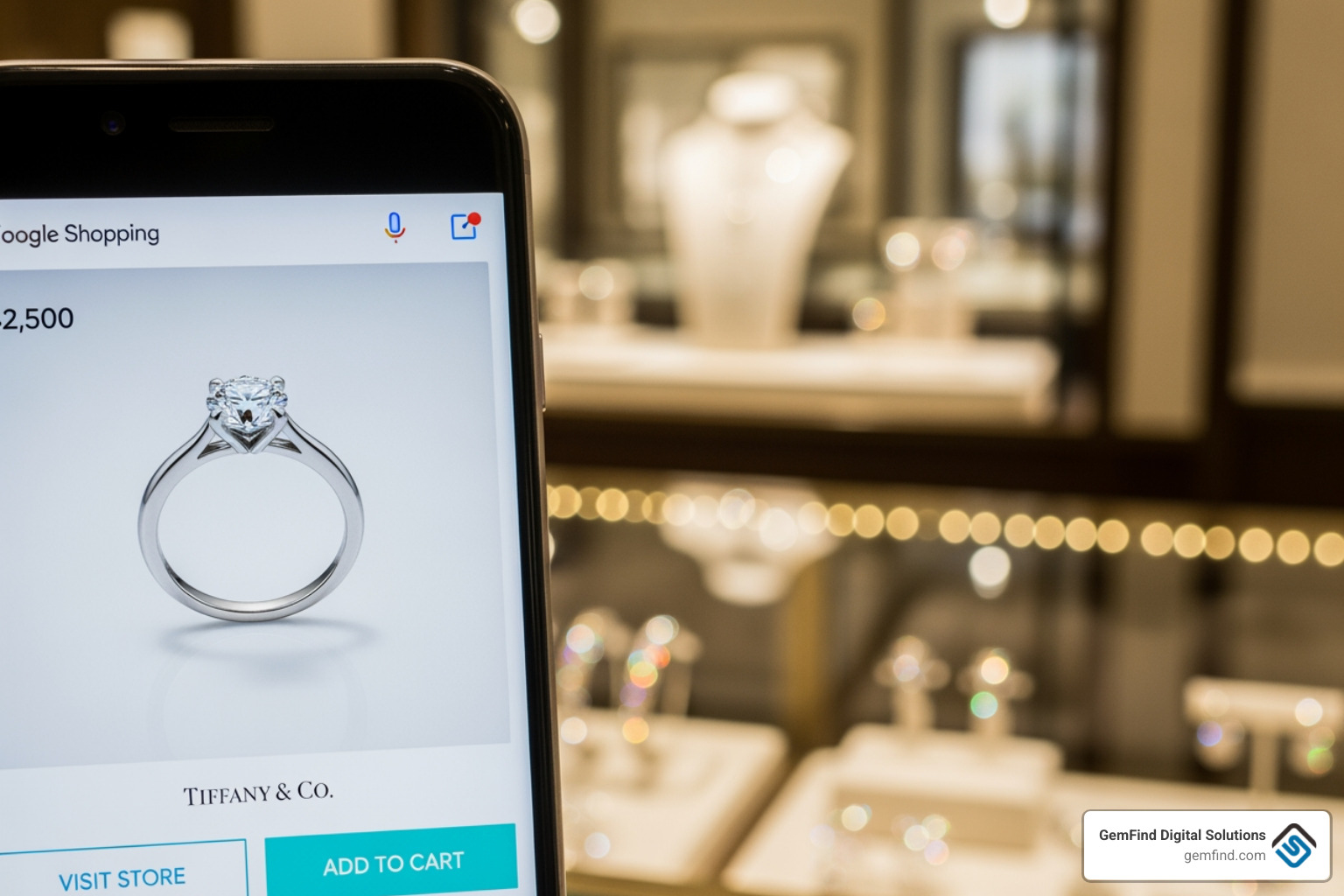
Google Ads jewelry campaigns help jewelry retailers reach high-intent shoppers actively searching for specific pieces like engagement rings, diamond earrings, or custom necklaces. Here's what you need to know:
Key Benefits of Google Ads for Jewelry Stores:
- Capture Purchase Intent - Your ads appear when customers search "diamond stud earrings for sale" or "engagement rings near me"
- Visual Product Showcase - Google Shopping Ads display your jewelry with images, prices, and store information
- Measurable Results - Track every click, conversion, and dollar spent with detailed performance data
- Budget Control - Set daily limits and adjust spending based on what's working
- Drive In-Store Traffic - Local inventory ads and location extensions bring nearby shoppers to your physical store
In today's jewelry market, customers start their shopping journey on Google—even if they plan to buy in-store. They search for "custom engagement rings," scroll through product images, and compare prices long before walking through your door. The challenge is getting your beautiful pieces in front of these ready-to-buy shoppers at the right moment.
That's where Google Ads comes in. Unlike social media ads that interrupt a user's feed, Google Ads meets customers when they're actively looking for jewelry. Someone searching "14k gold birthstone necklace" is in buying mode. Because Shopping Ads show your product image, price, and store name upfront, only truly interested shoppers click through. This means less wasted ad spend and more qualified leads.
The jewelry business is highly competitive and seasonal. Valentine's Day, Mother's Day, and the holidays can make or break your year. Google Ads gives you the flexibility to scale up during peak times and dial back when things slow down. Plus, with tools like Performance Max, even busy store owners can run effective ads without becoming marketing experts.
Why Google Ads is Essential for Jewelry Retailers
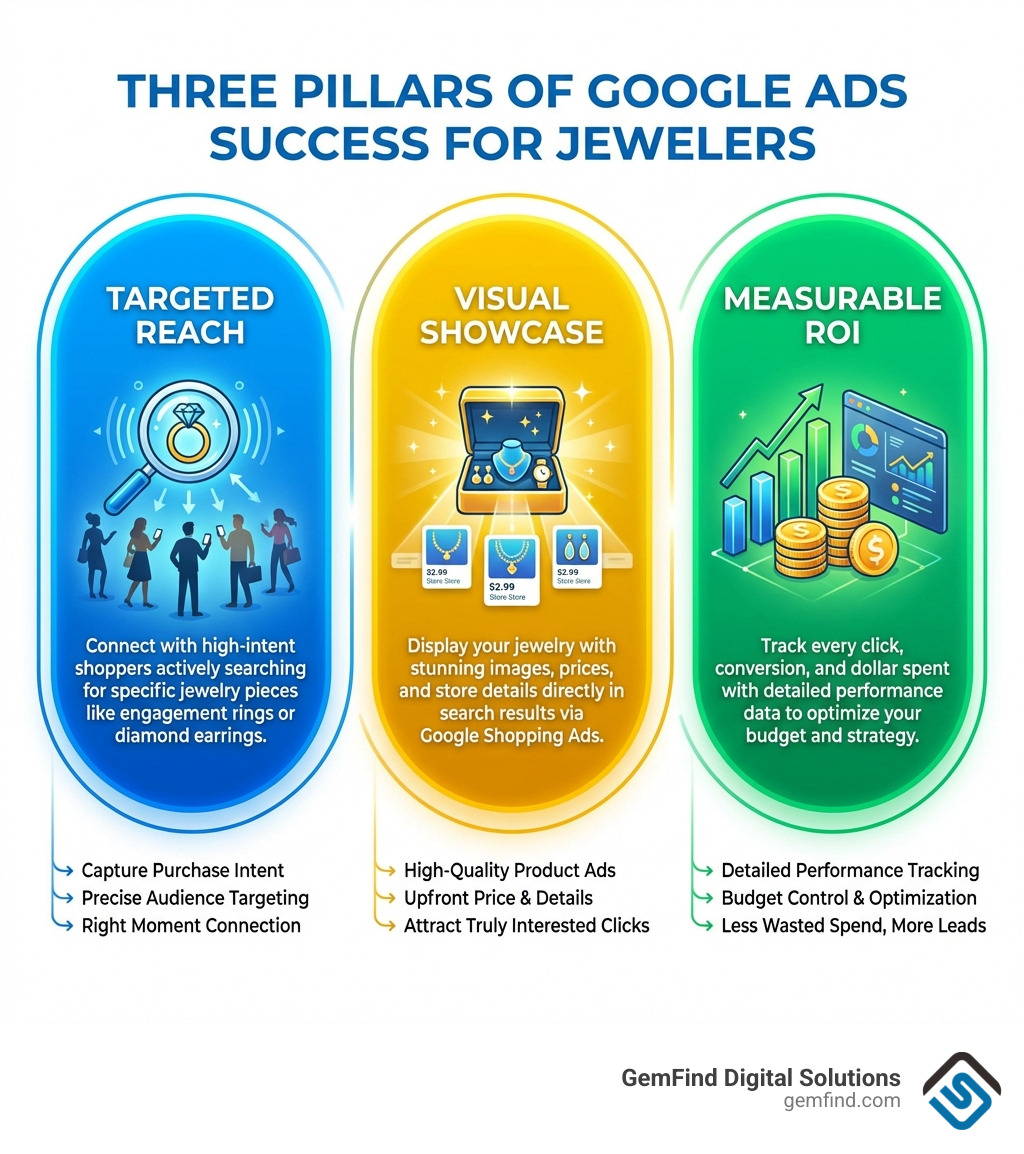
When it comes to selling jewelry, catching a customer's eye is just the first step. The real magic happens when you connect with someone who’s not just looking, but actively ready to buy. This is precisely where Google Ads shines for jewelry businesses.
The primary benefits are clear:
- Targeted Reach: Connect with customers actively searching for your products. When someone types "diamond stud earrings for sale," your ad appears, capturing high-intent buyers and leading to more qualified leads.
- Visual Showcase: Jewelry is visual. Google Shopping Ads display your products with high-resolution images, prices, and store names directly in search results, helping your creations stand out.
- Driving Online Sales: For e-commerce stores, Google Ads offers a direct path to conversion by driving interested shoppers from search results to your product pages.
- Boosting In-Store Foot Traffic: For brick-and-mortar stores, local search ads and location extensions drive nearby shoppers to your physical location, boosting foot traffic and reinforcing your local presence.
- Building Brand Visibility: Top placement in search results for key terms builds brand recognition and trust, which is crucial in a competitive market.
- Performance Tracking: Track clicks, impressions, conversions, and return on ad spend (ROAS) with comprehensive reports to see what's working and optimize your strategy.
- Budget Control: Set daily or monthly spending limits and adjust them as needed, giving you complete control over your advertising budget and ROI.
Google Ads vs. Other Digital Ad Channels: Choosing Your Strategy
When crafting a digital marketing strategy for jewelry, it’s not always about choosing one channel over another, but understanding how they complement each other. Let's compare Google Ads jewelry campaigns with other digital ad channels:
| Feature | Google Ads (Search & Shopping) | Social Media Ads (Facebook, Instagram, Pinterest) |
|---|---|---|
| User Intent | High-intent, "Pull" Marketing (captures existing demand) | Lower-intent, "Push" Marketing (creates demand, builds awareness) |
| Placement | Search results, Shopping tab, YouTube, Display Network, Gmail | Social media feeds, stories |
| Primary Goal | Immediate sales, lead generation, high-intent conversions | Brand awareness, audience engagement, long-term relationship building |
| Visuals | Essential for Shopping Ads, can use images for Display | Core of the platform, highly visual content (photos, videos) encouraged |
| Targeting | Keywords, demographics, location, in-market audiences | Interests, behaviors, demographics, custom audiences, lookalikes |
| Cost Efficiency | Often higher conversion rates due to intent, but competitive CPCs | Can be cost-effective for reach, but conversion rates may be lower |
If your goal is immediate sales from ready-to-buy shoppers, Google Ads is your best bet. It captures high-intent traffic that converts quickly. For long-term brand awareness and showcasing new designs, social media ads are ideal, using visual storytelling to attract new fans.
The most successful jewelers use both. A search campaign captures the ready-to-buy customer, while a social campaign inspires future buyers. In short: use social media to connect and Google to convert.
Driving Both Clicks and Foot Traffic
One of the standout benefits of Google Ads jewelry is its ability to drive both online sales and foot traffic to physical stores. It's a true win-win for modern jewelry businesses.
For local jewelers, this is a game-changer. When a customer searches for "jewelry stores near me," Google Ads can prominently display your store's address, phone number, and directions. Local inventory ads take this further by showing nearby shoppers what's available in your store right now, bridging the gap between online search and in-store purchase.
Geo-targeting allows you to show ads only to customers within a specific radius, minimizing wasted spend. Features like call extensions (for direct calls) and location extensions (for business info) improve these local ads. By connecting online data with in-store sales, you can get a holistic view of ROI.
Setting Up Your Winning Google Ads Jewelry Campaigns
A well-structured Google Ads jewelry campaign is the foundation for success. Think of it like organizing your jewelry display: everything needs to be in its right place to be easily found.
Your campaign structure should be logical and granular. This means organizing campaigns into ad groups, each focusing on a specific product category, theme, or audience. For example, you might have separate ad groups for "engagement rings," "diamond necklaces," and "custom jewelry design." Within each ad group, you'll use closely related keywords and highly relevant ad copy.
E-commerce integration is crucial for jewelry retailers. This involves connecting your online store to Google Merchant Center, which is essential for running Shopping Ads. The Merchant Center hosts your product feed – a comprehensive list of all your products, including images, prices, descriptions, and availability. A high-quality, frequently updated product feed is vital because Shopping Ads are triggered by this data, not just keywords alone. Ensure your product data is accurate and optimized to help Google display your jewelry effectively.
Choosing the Most Effective Campaign Types
Google offers a variety of ad campaign types, each with unique strengths for jewelry businesses. Choosing the right mix is key to a comprehensive Google Ads jewelry strategy:
- Search Ads: Text-based ads on Google search results, perfect for capturing high-intent buyers searching for specific items like "gold hoop earrings" or "jewelry repair near me."
- Shopping Ads: Arguably the most impactful for jewelry, these visual ads feature a product image, price, and store name at the top of search results, attracting ready-to-buy customers.
- Performance Max Campaigns: An automated, goal-based campaign type that uses machine learning to serve ads across all of Google's channels (Search, YouTube, Display, etc.) to maximize conversions.
- Display Ads: Visual banner ads on websites and apps across the Google Display Network, great for brand awareness and remarketing to past site visitors.
- Video Ads: YouTube ads that showcase the craftsmanship and story behind your jewelry, building emotional connections with consumers.
- Remarketing Campaigns: These ads target users who have visited your website but didn't convert, reminding them of the pieces they viewed to encourage a purchase.
Mastering Keyword Research for Google Ads jewelry
Effective keyword research is the bedrock of any successful Google Ads jewelry campaign. It’s about understanding the language your customers use when they're looking for their next cherished piece.
Start by brainstorming a comprehensive list of terms related to your products. Think about all the ways someone might search for an engagement ring, a necklace, or a pair of earrings.
Next, dive into long-tail keywords. These are more specific, multi-word phrases (e.g., "vintage rose gold engagement ring with sapphire" instead of just "engagement ring"). While they may have lower search volume, they often indicate higher purchase intent and face less competition, leading to more qualified clicks.
Distinguish between branded vs. generic terms. Branded keywords (e.g., "[Your Brand Name] diamond earrings") typically have high conversion rates but only reach those already familiar with you. Generic terms (e.g., "diamond earrings") attract new customers but are more competitive. Use a mix to balance growth and efficiency.
Understanding match types is crucial:
-
Exact match (
[diamond stud earrings]) shows your ad only for that precise phrase. -
Phrase match (
"diamond stud earrings") shows your ad for that phrase and close variations. - Broad match (diamond stud earrings) gives you the widest reach but can be less precise. Use these strategically and with caution.
Crucially, implement negative keywords. These are terms you don't want your ads to show for (e.g., "costume jewelry" if you sell fine jewelry, or "free jewelry"). This prevents wasted ad spend on irrelevant searches.
Finally, capitalize on occasion-based keywords. Jewelry is often bought for special moments. Terms like "Valentine's Day jewelry gift," "Mother's Day necklace," or "anniversary ring" capture seasonal and emotional purchasing intent.
Precision Audience Targeting
Beyond keywords, reaching the right people is about understanding who your potential customers are. Precision audience targeting allows you to tailor your Google Ads jewelry campaigns to specific groups.
Use demographic filters like age, gender, and household income to ensure you're reaching audiences with the means and inclination to purchase your jewelry. For example, ads for luxury items might target higher income brackets.
In-market audiences are a goldmine. Google identifies users who are actively researching products or services in a particular category – like "fine jewelry" or "wedding planning." Targeting these audiences means you're reaching people who are already close to making a purchase decision.
Custom audiences allow you to build highly specific groups based on interests, URLs they've visited, or even apps they use. For instance, you could target people interested in "sustainable fashion" for your ethically sourced collections.
Remarketing lists are invaluable. These allow you to show ads to people who have previously interacted with your website or app. If someone viewed a particular engagement ring but didn't buy, you can show them a remarketing ad for that exact ring, perhaps with a special offer.
Also target life events, a powerful feature for jewelry. Think about targeting "getting married" for engagement rings and wedding bands, or "new parents" for birthstone jewelry.
Finally, segment by buyer needs. Jewelry shoppers vary widely – from occasional gift buyers to passionate collectors or ethically minded consumers. By categorizing these groups, you can craft distinct digital experiences, ensuring that casual buyers see seasonal promotions while luxury-oriented segments receive messaging focused on craftsmanship and exclusivity.
Crafting Dazzling Ads & Optimizing for ROI
Running Google Ads jewelry campaigns comes with its unique set of challenges. The online jewelry business is highly competitive at every price point. You also deal with a wide range of price points, from affordable fashion pieces to high-value luxury items, which impacts bidding strategies. Building trust online for something as personal and valuable as jewelry is paramount, especially since customers can't physically sample the product.
To overcome these, leverage tools like ad extensions. These add extra information to your ads, like phone numbers, store locations, special offers, or links to specific pages on your site. They increase your ad's visibility and provide more value to potential customers without costing extra per click.
The Power of Visuals and Compelling Ad Creatives
In jewelry, visuals aren't just important—they're everything. A picture truly is worth a thousand words when it comes to showcasing a sparkling diamond or an intricately designed pendant.

Your ad creatives for Google Ads jewelry campaigns should be designed to impress. Use high-resolution imagery that captures the detail and luster of each piece. For Shopping Ads, this means crystal-clear product photos. For Display and Video Ads, go further with lifestyle photos showing people wearing the jewelry, or videos that highlight the craftsmanship and unique features.
Pair these stunning visuals with evocative language that tells a story and creates an emotional connection. Instead of generic descriptions, focus on the unique selling propositions (USPs) of each piece or your brand. Is it ethically sourced? Handcrafted with heritage techniques? A limited edition? Messaging like "Handcrafted for Your Lifetime Moments" or "Ethically Sourced Diamonds for Modern Tastes" sets you apart.
Every ad should include a clear Call-to-Action (CTA), guiding the customer on what to do next: "Shop Now," "Learn More," "Book an Appointment," or "Find Our Collection."
To ensure your ads are as effective as possible, constantly engage in A/B testing headlines and images. By testing different variations, you can find which elements resonate most with your audience, enabling incremental improvements in performance and a better return on ad spend.
Budgeting, Bidding, and Measuring Your Google Ads jewelry Success
Optimizing your Google Ads jewelry budget and bidding strategies is crucial for maximizing your return on investment (ROI). Don't just set it and forget it; actively manage and refine your approach.
First, set a budget that aligns with your business goals and expected ROI. This isn't just a random number; it's based on market research, keyword competition, and your desired cost per acquisition (CPA).
For bidding strategies, lean on Google's automated options, especially for e-commerce. Strategies like "Maximize Conversions" aim to get you the most conversions within your budget, while "Target ROAS" (Return On Ad Spend) helps you achieve a specific revenue target for every dollar spent. These smart bidding strategies use machine learning to optimize bids in real-time.
Continuously monitor key performance indicators (KPIs) to measure success:
- Cost Per Acquisition (CPA): How much it costs to acquire one customer or lead.
- Return On Ad Spend (ROAS): The revenue generated for every dollar spent on ads.
- Conversion Rate: The percentage of clicks that result in a desired action (e.g., purchase, lead form submission).
- Click-Through Rate (CTR): The percentage of people who see your ad and click on it.
Crucially, implement robust conversion tracking. This means tracking not just website purchases, but also phone calls, lead form submissions, and even in-store visits where possible. Integrating Google Ads with Google Analytics provides a holistic view of user behavior on your website, allowing you to understand the entire customer journey and validate which segments deliver the strongest ROI.
Advanced Strategies and Common Pitfalls
To truly shine with Google Ads jewelry campaigns, go beyond the basics. This includes optimizing for the mobile experience, refining your landing pages, and considering customer financing options.
Given that a significant portion of online shopping is done via smartphones, mobile optimization is non-negotiable. Your ads and landing pages must be fast-loading, easy to steer, and visually appealing on all devices.
The landing page experience is where conversions happen. Every ad should direct visitors to a product or category page that mirrors the promise made in the ad, ensuring continuity and reducing friction. High-resolution images, clear calls-to-action, and trust markers (like sustainability certifications or customer reviews) are essential. You can even explore offering virtual try-ons or live video consultations directly from the landing page to improve engagement.
For high-value jewelry, offering financing options can significantly boost conversions. Highlighting these options in your ads or on landing pages can make expensive pieces more accessible. Similarly, for brands focused on ethical practices, highlighting ethical sourcing becomes a powerful differentiator that resonates with a growing segment of conscious consumers.
Capitalizing on Seasonal Demand and Trends
The jewelry business is famously seasonal, with significant spikes around holidays and special occasions. Google Ads jewelry campaigns offer unparalleled flexibility to capitalize on these crucial periods.
Strategically plan your campaigns to align with peak seasons like Valentine's Day, Mother's Day, the holidays, and engagement season. This involves scheduling ads in advance, creating occasion-specific ad copy, and promoting seasonal offers (e.g., "Holiday Sale," "Perfect Gift for Mom").
During these high-demand times, be prepared to adjust bids and budgets to ensure maximum visibility. Monitoring campaign data for seasonal spikes or emerging trends allows you to respond quickly, prioritizing high-converting products and ensuring your inventory moves when demand is at its peak.
Common Mistakes to Avoid
Even with the best intentions, it's easy to stumble when running Google Ads jewelry campaigns. Here are some common mistakes to avoid:
- Ignoring Keyword Research: Using overly broad terms leads to wasted ad spend. Emphasize thorough, ongoing keyword research, including negative keywords, to maintain focus.
- Low-Quality Creatives: Jewelry demands excellence. Blurry images or generic ad copy will not convert. Use dazzling, high-resolution creatives that showcase the beauty of your pieces.
- Neglecting Conversion Tracking: If you can't track what's working, you can't optimize. Setting up proper conversion tracking for purchases, leads, and calls is essential.
- Poor Mobile Experience: A slow or clunky mobile website is a conversion killer. Ensure your landing pages are always mobile-optimized.
- Not Using Negative Keywords: Failing to exclude irrelevant search terms drains your budget on uninterested searchers. Constantly refine your negative keyword lists.
- Inconsistent Messaging: Ensure a seamless message from ad to landing page. If an ad promises "custom rings," the landing page must deliver on that promise.
Frequently Asked Questions about Google Ads for Jewelry
What is the most important Google Ads campaign type for a jewelry store?
While all campaign types have their place, Google Shopping Ads are often considered the most important for jewelry stores, especially those with e-commerce functionality. They are highly visual, appear prominently in search results, and attract high-intent shoppers who can see the product image, price, and store name upfront. This leads to more qualified clicks and efficient ad spend, directly aligning with how customers shop for jewelry.
How much should a jewelry business budget for Google Ads?
There's no one-size-fits-all answer, as budgets depend on factors like competition, product price points, and desired scale. However, instead of focusing on a fixed number, it's best to allocate your budget based on precise targeting and high-intent keywords to ensure efficiency. It's crucial to regularly review performance data to adjust spending towards campaigns that yield the highest conversion rates and ROAS. Start with a manageable budget, learn from the data, and scale up as your campaigns prove profitable.
How can I track if my Google Ads are leading to in-store sales?
Tracking online ads to offline sales is a sophisticated but achievable goal. You can leverage several strategies:
- Local Inventory Ads: These show nearby shoppers what's available in your physical store. You can track clicks on these ads and subsequent store visits.
- Store Visit Conversions: Google can estimate store visits from ad clicks using anonymized, aggregated data from users who have opted into Location History.
- Call Tracking: If you use call extensions or call-only ads, you can track phone calls from your ads, which often lead to in-store appointments or purchases.
- CRM Integration: By connecting online engagement data from Google Ads with your Customer Relationship Management (CRM) records and in-store transactions, you can attribute a lead or sale to its original source. This provides a full-funnel view of ROI.
- Promotional Codes: Offering unique online-generated codes for in-store redemption can also help bridge the gap.
Conclusion
Navigating the competitive world of jewelry retailing requires more than just stunning pieces; it demands a strategic and data-driven approach to marketing. Google Ads jewelry campaigns offer an unparalleled platform to connect with high-intent buyers, drive both online and in-store sales, and build a lasting brand presence.
This guide has explored how focusing on specific campaign types like Shopping Ads, mastering keyword research and audience targeting, and crafting dazzling creatives can turn clicks into customers. You've learned the importance of budgeting wisely, continuously optimizing for ROI, and capitalizing on seasonal trends. By avoiding common pitfalls and integrating Google Ads with your overall marketing strategy – including SEO, social media, and email marketing – you can create a powerful, unified approach that amplifies your reach.
The future of Google Ads jewelry is exciting, with trends pointing towards even more sophisticated audience matching technology, the rise of video advertising, innovative online try-on functions, and the increasing role of AI in optimizing ad performance. Staying ahead means embracing these advancements and continuously adapting your strategies.
At GemFind Digital Solutions, we understand the unique nuances of the jewelry industry, backed by over 25 years of specialized expertise. We're not just about running ads; we're about crafting custom solutions that help your jewelry business shine brightest in the digital landscape.
Ready to transform your online presence and attract more ready-to-buy customers? Explore our digital marketing services for jewelers and let us help you craft a Google Ads strategy that truly sparkles.


