



What Are the Most Important KPIs and Metrics for Measuring Jewelry Campaign Success?
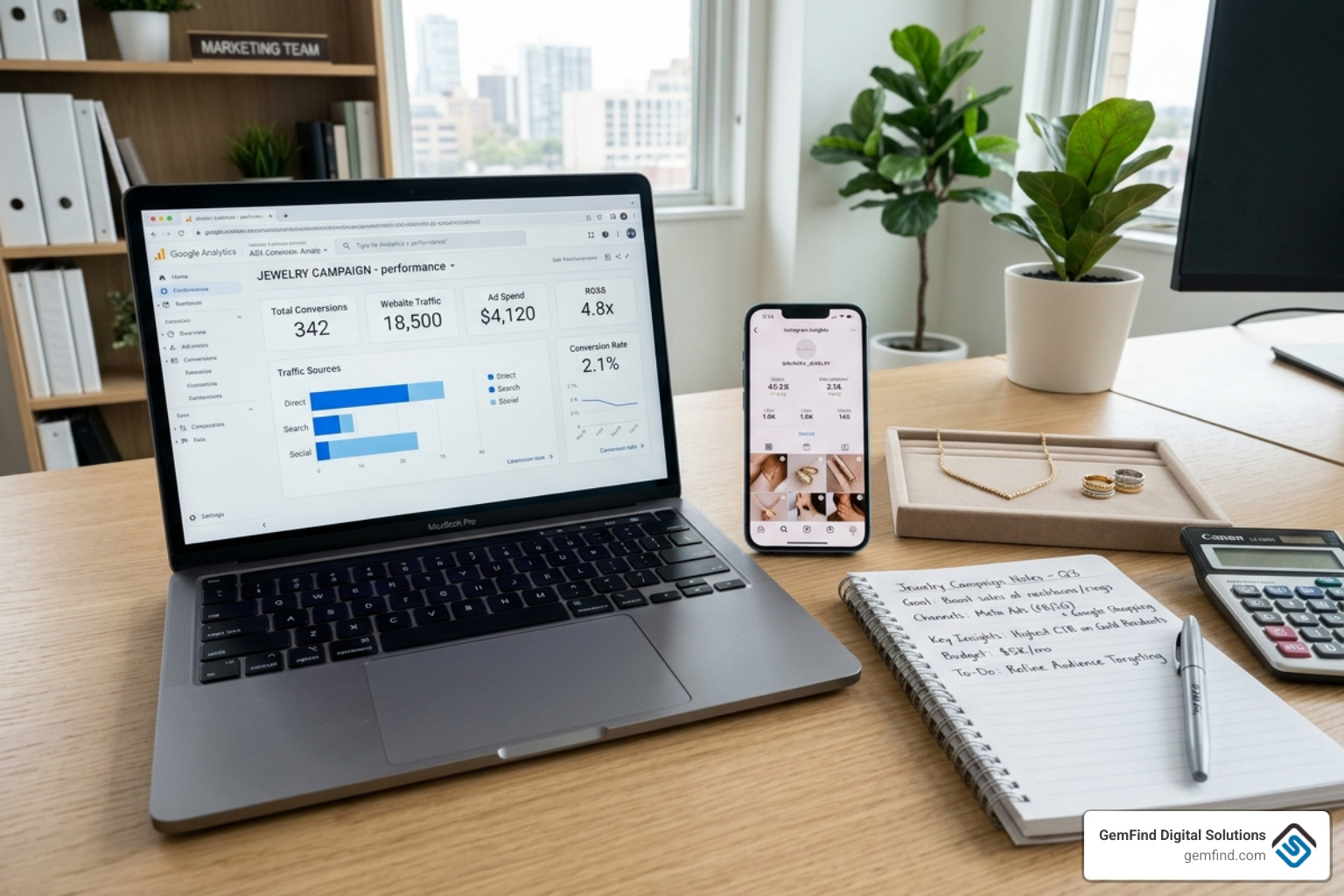
To determine if your jewelry marketing is succeeding, you must look beyond superficial engagement. Identifying the right Key Performance Indicators (KPIs) allows you to refine strategies and maximize ROI. From website interactions to customer satisfaction, a holistic view is essential for modern jewelers.
How Do Website & Digital Metrics Inform Jewelry Campaign Performance?
Your website is your digital storefront. We track several metrics to gauge its performance:
- Unique Visitors & Page Views: These indicate brand awareness and content engagement. A growing visitor count suggests successful traffic generation.
- Bounce Rate: A high rate may signal issues with landing page relevance or user experience. For jewelry, low bounce rates are ideal as they indicate active browsing.
- Average Session Duration: Longer stays suggest visitors are exploring collections and brand stories.
- Conversion Rate: The percentage of visitors who purchase, book appointments, or fill out forms. Since 82% of luxury jewelry buyers research online before purchasing, robust analytics are vital.
- Micro-conversions: Actions like newsletter sign-ups or wishlist additions indicate interest in the longer jewelry buying journey.
Analyzing these metrics helps optimize the path to purchase. For more details, see our guide on Are you tracking your web traffic correctly.
Which Financial Metrics Are Crucial for Jewelry Ads?
Financial metrics link marketing to your bottom line, helping you understand campaign value.
- Return on Ad Spend (ROAS): Measures revenue generated for every dollar spent. Many jewelry brands see ROAS exceeding 5x within six months.
- Customer Acquisition Cost (CAC): The cost to acquire a new customer, calculated by dividing marketing expenses by new customer volume.
- Customer Lifetime Value (CLV): Estimates total revenue a customer generates over time. For jewelry, CLV averages $15,000 over five years, justifying higher acquisition costs.
- Return on Investment (ROI): Evaluates overall profitability by comparing net profit to total costs. Learn more in our guide on How to Measure ROI Across All of Your Marketing Efforts.
These metrics are critical for budget allocation. Our insights into PPC campaigns emphasize tracking conversions beyond immediate sales. Read more on How to Measure ROI on Your PPC Campaigns.
What Social Media & Brand Metrics Should Jewelers Track?
Social media tracking must go beyond "likes" to reflect genuine interest.
- Engagement Rate & Reach: Measures interactions relative to followers. With 85% of jewelry consumers following brands for updates, high engagement is essential.
- Click-Through Rates (CTR): Indicates how effectively social content drives website traffic.
- Brand Lift & Sentiment: Measures impact on awareness and brand perception through sentiment-weighted mentions.
- Influencer Metrics: We use Qualified Reach Rate (QRR) to ensure audience alignment and the Engagement Depth Index (EDI) to track meaningful interactions like long comments and saves.
- Conversion Assist Score (CAS): Tracks how social interactions contribute to the multi-touch journey. With 48% of jewelry consumers influenced by endorsements, these metrics are vital.
Why is Customer Feedback Essential for Jewelry Campaigns?
In the emotional jewelry market, satisfaction is a powerful marketing tool.
- CSAT/NPS & Reviews: Direct feedback and Google reviews build trust and social proof.
- Personalization: Analyzing buying patterns allows for personalized recommendations, which 71% of consumers value.
As 78% of shoppers revisit brands offering exceptional service, tracking satisfaction is vital. For a comprehensive overview, read Measuring the Success of Your Jewelry Marketing Efforts.
What Are the Best Analytics Tools and Platforms for Jewelry Marketers?
The right analytics tools provide the insights needed for informed decision-making.

How Does Google Analytics 4 Help Jewelry Businesses?
Google Analytics 4 (GA4) is an event-based platform that allows jewelers to:
- Track Behavior: Monitor who visits and how they interact with your site.
- Monitor Conversions: Set custom events for product views, cart additions, and inquiries.
- Understand Demographics: Gain insights into audience age, location, and interests.
- Integrate Ads: Connect with Google Ads for comprehensive attribution.
GemFind specializes in GA4 setup for jewelry stores. For more, see Google Analytics for Jewelry Stores.
Which Social Media Platforms Offer Built-in Analytics for Jewelers?
- Facebook & Instagram Insights: Provide data on reach, engagement, and audience demographics.
- TikTok & Pinterest Analytics: Track video views, pin performance, and referral traffic.
What Role Do CRM Systems Play in Jewelry Campaign Measurement?
CRM systems are vital for managing customer data, tracking purchase history, and segmenting audiences for personalized marketing. They connect marketing efforts to actual buying patterns. For more on CRM, see 10 Game-Changing CRM Jewelry Tools to Supercharge ... - SuperAGI.
What Specialized Tools Are Available for Social Media & Influencer Tracking?
- Influencer Platforms: Tools like HypeAuditor and Traackr analyze audience quality and campaign ROI.
- Listening Tools: Sprout Social and Brandwatch monitor brand mentions and sentiment.
- Hashtag Analytics: Ritetag helps find and track optimal hashtags.
How Do Email Marketing Platforms Aid Measurement?
Email platforms provide metrics like open rates, CTR, and revenue per subscriber. Personalized emails can produce a 139% increase in CTR, highlighting the importance of segmentation tools in jewelry campaigns.
How Should Jewelry Businesses Set Up Tracking for Multichannel Campaigns?
Measuring effectiveness across multiple touchpoints requires a robust multichannel tracking setup.
What is the Foundation for Tracking Digital Channels?
- Tracking Pixels: Snippets like the Meta Pixel collect behavior data for remarketing and conversion attribution.
- UTM Parameters: These tags added to URLs allow analytics tools to identify the source and campaign driving traffic.
GemFind assists with pixel and UTM setup to ensure accurate data. See Are you monitoring your web traffic correctly.
How Can Jewelers Measure Social Media Performance Beyond Native Insights?
Beyond likes, jewelers should track engagement depth (long comments, DMs, saves) and use hashtag analytics to understand reach and sentiment. For more, see Track Jewellery Campaigns Beyond Likes in 2025.
How Do You Track Email Campaign Effectiveness?
Effective email tracking involves segmenting lists by behavior and measuring revenue per subscriber. A/B testing subject lines and content helps refine performance. Notably, combining direct mail and digital strategies can increase conversion rates by 28%.
What Are the Methods for Measuring DOOH (Digital Out-of-Home) Campaigns?
- Impression Multipliers: Sensors and location data estimate viewership.
- Footfall Attribution: Uses mobile IDs and geofences to link ad exposure to physical store visits.
- QR Codes: Unique codes track online conversions from offline ads.
How Can Omnichannel Attribution Be Achieved for Jewelry?
Omnichannel measurement involves integrating data from GA4, social media, CRM, and offline sales. Multi-touch attribution models (linear, time decay) assign credit to various touchpoints, ensuring top-of-funnel efforts aren't undervalued.
How Can Jewelers Optimize Campaigns and Avoid Common Measurement Pitfalls?
Optimization is an ongoing process of testing and adapting based on data insights.
What Role Does A/B Testing Play in Campaign Optimization?
A/B testing involves running variations of ad creatives, copy, or landing pages to identify what drives the best CTR and conversion rates. This systematically lowers CAC and improves ROAS.
How Can Retargeting Data Be Used for Optimization?
Retargeting re-engages users who visited your site but didn't convert. By using browsing history, you can offer personalized recommendations that increase the likelihood of a purchase.
How Do Customer Satisfaction Metrics Drive Campaign Refinement?
Feedback helps identify pain points. If customers praise specific aspects like ethical sourcing, you can emphasize those in future messaging. 78% of shoppers return to brands with exceptional service.
What Benchmarks and Industry Standards Should Jewelers Consider?
Compare your CTR and ROAS against jewelry sector averages to gauge competitiveness. While benchmarks are helpful guides, your unique brand goals should always lead your strategy.
What Common Pitfalls Should Jewelers Avoid?
- Vanity Metrics: Don't focus solely on likes; link engagement to sales.
- Last-Click Bias: Avoid undervaluing early touchpoints in the long jewelry purchase cycle.
- Ignoring CLV: Failing to track lifetime value leads to underinvesting in retention.
- Stagnation: Regularly review and adapt your tracking setup.
For more on monitoring, see Are you monitoring your web traffic correctly.
How Do Local Jewelry Shops Measure Success Against Online Competitors?
Local shops can leverage personalized service and community connections through omnichannel metrics.
How Can Local SEO and Google Business Profile Be Leveraged?
Optimizing your Google Business Profile (GBP) is essential. Customers are 70% more likely to visit a business with a complete profile. Track local search rankings for terms like "jewelry store near me" and actively manage reviews.
What is Footfall Attribution for Local Jewelers?
Footfall attribution uses location data and geofencing to measure how many people visit your physical store after seeing your digital or DOOH ads. This links digital spend directly to in-store revenue.
How Do Personalized Service and Community Metrics Help?
Track repeat customer rates and engagement with local events. These metrics highlight the human connection that online-only stores cannot replicate.
How Can Blending Print and Digital Strategies Be Measured?
Use unique QR codes in print ads or offer in-store promotions mentioned in emails. Combining direct mail and digital strategies can result in a 28% increase in conversion rates.
What Omnichannel Metrics Are Key for Local Shops?
Success lies in understanding the journey from online research to in-store purchase. GemFind helps local jewelers implement attribution models that account for every touchpoint. For more strategies, see How Local Jewelry Shops Can Effectively Compete in an Online-Dominated Market.
Frequently Asked Questions about Measuring Jewelry Campaigns
What is the single most important metric for a jewelry business to track?
Customer Lifetime Value (CLV) is arguably the most crucial. It provides a long-term view of profitability, which is essential for high-value, emotional purchases.
How often should I review my jewelry campaign performance data?
Weekly reviews are best for active campaigns to allow for quick optimizations. Monthly or quarterly deep dives are recommended for assessing long-term strategic goals.
Can small jewelry businesses measure campaigns without a large budget?
Yes. Tools like GA4 and native social insights are free. By using UTM parameters and focusing on key goals, even small businesses can gain actionable insights.
Conclusion
Effective measurement is a necessity for growth. By focusing on the right KPIs and leveraging tools like GA4 and CRM systems, jewelers can optimize their marketing spend and connect more deeply with customers.
GemFind Digital Solutions offers over 25 years of expertise in jewelry-specific digital marketing and web design. Let us help you transform your campaign data into a precise growth strategy.


