


Why the Jewelry Market Rewards Stores That Adapt Fast

If you want to increase jewelry sales, here are the most effective ways to do it in 2026:
- Use AI-driven analytics to stock the right products at the right time
- Build client profiles and reach out with personalized, occasion-based messages
- Optimize your Google Business Profile and website for local search
- Train staff to upsell and cross-sell with confidence
- Launch loyalty programs and VIP tiers to grow repeat revenue
- Convert repair traffic into new sales at pickup
- Run targeted Facebook and Instagram ads to reach high-intent buyers
The U.S. jewelry market is on track to reach $61.7 billion in revenue by 2026. And here is what is interesting: shoppers are buying fewer pieces, but spending more on each one. Finished jewelry sales rose 13% in a single month, with spending per item climbing over 20%. This shift — sometimes called "premiumization" — means the opportunity is real, but only for stores that know how to capture it.
At the same time, most jewelry purchases start online, long before a customer ever walks through your door. If your store is not showing up where people are searching, you are invisible to them.
The gap between stores that grow and stores that stagnate often comes down to a handful of specific, repeatable strategies — not luck.
I'm Anthony Arechiga, Vice President of Sales at GemFind Digital Solutions, where I've spent nearly two decades helping jewelry retailers build the digital presence and sales systems they need to increase jewelry sales in a competitive market. In this guide, I'll walk you through the exact levers that move the needle — from AI-powered inventory tools to in-store conversion tactics — so you can start applying them right away.
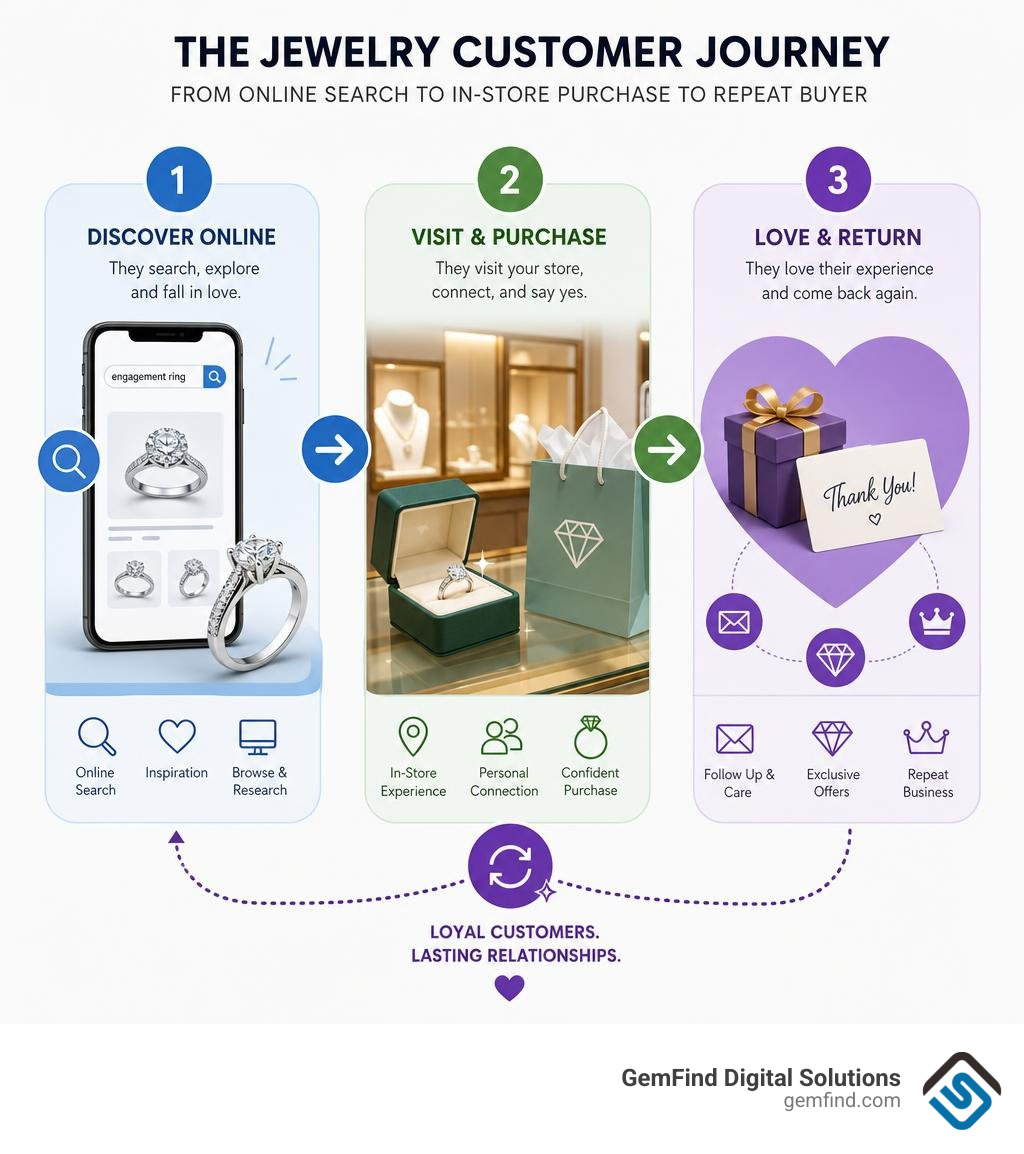
Basic Increase jewelry sales vocab:
1. Use AI-Driven Analytics and Smart Inventory Management
For generations, independent jewelers relied on "gut feeling" and manual spreadsheets to decide which pieces to buy and display. But in 2026, that approach is a recipe for tied-up capital and missed opportunities. Carrying costs on slow-moving inventory erode your margins faster than ever, particularly with precious metals and gemstones at historic highs.
Using AI-driven analytics allows us to transform raw sales data into actionable, SKU-level demand forecasting. Instead of guessing whether yellow gold or platinum will dominate next quarter, smart analytics tools examine localized search trends, historical purchase data, and price elasticity to tell us exactly what to stock.
One of the most powerful concepts in modern inventory management is style clustering. Instead of analyzing individual SKUs, AI clusters your inventory into aesthetic profiles — such as "romantic bridal," "minimalist daily wear," or "bold statement." This helps us understand exactly which design languages are resonating with our local demographics.
Additionally, integrating visual search on our websites allows customers to upload inspiration photos (like a Pinterest screenshot) and instantly find matching or highly similar items from our active showroom stock. This bridges the gap between customer inspiration and our actual inventory, preventing shoppers from leaving to search elsewhere.
| Inventory Strategy | Traditional Inventory Tracking | AI-Driven Analytics |
|---|---|---|
| Tracking Method | Manual spreadsheets & seasonal physical counts | Real-time POS integration & automated tracking |
| Forecasting | Historical year-over-year gut-check estimates | SKU-level predictive demand & style clustering |
| Pricing Optimization | Static pricing or reactive markdown cycles | Dynamic elasticity modeling & targeted promotions |
| Reorder Triggers | Reactive (when stock runs out entirely) | Proactive alerts based on localized velocity trends |
| Slow-Moving Stock | Sits in cases for 12–24 months, eating margin | Flagged early for remounting, styling, or trade-in |
By adopting these modern tools, we can proactively flag aging inventory (items sitting for 12, 18, or 24 months) and decide whether to strategically remount the stones, discount them, or return them to suppliers before they lose value. To get started with these tools, we can learn how to deploy quick-win AI tools designed specifically for independent boutiques.
Predictive Stocking for Seasonal Peaks
The jewelry industry is highly seasonal, characterized by dramatic demand spikes during the winter holidays, Valentine's Day, Mother's Day, and the peak summer wedding season (typically June, July, and August). Failing to prepare for these peaks leads to stockouts of best-sellers, while over-preparing can leave us with excess inventory and cash flow shortages.
To balance this, we use predictive stocking. By analyzing historical seasonal data alongside current macroeconomic variables, we can build a highly accurate replenishment schedule. This ensures we have deep stock of high-demand items like classic diamond studs, tennis bracelets, and popular engagement ring mountings well before the rush begins. To maximize your seasonal revenue, you can discover holiday sales strategies that keep your showroom busy and your checkout lines moving.
2. Implement Proven Retail Strategies to Increase Jewelry Sales
To successfully increase jewelry sales, we must first understand the modern consumer. Today's luxury buyers are highly selective. They value quality, ethical sourcing, and personalized experiences over sheer volume. This is the driving force behind the "premiumization" trend: customers are buying fewer individual pieces, but they are willing to pay significantly more for high-end, finished jewelry that carries real emotional weight.

Understanding customer demographics and buying patterns is crucial. For instance, self-purchasing women look for versatile, durable pieces like stackable rings and layering necklaces, whereas bridal buyers seek deep educational guidance on gemstones and custom design options. By collecting direct customer feedback and tracking what our local market actually buys, we can shift our product mix to align with high-end demand.
How Clienteling and Personalization Increase Jewelry Sales
Clienteling is the art of building long-term, personalized relationships with customers using data-driven insights. It beats cold advertising every single time. Instead of blasting your entire email list with generic promotions, clienteling relies on deep CRM integration to turn every shopper into a "known customer."
When we capture details like purchase history, metal preferences, ring sizes, and critical milestones (birthdays, wedding anniversaries, upcoming graduations), we can execute highly targeted, personal outreach. Imagine texting a client a high-resolution photo of a matching sapphire pendant 30 days before his wife's birthday, knowing he bought her sapphire earrings last year. That is not pushy salesmanship; it is exceptional, proactive service. To see how these clienteling workflows are automated in modern showrooms, you can read the 2026 jewelry sales playbook.
Leveraging Seasonal Promotions to Increase Jewelry Sales
While traditional, deep-discount sales can erode luxury brand perception, highly curated, seasonal promotions do the opposite. The key is targeting specific buying personas during high-intent timeframes.
For the bridal market, we can run "Engagement Ring Styling Weeks" where couples can book private design consultations. For self-purchasing women, we can host "Layering and Stacking Workshops" during the spring or fall fashion transitions. By focusing on milestone celebrations and styling education rather than generic "20% off everything" signs, we protect our margins and build a reputation for expertise. To see these dynamics in action and learn from real-world success stories, you can watch expert jewelry business tips on how to quickly grow online and retail sales.
3. Master Digital Marketing, SEO, and Social Media
If your jewelry store does not have a strong digital footprint, you are losing sales to competitors before customers even know you exist. In 2026, your website and your local search profiles act as your primary digital window displays.
The absolute fastest, highest-ROI digital win for any physical jewelry store is optimizing their Google Business Profile. When someone in your city searches for "custom engagement rings near me" or "best local jeweler," Google displays the "Local 3-Pack" of map listings. Stores with complete, active profiles — featuring high-resolution photos, accurate store hours, structured service lists, and a steady stream of fresh reviews — receive up to seven times more clicks than incomplete ones.
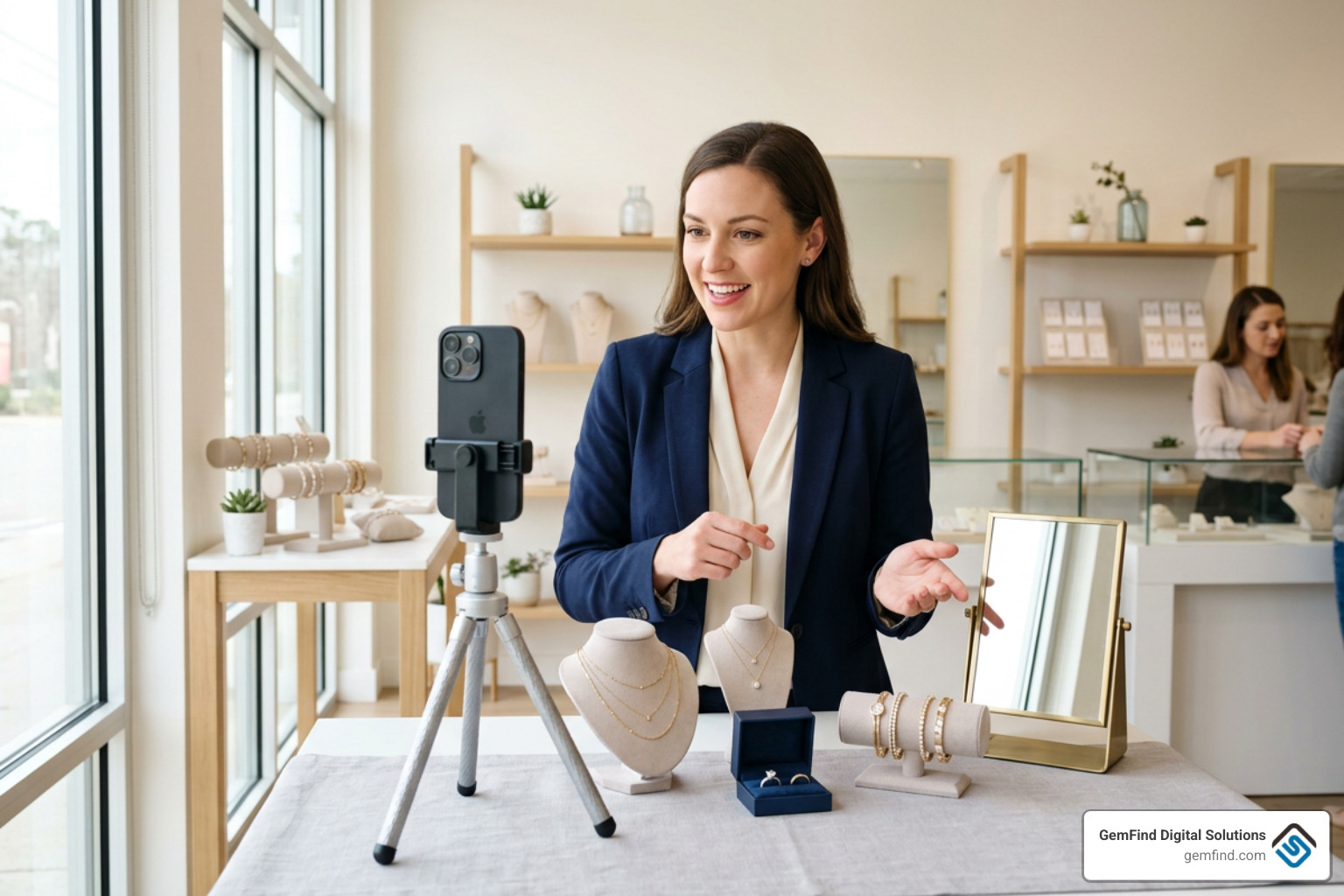
Beyond local SEO, social media platforms like Instagram and TikTok serve as visual-centric stages for our products. We should treat these channels as interactive showrooms. Posting high-quality videos of gemstone brilliance under natural light, sharing behind-the-scenes content of our jewelers at the bench, and hosting live styling sessions are incredibly effective ways to build trust and drive traffic.
Optimizing Your Website for Search and Conversions
A beautiful website is useless if it does not convert visitors into leads or buyers. To turn your website into a high-performing sales channel, we recommend focusing on the following core optimizations:
- Create Dedicated Service Pages: Do not just list your services on a single page. Build individual, keyword-optimized pages for "Custom Jewelry Design," "Jewelry Repair," "Watch Restoration," and "Appraisals" to capture high-intent local search traffic.
- Optimize for Mobile: Over 70% of jewelry web traffic comes from mobile devices. Your site must load in under two seconds, feature an intuitive navigation menu, and offer a seamless mobile checkout experience.
- Use Rich Product Galleries: Showcase jewelry with professional, multi-angle photography, 360-degree video rotations, and high-quality zoom capabilities so customers can examine metal finishes and stone settings.
- Implement Keyword-Rich Descriptions: Avoid generic descriptions. Write detailed copy that mentions metal purity (e.g., "18k yellow gold"), stone details ("GIA-certified conflict-free diamonds"), and the inspiration behind the design.
- Deploy Educational Lead Magnets: Offer valuable downloadable resources, such as a "Diamond Engagement Ring Buying Guide" or a "Jewelry Care & Cleaning Checklist," in exchange for email addresses to build a high-converting lead list.
4. Elevate the In-Store Experience and Convert Repair Traffic
While digital marketing gets customers to your door, the in-store experience is where the transaction is secured. Our sales associates must act as trusted consultants, not order-takers. Investing in continuous staff training on gemstone education, ethical sourcing, and the Mohs hardness scale builds incredible buyer confidence.
Another major revenue driver is offering flexible consumer financing options at every ticket size. Financing breaks down the barrier of high upfront costs, naturally raising both close rates and average order values.
Furthermore, do not overlook your repair counter. Repair customers visit physical jewelry stores two to four times more frequently than typical retail shoppers. When a customer comes in to pick up a repaired piece, our staff should use that touchpoint as an opportunity to build a relationship. By pulling up their purchase history and wishlist at pickup, associates can seamlessly transition the conversation from a simple repair collection to a new retail discovery.
Experiential Retail and Storytelling
Every fine piece of jewelry is a potential family heirloom. To sell luxury, we must sell the emotion behind it. This is where experiential retail and storytelling come into play.
When presenting a colored gemstone, do not just state its name and price. Tell its story — its origin, its cultural significance, and the craftsmanship required to cut it. Combine this storytelling with expert visual merchandising, utilizing focused, warm lighting and thematic display cases organized by occasion (e.g., "Anniversary Milestones") rather than just product category.
We can also train our staff in layering and stacking techniques. By physically showing a customer how a new diamond band complements her existing engagement ring, or how three different gold necklaces layer beautifully together, we shift the conversation from buying a single item to styling an entire look. To dive deeper into these retail techniques, you can explore expert tips on retail jewelry sales to boost both conversion and long-term customer retention.
5. Maximize Customer Lifetime Value and Average Transaction Value
Acquiring a new customer is significantly more expensive than retaining an existing one. In fact, repeat customers spend an average of 67% more than first-time buyers. If we want to systematically increase jewelry sales, we must focus on maximizing both Customer Lifetime Value (CLV) and Average Transaction Value (ATV).
To illustrate the power of ATV, consider the math: if a store doing 40 transactions per week increases its average transaction value by just $200, it generates an additional $416,000 in annual revenue without needing to acquire a single new customer.
We can systematically drive this growth by implementing structured loyalty programs and VIP tier systems. By rewarding our top 20% of clients (who typically generate 60% to 80% of our revenue) with exclusive perks, priority access to new collection drops, and complimentary jewelry refresh services, we dramatically increase their repeat purchase rate. To understand how to calculate your baseline metrics and unlock this massive growth engine, you can learn why average transaction value is your best growth lever.
Micro-Interventions to Lift Average Order Value
Lifting your average order value (AOV) online does not require massive budget overhauls. Instead, it comes down to implementing surgical, on-site UX changes known as micro-interventions.
These small, targeted digital prompts influence single purchase behaviors during the online shopping journey. Examples include smart bundling (displaying matching earrings directly on a pendant's product page with a one-click "Add Set to Cart" button), offering a discounted annual repair subscription at checkout, or displaying a 48-hour limited warranty upgrade that covers accidental stone damage. To learn how to run these rapid UX experiments and measure their impact on your margins, you can read about conversion science micro-interventions tailored for jewelry e-commerce.
Frequently Asked Questions about Jewelry Sales
How long does it take to see results from jewelry lead generation?
Most jewelry stores begin seeing a consistent flow of new digital leads within the first 30 days of optimizing their local SEO and paid advertising campaigns. However, because jewelry is a high-ticket, emotional purchase, the buying cycle is naturally longer. Leads generated today typically convert into actual showroom or online sales within 60 to 90 days, as buyers move from the research phase to the final commitment.
What is the impact of jewelry premiumization on independent retailers?
Jewelry premiumization represents a structural shift where consumers prioritize high-value, heirloom-quality pieces over cheap, mass-produced fashion jewelry. For independent retailers, this means unit sales may decline slightly, but average spend and overall revenue are climbing. Retailers can capitalize on this by focusing on high-margin, high-end finished goods, custom design services, and exceptional in-store experiences.
How can AI chatbots help increase online jewelry conversions?
AI chatbots act as 24/7 digital sales assistants on your website. They can instantly answer common consumer questions regarding metal purity, diamond certifications, return policies, and store hours. By pre-qualifying leads, suggesting relevant product collections based on user input, and helping customers book in-store design appointments, AI chatbots can boost online conversion rates by up to 25%.
Conclusion
At GemFind Digital Solutions, we believe that growing a jewelry business in 2026 requires a seamless blend of cutting-edge digital marketing and exceptional, high-touch retail experiences. With over 25 years of industry-specific expertise, we specialize in helping independent jewelers bridge this gap. Whether you need an elegant, high-converting Shopify website, integrated Edge POS systems to sync your real-time showroom inventory, or targeted digital marketing campaigns that drive qualified local traffic, we provide the custom tools you need to succeed.
Ready to transform your business and scale your revenue? Grow your business with GemFind's digital marketing services and let our team of jewelry industry experts build your custom growth playbook today.


