


Why Jewelry eCommerce Websites Matter in Today's Digital Marketplace
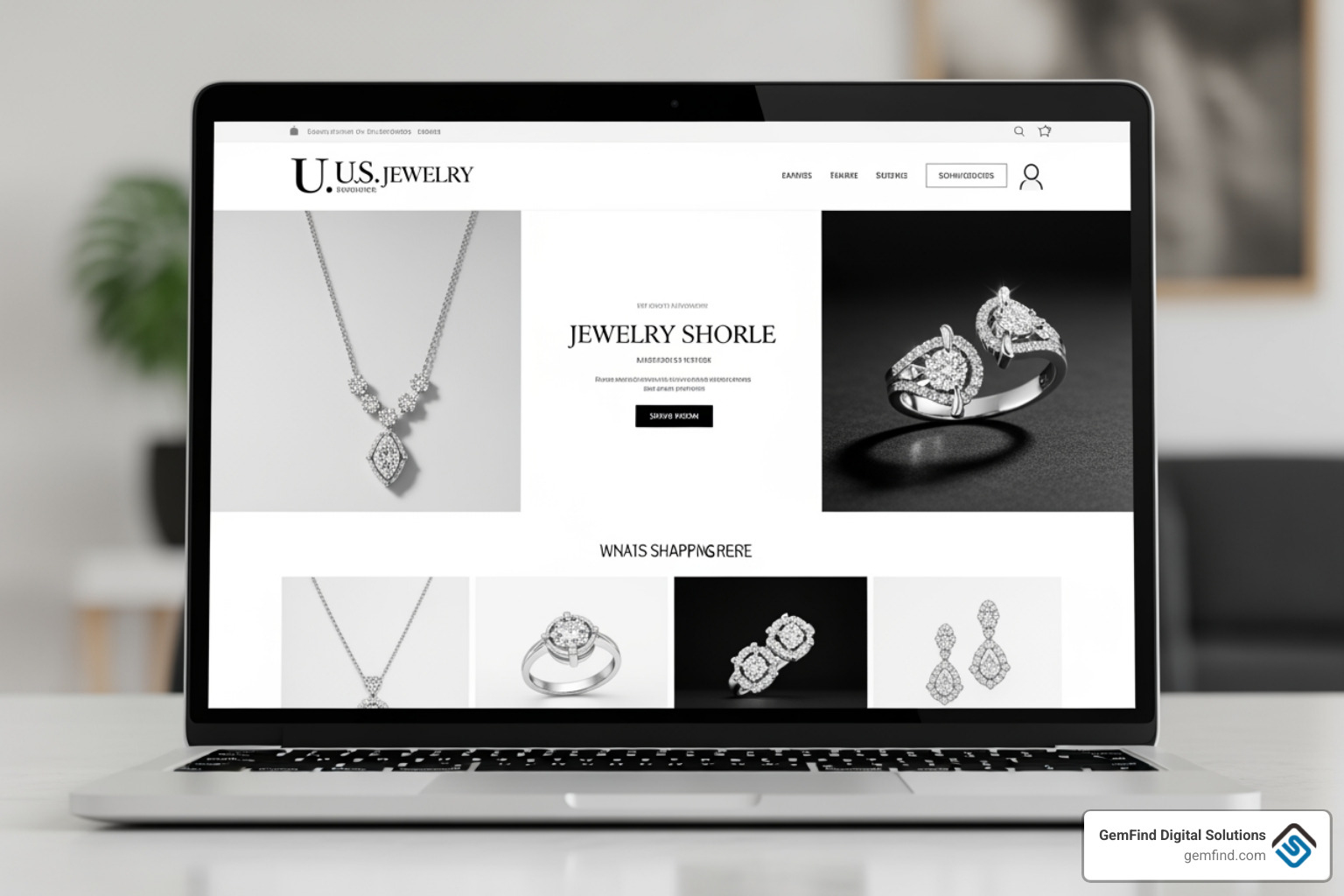
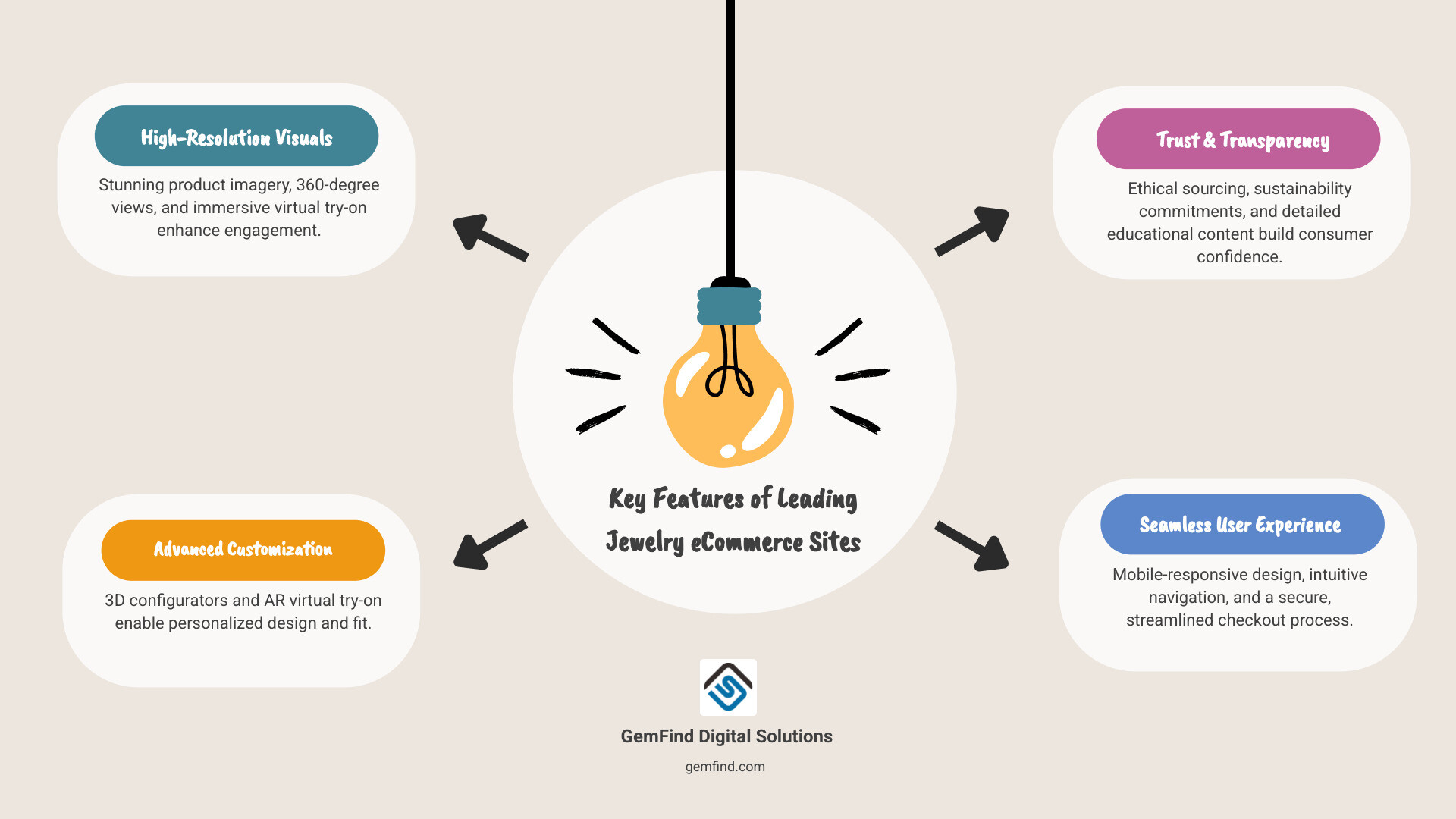
Jewelry ecommerce websites are changing how consumers shop for engagement rings, fine jewelry, and luxury accessories. The top-performing sites combine stunning visual design, advanced technology like virtual try-on and 3D configurators, and trust-building features such as ethical sourcing transparency and detailed educational content.
Key Features of Leading Jewelry eCommerce Sites:
- High-resolution imagery with 360-degree product views
- Virtual try-on technology using AR for rings, earrings, and necklaces
- 3D product configurators for custom jewelry design
- Mobile-responsive design for smartphone shopping
- Ethical sourcing information and sustainability commitments
- Detailed educational resources about diamonds, gemstones, and metals
- Streamlined checkout with multiple payment options and security badges
The numbers tell a compelling story. In 2024, retail eCommerce sales exceeded 6.3 trillion dollars worldwide, with over five billion internet users now shopping online. For jewelry retailers, this represents both an enormous opportunity and a significant challenge.
Traditional jewelry stores can no longer rely solely on foot traffic. Customers now research engagement rings on their phones during lunch breaks, compare diamond prices across multiple sites, and expect the same level of detail online that they'd get from an in-store consultation.
The competition is fierce. Luxury brands like Tiffany & Co. compete with sustainable newcomers like Brilliant Earth and tech-forward retailers using 3D configurators. Each has found unique ways to build trust and create exceptional shopping experiences without the physical showroom.
I'm Anthony Arechiga, Vice President of Sales at GemFind Digital Solutions, where I've spent over 15 years helping jewelry retailers build successful jewelry ecommerce websites that drive real sales growth. Throughout this article, I'll break down what makes the best jewelry sites work and how you can apply these strategies to your own business.
Glossary for jewelry ecommerce websites:
Essential Features of High-Performing Jewelry eCommerce Websites
Building a successful jewelry ecommerce website is much like crafting a beautiful piece of jewelry itself: it requires attention to detail, quality materials, and a flawless finish. The online environment for selling precious items demands a unique blend of aesthetics, functionality, and trust-building elements. So, what exactly are the essential features that set successful jewelry sites apart?
First and foremost, visual presentation is paramount. Since customers cannot physically touch or try on a piece, high-resolution imagery and 360-degree views become their eyes and hands. We're talking about professional photography that captures every facet, every gleam, and every intricate detail. Imagine trying to buy a diamond engagement ring without seeing it from every angle – it's practically impossible! These visuals must be complemented by detailed product descriptions that go beyond mere specifications. They should include information on materials, dimensions, weight, gemstone characteristics (like the 4 Cs for diamonds), and even care instructions. This level of detail empowers customers to make informed decisions and significantly reduces the likelihood of returns.
With over five billion internet users worldwide, a significant portion of online shopping now happens on mobile devices. This makes mobile responsiveness not just a nice-to-have, but a critical necessity. Your jewelry ecommerce website must look and function flawlessly on smartphones and tablets, offering an intuitive browsing experience regardless of screen size. If your site isn't mobile-friendly, you're essentially putting up a "closed" sign for a huge segment of potential customers.
Navigation also plays a crucial role. Customers should be able to find exactly what they're looking for with ease. This means implementing robust faceted navigation, allowing them to filter products by metal type, gemstone, price range, style, and occasion. A powerful search function is also key, helping shoppers quickly locate specific items or explore broader categories.
Finally, trust and security are non-negotiable. When customers are making high-value purchases, they need to feel completely confident. A secure checkout process, indicated by SSL certificates and visible security badges, is fundamental. Offering multiple trusted payment options further improves this confidence. Furthermore, social proof, such as customer reviews, testimonials, and user-generated content, can be incredibly powerful. Hearing from other satisfied customers helps alleviate doubts and builds a sense of community around your brand. These features collectively create an online environment where shoppers feel comfortable investing in their next cherished piece.
Top Jewelry eCommerce Sites Setting the Standard
In the dynamic world of online retail, some jewelry ecommerce websites truly shine, setting benchmarks for design, functionality, and customer experience. These sites offer invaluable inspiration, demonstrating how to effectively blend luxury with digital convenience. Let's take a look at some of the leaders in the industry.
Shane Co. stands out for its exceptional customer service, offering a personalized touch that makes online shoppers feel valued. Their website reflects this commitment with clear policies and a focus on building long-term relationships.
Tanishq, a prominent Indian jewelry brand, has acceptd innovation with leading virtual try-on capabilities. This allows customers to visualize how jewelry pieces, such as earrings or necklaces, would look on them, bridging the gap between online browsing and real-world experience.
Brilliant Earth has carved a niche by championing sustainable and ethically sourced jewelry. Their website is a testament to transparency, providing detailed information about the origin of their diamonds and metals, appealing to a growing segment of conscious consumers.
Tiffany & Co., a global icon of luxury, masterfully translates its prestigious brand into the digital field. Their website exudes elegance with high-resolution imagery and a sophisticated user interface, proving that luxury can indeed thrive online.
Pandora excels in customization, offering a platform where customers can design their own charm bracelets and personalized pieces. This interactive experience fosters creativity and a deeper connection with the brand.
Vrai innovates with a focus on lab-grown diamonds, presenting a modern alternative with a smaller ecological footprint. Their minimalist design and clear messaging highlight the beauty and benefits of sustainable options.
Courbet and Plum Diamonds both leverage cutting-edge technology with their 3D product configurators. These tools allow customers to carefully design their own rings, choosing settings, stones, and metals, and viewing their creation from every angle before purchase. It's like having a personal jeweler at your fingertips!
Finally, Richter & Phillips Jewelers are noted for their unique user experience (UI/UX). Their website demonstrates how thoughtful design and intuitive navigation can create a seamless and enjoyable shopping journey, making complex choices feel simple and engaging.
These examples illustrate that while the products are precious, the real gold is in how these jewelry ecommerce websites innovate and cater to their customers' evolving needs and expectations.
Leveraging Technology and Personalization
In the competitive landscape of jewelry ecommerce websites, simply having an online store isn't enough. To truly capture hearts and sales, brands must leverage cutting-edge technology and accept personalization. These tools don't just improve the shopping experience; they transform it, addressing the unique challenges of selling high-value, emotionally resonant products online.
The rise of virtual try-on and Augmented Reality (AR) technology is a game-changer. Imagine being able to "try on" a stunning diamond necklace or an neat pair of earrings from the comfort of your home, using your smartphone camera. This technology, like that pioneered by Tanishq and Soha Diamond Co., allows shoppers to see how a piece looks on them in real-time, greatly increasing purchase confidence and reducing return rates. It's the closest thing to a physical fitting room, but without the hassle!
Beyond visualization, 3D configurators are revolutionizing customization. Brands like Courbet and Plum Diamonds empower customers to become their own designers. Whether it's selecting the perfect diamond cut, choosing a specific metal for a setting, or engraving a personal message, these configurators bring bespoke jewelry design to the masses. This level of interaction, often integrated with CAD (Computer-Aided Design) systems, makes the purchase incredibly personal and memorable.
With over five billion internet users worldwide, the sheer volume of data available to jewelry ecommerce websites is immense. This data, when harnessed correctly, fuels powerful personalization. AI chatbots, for instance, can provide instant customer service, answer frequently asked questions, and even guide shoppers through the selection process based on their preferences. Think of it as having a knowledgeable sales associate available 24/7. Personalized recommendations, driven by browsing history and past purchases, make customers feel seen and understood, suggesting complementary pieces or items that align with their unique style. This custom approach improves the customer journey, making each interaction feel special and unique, much like the jewelry itself.
Innovative Tech in Jewelry eCommerce Websites
The allure of jewelry is undeniable, but convincing someone to make a significant purchase without seeing or touching the item can be tricky. This is where innovative technology steps in, changing the online browsing experience into something truly immersive and interactive for jewelry ecommerce websites.
Virtual try-on, as we've touched upon, is a standout feature. It uses augmented reality to overlay a digital image of a piece of jewelry onto a customer's live camera feed. This means you can virtually "wear" a ring on your finger, earrings on your lobes, or a necklace around your neck. It's an incredibly powerful tool for visualizing scale, fit, and how a piece complements individual style, helping to overcome the traditional barriers of online jewelry shopping.
3D product configurators take this a step further, allowing customers to customize a piece of jewelry from the ground up. Whether it's an engagement ring, a pendant, or a bracelet, shoppers can select different gemstones, metal types, settings, and even engravings, then see their creation rendered in stunning 3D. This not only engages customers deeply but also allows them to design a truly unique item, fostering a sense of ownership even before the purchase.
For rings, precision is key, and ring sizer tools integrated into jewelry ecommerce websites eliminate guesswork. These digital tools often use printable guides or visual comparisons to help customers accurately determine their size, preventing the frustration of receiving a beautiful ring that doesn't fit.
Finally, interactive diamond search tools empower customers with comprehensive information. These sophisticated filters allow shoppers to sort diamonds by the 4 Cs (cut, color, clarity, carat), shape, price, and even ethical sourcing credentials. Many tools also provide detailed reports and 360-degree views of individual diamonds, giving customers the confidence to select their perfect stone. Together, these technologies create a rich, informative, and highly personal shopping journey, making online jewelry purchases as enjoyable and secure as possible.
Optimizing User Experience for Jewelry eCommerce Websites
A beautiful piece of jewelry deserves a beautiful and seamless online showcase. Optimizing the user experience (UX) on jewelry ecommerce websites is not just about aesthetics; it's about creating a frictionless journey that builds trust, inspires confidence, and ultimately leads to a sale.
Intuitive navigation is the backbone of any great online store. For jewelry, this means clear categories (e.g., rings, necklaces, earrings, bracelets), well-organized subcategories (e.g., engagement rings, wedding bands, fashion rings), and robust filtering options. Customers should be able to effortlessly browse by metal type, gemstone, price range, designer, or occasion. A powerful and predictive search bar is also essential, guiding users quickly to what they seek. We want our customers to feel like they're strolling through a well-organized boutique, not lost in a digital maze.
Given that a significant portion of online browsing and purchasing happens on mobile devices, a mobile-first design is non-negotiable. Your jewelry ecommerce website must be fully responsive, adapting perfectly to any screen size, from desktops to tablets to smartphones. This ensures that high-resolution images load quickly, product descriptions are legible, and the checkout process is smooth, regardless of the device.
Fast loading speeds are another critical UX factor. In today's instant-gratification world, slow-loading pages lead to high bounce rates. Customers expect immediate access to information and visuals. Even a few extra seconds can mean the difference between a sale and a lost opportunity. We work tirelessly to ensure our clients' sites are optimized for speed, because every second counts when a customer is contemplating a significant purchase.
Finally, a streamlined checkout process is the grand finale of a positive user experience. After a customer has found their dream piece, the last thing we want is for them to abandon their cart due to a complicated or lengthy checkout. This means minimizing the number of steps, offering guest checkout options, providing multiple secure payment methods, and clearly displaying shipping costs and return policies upfront. Transparency and simplicity here are key to converting browsers into buyers, ensuring that the final step of their journey is as brilliant as the jewelry they've chosen.
Building Trust and Choosing the Right Platform
In jewelry ecommerce websites, trust is the ultimate currency. When customers are investing in items of significant value and emotional importance, they need assurance that their purchase is authentic, ethical, and backed by reliable service. This is where transparency, ethical practices, and the right technological foundation come into play.
Ethical sourcing and sustainability have rapidly become paramount for modern jewelry consumers. Shoppers, especially younger generations, are increasingly concerned about the environmental and social impact of their purchases. Brands like Brilliant Earth, Soha Diamond Co., Vrai, and Courbet have successfully built their reputations by emphasizing ethically sourced materials, conflict-free diamonds, and transparent supply chains. For many, the origin story of a gemstone is as important as its sparkle. This includes the growing popularity of lab-grown diamonds, which offer a sustainable and often more affordable alternative to natural diamonds, appealing to conscious consumers. Providing detailed educational resources, such as diamond grading guides and information on metal properties, further empowers customers and builds credibility. When a website educates its audience, it naturally builds trust, positioning itself as an authority rather than just a storefront.
Choosing the right platform for your jewelry ecommerce website is similar to selecting the perfect setting for a diamond - it needs to be robust, secure, and capable of showcasing its beauty. There are several top-tier platforms, each with its strengths:
| Platform | Key Strengths for Jewelry eCommerce |
|---|---|
| Shopify / Shopify Plus | Fast setup, strong app ecosystem, reliable hosting and security, and excellent support for high-quality product pages and mobile-first shopping. |
| WooCommerce | Highly customizable for WordPress sites; flexible catalog and content capabilities; suitable for stores that want more control over the tech stack. |
| Adobe Commerce | Advanced merchandising and catalog management; strong for complex product configurations and larger operations with dedicated development resources. |
| Salesforce Commerce Cloud | Enterprise-grade personalization, integrations, and scalability for larger brands with robust omnichannel needs. |
Educational resources also play a major role in platform success and store performance. Content like diamond and gemstone education, buying guides, metal comparisons, and care instructions can improve SEO and reduce customer anxiety for high-consideration purchases. When paired with clear policies (shipping, returns, warranties) and visible security signals, these elements help turn browsing into confident buying.
What are the Essential Features of a Successful Jewelry eCommerce Website?
A successful jewelry website must combine high-resolution imagery, mobile-responsive design, and secure checkout. These features, along with detailed product descriptions and intuitive navigation, ensure a seamless shopping experience that builds customer confidence.
How can jewelry brands leverage technology like virtual try-on and 3D configurators?
Virtual try-on technology uses AR to allow customers to visualize jewelry on themselves, while 3D configurators enable real-time customization of pieces. These tools bridge the gap between the digital and physical shopping experience.
What role does ethical sourcing and sustainability play in modern jewelry eCommerce?
Ethical sourcing and sustainability are critical for building trust with modern consumers. Highlighting conflict-free diamonds and transparent supply chains helps brands align with the values of socially conscious shoppers.
How can jewelry eCommerce sites build trust and credibility with customers?
Trust is built through transparency, including clear return policies, visible security badges, and authentic customer reviews. Providing educational resources about gemstones and metals also establishes the brand as an industry authority.
What are the best platforms for building a jewelry eCommerce website?
Shopify and Shopify Plus are top choices for their robust ecosystem and ease of use. WooCommerce offers high customizability, while Adobe Commerce and Salesforce Commerce Cloud cater to larger enterprises with complex needs.
How can jewelry brands effectively use content marketing and educational resources?
Content marketing, such as diamond education and buying guides, helps reduce customer anxiety and improves SEO. Educational resources empower shoppers to make informed decisions about high-value purchases.
What are the key differences between luxury, mid-range, and fast-fashion jewelry eCommerce sites?
Luxury sites focus on exclusivity and high-end storytelling; mid-range sites prioritize selection and value; and fast-fashion sites emphasize trends, social proof, and competitive pricing.
How can personalization and customer service be optimized for jewelry shoppers?
Personalization can be optimized using AI chatbots for instant support and data-driven recommendations that suggest products based on a customer's unique browsing history and preferences.
What are the emerging trends in jewelry eCommerce design and user experience?
Emerging trends include mobile-first design, interactive 3D product views, and the integration of advanced filtering tools that allow customers to find specific gemstone or metal combinations easily.
How can jewelry businesses balance online sales with potential physical store or showroom experiences?
Jewelry businesses can balance both by using omnichannel solutions like Edge POS integration, which synchronizes inventory and customer data between the online store and the physical showroom.
These were the key questions that guided our deep dive into jewelry ecommerce websites. We believe that by understanding and implementing the strategies discussed, any jewelry business can lift its online presence and achieve remarkable success.
Conclusion
The journey through jewelry ecommerce websites reveals a clear path forward for retailers: accept innovation, prioritize user experience, and build unwavering trust. The digital landscape is not just an extension of your physical store; it's a powerful, dynamic platform with its own rules and immense potential.
At GemFind Digital Solutions, we understand the unique nuances of the jewelry industry. With over 25 years of industry-specific expertise, we've helped countless jewelers steer this evolving market. We offer specialized digital marketing, web design, and custom app development services custom precisely for your needs. Our status as a Shopify and Google Partner means we're equipped with the latest tools and strategies to ensure your online store not only looks stunning but also performs exceptionally. From seamless Edge POS integration to crafting bespoke jewelry-focused tools, we are dedicated to building jewelry ecommerce websites that convert browsers into loyal customers.
As you plan your next steps, a truly excellent online presence is a blend of artistry and technology. It's about showcasing your beautiful jewelry with clarity, making the shopping experience effortless, and communicating your brand's values authentically. Let us help you craft an online experience that's as brilliant and enduring as the jewelry you sell. Explore how our expertise can transform your digital storefront into a sparkling success: Web design for jewelers.


