


Why Jewelry Lead Generation Is the Key to Growing Your Store

Jewelry lead generation is the process of attracting and capturing potential customers who are interested in buying jewelry — and turning them into paying clients.
Here's a quick overview of what it involves:
| Step | What Happens |
|---|---|
| Attract | Drive traffic via SEO, paid ads, and social media |
| Capture | Convert visitors into leads using forms, quizzes, and chatbots |
| Nurture | Build trust with email, SMS, and personalized content |
| Convert | Turn warm leads into in-store visits or online purchases |
| Retain | Re-engage buyers with loyalty programs and referrals |
Most people spend significant time researching jewelry purchases online before ever walking into a store. That means if your business relies only on foot traffic, you're likely missing a large pool of potential buyers.
Jewelry is different from most retail. Purchases carry emotional weight — engagement rings, anniversary gifts, milestone celebrations. The decision takes time. Buyers need to trust you before they spend.
That's what makes lead generation for jewelers both more challenging and more rewarding than in most industries. The right system doesn't just bring in more inquiries — it brings in the right ones, at the right stage of their buying journey.
I'm Anthony Arechiga, VP of Sales at GemFind Digital Solutions, where I've spent over 17 years helping jewelry stores build the digital infrastructure needed to drive consistent Jewelry Lead Generation and real revenue growth. In this guide, I'll walk you through the strategies that actually work — from organic SEO to paid ads to automation — so you can build a lead pipeline that runs even while you're at the bench.
Understanding the Unique Landscape of Jewelry Lead Generation
Generating leads for a luxury boutique isn't the same as selling fast-fashion accessories. We are dealing with high-ticket items that often represent the most significant financial and emotional investments in a person's life. This creates a unique set of challenges and opportunities.
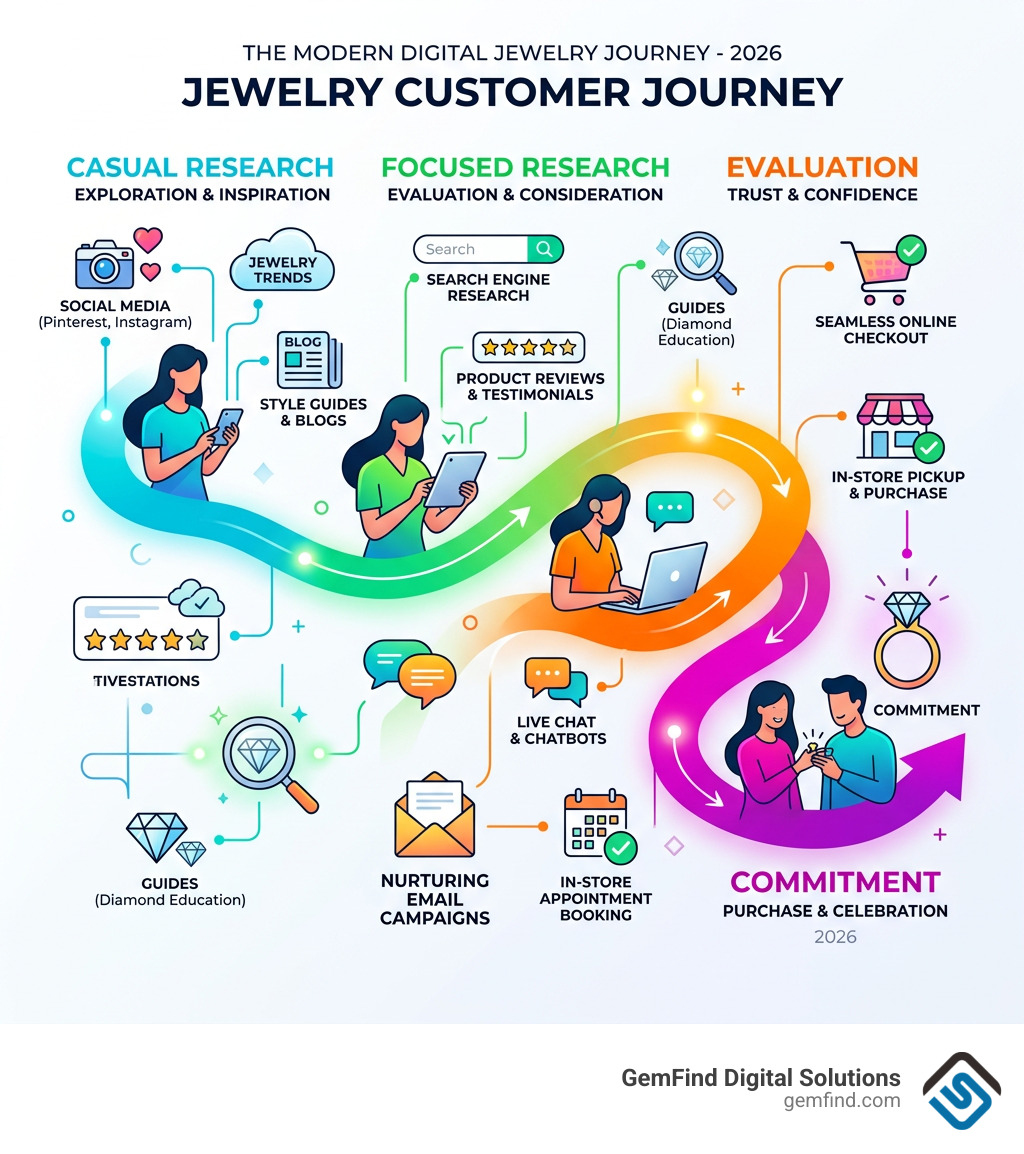
First, let's talk about the buying cycle. Unlike an impulsive $20 purchase, a $10,000 engagement ring involves a multi-stage journey: casual research, focused research, evaluation, and finally, commitment. Because of this length, marketing-tips-for-jewelers-the-difference-between-lead-generation-lead-nurturing is a distinction every store owner must master. Lead generation gets them in the door (or onto your site), while nurturing keeps you top-of-mind during the weeks or months they spend deciding.
Psychology also plays a massive role. Retailers often use the psychology of scarcity and discounts to push a lead toward a final decision. However, in the luxury space, this must be balanced with trust-building. If a deal seems "too good," it can actually erode the perceived value of the gemstone.
To succeed, we must define our ideal customer personas. Are you targeting:
- The Engagement Ring Buyer: High-stress, research-heavy, looking for education and reassurance.
- The Self-Purchasing Woman: Values style, ethics, and personal reward; often responds well to social proof.
- The Luxury Collector: Driven by exclusivity, rarity, and investment value.
Each of these personas requires a different "hook" to enter your funnel.
High-Impact Digital Strategies for Jewelry Lead Generation
In today's market, your website isn't just a digital brochure; it’s your hardest-working salesperson. Learning how-to-turn-your-website-into-a-lead-generation-hub is the first step toward 7-figure growth. We’ve seen stores increase qualified leads by 20–30% within just 60 to 90 days of optimizing their digital presence.
Leveraging SEO and Content for Organic Jewelry Lead Generation
Organic traffic is the gift that keeps on giving. By creating authoritative content, you position your brand as the expert. Effective content types include:
- Style Guides: "Top 10 Engagement Ring Trends for 2024."
- Gemstone Education: Video series explaining the 4Cs or the origin of lab-grown diamonds.
- Care Guides: How to keep your heirloom pieces sparkling.
These pieces of content serve as "top-of-funnel" magnets. You can further capitalize on this traffic by asking, can-lead-magnets-attract-more-shoppers? The answer is a resounding yes. Offering a downloadable "Diamond Buying Checklist" in exchange for an email address turns an anonymous visitor into a tangible lead. One jewelry company we worked with saw organic traffic jump by 80% and sales hit $1.1M simply by leaning into educational video content and style guides.
Paid Advertising and Social Media for Jewelry Lead Generation
While SEO is a long game, paid advertising provides immediate results. Google Ads and Shopping Ads are fantastic for capturing "bottom-of-the-funnel" intent—people searching for "diamond stores near me" or specific ring settings.
On the other hand, Meta Ads (Facebook and Instagram) are perfect for demand generation. You can use 23-tactics-to-reach-more-bridal-customers such as:
- Instagram Stories: Showcasing behind-the-scenes craftsmanship to build emotional connection.
- TikTok Challenges: Tapping into viral trends like "non-traditional wedding bands."
- Retargeting: Showing an ad for the exact ring a user viewed on your site yesterday.
For those focusing on the bridal market, create-a-consistent-flow-of-engagement-ring-clients-with-inbound-marketing involves using lookalike audiences. By feeding your current customer data into Meta, the platform finds new users with similar income levels, interests, and life milestones (like "recently engaged"). We also recommend inbound-marketing-strategies-for-reaching-more-engagement-ring-clients that focus on localized targeting to drive people into your physical showroom.
Nurturing High-Value Leads through Automation and Personalization
Once you have a lead, the clock starts ticking. For high-value jewelry, you can't just send one email and hope for the best. You need a multi-channel approach.
A unified communication hub is essential. Imagine having one login for email, texts, WhatsApp, and live chat. This prevents lost interactions and ensures that no "ready-to-buy" prospect slips through the cracks. Automation tools can handle the heavy lifting:
- Email Drip Campaigns: Send a series of educational emails over two weeks to build authority.
- SMS Sequencing: Send a quick text reminder for an upcoming appointment or a limited-time offer.
- AI Chatbots: These can pre-qualify leads 24/7. In fact, AI chat widgets can boost conversions by up to 25% by answering basic questions while you sleep.
Personalization is the "secret sauce." Using a customer's name, mentioning the specific product they viewed, or sending a "Happy Anniversary" discount makes the buyer feel special. We’ve found that how-to-book-more-appointments-with-digital-marketing-for-your-jewelry-business often comes down to offering a personalized quiz. A "Find Your Perfect Style" quiz is fun for the user and provides you with a rich data profile for follow-up.
Bridging the Gap Between Online and In-Store Experiences
For many jewelers, the goal of Jewelry Lead Generation isn't just an online checkout—it's a face-to-face meeting. An omnichannel strategy ensures the transition from screen to showroom is seamless.
One of the most effective ways to do this is by offering how-to-generate-virtual-appointments-for-your-jewelry-store. This allows you to build a personal rapport with a lead before they even leave their house. To make this work at scale, we recommend maximize-leads-with-a-shopify-website-for-your-jewelry-business, as Shopify integrates beautifully with booking tools and POS systems.
Speaking of POS, integrating your digital leads with systems like Edge POS allows you to track a customer's journey from their first ad click to their final in-store purchase. This "Store Visit Tracking" is crucial for understanding your true ROI.
B2B vs. B2C Lead Generation
While most of this guide focuses on finding retail customers (B2C), many businesses also need B2B leads—suppliers, manufacturers, or retail partners.
| Feature | B2C (Retail Customers) | B2B (Suppliers/Partners) |
|---|---|---|
| Primary Goal | Single high-value sale | Long-term contract / Bulk orders |
| Lead Source | Social media, SEO, Local PPC | Industry-specific B2B networks, LinkedIn |
| Platform | Instagram, Google Shopping | LinkedIn, Industry Trade Directories |
| Decision Driver | Emotion, Trust, Design | Reliability, MOQ, Pricing |
Professional B2B networking platforms are excellent for jewelry brands looking for manufacturing partners with low Minimum Order Quantities (MOQs), whereas retail lead generation requires a more visual, consumer-centric approach.
Measuring Success and Avoiding Common Pitfalls
You can't manage what you don't measure. To ensure your Jewelry Lead Generation is actually profitable, you must track key performance indicators (KPIs):
- Lead Quality Score: Not all leads are equal. A lead asking about a $50 repair is different from one asking about a $15,000 custom ring.
- Conversion Rate: Jewelry-focused systems typically see an 8–12% lead-to-sale conversion rate.
- Customer Acquisition Cost (CAC): How much are you spending to get one new customer?
- ROI: Are your ads generating enough profit to justify the spend?
One common pitfall is relying on "dirty" data. If you are using third-party data sources, ensure the provider has a high confidence level. High-quality data providers often boast high accuracy rates because they use rigorous verification processes. While purchasing targeted lists can be a shortcut, it must be paired with high-quality outreach to avoid being marked as spam.
Another mistake is "set it and forget it" marketing. You must respect frequency caps—don't bombard a lead with five emails a day. Instead, aim for 3–5 touches over two weeks. We’ve seen stores like "Sparkle & Shine" (a real-world example of growth) reach $1.2M in annual revenue by simply refining their abandoned cart SMS and email sequences to be more helpful and less "salesy."
Finally, don't ignore the power of your existing fans. A referral automation program can be a goldmine. One boutique generated 150 warm leads in just three months, resulting in $850k in new sales, simply by rewarding current clients for introducing their friends.
Frequently Asked Questions about Jewelry Lead Generation
How long does it take to see results from jewelry lead generation?
Most jewelry stores begin seeing a flow of new leads within the first 30 days of launching a targeted campaign. However, because the jewelry buying cycle is longer, the "sale" might happen 60 to 90 days later. Significant ROI improvements usually stabilize after three months of optimization.
Do lead generation campaigns work for high-ticket engagement rings?
Absolutely. In fact, high-ticket items often perform better with structured lead generation because the buyer is actively looking for an expert to guide them. By providing educational content and virtual consultations, you build the trust necessary for a $10,000+ transaction.
What is the average conversion rate for jewelry-specific leads?
While it varies by store and price point, industry-specific systems often see a conversion rate of 8–12% from lead to sale. Using tools like AI chatbots and personalized follow-ups can push this even higher.
Conclusion
Success in the jewelry industry today requires more than just a beautiful window display. It requires a "mining" mindset—digging deep into data, refining your digital presence, and nurturing every prospect with the same care you’d give a rare gemstone.
At GemFind Digital Solutions, we’ve spent over 25 years perfecting this craft. As a certified Shopify and Google Partner, we don't just provide generic marketing; we provide tools built specifically for the way people buy jewelry. From Edge POS integration to our specialized apps like Ring Builder and Diamond Link, we help you bridge the gap between "just looking" and "I do."
Ready to turn your website into a powerhouse? Start by learning how-to-turn-your-website-into-a-lead-generation-hub and let us help you build a pipeline of leads that shine as brightly as your inventory.


