


Why the Decision to Design Your Wedding Band Is Easier Than You Think

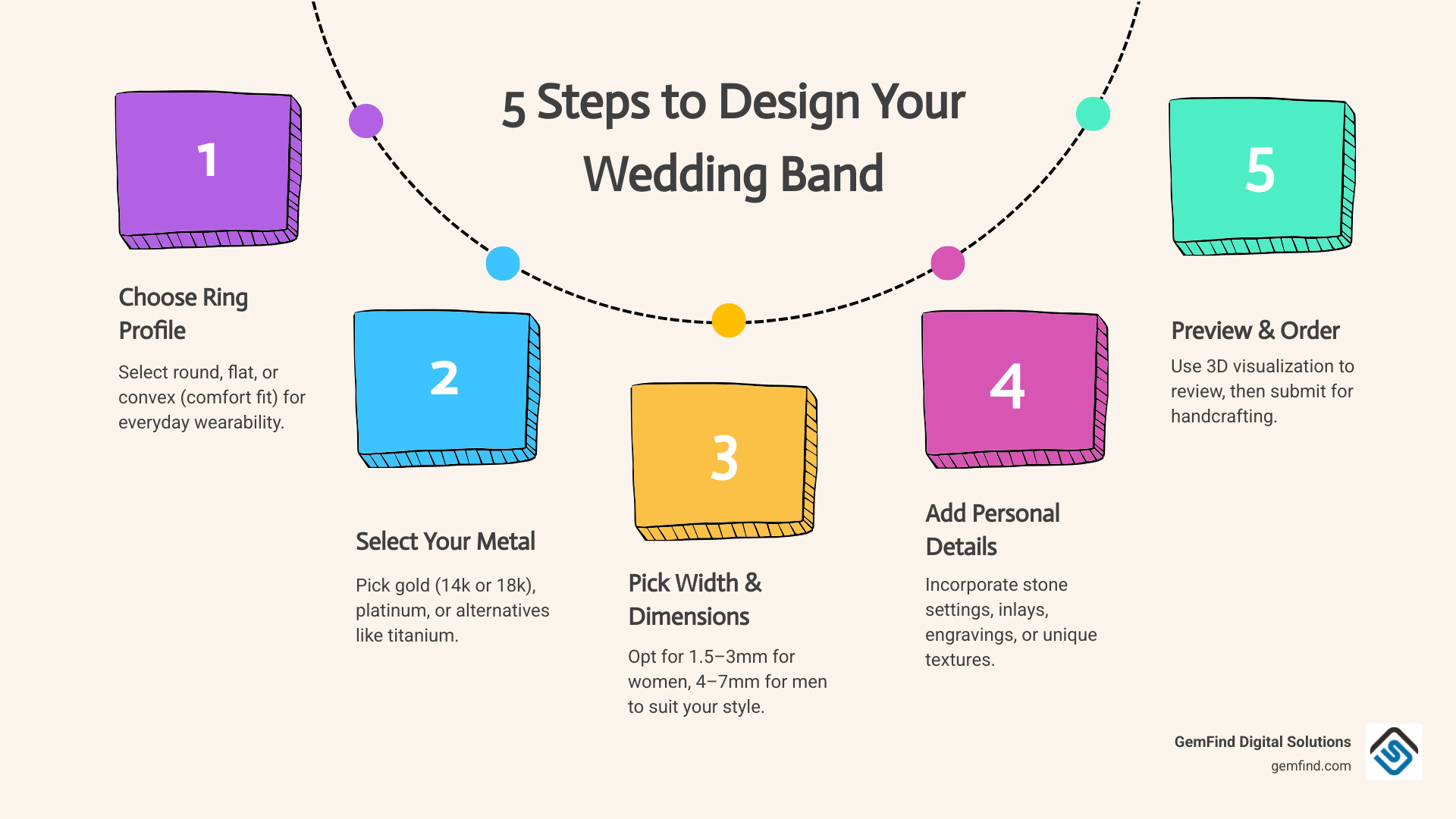
If you want to design your wedding band, here is the core process in five steps:
- Choose your ring profile — round, flat, or convex (comfort fit)
- Select your metal — gold (14k or 18k), platinum, or an alternative like titanium
- Pick your width and dimensions — typically 1.5–3mm for women, 4–7mm for men
- Add personal details — stone settings, inlays, engravings, or unique textures
- Preview and order — use a 3D or online builder, then submit for handcrafting
Your wedding band is one of the few things you will wear every single day. It should feel like you.
The good news? Designing a custom band is no longer a complicated, expensive process reserved for a handful of high-end jewelers. Online builders now offer billions of combinations — from classic gold to carbon fiber to meteorite inlays — and most custom bands ship within 10 days.
Whether you are shopping for yourself, your partner, or helping a customer find the perfect match for their engagement ring, the options available in April 2026 are more accessible and more exciting than ever.
I'm Anthony Arechiga, Vice President of Sales at GemFind Digital Solutions, where since 2007 I've helped hundreds of jewelry retailers build the digital tools and e-commerce strategies they need to help their customers confidently design your wedding band online. In the sections ahead, I'll walk you through everything — from materials and matching to timelines and costs.
The Step-by-Step Process to Design Your Wedding Band
When you decide to design your wedding band, the journey from a blank slate to a finished piece of jewelry is remarkably logical once you break it down. Modern technology has replaced the guesswork of traditional sketches with high-fidelity 3D visualization. We have seen how these tools empower couples to experiment with styles they might never have considered in a high-pressure showroom environment.
1. Defining the Ring Profile and Dimensions
The "profile" refers to the shape of the ring's cross-section. This is the foundation of your design.
- Convex (Comfort Fit): This is the most popular choice in 2026. The interior of the band is slightly domed, allowing it to glide over the knuckle more easily and sit comfortably against the finger.
- Flat: A modern, architectural look where the top of the band is perfectly level.
- Round: The classic "wedding ring" look, providing a soft, traditional aesthetic.
Dimensions are equally critical. For women’s bands, a width of 2mm is often considered the "sweet spot" for elegance, while petite styles might drop to 1.5mm. For men, a 5mm width provides a commanding presence without feeling bulky, though options typically range from 4mm to 7mm.
2. Visualizing in 3D
One of the biggest hurdles in custom jewelry used to be the "I hope it looks like the drawing" anxiety. Today, advanced Engagement Ring Builder App technology and specialized band tools allow you to see your ring from every angle in real-time. You can swap yellow gold for platinum or add a hammer finish with a single click. This transparency ensures that the final handcrafted product matches your digital vision exactly. For a deeper dive into how these tools function, check out our Complete Ring Builder App Guide.
3. Adding the Finishing Touches
Once the base is set, you can personalize the exterior. This includes choosing between high-polish, matte, or brushed finishes, and deciding on "grooves" or "edges" that add texture. Finally, engravings—ranging from traditional dates to actual handwriting or fingerprints—transform a piece of jewelry into a family heirloom.

Choosing Materials: From Precious Metals to Exotic Inlays
The material you choose dictates not just the look, but the durability and price of your band. In April 2026, we are seeing a fascinating blend of traditional precious metals and "alternative" materials that offer incredible strength and unique stories.
| Material | Durability | Price Range | Best For |
|---|---|---|---|
| 14k Gold | High | Moderate | Everyday wear, scratch resistance |
| 18k Gold | Medium | High | Rich color, higher prestige |
| Platinum | Extreme | Premium | Hypoallergenic, lifetime longevity |
| Tantalum | High | Moderate | Modern, dark grey aesthetic |
| Carbon Fiber | Very High | Affordable | Lightweight, sporty look |
| Meteorite | Medium | Premium | Unique patterns, "out of this world" story |
The Rise of Alternative Metals
While gold and platinum remain the gold standard, many men are opting to design your wedding band using materials like tantalum or titanium. These metals are incredibly tough and offer a darker, more industrial color palette. For those seeking something truly one-of-a-kind, exotic inlays are the way to go. We’ve seen bands incorporating:
- Meteorite: Genuine Gibeon meteorite with its distinct Widmanstätten pattern.
- Wood Sleeves: Whiskey barrel oak or curly koa wood for a warm, natural feel.
- Dinosaur Bone: Authentic T-Rex or Giganotosaurus fossils for a truly prehistoric touch.
How to Design Your Wedding Band with Lab-Grown Diamonds
Sustainability is no longer a niche preference; it is a primary driver in how people design your wedding band today. Lab-grown diamonds are chemically, physically, and optically identical to mined diamonds but come with a significantly lower price tag and a transparent ethical footprint.
When you choose lab-grown diamonds, you can often afford a higher total carat weight or a higher color and clarity grade within the same budget. Many couples pair these with recycled gold or platinum to ensure their "forever" ring supports a healthier planet. This shift is a major part of which styles of bridal diamond rings are popular this season.
Matching Your Band to an Engagement Ring
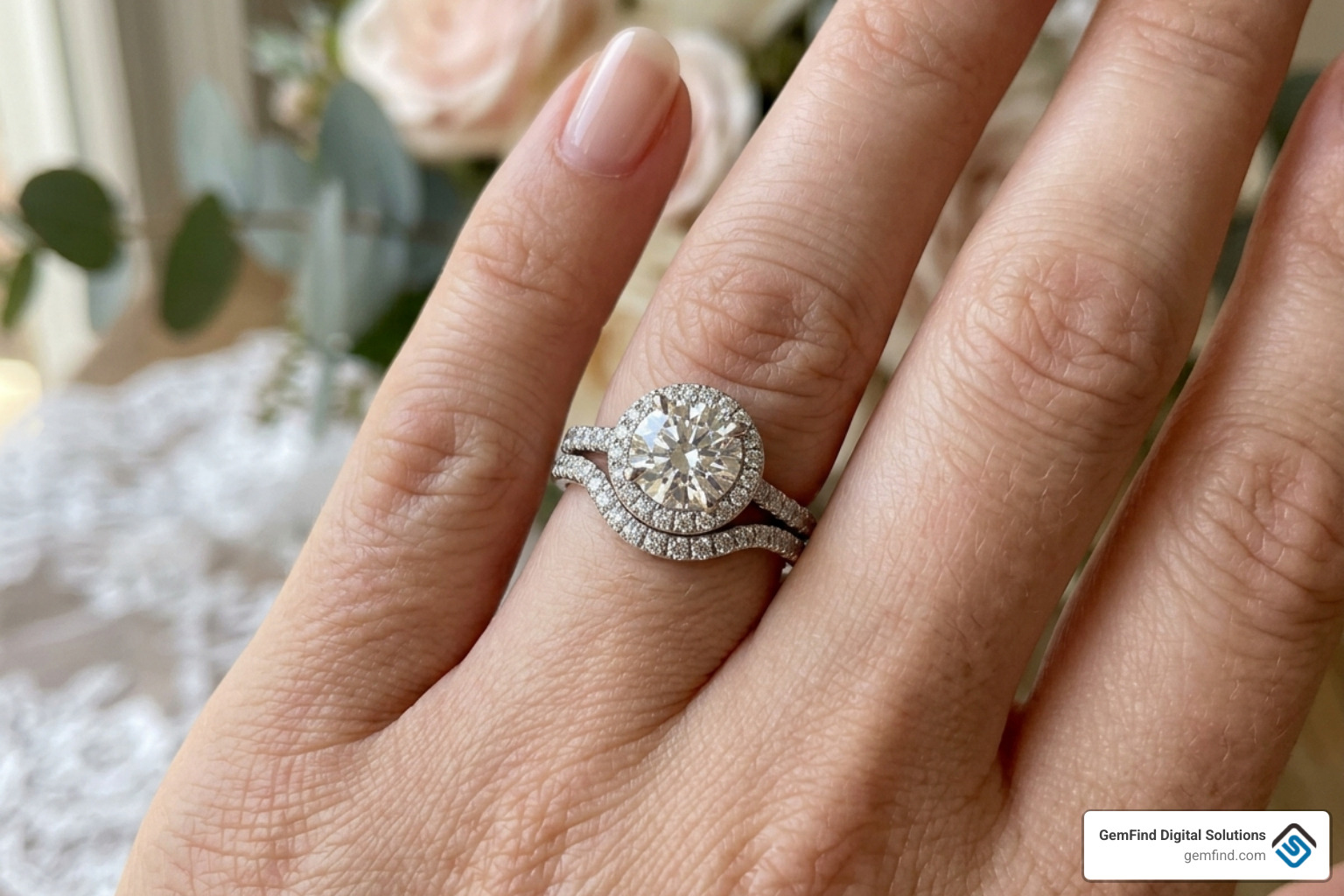
A common challenge is ensuring the wedding band complements the engagement ring rather than competing with it. If the engagement ring has a low-set diamond or a unique "halo" shape, a standard straight band might leave a large, awkward gap.
Contour vs. Straight Bands
- Straight Bands: These are classic and can be worn alone easily. However, they may not sit flush against some engagement rings.
- Contour Bands: These are designed with a curve or "dip" to hug the silhouette of the engagement ring. This creates a seamless, unified look on the finger.
- Open-Style Bands: These feature a gap in the center of the band, allowing a large center stone to sit right in the middle for a perfectly balanced stack.
How to Design Your Wedding Band to Match an Engagement Ring
To achieve a "bespoke" fit, many designers now use 3D scans of the engagement ring to craft a wedding band that locks into place like a puzzle piece. Beyond the fit, you should consider coordinating the metal colors (though mixed metals like rose gold and platinum are very trendy right now) and matching the diamond shapes. If your engagement ring has marquise side stones, incorporating marquise diamonds into the wedding band creates a cohesive visual rhythm.
Logistics: Timing, Costs, and Customization Guarantees
One of the biggest myths about custom jewelry is that it takes months to produce. While some high-end bespoke houses may require 4 to 8 weeks, many modern providers have streamlined the process.
Production and Shipping
Most custom-designed bands are handcrafted and ready to ship within 10 business days. If you’ve waited until the last minute (don't worry, it happens!), rush options of 1 to 3 days are often available for an additional fee. However, we always recommend starting the process at least two months before the big day to allow for sizing adjustments.
Cost Factors
The price to design your wedding band typically starts around $500 to $700 for simple gold profiles and can go up to several thousand dollars depending on the metal weight and gemstone count. Platinum is the most expensive precious metal due to its density and purity, while 14k gold offers the best balance of cost and durability.
Warranties and Sizing
Top-tier providers offer a "Sizing for Life" guarantee. Because custom rings (especially those with inlays like wood or meteorite) can be difficult to resize traditionally, these companies often provide a replacement policy if your finger size changes over the years. Always look for a lifetime warranty that covers manufacturing defects to protect your investment.
Frequently Asked Questions about Custom Wedding Bands
How much does it typically cost to design your wedding band?
The cost is primarily influenced by the metal choice and the complexity of the design. A simple 14k gold band might start at $600, while a band with a full pavé of lab-grown diamonds or exotic meteorite inlays could range from $1,500 to $3,000. Engraving usually adds a small, flat fee (around $25–$50).
How long does the custom design process take?
With modern digital tools, you can finish the "design" phase in minutes. Once the order is placed, handcrafting usually takes about 10 days. Shipping adds another few days, meaning you can have a completely custom ring on your finger in under three weeks.
When is the best time to start the design process?
To avoid stress, we recommend you start looking at designs 3 to 4 months before the wedding. This gives you plenty of time to order a physical ring sizer, consult with a designer if you want something highly specific, and ensures the ring arrives well before your final dress or suit fittings.
Conclusion
The ability to design your wedding band is a beautiful way to ensure your jewelry reflects your personal story and values. Whether you are drawn to the ethical appeal of lab-grown diamonds, the ruggedness of carbon fiber, or the timeless elegance of a contoured platinum band, the tools available today make the process stress-free and rewarding.
At GemFind Digital Solutions, we pride ourselves on providing the jewelry industry with the digital tools—like 3D builders and seamless e-commerce integrations—that make these custom experiences possible. With over 25 years of expertise, we help retailers connect with couples to create jewelry that lasts a lifetime.
Ready to see how technology is changing the way we celebrate love? Start your custom jewelry design journey today and discover how easy it is to create something truly yours.


