


How a Diamond Ring Creator Works: Fully Custom vs. Semi-Custom
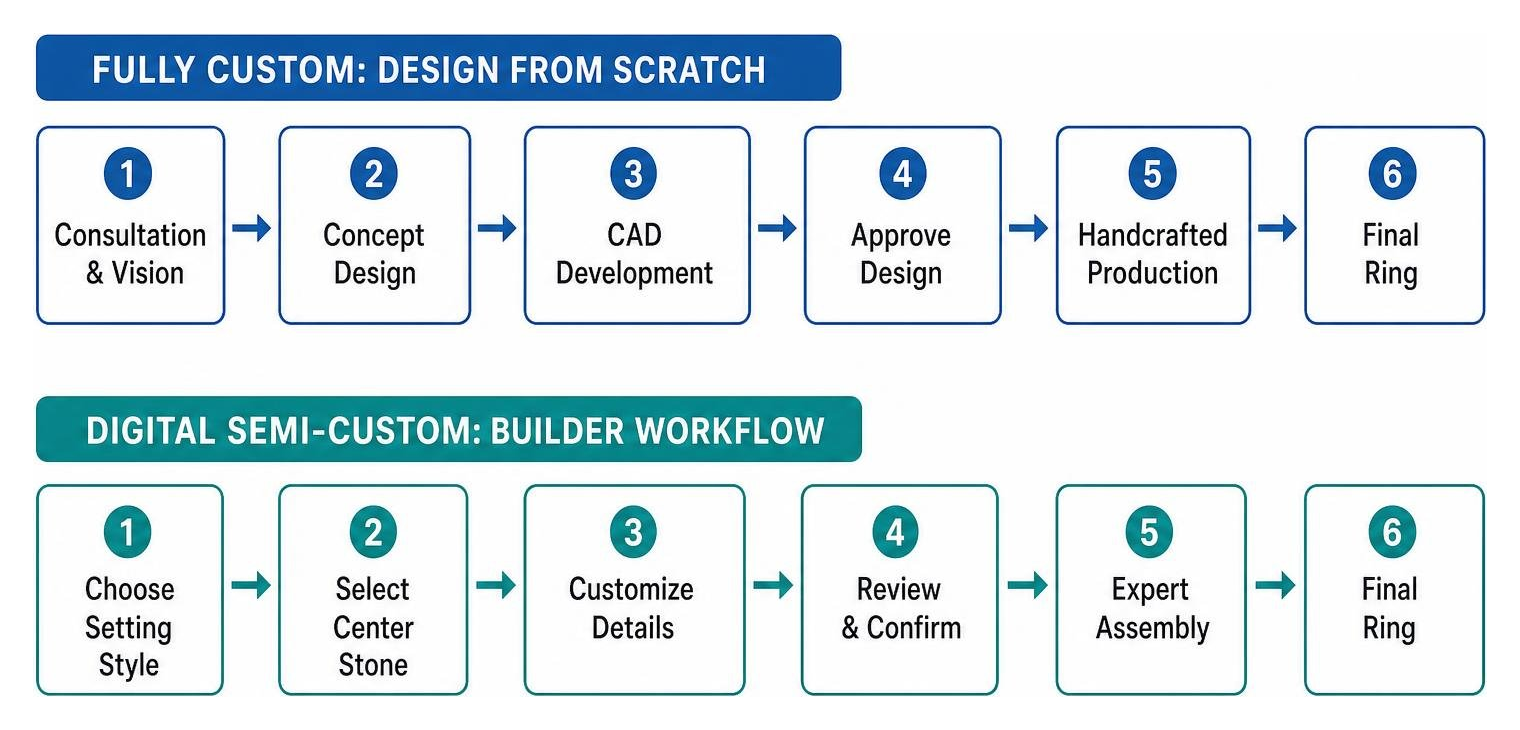
When you decide to craft a ring, you will quickly realize that the term "custom" covers two distinct paths: fully custom and semi-custom. Knowing which route fits your vision, timeline, and budget is the first major step in your design journey.
Fully Custom Ring Creation From Scratch
Fully custom design means starting with a completely blank canvas—zero templates, zero pre-cast factory settings. You work directly with a designer or master bench jeweler to engineer a setting specifically for the exact dimensions of your chosen center stone.
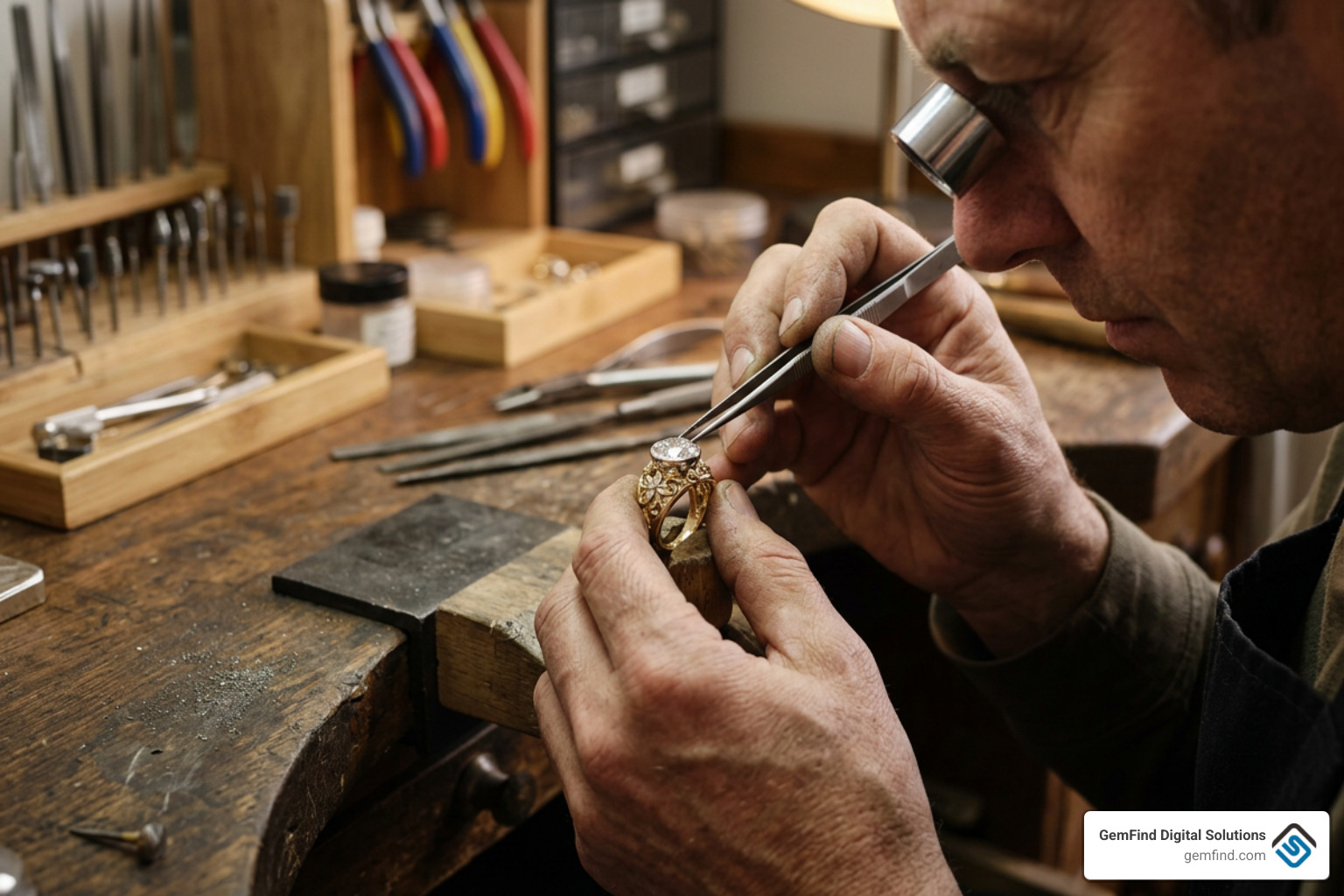
This path is ideal if you have a unique architectural vision, want hand-sculpted settings, or plan on remounting an heirloom stone. Because the ring is fabricated from scratch around your diamond, details like hand-sculpted claw prongs, seamless halos, and custom bridge architecture fit together perfectly. While this craft-heavy process delivers a one-of-a-kind heirloom, it also requires a larger investment, with bespoke custom pieces typically starting at $10,000 or more depending on the stone. You can learn more about master custom ring building to see how custom bench craftsmanship comes together.
Using a Digital Diamond Ring Creator for Semi-Custom Design
If you want a personalized ring without starting from absolute zero, a semi-custom approach using an online diamond ring creator is a powerful alternative. These digital ring builders allow you to choose from hundreds of pre-designed setting architectures (such as solitaires, halos, three-stone rings, or vintage pavé) and pair them directly with loose center diamonds.
Through interactive 3D preview tools, you can swap metal types, adjust band widths, choose diamond shapes, and view photorealistic 3D renders from every angle. This approach saves time and keeps costs lower by utilizing proven CAD frameworks while still granting over 1,000 potential custom combinations. To test out these tools yourself, explore custom diamond ring builders or try interactive ring creator software to see how quickly a virtual vision takes shape.
Step-by-Step Guide to Crafting a Ring with a Digital Ring Creator App
Using a digital builder makes designing fine jewelry as seamless as ordering custom furniture. Here is how to navigate the process step-by-step to build a piece that will stand up to a lifetime of wear.
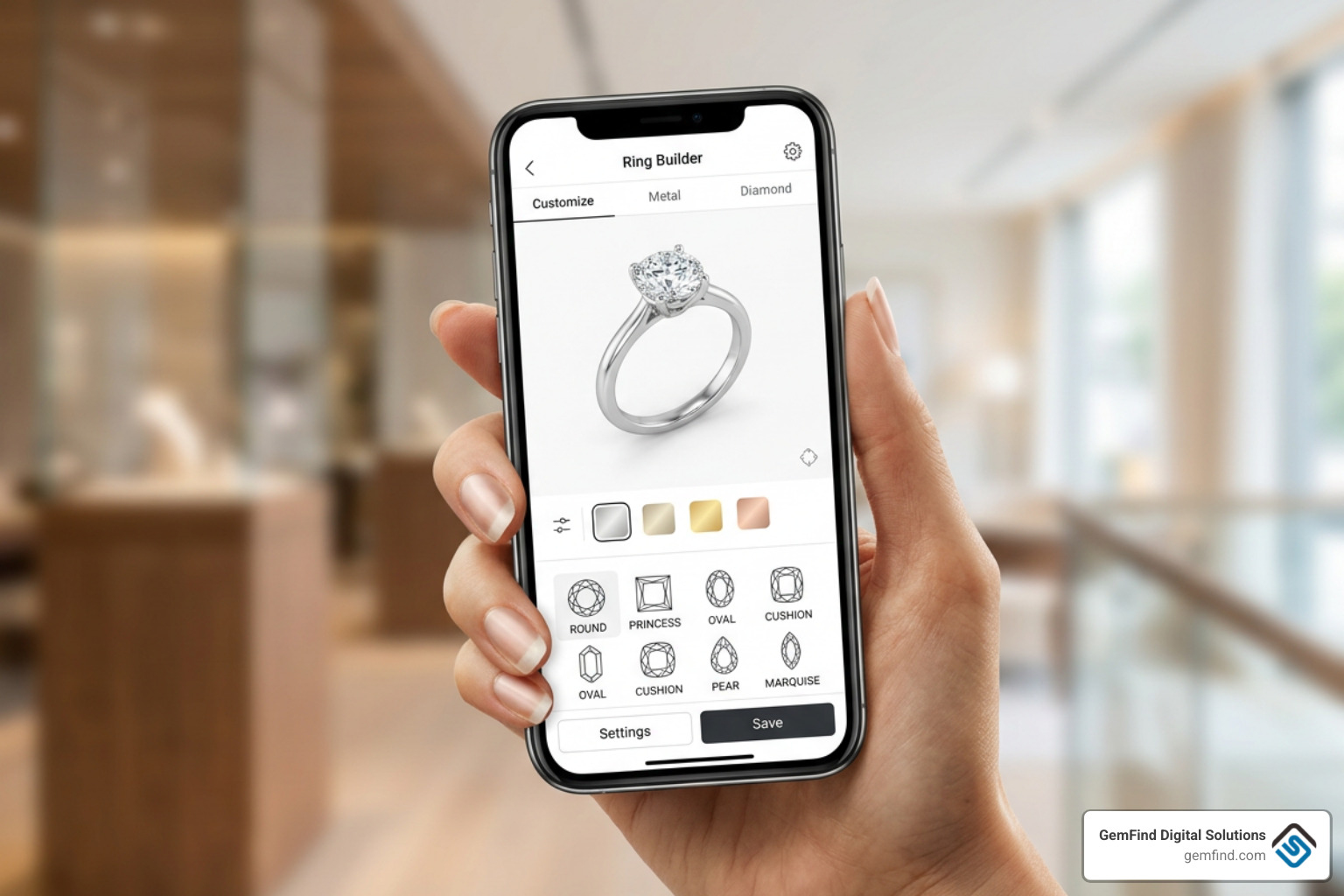
Step 1: Selecting the Ring Setting Architecture
Your setting provides the structural foundation for your center stone. Beyond choosing what looks pretty, pay close attention to structural parameters that ensure long-term durability:
- Prongs vs. Bezel: Claw prongs hold the stone securely while letting maximum light enter, whereas a sleek bezel setting wraps a continuous lip of precious metal around the diamond's perimeter for maximum protection.
- Cathedral Arches: A cathedral setting features arches rising up from the band to support the stone head, creating an integrated, classic look. Non-cathedral settings let the center stone sit independently so it appears to float.
- Band Depth and Width: A common structural mistake is choosing a band that is too thin. Ensure standard diamond bands maintain a hand-finished depth tolerance of at least 1.6mm. This prevents the metal from bending or warping under everyday wear. Band widths typically range from a delicate 1.8mm up to 2.5mm or 3.0mm for higher-carat stones.
If you are ready to explore structural options online, you can build your dream engagement ring or discover engagement ring builder app features to see how different setting heights look on hand renderings.
Step 2: Choosing Your Center Stone: Lab-Grown vs. Natural
The center diamond typically represents 70% to 90% of the overall engagement ring budget. Today, buyers face a major choice: traditional natural earth-mined diamonds or modern lab-grown diamonds.
Optically, chemically, and physically, lab-grown diamonds are identical to natural diamonds. Even professional gemologists require specialized equipment to tell them apart. Both undergo strict grading through independent gemological labs like the GIA (Gemological Institute of America) or IGI (International Gemological Institute).
The primary difference comes down to origin, price, and personal preference. Lab-grown diamonds allow you to maximize carat size within your budget—lab-grown engagement ring options start around $1,500—while natural diamonds offer historic earth-mined rarity and traditional value retention.
| Feature | Lab-Grown Diamonds | Natural Earth-Mined Diamonds |
|---|---|---|
| Origin | Controlled laboratory environment | Formed over billions of years in the earth |
| Physical & Chemical Properties | 100% identical to natural diamond | 100% identical to lab-grown diamond |
| Price Point | Significantly lower cost per carat | Higher cost per carat due to natural scarcity |
| Grading Reports | Certified by IGI or GIA | Certified by GIA or IGI |
| Starting Price Range | Rings start at ~$1,500 | Fully custom rings generally start at $10,000+ |
Whether you prefer natural rarity or want a substantial center stone, exploring settings designed around specific cuts—like vintage-inspired lab diamond settings—helps you envision how stone proportions interact with setting metals.
Step 3: Adding Personalization via a Diamond Ring Creator
The smallest details often create the most sentimental value. A modern diamond ring creator app gives you access to subtle personal touches:
- Hidden Halos & Side Micropavé: Add a subtle ring of diamonds tucked directly underneath the center stone platform, visible only from the side view. You can view micropavé side-detail ring designs to see how side accents create interest without overwhelming the top solitaire view.
- East-West Orientation: Turn elongated diamond cuts (like ovals, emeralds, or radiants) horizontally across the band for an architectural twist on a traditional cut.
- Two-Tone Metal Matching: If you choose a yellow gold or rose gold band, consider setting the center diamond in platinum prongs. Platinum is naturally white and hypoallergenic; using white prongs prevents yellow metal tones from reflecting into the center stone, keeping your diamond looking bright and white.
- Custom Laser Engraving: Add dates, initials, or secret messages up to 15 characters inside the band.
Key Factors That Impact Custom Ring Cost and Production Timelines
Understanding the financial and time investments required for custom ring crafting eliminates stress as your target proposal or event date approaches.
The Cost Breakdown
Your total cost is divided between the center stone and the mounting:
- Center Diamond (70–90% of budget): Determined by the 4 Cs (Cut, Color, Clarity, Carat weight).
- The Setting (10–30% of budget): Determined by metal choice (14k/18k gold vs. naturally dense platinum), accent stone quantity (solitaire vs. complex pavé halos), and casting complexity.
Because made-to-order custom jewelers eliminate retail display inventory, your budget goes directly toward raw materials and individual craftsmanship.
Production Timelines
Plan ahead to ensure your custom creation is ready when you need it:
- Semi-Custom Digital Builders: Standard made-to-order designs created through digital builders generally take 2 to 3 weeks (about 15 business days) from order placement to delivery.
- Fully Custom Bespoke Design: Completely custom pieces built from scratch take between 4 to 8 weeks. This timeline accounts for initial consultations, 24-hour to multi-day 3D CAD blueprint revisions, physical wax model casting, hand setting, and rigorous quality control.
- Rush Creation Options: Many studios offer 6-week (+$300) or 4-week (+$500) rush options if stone availability permits.
To start planning your budget and timeline online, you can learn how to create your own engagement ring online or request a digital render to get a 3D design and custom ring quote.
Common Mistakes to Avoid When Designing Your Custom Engagement Ring
Avoid these common pitfalls when using a diamond ring creator:
- Skipping the Ring Sizer: Guessing ring size causes unnecessary post-delivery hassle. Most custom engagement rings are non-refundable final sale items. While resizing is common, altering a band by more than 2 sizes up or down can compromise pavé stone security. Request a free plastic ring sizer before confirming your order.
- Ignoring Wedding Band Flushness: Low-set donut settings or flush-mounted heads let the center diamond sit comfortably low on the finger, but they prevent traditional straight wedding bands from sitting completely flush. If you want zero gap between your rings, choose a high-set cathedral or plan for a contoured/open wedding band.
- Choosing Ultra-Thin Bands for Heavy Stones: Thin 1.5mm bands are popular on social media, but large center diamonds require structural support. Ensure your band depth is at least 1.6mm to prevent structural warping.
- Matching Color Grades Incorrectly: If you design a ring with halo or pavé accent stones, ensure their color grades match your center stone. Pairing a icy D-E-F center diamond with warm G-H side stones creates visual contrast that can make the ring look mismatched.
Frequently Asked Questions About Custom Engagement Rings
Can I use my own heirloom diamond or gemstone in a custom ring?
Yes! Fully custom ring creation is ideal for repurposing heirloom stones. A jeweler will inspect your diamond for chips, record its exact millimeter dimensions, and engineer a new custom setting designed specifically around its unique proportions. Most automated semi-custom online tools require purchasing the center stone directly through their diamond database to ensure physical compatibility.
How do I evaluate a designer to ensure high-quality custom craftsmanship?
Look for designers who provide multi-angle 3D CAD renders before casting and offer direct communication with the craftsman or bench jeweler. High-quality custom work features hand-sculpted claw prongs (rather than bulky round prongs), color-matched accent diamonds set under magnification without dark gaps, and thick metal tolerances that guarantee structural integrity.
What is the typical timeline for creating a custom engagement ring?
Semi-custom orders using pre-existing setting templates typically ship within 2 to 3 weeks. Fully bespoke rings designed from scratch require 6 to 8 weeks to allow for stone sourcing, CAD approval, wax casting, hand-setting, and final video inspection. Rush manufacturing options (4 to 6 weeks) are often available for an additional fee.
Conclusion
Building a custom engagement ring gives you total control over the design, quality, and ethics of your piece. Whether you choose a fully bespoke bench-crafted process or use an interactive digital diamond ring creator, you are creating an heirloom piece filled with personal meaning.
At GemFind Digital Solutions, we have spent over 25 years helping retail jewelers integrate state-of-the-art ring builder apps and inventory management technology. If you are a jewelry business owner looking to offer modern digital design tools to your customers, read the complete ring builder app guide to learn how our digital solutions can elevate your custom offerings.


