


What Is an Email Automation Agency (And Why It Matters for Your Business)

An email automation agency is a specialized team that builds, manages, and optimizes automated email systems — so your business sends the right message to the right customer at exactly the right moment, without manual effort.
Here's a quick breakdown of what that means in practice:
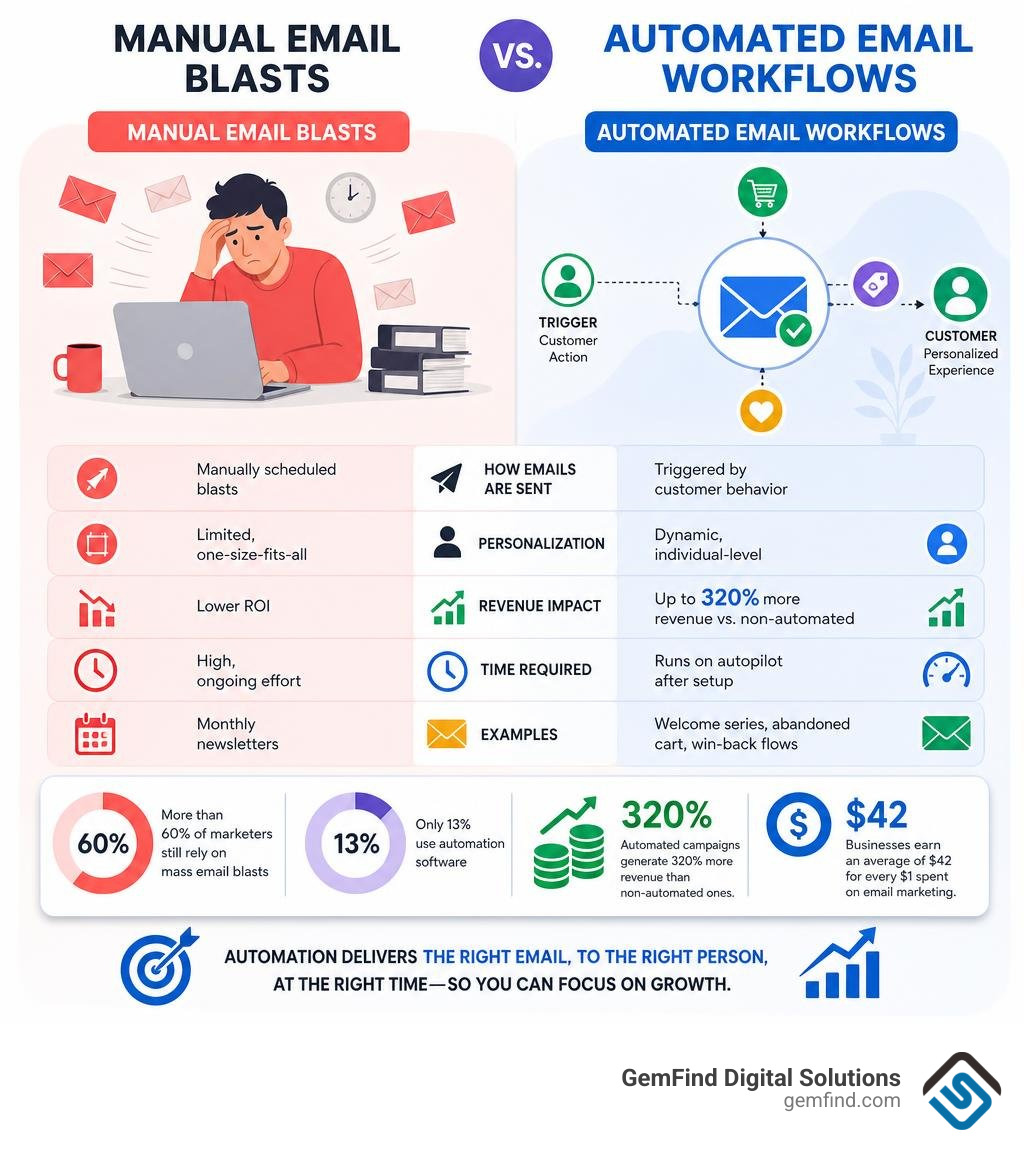
| Manual Email Marketing | Email Automation Agency | |
|---|---|---|
| How emails are sent | Manually scheduled blasts | Triggered by customer behavior |
| Personalization | Limited, one-size-fits-all | Dynamic, individual-level |
| Revenue impact | Lower ROI | Up to 320% more revenue vs. non-automated |
| Time required | High, ongoing effort | Runs on autopilot after setup |
| Examples | Monthly newsletters | Welcome series, abandoned cart, win-back flows |
For a jewelry store, this means a customer who browses an engagement ring but doesn't buy can automatically receive a follow-up email — personalized, timely, and relevant — without you lifting a finger.
Most businesses are still leaving money on the table. More than 60% of marketers still rely on mass email blasts, yet only 13% use automation software. Meanwhile, automated campaigns generate 320% more revenue than non-automated ones, and businesses earn an average of $42 for every $1 spent on email marketing.
That gap between what's possible and what most businesses actually do? That's exactly where an email automation agency comes in.
I'm Morgan Price, a backlink outreach and content strategy specialist with deep experience helping businesses — including those in the jewelry industry — understand and leverage email automation agency partnerships to build sustainable, revenue-driving marketing systems. In the sections below, I'll walk you through everything you need to know to make a confident, informed decision.
Why Your Business Needs an Email Automation Agency

As paid media costs continue to climb in 2026, privacy regulations tighten, and traditional tracking cookies fade away, owned marketing channels have become your most valuable asset. Relying entirely on manual newsletters or basic batch-and-blast campaigns is no longer enough to scale. To build real, sustainable growth, you need to use Email Marketing to Build Relationships with Customers Part 1.
An email automation agency acts as your team of retention strategists, technical architects, and revenue engineers. Instead of treating email as a broadcast medium, they turn it into a dynamic, two-way conversation that adapts to every action your customer takes.
Defining the Modern Email Automation Agency
A modern email automation agency focuses entirely on lifecycle marketing, data integration, and behavioral triggers. While a generalist digital marketing agency might split its attention across SEO, social media management, and paid ads, an email automation specialist lives and breathes user journeys, database management, and conversion rate optimization.
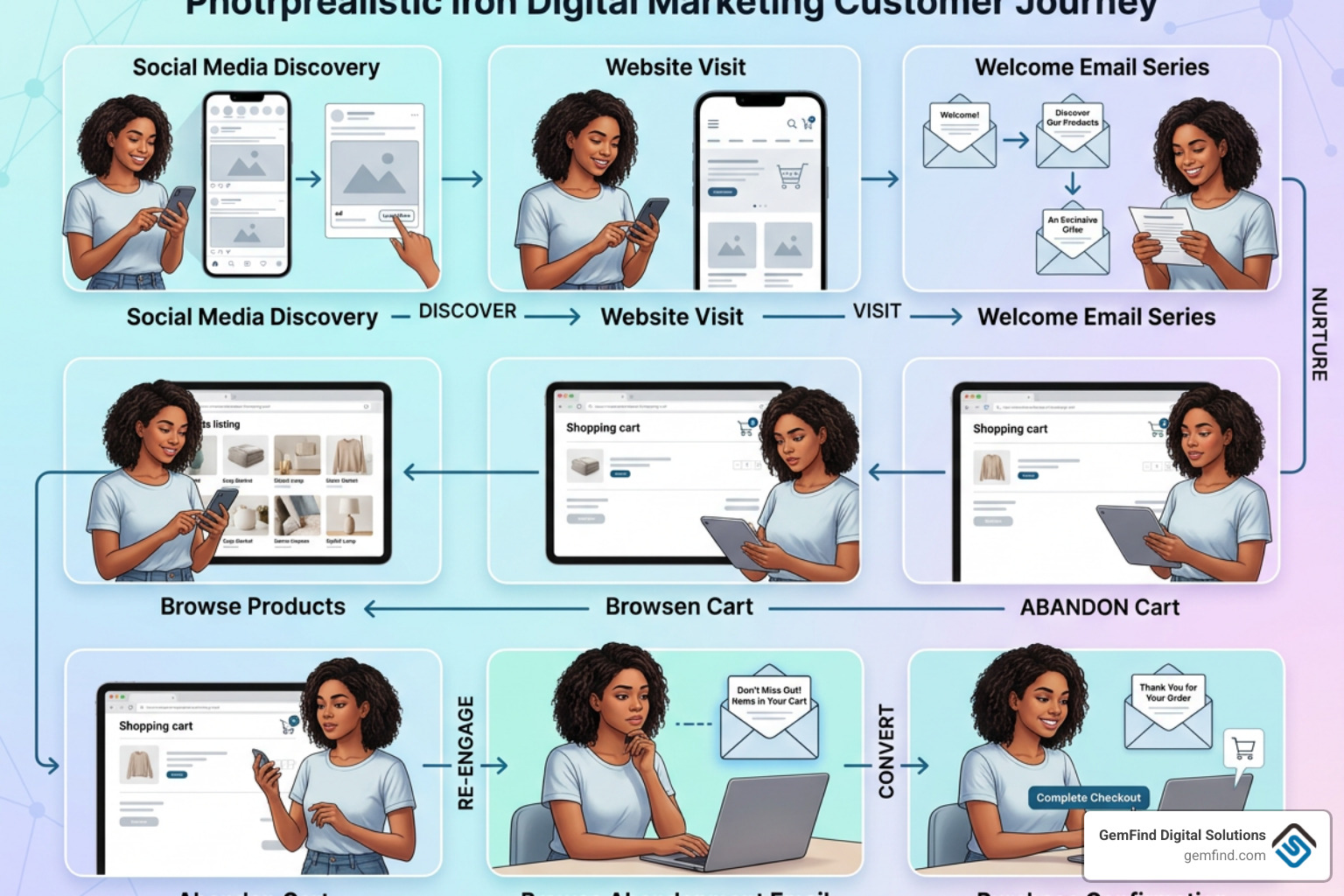
Instead of manually drafting and scheduling a newsletter every Tuesday, these agencies design complex, multi-branch workflows. These workflows trigger automatically based on real-time events—such as a user signing up for a newsletter, viewing a specific product tier, abandoning a shopping cart, or hitting a milestone in their customer lifecycle.
Marketers using automation software generate 2X the number of leads than those using blast email software and are perceived by their peers to be 2X as effective at communicating. By handing over these complex setups to specialized experts, you ensure your marketing runs 24/7, converting leads and retaining customers while you focus on running your business.
eCommerce vs. B2B Lifecycle Marketing
The strategy behind email automation changes significantly depending on whether you are selling directly to consumers (DTC) or targeting business buyers (B2B). An experienced agency understands these differences and tailors their approach accordingly:
- eCommerce/DTC Lifecycle Marketing: For online retail and luxury brands, the primary focus is on maximizing customer lifetime value (CLV), driving repeat purchases, and recovering lost sales. Agencies specializing in this space—often working as certified Klaviyo partners—focus heavily on visual design, zero-party data collection, dynamic product recommendations, and behavioral triggers like browse abandonment and cart recovery.
- B2B Outbound and Nurturing: For B2B companies, SaaS platforms, and enterprise service providers, the sales cycle is longer and relies on building deep trust. B2B automation agencies focus on lead scoring, content downloads, educational drip sequences, and seamless CRM integrations. They often run highly targeted outbound systems, utilizing platforms like Cold Email That Actually Books Meetings | Ken AI to initiate real business conversations and nurture leads until they are ready to speak with a sales representative.
Whether your goal is securing a quick checkout for a designer necklace or booking a high-value enterprise consultation, a professional agency knows how to architect the right journey for your specific audience.
Core Services, Workflows, and Platform Specialization
To understand the true impact of hiring an email automation agency, it helps to look at the actual workflows they build and the technical ecosystems they manage. When properly configured, these automated systems operate as a predictable revenue engine for your brand.
| Automated Flow Type | Core Trigger | Primary Business Goal | Benchmark Conversion Rate |
|---|---|---|---|
| Welcome Series | New newsletter subscription | Introduce brand, build trust, drive first purchase | 15% - 30% |
| Abandoned Cart | Items left in cart without checkout | Recover lost sales, address purchase friction | 10% - 15% |
| Browse Abandonment | Product viewed but not added to cart | Re-engage high-intent window shoppers | 5% - 8% |
| Post-Purchase Nurture | Order placed successfully | Drive repeat purchases, collect reviews, boost LTV | 8% - 12% |
| Win-Back / Reactivation | No interaction for 90+ days | Re-engage lapsed buyers, clean inactive profiles | 3% - 5% |
To get the most out of these flows, we recommend checking out GemFind Digital Solutions to see how we build customized, high-performing retention systems tailored to your unique brand identity.
Platform Specialization and No-Code Tools
A top-tier agency doesn't believe in a one-size-fits-all software solution. They hold deep technical certifications across a wide variety of Email Service Providers (ESPs) and CRM platforms, selecting the exact tool that matches your business model:
- Klaviyo: The gold standard for eCommerce and DTC brands, allowing for hyper-targeted segmentation based on purchase history, browsing behavior, and Shopify event data.
- HubSpot & ActiveCampaign: Ideal for B2B and hybrid businesses that require advanced lead scoring, sales pipeline automation, and multi-channel marketing synchronization.
- Salesforce Marketing Cloud: The go-to choice for enterprise-level operations requiring massive data handling, multi-brand management, and complex database structures.
- Mailchimp: A great entry point for growing businesses looking to establish solid foundational automations without excessive technical complexity.
For businesses looking to integrate these platforms, professional technical engineering is key to ensuring data flows seamlessly across your systems. Additionally, modern agencies are increasingly keeping an eye on cutting-edge, AI-native tools like Nitrosend - AI-native email for agencies and builders, which allow for prompt-based workflow designs and automated code generation directly inside modern workspaces.
Core Automated Campaigns and Omnichannel Integration
An email automation agency doesn't stop at email. To maximize customer retention, they design cohesive omnichannel experiences that meet your customers wherever they are. This involves coordinating your email flows with:
- SMS & WhatsApp Marketing: Sending time-sensitive messages (like shipping updates or flash sales) via text, while saving longer brand stories for email.
- Paid Media Syncing: Automatically feeding your email segments back into Google Ads and Meta to create dynamic retargeting lists or exclude recent buyers from seeing acquisition ads.
- CRM & POS Integrations: Connecting online behavior with offline retail data, which is especially important for luxury jewelry stores using in-store POS systems.
By combining these channels, you can deliver highly personalized, consistent experiences. To explore how to use these strategies to grow your business, read Email Marketing to Build Relationships with Customers Part 2 and review our guide on Proven Email Marketing Strategies for Jewelers.
Ongoing Optimization and Strategy
A common mistake businesses make is treating email automation as a "set-and-forget" project. In reality, consumer behaviors change, email client algorithms evolve, and workflows can break over time.
A professional agency provides continuous optimization. They analyze performance data, perform regular workflow audits, and conduct systematic A/B testing on:
- Subject Lines & Preview Text: To consistently improve open rates. For actionable advice on this, read our guide on How to Effectively Improve Your Email Open Rates and explore these 5 Tips on How Personalized Email Subject Lines Can Generate Better Open Rates.
- Send Time & Frequency Delay: Finding the sweet spot between staying top-of-mind and annoying your subscribers.
- Design Layouts & CTAs: Comparing plain-text styles against highly designed, visual templates to see what drives more clicks.
Measuring Success, Deliverability, and ROI
At the end of the day, the success of your email marketing comes down to real business results. Working with an agency should lead to clear improvements in your bottom line. To understand the financial impact of these strategies, read our guide on Maximizing Revenue: The Power of Email Marketing for Your Jewelry Store.
Deliverability and List Hygiene
Your automated emails can only drive revenue if they actually reach the inbox. A premier email automation agency places a heavy focus on technical deliverability and list hygiene. This includes:
- Authentication Protocols: Setting up and monitoring SPF, DKIM, and DMARC records to prove to inbox providers (like Gmail and Yahoo) that your emails are safe and legitimate.
- List Cleaning: Automatically identifying and removing unengaged subscribers, hard bounces, and spam traps to protect your sender reputation.
- Engagement-Based Segmentation: Sending campaigns primarily to subscribers who actively open and click your emails, which signals to inbox providers that your content is highly valued.
A professional agency structures these backend systems to ensure high deliverability, protecting your sender reputation while maximizing inbox placement.
Expected ROI and Key Metrics
When you hire an agency, you should move away from vanity metrics (like total emails sent) and focus on key performance indicators (KPIs) that directly impact growth:
- Email-Attributed Revenue: The percentage of your total business revenue directly generated by email campaigns and flows (healthy brands typically see 20% to 40% of their revenue from email).
- Customer Lifetime Value (CLV): How much a customer spends with your brand over their entire relationship.
- Conversion Rate: The percentage of email recipients who take a desired action, such as making a purchase or booking a consultation.
- Return on Investment (ROI): Realistically, businesses see an average return of $36 to $42 for every $1 spent on professional email marketing.
By tracking and optimizing these metrics, agencies can continuously refine your campaigns to scale your brand's online revenue.
How to Choose the Right Email Automation Agency
Selecting the right partner is critical to your long-term success. As you evaluate different agencies, keep these key factors in mind:
- Platform Expertise: Ensure they hold official certifications in the specific tools you use (such as Klaviyo Elite status or HubSpot Platinum partnerships).
- Specialization: Choose an agency that understands your specific industry. A B2B lead-generation agency might not be the best fit for an eCommerce jewelry brand, and vice-versa.
- Clear Pricing Models: Agencies generally offer three pricing structures: project-based (for a one-time flow setup), monthly retainers (for ongoing strategy and management), or performance-based models. When choosing a partner, look for transparent pricing that aligns with your business goals and expected return on investment.
Frequently Asked Questions about Email Automation
What is the difference between email marketing and email automation?
Traditional email marketing involves manually creating, scheduling, and sending individual campaigns (like a weekly newsletter or holiday promo) to a broad list of subscribers. Email automation uses software to build workflows that trigger automatically based on specific customer behaviors, actions, or milestones, delivering highly personalized messages at scale without manual effort.
How long does it take to set up automated email flows?
A comprehensive, professional setup of your core flows (such as Welcome, Abandoned Cart, Browse Abandonment, and Post-Purchase) typically takes between 4 to 8 weeks. This timeline includes deep strategy mapping, custom copywriting, brand-aligned design, technical integration, and thorough quality assurance testing.
Can email automation integrate with my existing CRM?
Yes. Top-tier email automation platforms integrate seamlessly with major CRMs (like Salesforce, HubSpot, and Zoho) and eCommerce platforms (like Shopify and WooCommerce). This integration ensures real-time data syncing, accurate customer profiling, and seamless lead scoring across your entire marketing ecosystem.
Conclusion
Running a successful marketing strategy in 2026 requires moving away from generic, mass email blasts and embracing highly personalized, automated customer journeys. Partnering with an email automation agency gives you the strategy, technical setup, and ongoing optimization needed to turn your email list into a reliable, high-ROI sales channel.
At GemFind Digital Solutions, we bring over 25 years of industry-specific expertise as a trusted Shopify and Google Partner. We specialize in creating tailored digital marketing, web design, and advanced marketing automation systems—including seamless Edge POS integrations—specifically designed to help jewelry retailers grow.
Ready to unlock the true revenue potential of your customer list? Read our comprehensive guide on The Future of Jewelry Retail: Integrating Client Management and Marketing Automation and let’s build a automated growth strategy for your business today.


