


Why Every Love Story Deserves a Custom Gemstone Engagement Ring

If you've been exploring gemstone engagement rings design your own options, here's what you need to know upfront:
How to design your own gemstone engagement ring — quick overview:
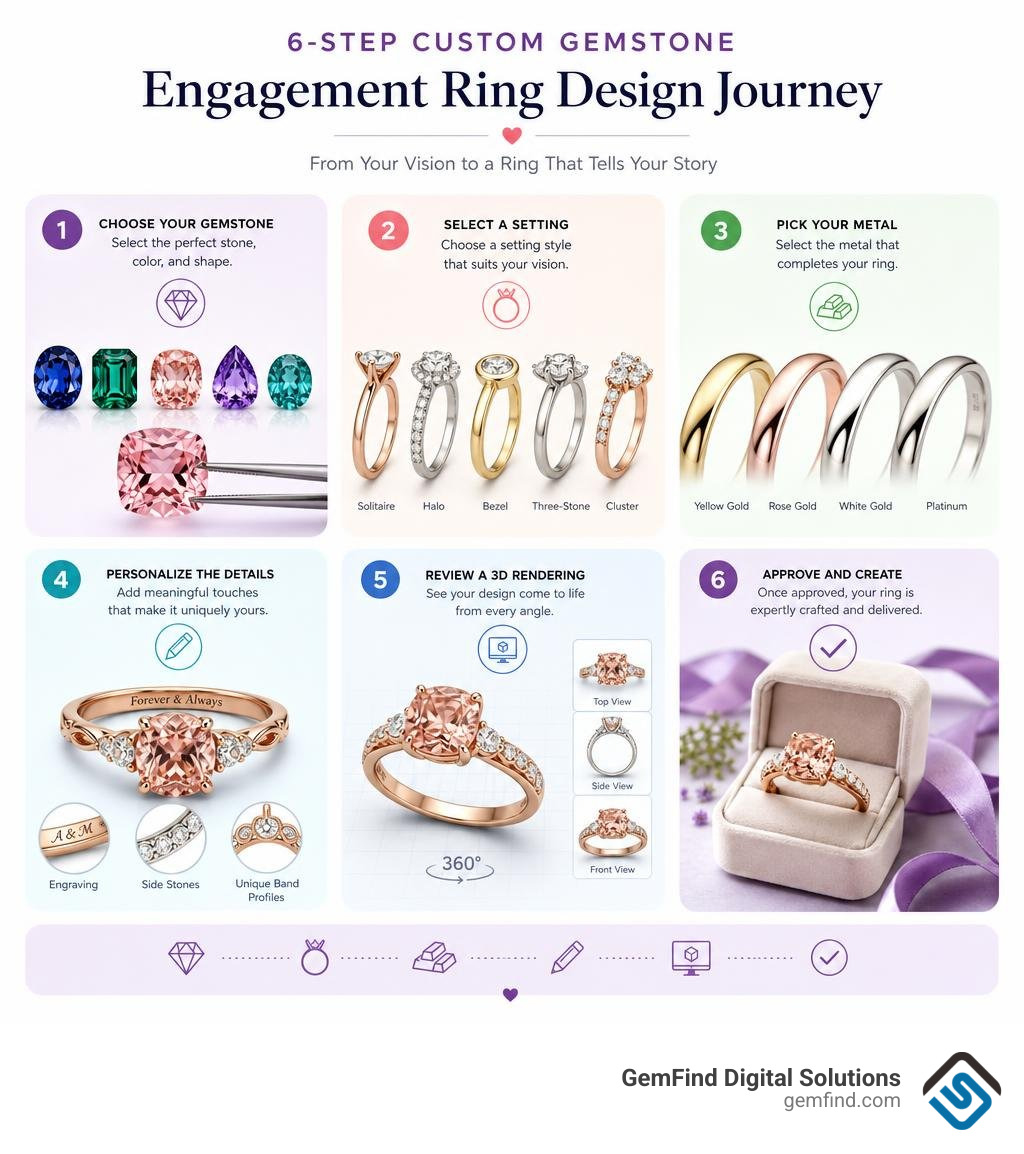
- Choose your gemstone — Pick a stone type (sapphire, emerald, morganite, tanzanite, etc.), color, and shape.
- Select a setting — Solitaire, halo, bezel, three-stone, or cluster styles are all common options.
- Pick your metal — Yellow gold, rose gold, white gold, or platinum.
- Personalize the details — Add engraving, side stones, or unique band profiles.
- Review a 3D rendering — Most custom jewelers provide digital previews before crafting begins.
- Approve and create — Production typically takes 2 to 6 weeks depending on the jeweler.
A custom gemstone ring is more than jewelry. It's a way to tell your story — through color, shape, stone origin, and design details that no off-the-shelf ring can match. With the average US wedding ring costing around $5,500, designing your own also gives you direct control over where every dollar goes.
Whether you want a teal sapphire, a peachy-pink morganite, or an ethically sourced emerald, the options today are wider — and more accessible — than ever before.
I'm Anthony Arechiga, VP of Sales at GemFind Digital Solutions, where I've spent nearly two decades helping jewelry retailers build the digital tools they need to offer gemstone engagement rings design your own experiences online. In the sections below, I'll walk you through everything — from picking the right stone to understanding timelines, budgets, and settings.
Why Choose Gemstone Engagement Rings: Design Your Own Masterpiece
Opting for a gemstone over a traditional colorless diamond is a powerful way to express individuality. Modern couples in July 2026 are increasingly moving away from cookie-cutter designs and choosing rings that reflect their unique personalities, values, and love stories.
When you decide to Create Your Own Engagement Ring, you gain access to an incredible spectrum of color families. From the deep velvet of royal blue sapphires and the refreshing punch of minty green chrysoberyl to the utterly unique look of bi-color sapphires that display two distinct hues in a single stone, the color possibilities are endless. Teal gemstones, in particular, have skyrocketed in popularity for creating a distinctive, contemporary aesthetic.
Beyond visual appeal, designing a custom ring allows you to prioritize ethical sourcing. You can select fully traceable gemstones, such as Montana sapphires known for their unique regional hues, or opt for conflict-free diamonds and recycled precious metals. This ensures your ring is as kind to the planet as it is beautiful.
Customization also allows you to break free from traditional gender norms and design a gender-neutral piece or a non-traditional pairing. For instance, pairing a salt and pepper diamond with a colorful sapphire creates an eye-catching contrast that traditional retail simply doesn't offer. By taking the time to Design Your Own Wedding Rings, you ensure that your bridal set fits together seamlessly, reflecting a cohesive and deeply personal style.
Selecting Your Gemstone: Durability, Cuts, and Lab-Grown Options
Choosing the center stone is the most exciting part of the design process. However, because an engagement ring is meant for daily, lifelong wear, you must balance visual beauty with physical durability.
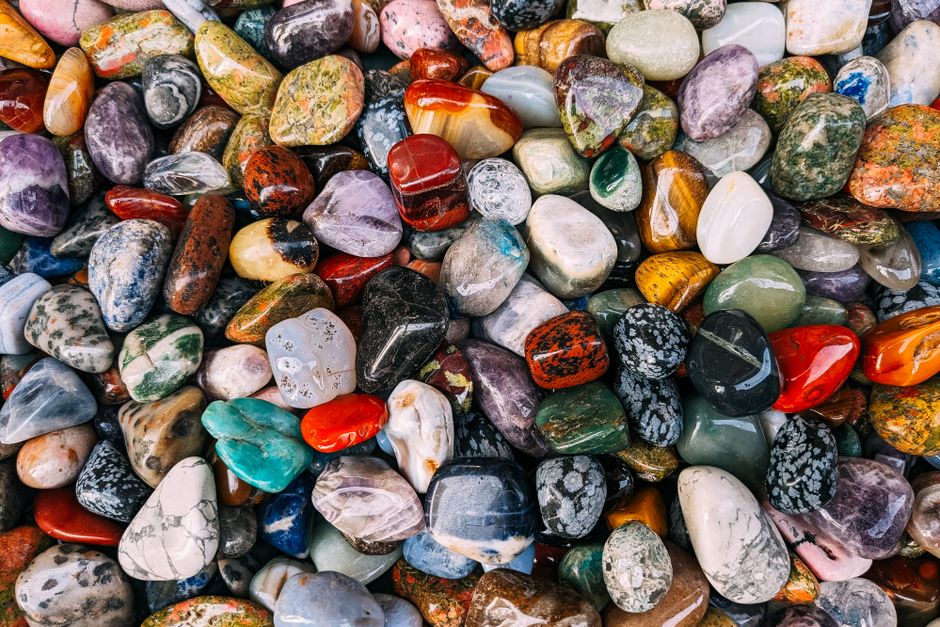
To help you decide between natural and lab-grown options, here is a quick comparison:
| Feature | Natural Gemstones | Lab-Grown Gemstones |
|---|---|---|
| Chemical Composition | Identical natural mineral structure | Identical physical, optical, and chemical properties |
| Cost | Premium pricing, highly dependent on rarity | Significantly lower, offering savings of up to 50% or more |
| Environmental Impact | Requires mining; carbon footprint varies | Mine-free; often crafted using renewable energy |
| Uniqueness | Natural inclusions and regional color variations | Highly controlled clarity and color consistency |
Popular Gemstones and the Mohs Hardness Scale
The Mohs hardness scale rates a mineral's resistance to scratching from 1 to 10. Diamonds sit at a perfect 10, but several colored gemstones offer excellent durability for daily wear:
- Sapphires and Rubies (Mohs 9): Part of the corundum family, these are the hardest colored gemstones available. They are incredibly scratch-resistant, retain their sparkle brilliantly over time, and come in almost every color of the rainbow. If you want a classic, romantic look, you can build a custom piece like The Aster Ring | Build Your Own Pear Blue Sapphire Engagement Ring – Alexis Russell to showcase a unique, ethically sourced center stone.
- Emeralds (Mohs 7.5 - 8): Known for their rich green hues, emeralds are beautiful but require gentle care. They naturally contain tiny internal fractures (called jardin), making them more prone to chipping if struck hard.
- Tanzanite (Mohs 6 - 7): Sourced exclusively from the hills of Merelani in northern Tanzania, tanzanite is highly coveted for its dramatic color-shifting abilities, shifting from violet-blue to teal under different lighting. Because it is softer, setting it in a protective style is highly recommended. For example, The Jade Ring | Build Your Own Emerald Cut Tanzanite Engagement Ring – Alexis Russell pairs a striking emerald-cut tanzanite with protective side trillions to balance beauty and security.
Lab-Grown vs. Natural Gemstones
One of the most common questions couples ask is whether lab-created gemstones are "real." The answer is a resounding yes. Lab-grown gemstones are chemically, physically, and optically identical to their mined counterparts. They are not cheap imitations; they are grown in controlled environments that replicate the heat and pressure of the earth.
The primary benefits of lab-grown gemstones are cost savings and ethical peace of mind. Because they bypass the complex supply chains of mining, lab-grown gemstone engagement rings generally cost significantly less than mined ones. This allows you to allocate more of your budget toward a higher-quality metal setting or a larger center stone. Additionally, they are entirely mine-free, making them an excellent choice for eco-conscious couples.
Choosing the Right Gemstone Shape and Cut
The cut of your gemstone dictates how it reflects light and shapes the overall character of your ring. Traditional round and oval cuts maximize brilliance, but geometric shapes are perfect for a modern, alternative look:
- Hexagon Cuts: Offer clean, sharp lines that feel architectural and bold.
- Pear Cuts: Teardrop shapes that elegantly elongate the finger. You can explore this style with The Bryn Ring | Build Your Own Pear Salt and Pepper Diamond Engagement – Alexis Russell, which celebrates the natural, character-rich "imperfections" of salt and pepper diamonds.
- Kite Cuts: Highly geometric and edgy, kite cuts are perfect for the alternative bride. Because they have sharp, vulnerable points, they are best paired with protective settings, such as The Hazel Ring | Build Your Own Kite Salt and Pepper Diamond Engagemen – Alexis Russell, which utilizes a secure bezel setting.
Customizing the Setting, Metals, and Heirloom Stones
Once you have selected your gemstone, the next step is designing its "throne" — the setting and the metal band.
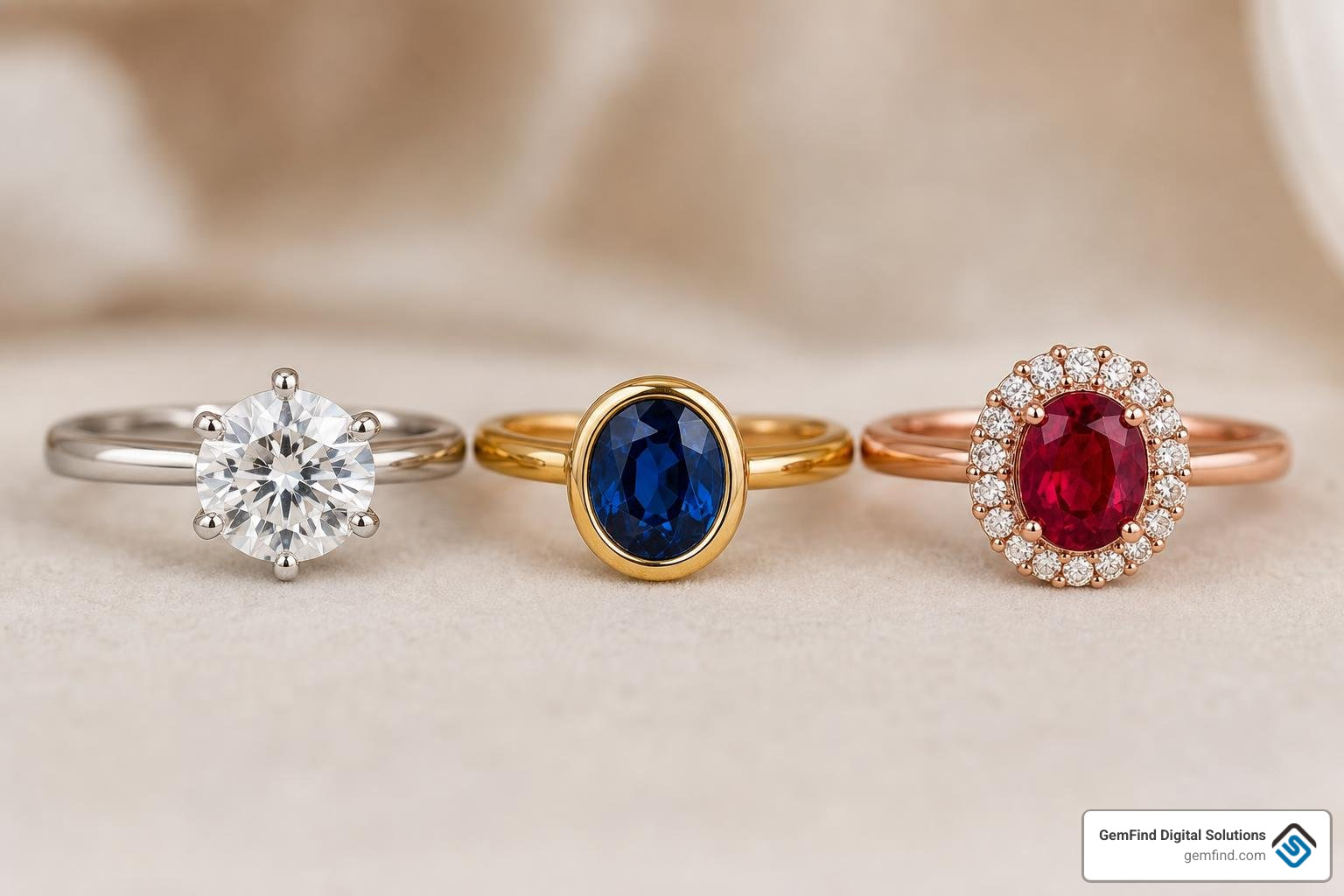
The metal you choose should complement the hue of your gemstone. For instance, warm 14K yellow gold or rose gold beautifully enhances peachy-pink morganites or champagne sapphires. Conversely, platinum or white gold provides a crisp, cool backdrop that makes deep blue sapphires or vibrant green emeralds pop.
The structural design of the setting is equally important. A bezel setting, which wraps a continuous band of metal around the perimeter of the stone, offers the highest level of protection against chipping. This is highly recommended for active wearers or delicate gemstone cuts. If you prefer a sleek, modern aesthetic, a knife-edge band features a sloped, triangular profile that draws the eye directly toward the center stone while maintaining structural integrity.
Step-by-Step: Gemstone Engagement Rings Design Your Own Process
Designing a custom ring online has never been easier, thanks to modern interactive technology. Here is how the step-by-step creation process works:
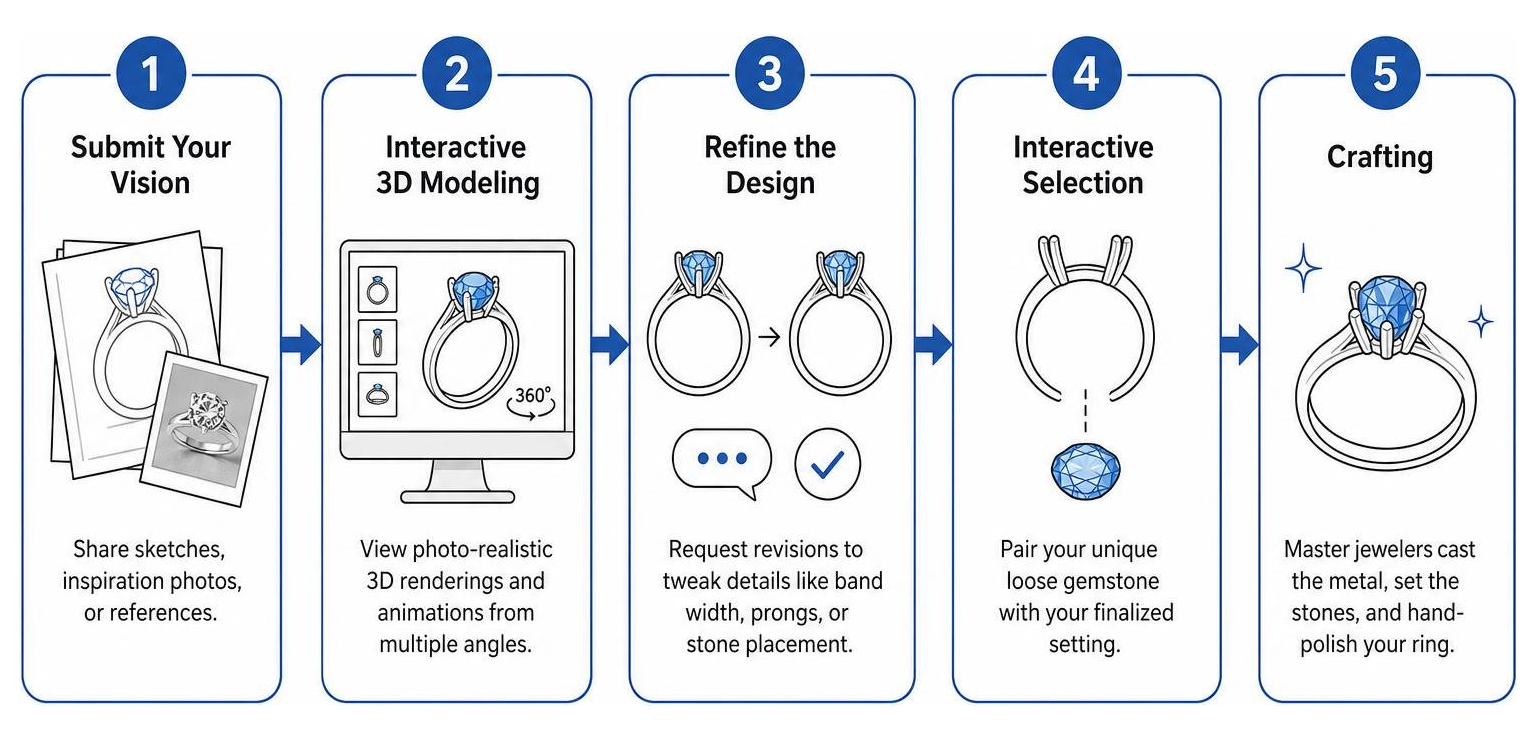
- Submit Your Vision: You begin by sharing sketches, inspiration photos, or references with a design team.
- Interactive 3D Modeling: Using an advanced Engagement Ring Builder App, designers generate photo-realistic 3D renderings and animations of your ring. This allows you to view the piece from multiple angles before it physically exists.
- Refine the Design: Most custom jewelers offer a set number of free revisions (often up to five) to tweak the band width, prong styles, or stone placement.
- Interactive Selection: Using a digital Ring Creator, you can pair your specific, unique loose gemstone with your finalized setting, ensuring a perfect fit.
- Crafting: Once approved, master jewelers cast the metal, set the stones, and hand-polish your custom masterpiece.
Budgeting for Gemstone Engagement Rings: Design Your Own Price Point
One of the greatest myths of custom jewelry is that it is inherently more expensive than buying off-the-case. In reality, designing your own ring gives you complete control over your budget. If you need to lower the price, you can easily swap platinum for 14K gold, choose a slightly smaller stone, or opt for a lab-grown gemstone.
While the average wedding ring in the US hovers around $5,500, custom gemstone rings can start as low as $1,100 to $1,500 depending on the design's complexity and materials.
In terms of timelines, custom-made rings are not instant. While some simple made-to-order styles can be completed in 2 to 4 weeks, highly bespoke designs crafted in major jewelry hubs like New York City can take up to 6 weeks. Always plan ahead and let your design team know if you are working around a tight proposal deadline. To find jewelers who offer these seamless digital design experiences, look for a certified Custom Engagement Ring Website powered by state-of-the-art visualization tools.
Repurposing Family Heirloom Gemstones
If you are fortunate enough to inherit a family heirloom, repurposing its gemstones into a modern design is an incredibly meaningful path. It preserves the sentimental value of a family legacy while giving the stones a fresh lease on life.
To start, you will complete a custom design questionnaire detailing the dimensions and condition of your heirloom stone. Skilled designers will inspect the gem to ensure it is structurally sound enough to be unset and remounted. They can then build a brand-new setting around your historic stone, often utilizing recycled metals to keep the entire project eco-friendly and deeply personal.
Frequently Asked Questions about Custom Gemstone Rings
Are custom gemstone rings returnable or exchangeable?
Because custom-designed rings are handcrafted to order and personalized to your exact specifications, they are almost always final sale and cannot be returned or exchanged. It is crucial to review your 3D renderings carefully and confirm your design choices before giving the green light for production.
Can custom gemstone rings be resized?
Yes, most custom rings can be resized, but policies vary. Many reputable custom jewelers offer a complimentary resizing window (typically 30 days from delivery) for standard bands. However, certain styles — such as full eternity bands or highly detailed carved metals — cannot be easily resized without rebuilding the ring. Always ask your jeweler about resizing limitations before finalizing your band design.
How do I care for and clean my custom gemstone ring?
To keep your gemstone sparkling, clean it regularly at home using warm water, a few drops of mild dish soap, and a very soft-bristled toothbrush. Gently scrub behind the setting where dust and oils accumulate. Avoid harsh household chemicals, steam cleaners, or ultrasonic cleaners, especially for delicate or heavily included stones like emeralds and tanzanites, which can crack under extreme temperatures or vibrations.
Conclusion
Designing your own gemstone engagement ring is a beautiful journey that transforms your personal love story into a wearable work of art. By selecting your own stone, metal, and setting, you create a piece of jewelry that is as unique and enduring as your commitment to one another.
At GemFind Digital Solutions, we do not sell jewelry directly to consumers. Instead, we provide the cutting-edge digital technology, web design, and specialized apps that empower independent jewelers to offer these magical customization experiences online. If you are a jewelry retailer looking to capture the hearts of modern couples, Learn how the RingBuilder® can transform your jewelry website and bring the future of custom design directly to your customers' fingertips.


