


Why Fine Jewellers Need Specialized Jewelry Business Consulting

Jewelry business consulting is specialized advisory support that helps fine jewelry brands optimize pricing, unlock working capital trapped in inventory, and scale operations without sacrificing craftsmanship or margin. Advisors apply industry-specific frameworks to merchandising, production, and digital growth so each showcase slot and collection generates measurable returns.
Fine jewelry operates under financial and operational dynamics that generic retail frameworks fail to address. Precious metals fluctuate daily, gemstone sourcing involves intricate grading and ethical compliance, and individual SKUs often command four-to-six-figure price tags. These high-ticket price points lead to extended consumer buying cycles where trust, tactile validation, and emotional resonance dictate conversion rates.
Generic retail advice often assumes high turnover of low-cost goods with short sales cycles. In contrast, luxury jewelry demands working capital management where inventory carries significant carrying costs. A specialized approach ensures that merchandising, production schedules, and marketing programs align with the physical realities of the bench and the high expectations of luxury buyers.
Jewelry Business Consulting vs Generic Coaching
Generic business coaches typically offer high-level motivation, standard leadership frameworks, and generalized sales tactics. While helpful for broad organizational management, they rarely understand the intricacies of casting shrinkage, memo goods, precious metal hedging, hallmarking regulations, or gemstone grading standards.
Specialized jewelry consulting connects high-level strategy directly to industry workflows. Advisors evaluate supplier terms, optimize custom design CAD-to-CAM pipelines, and implement inventory turn strategies built specifically for fine jewelry retail and wholesale.
| Strategic Dimension | Generic Business Coaching | Specialized Jewelry Business Consulting |
|---|---|---|
| Inventory Evaluation | Standard FIFO/LIFO turnover models | Metal weight, stone yield, memo tracking, scrap repurposing |
| Pricing Models | Flat markup percentages (e.g., standard keystone) | Dynamic metal factor, stone sourcing margins, bench labor absorption |
| Sales Funnel Focus | Rapid, transactional conversions | High-trust, milestone-driven client journeys and bridal pipelines |
| Digital Integration | Standard e-commerce templates | Diamond feed integrations, interactive ring builders, virtual try-on, POS syncing |
| Operations | General team productivity | Bench jeweler efficiency, safe-to-case security, CAD-to-cast workflows |
Key Growth Stages and When to Hire an Advisor
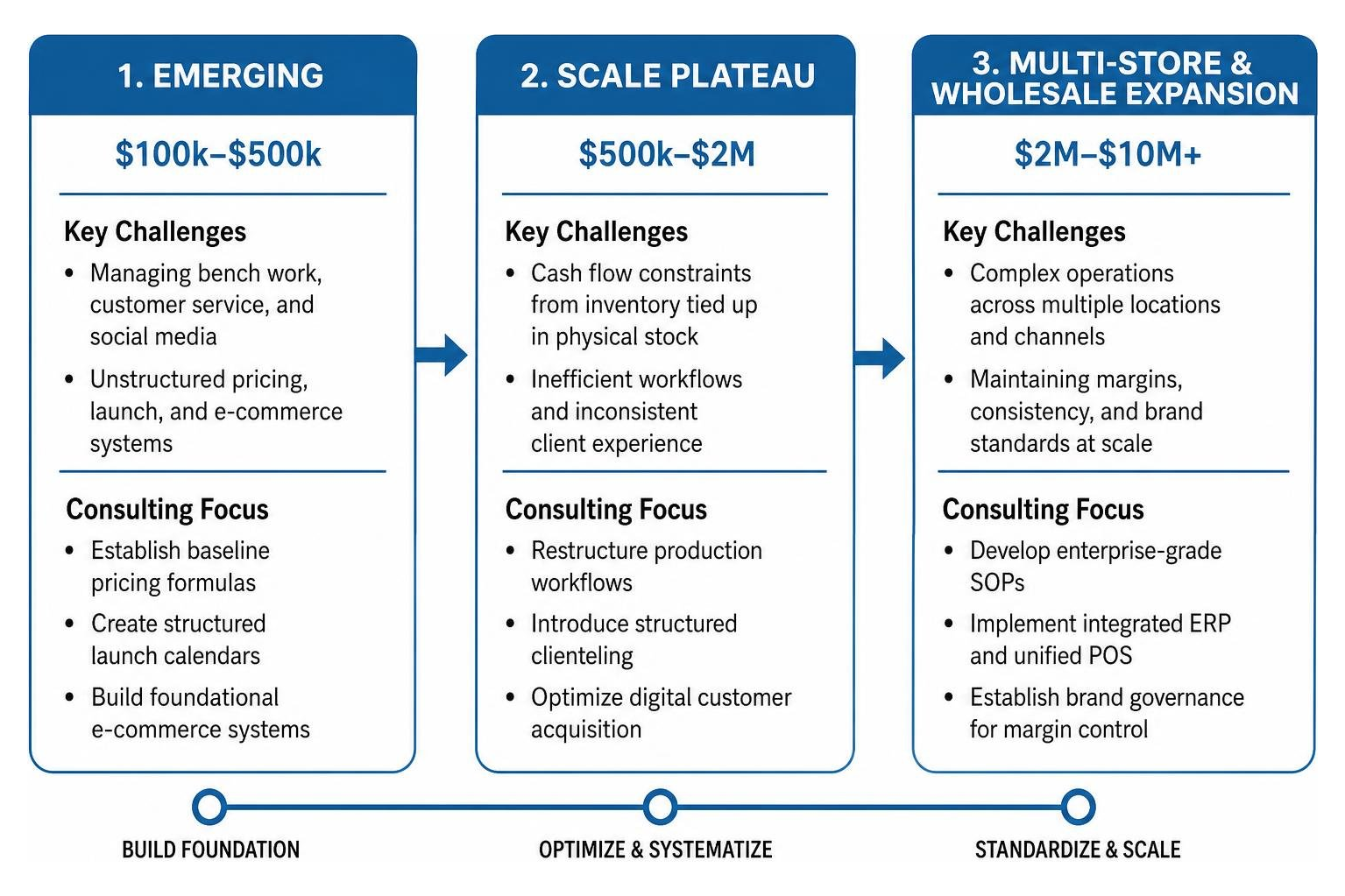
Jewelry brands encounter distinct operational hurdles as they expand:
- The Emerging Phase ($100k–$500k): Designers often find themselves overwhelmed managing bench work, customer service, and social media simultaneously. Consulting establishes baseline pricing formulas, structured launch calendars, and foundational e-commerce systems.
- The Scale Plateau ($500k–$2M): Brands encounter cash flow constraints because working capital remains tied up in physical inventory. Consulting at this stage restructures production workflows, introduces structured clienteling, and optimizes digital customer acquisition.
- Multi-Store and Wholesale Expansion ($2M–$10M+): Companies require enterprise-grade standard operating procedures (SOPs), integrated enterprise resource planning (ERP) systems, unified point-of-sale platforms, and formal brand governance to maintain margin control across multiple sales channels.
Core Pillars: Pricing, Inventory, and Margin Optimization
A jewelry business cannot scale if its underlying financial architecture is flawed. Many jewelers operate under the illusion of profitability, looking only at top-line revenue while ignoring scrap loss, fluctuating metal markets, bench labor overhead, and carrying costs for aged showcases.
Optimizing margins requires balancing the 5Ps framework (Product, Price, Place, People, and Presentation) so that every showcase slot and digital collection generates measurable returns on capital.
Fixing Pricing Gaps and Trapped Working Capital
Underpricing is one of the most common issues among independent designers and retailers. Founders frequently calculate prices by applying a simple keystone markup (2x) to raw materials and direct casting costs, completely omitting:
- Bench labor time spent polishing, setting, and finishing
- Non-recoverable metal loss (scrap and polishing dust)
- Prototyping, CAD modeling, and master mold depreciation
- Insured shipping, gemological certifications, and secure vault storage
At the same time, aged inventory locks up vital liquidity. When unsold pieces sit in display cases for more than 12 months, they stop acting as assets and become liabilities.
Consultants help jewelers audit slow-moving items, identify dead capital, and decide whether to melt them down for scrap credit, re-set the stones into modern mountings, or run strategic VIP private sales.
Overcoming Common Operational and Merchandising Mistakes
Merchandising mistakes quietly erode profit margins. Designers often produce expansive collections with too many variations, resulting in high production expenses and customer decision paralysis.
Consultants help design focused, cohesive core lines supported by disciplined reordering workflows. Discover effective steps to grow your jewelry business by establishing standardized operating procedures that protect margins across every collection.
Scaling Online: Digital Transformation, SEO, and Omnichannel Commerce
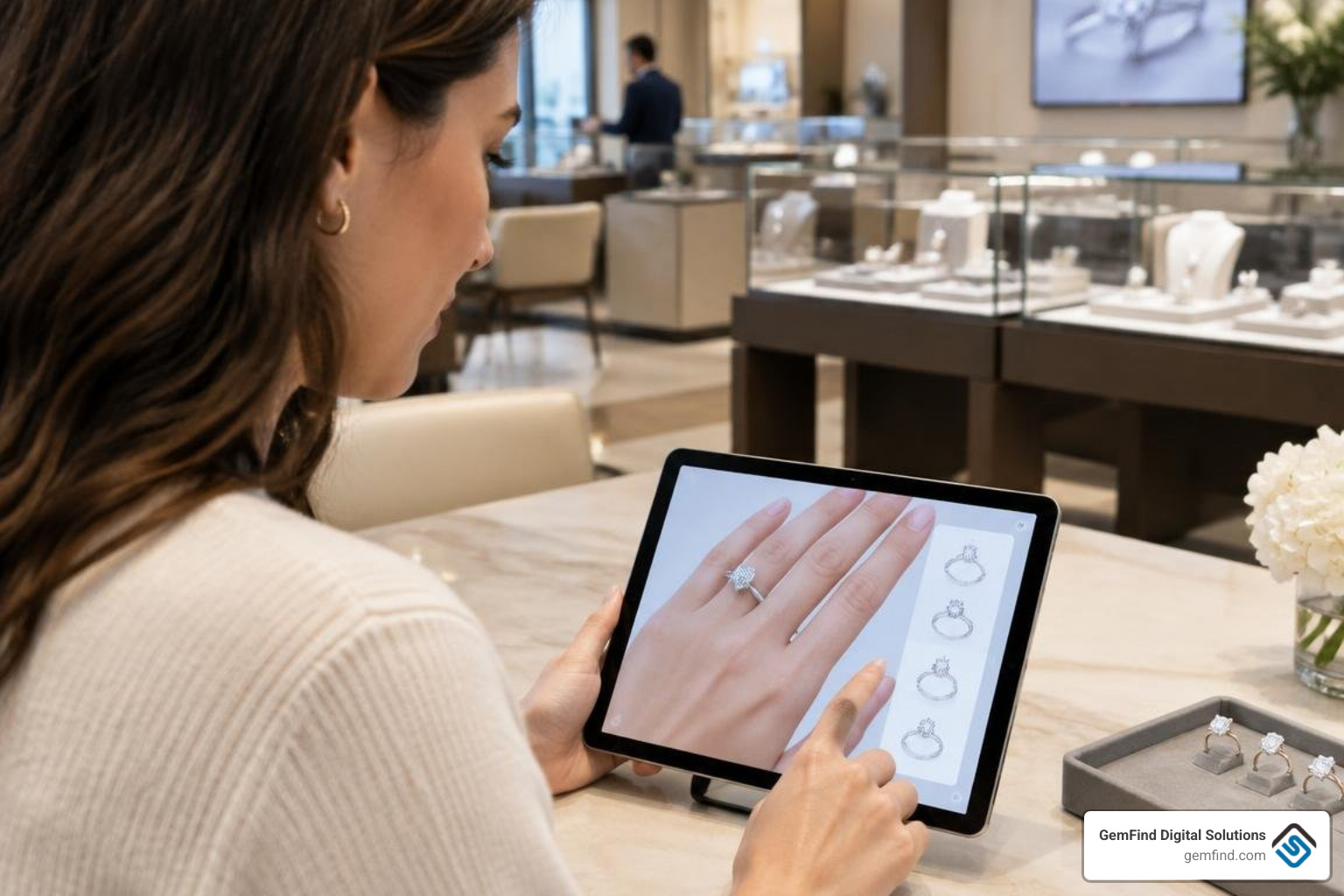
A functional website alone is no longer enough to succeed online. Modern jewelry consumers expect an integrated experience across social channels, digital storefronts, and physical showrooms.
Achieving sustainable online growth requires a dependable engine that attracts qualified traffic, builds immediate trust, and provides an effortless path to purchase.
SEO Foundations, Technical Audits, and Conversion Optimization
Search engine optimization for jewelry brands requires balancing high-intent search visibility with visually engaging brand storytelling. General SEO practices often miss the structured taxonomy needed for luxury catalog navigation.
- Category Hierarchy: Organizing collections logically by metal purity, gemstone cut, carat weight, and style simplifies browsing for both shoppers and search engines.
- Technical SEO: Compressing high-resolution product photography, implementing structured schema data (specifying material, carat, cut, and pricing), and accelerating page load speeds keep bounce rates low.
- Trust Architecture: Placing transparent diamond grading credentials, secure insured shipping assurances, return guarantees, and customer reviews directly on product detail pages boosts buyer confidence.
Review our in-depth guide to positioning a jewelry business online to discover how structured search optimization drives consistent, high-value inquiries.
Integrating AI, Virtual Try-On, and Point-of-Sale Systems
Modern retail requires smooth connectivity between digital channels and the physical sales floor. Independent jewelers often face operational snags when running isolated point-of-sale (POS) systems that fail to sync inventory with their e-commerce platforms.
Our team helps jewelers implement seamless integrations between platforms like Shopify and jewelry-specific management systems such as The Edge POS.
Introducing dynamic loose diamond database feeds, custom 3D configurators, and virtual try-on (VTO) tools bridges the tactile gap for online shoppers. Discover how our dedicated jewelry marketing agency crafts digital ecosystems that convert online visitors into loyal showroom clients.
Growth Models: Audits, Long-Term Strategy, and Enterprise Expansion
Jewelry businesses require different advisory engagements depending on their operational maturity and near-term milestones. Choosing between targeted diagnostic interventions and continuous strategic partnerships determines how effectively capital and operational changes are deployed.
Brand Audits vs Monthly Jewelry Business Consulting Retainers
Understanding whether your business needs a one-time diagnostic project or continuous strategic management is essential for budgeting and resource allocation:
Before committing resources, explore evaluating if an agency model suits your store to decide whether project-based audits or ongoing retainers best match your business goals.
Scaling Towards Franchising, Multi-Store Expansion, and Investment Readiness
When expanding from a single boutique to multiple regional locations, operational consistency becomes paramount. Scaling brands must implement the four core operational phases:
- People: Role-specific hiring scorecards, luxury sales onboarding frameworks, and commission structures that reward margin preservation over discount-driven volume.
- Process: Comprehensive standard operating manuals covering safe opening/closing, daily memo tracking, CAD-to-cast steps, and quality control checklists.
- Technology: Centralized cloud inventory systems providing real-time visibility of SKU transfers, customer purchase histories, and vendor reorder thresholds across every location.
- Infrastructure: Standardized physical showroom layouts, uniform display visual merchandising guidelines, and secure vaulting protocols.
For enterprise jewelers preparing for private equity investment or family leadership transitions, advisors build transparent governance structures, clean up balance sheets, and establish reliable multi-channel revenue engines.
How to Choose the Right Advisor and Measure Consulting ROI
Hiring a consultant represents a serious operational investment. Selecting the wrong partner can lead to wasted capital, disrupted team workflows, and brand messaging that misses the mark with luxury buyers.

Key Qualifications and Industry Experience Checklist
Before hiring a consulting firm or individual advisor, verify that they meet these core requirements:
- [ ] Demonstrated Industry Track Record: Proven history advising jewelry brands, with client references and verified portfolio examples.
- [ ] Deep Gemological & Supply Chain Understanding: Working familiarity with diamond sourcing, precious metal manufacturing, and international trade regulations.
- [ ] Omnichannel Technical Proficiency: Direct experience integrating jewelry point-of-sale systems, e-commerce platforms, live diamond feeds, and CRM databases.
- [ ] Data-Driven Strategy: A clear roadmap focused on measurable gross margin return on investment (GMROI) and customer lifetime value, rather than vague lifestyle coaching.
Read our overview on the top qualities to look for in a digital partner to ensure your selected team brings proven domain expertise to your business.
Tracking Concrete Metrics and Revenue Returns
A successful consulting engagement should deliver measurable improvements across both balance sheets and digital channels. Key performance indicators to track include:
- Gross Margin Return on Inventory Investment (GMROI): Evaluating how effectively every inventory dollar turns into gross profit.
- Inventory Aging and Velocity: Measuring the speed at which finished jewelry pieces sell after hitting showcases or digital collection pages.
- E-Commerce Conversion Rate: Tracking conversion lifts from technical SEO improvements, clear product descriptions, and streamlined checkout flows.
- Customer Acquisition Cost (CAC) vs. Lifetime Value (LTV): Measuring repeat purchases, bridal-to-anniversary transitions, and post-purchase client retention.
- Operating Expense Reduction: Eliminating software redundancies, renegotiating supplier terms, and cutting scrap metal waste.
Frequently Asked Questions About Jewelry Business Consulting
What measurable ROI can a brand expect from a jewelry advisor?
Return on investment varies by engagement scope, but typical consulting projects deliver returns through multiple areas:
- Direct Expense Reductions: Identifying inefficient marketing spend, renegotiating vendor payment terms, and cutting scrap metal loss.
- Higher Average Order Value (AOV): Introducing strategic upsells, bundled custom packages, and improved collection merchandising.
- Inventory Turnover: Releasing working capital by liquidating aged stock and focusing production on proven, high-velocity styles.
- Conversion Rate Optimization (CRO): Turning existing website traffic into qualified bridal and custom jewelry consultations.
How does a consultant fix cash flow trapped in aged inventory?
Advisors use a systematic approach to unlock trapped working capital:
- Aging Audit: Classifying inventory by days in stock (0–90, 91–180, 181–365, and 365+ days).
- Scrap vs. Remount Evaluation: Calculating whether melting older settings for credit yields faster liquidity than discounting finished pieces.
- Private VIP Clienteling: Running targeted, private outreach campaigns to match older inventory with customer purchase preferences before resorting to public sales.
- Dynamic Merchandising: Moving slow-moving showcase pieces to prominent digital landing pages with updated lifestyle photography and search-optimized copy.
When should an emerging jewelry designer hire a business consultant?
An emerging designer should consider working with a consultant when:
- Sales hit a plateau despite strong organic interest, indicating bottlenecks in marketing funnels or pricing structures.
- Making the transition from direct-to-consumer bench jeweler to managing wholesale accounts or opening a dedicated brick-and-mortar boutique.
- Product lines expand beyond the founder's production capacity, requiring reliable casting houses, CAD specialists, and standardized manufacturing workflows.
- Launching a digital storefront requiring synchronized inventory feeds, custom ring configurators, and structured search visibility.
Transform Your Jewelry Business Into a Profitable Growth Engine
Designing beautiful jewelry requires creative vision, but scaling a sustainable luxury brand demands clear operational systems, precise margin control, and modern digital commerce.
Whether your goal is to release capital locked in older inventory, optimize custom design workflows, or build an integrated digital storefront, strategic guidance turns operational challenges into lasting profitability.
At GemFind Digital Solutions, we combine over 25 years of dedicated jewelry industry experience with modern technology partnerships across Shopify, Google, and major jewelry point-of-sale systems. We build the digital tools, e-commerce architectures, and growth strategies that help independent jewelers and luxury houses scale with confidence.
Ready to uncover hidden profit leaks and build a reliable digital growth engine? Schedule your Free Consultation with our advisory team today. Explore our comprehensive hub of strategic jewelry digital marketing and consulting resources to start scaling your brand today.


