


Why Search Engine Optimisation SEO Matters for Jewelry Stores
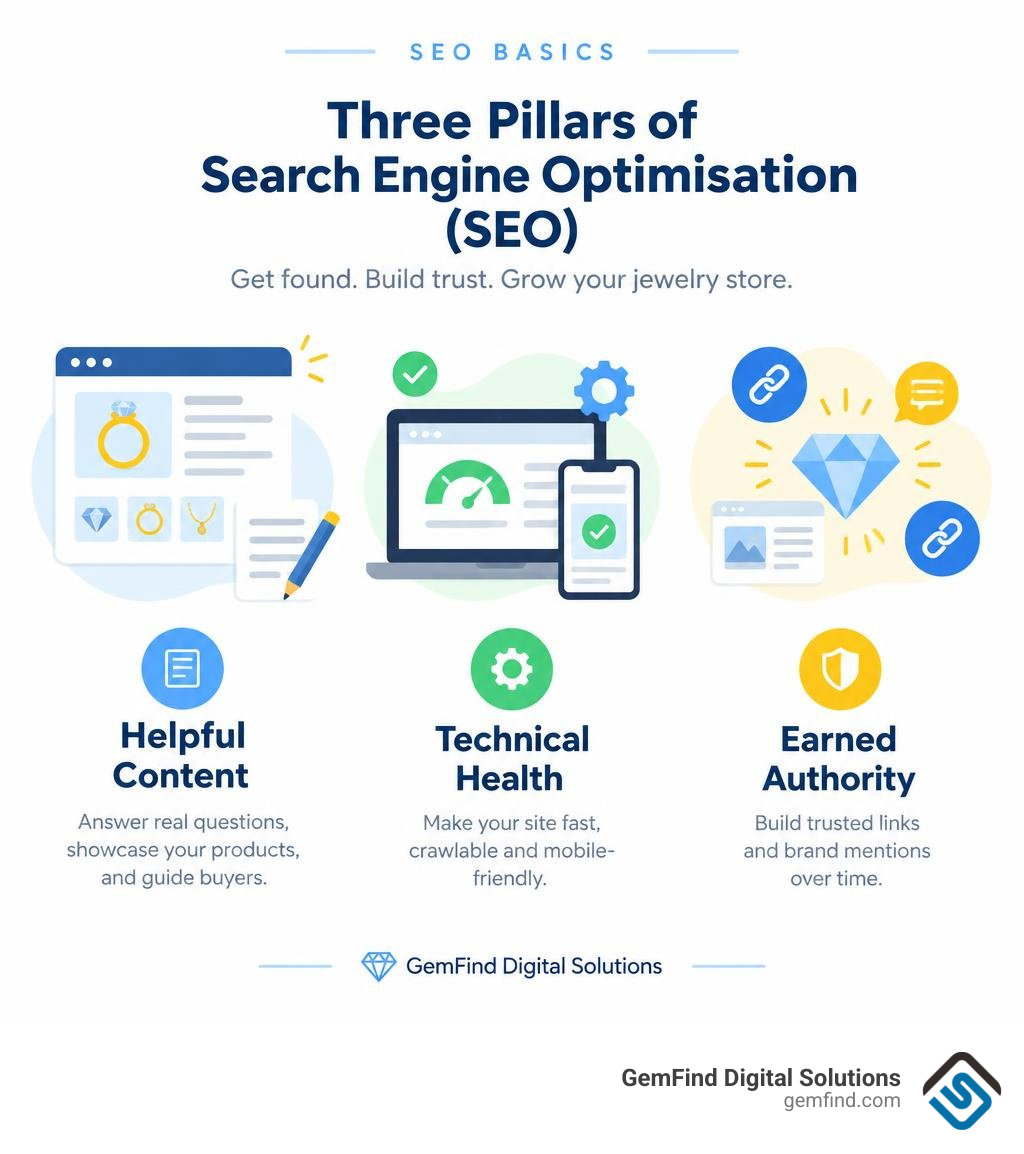
Search engine optimisation SEO is the work of making your website easier for Google and AI search tools to find, understand, and recommend. For a jewelry store, that means creating useful pages for the products and questions shoppers search for, keeping the site fast and crawlable, and earning trusted links and brand mentions.
Start with these three priorities:
- Match buyer intent: Build clear pages for searches such as "custom engagement rings" or "gold jewelry repair near me."
- Make every page useful: Add original product details, quality images, descriptive titles, and helpful buying guidance.
- Keep the site technically healthy: Ensure Google can crawl important pages, shoppers can use the site on mobile, and pages load quickly.
SEO is not just a race for the number-one blue link. It is a way to build visibility wherever people look for answers, including traditional results, local results, and AI-generated search experiences. Organic search accounted for 33% of website traffic across seven major industries in 2025, making it a meaningful channel for businesses that want sustainable discovery without paying for every visit.
Google and other systems discover pages, store information about them, and choose results that appear relevant, helpful, trustworthy, and easy to use. AI search can also combine information from several sources into an answer, so clear expertise and strong site foundations matter more than ever.
I am Morgan Price, a white-hat outreach specialist with experience researching link opportunities, building real publisher relationships, and helping content teams earn sustainable authority for search engine optimisation SEO. Next, we will break down how Google and AI search systems decide which pages deserve visibility.
Search engine optimisation seo basics:
- affordable seo companies
- local seo services for small business
- digital marketing seo agency
Understanding Search Engine Optimisation SEO and How Search Systems Work
When we look at the evolution of modern discovery, search engines have transformed from simple index catalogs into complex discovery ecosystems. Today, Google processes more than five trillion searches every single year. Whether a customer is typing a short keyword into a traditional search bar or speaking a natural-language prompt into an AI assistant, the goal remains the same: finding the most relevant, reliable solution.
Understanding the historical and modern landscape of search engine optimization helps us see why quality always triumphs over quick shortcuts. In the early days, web discovery relied on static directories. Today, search algorithms rely on sophisticated machine learning models to assess content value, user satisfaction, and contextual relevance.
The search engine results page (SERP) now blends conventional organic blue links, local map packs, product listings, and generative snapshots. For example, Google reported that AI Overviews drove over 10% growth in query types where they appear across major markets like the U.S. and India. Furthermore, 63% of digital marketing professionals report that AI Overviews have positively impacted organic visibility and engagement for sites built on sound search principles.
To choose where to allocate your digital marketing resources, it helps to compare organic search engine optimization with paid search advertising (PPC):
| Strategy Element | Organic Search Engine Optimisation (SEO) | Paid Search Advertising (PPC / SEM) |
|---|---|---|
| Cost Model | Upfront effort; clicks are free | Pay-per-click (PPC); ongoing ad spend required |
| Longevity | Compounding traffic that endures over time | Traffic ceases the moment ad campaigns pause |
| User Trust | High credibility through earned editorial placement | Clear sponsored labels; some users skip ads |
| Time to Impact | Gradual growth over weeks or months | Instant placement at the top of search pages |
| Conversion Quality | Attracts high-intent, research-driven visitors | Captures immediate transactional queries |
Both channels offer value, but organic search builds an enduring digital asset that continually pays dividends.
How Search Crawlers and Generative AI Index Content
Search systems operate through a continuous three-stage workflow: crawling, indexing, and ranking.
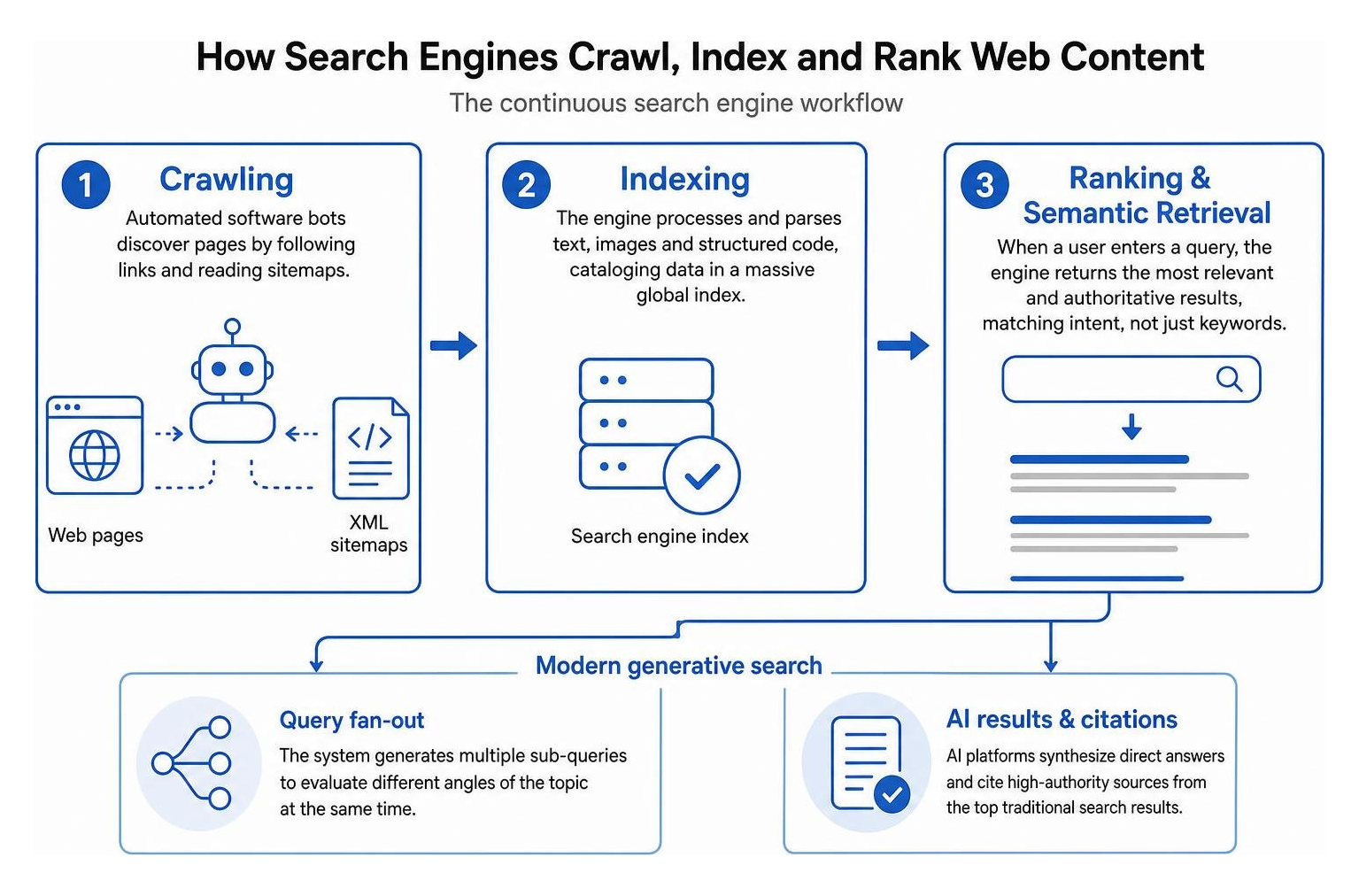
- Crawling: Automated software bots (such as Googlebot) discover pages by following hyperlinks across the web and reading submitted XML sitemaps.
- Indexing: The search engine processes and parses the text, visual media, and structured code on the page, cataloging the data in a massive global index.
- Ranking and Semantic Retrieval: When a user enters a query, the search engine searches its index to return the most relevant and authoritative results, matching not just direct keywords, but underlying semantic intent.
In modern generative environments, search engines deploy advanced techniques like "query fan-out." Instead of treating a search as an isolated string, the system generates multiple sub-queries to evaluate different angles of the topic simultaneously. AI search platforms then synthesize direct answers and cite high-authority sources. Interestingly, research indicates that AI Overviews pull from the top 10 traditional Google URLs roughly 67% of the time, while the direct result overlap between dedicated AI Mode and top-10 standard results sits at approximately 35%.
Learning how these mechanisms operate is crucial for driving sustainable organic growth, ensuring your brand is cited both in traditional rankings and conversational summaries.
Core Pillars of Search Engine Optimisation SEO
A balanced, resilient optimization strategy stands on three core pillars:
- On-Page SEO: Creating informative, user-first content optimized with descriptive titles, headers, clear images, and logical internal links. Focus on optimizing on-page SEO elements to show clear relevance to both human visitors and search engines.
- Technical SEO: Ensuring search engine bots can efficiently access, crawl, interpret, and index your website without encountering broken code, slow speeds, or security issues. Google provides extensive foundational guidance within the Google Search Central SEO Starter Guide.
- Off-Page SEO: Establishing brand authority, trust, and reputation across the broader web through earned editorial backlinks, digital PR, industry citations, and unlinked brand mentions.
Fundamental Strategies for On-Page and Technical Website Optimization
Achieving top visibility requires delivering an exceptional user experience supported by rock-solid technical infrastructure.

Keyword Research and Search Intent Optimization
Keyword research is the process of discovering the exact phrases, questions, and terminology your prospective customers use. Rather than guessing, use data-driven research to evaluate search volume, keyword difficulty, and intent density.
Search intent generally falls into four distinct categories:
- Informational: The user wants answers or education (e.g., "how to clean diamond rings at home").
- Navigational: The user is seeking a specific brand or destination (e.g., "GemFind login").
- Commercial Investigation: The user is comparing options before buying (e.g., "lab grown vs natural diamond earrings review").
- Transactional: The user is ready to make a purchase (e.g., "buy platinum engagement ring online").
Rather than targeting isolated keywords with individual thin pages, modern search engines reward comprehensive topical coverage. Implementing strategic keyword clustering practices allows you to group related search queries onto a single, high-value page or within an interconnected hub of articles.
When formatting on-page elements, follow these best practices:
- Title Tags: Write concise, engaging titles (under 60 characters) featuring your primary keyword near the beginning.
- Meta Descriptions: Create enticing, natural summaries (around 150–160 characters) that encourage clicks from the SERP.
- Heading Structure (H1, H2, H3): Organize content logically so readers and crawlers can scan key takeaways effortlessly.
- Image Optimization: Add clear, descriptive alt text and compress images into modern formats like WebP to maintain fast load speeds.
Technical Health, Site Speed, and Structured Data
A website can have exceptional content, but if search engine crawlers encounter technical roadblocks, that content will struggle to rank. Maintaining essential technical ranking fundamentals ensures your site remains fully crawlable and indexable.
Key technical priorities include:
- Robots.txt Configuration: Guide search bots away from private admin files while ensuring all valuable public content is fully accessible.
- XML Sitemaps: Keep an up-to-date XML sitemap submitted to Google Search Console to speed up the discovery of new and updated pages.
- Canonical Tags: Use self-referential or cross-domain canonical tags to prevent duplicate content issues across similar product variants or category filters.
- Mobile-First Indexing: Google indexes web pages based on how they render on a mobile device. Ensure mobile responsive layouts are intuitive and easy to navigate.
- Core Web Vitals: Optimize your Largest Contentful Paint (LCP), Interaction to Next Paint (INP), and Cumulative Layout Shift (CLS) to guarantee snappy, stable page loads.
- Schema Markup: Implement structured data (such as Product, Organization, FAQ, and LocalBusiness schema) to help search engines understand entities and qualify your pages for rich SERP enhancements.
Building Digital Authority and Measuring Search Visibility
Search engines evaluate authority based on how the rest of the web talks about and references your brand. Earning trust takes deliberate, relationship-based effort.

Authority building centers on earning high-quality backlinks and legitimate media coverage. When an established, industry-relevant publication links to your content, it serves as a vote of confidence. Exploring proven methods for increasing visibility with off-page SEO will help protect your website from low-quality link schemes while building genuine brand prominence.
Beginner Steps for Search Engine Optimisation SEO Success
If you are just getting started, break your SEO rollout into actionable, manageable steps:
- Set Up Google Search Console and Analytics: Connect your website to Google Search Console and Google Analytics 4 to track impressions, clicks, search queries, and technical errors.
- Perform a Comprehensive Site Audit: Identify broken links, 404 errors, missing meta tags, and slow-loading media assets across your core pages.
- Map Keywords to Core Landing Pages: Assign primary and secondary search queries to specific service pages, category hubs, and blog guides based on user intent.
- Optimize On-Page Elements: Polish title tags, meta descriptions, image alt tags, and internal link structures.
- Verify Indexing with the URL Inspection Tool: Test your priority URLs in Search Console to verify that Googlebot can render them properly without script blockers.
- Publish In-Depth, Expert Content Regularly: Answer real customer questions thoroughly, demonstrating genuine experience and subject expertise.
- Initiate Outreach for Digital PR and Backlinks: Partner with reputable local organizations, industry publications, and supplier directories to secure relevant editorial links.
Tracking Performance and AI Search Visibility Metrics
Measuring search performance requires looking beyond isolated keyword rankings. Monitor a balanced portfolio of organic metrics:
- Organic Impressions and Clicks: Tracking visibility trends across Search Console reveals whether your content footprint is expanding.
- Click-Through Rate (CTR): Analyzing CTR helps you optimize title links and meta descriptions to attract more qualified traffic.
- Keyword Rankings Across Intent Buckets: Monitor how your commercial, local, and educational pages progress over time.
- Organic Conversions and Revenue: The ultimate measure of SEO success is business growth—whether measured in form submissions, phone calls, or direct e-commerce sales.
- AI Citations and Mentions: With conversational search engines expanding, tracking your brand's presence across AI summaries provides crucial insights into modern search presence. Recent industry data shows that AI search visitors are worth approximately 4.4 times more in conversion value than standard traffic due to their high commercial intent.
Leveraging comprehensive digital marketing SEO strategies ensures your analytics data directly informs your ongoing content and technical roadmap.
Frequently Asked Questions About Google Search Engine Optimisation
What is the primary difference between SEO and SEM?
SEO (search engine optimization) focuses on earning unpaid, organic placement on search engine results pages through content quality, site architecture, and digital authority. SEM (search engine marketing), commonly referred to as paid search or PPC, involves purchasing advertising space at the top of search listings. While SEM delivers immediate visibility for as long as you pay for clicks, SEO generates sustainable, compounding traffic with long-term return on investment.
How long does it take to see organic ranking results from SEO?
Search engine optimization is an ongoing process. While technical adjustments (such as fixing critical crawl errors or updating metadata) can produce positive ranking shifts in a matter of weeks, meaningful organic growth and competitive keyword rankings typically take between three to six months. Factors influencing this timeline include your website's domain age, existing authority, technical health, content quality, and the level of industry competition.
Which outdated SEO tactics and myths should businesses avoid?
Avoid wasting time on obsolete tactics such as:
- Meta Keywords: Search engines have ignored the meta keywords tag for over a decade.
- Keyword Stuffing: Artificially cramming repetitive keywords into content harms readability and triggers search spam penalties.
- PageRank Obsession: Focusing solely on legacy PageRank scores rather than practical content relevance and modern engagement metrics is counterproductive.
- Duplicate Content Penalties: Minor duplicate content (such as standard boilerplate disclaimers or syndicated product descriptions) does not trigger severe algorithmic penalties, though it can dilute ranking power and waste crawl budget.
Conclusion
Succeeding in organic search requires consistency, technical precision, and an unwavering commitment to user satisfaction. As search engines continue to integrate generative AI and semantic understanding, the brands that thrive will be those that pair clean technical foundations with authoritative, expert-led content.
At GemFind Digital Solutions, we bring more than 25 years of specialized digital marketing, web development, and search engine optimization expertise to help businesses build dominant organic search footprints. Whether optimizing product discovery, enhancing local maps visibility, or preparing your website for the future of AI-driven search, our certified team is here to guide your growth.
Ready to elevate your online visibility and drive measurable revenue? Explore our comprehensive SEO Jewelry Guide 2026 to discover tailored search strategies that convert browsing shoppers into loyal, lifetime clients.


