


Why Your Jewelry Brand Needs More Than Just Sparkle

Jewelry brand marketing is how you attract customers, build loyalty, and drive sales through strategic branding, digital presence, social media, SEO, email campaigns, and customer engagement. In today's competitive landscape, beautiful products alone won't guarantee success—you need a comprehensive marketing strategy that connects emotionally with buyers and stands out in a crowded market.
Quick Answer: Essential Jewelry Brand Marketing Strategies
- Build a Strong Brand Identity - Define your story, values, and unique selling proposition
- Create a High-Converting Website - Optimize for mobile, showcase products with quality photos, simplify checkout
- Leverage Social Media - Focus on Instagram, Pinterest, and TikTok with visual content and UGC
- Invest in SEO & Content - Attract organic traffic through blogs, gift guides, and educational content
- Use Paid Advertising Strategically - Deploy Google Ads, social media ads, and retargeting campaigns
- Harness Email Marketing - Segment your list and personalize campaigns for high ROI
- Accept New Technology - Offer virtual try-on, personalization tools, and AR experiences
- Build Customer Loyalty - Use testimonials, reviews, and loyalty programs to retain buyers
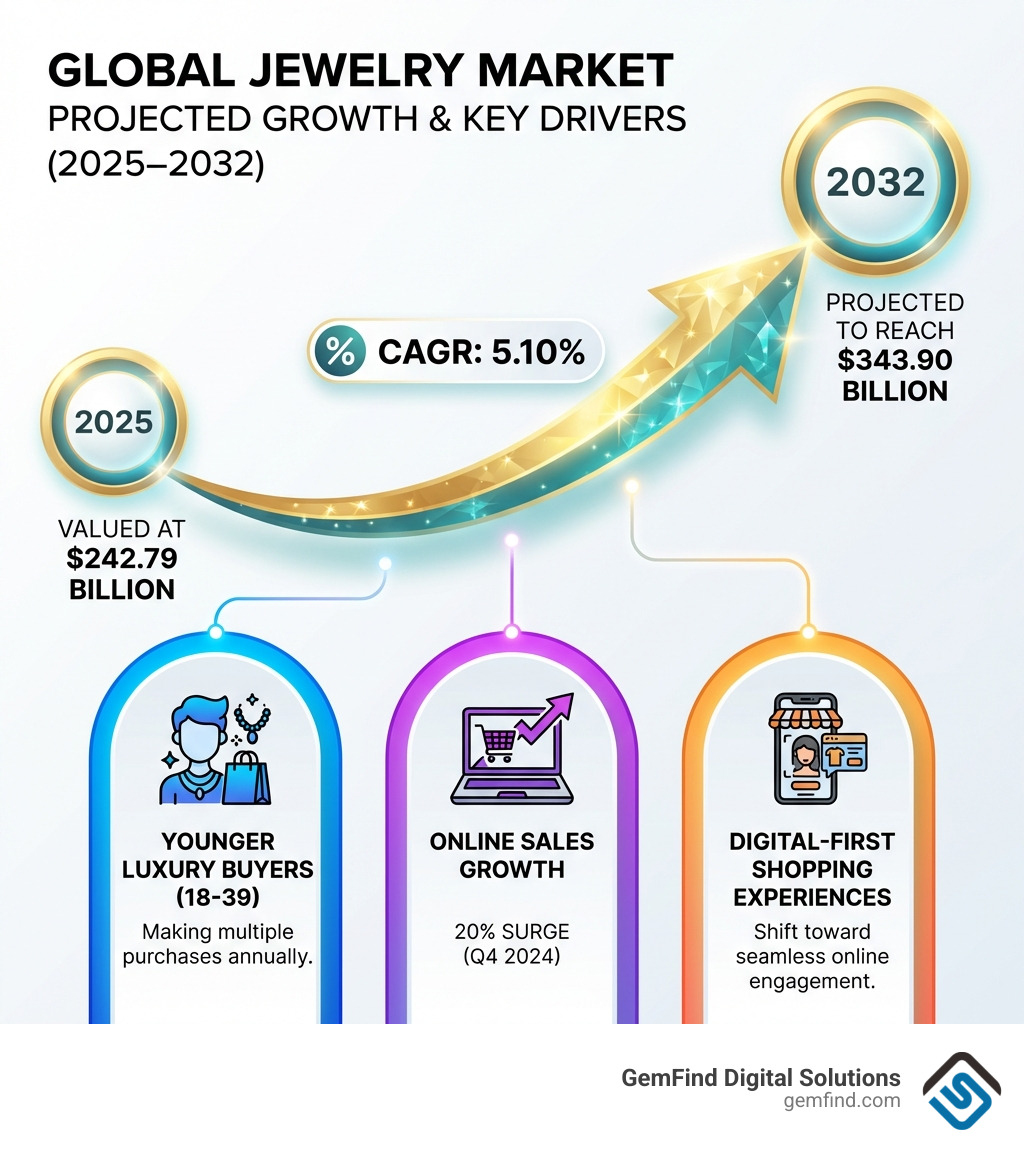
The global jewelry market tells a compelling story. Valued at $242.79 billion in 2025, it's projected to reach $343.90 billion by 2032—a 5.10% annual growth rate. But here's the challenge: with new brands multiplying rapidly, competition is fierce. Every jewelry business is fighting for the same customers' attention.
The market shift is undeniable. Luxury jewelry buyers aged 18 to 39 made multiple purchases last year, while those 40 and older bought less often. Online sales surged 20% in Q4 2024 alone. Your customers expect more than pretty pieces—they want authentic stories, seamless digital experiences, and emotional connections with the brands they choose.
This isn't just about selling jewelry anymore. It's about building a brand that resonates, differentiates, and creates lasting relationships with customers who have endless options at their fingertips.
As Morgan Price, I've spent years helping jewelry brands build authoritative online presences through strategic content and link-building that drives real traffic and sales. Throughout this guide, I'll share proven jewelry brand marketing strategies that work in today's digital-first marketplace—from foundational branding to advanced growth tactics that scale your business.
The Foundation: Building an Unforgettable Brand Identity
In a market where products can look similar, your brand is what truly sets you apart. It's the intangible value that transforms a piece of metal and stone into a cherished possession. Building a strong brand identity is the bedrock of effective jewelry brand marketing.
Define Your Brand's Soul and Story
Before you even think about logos or ad campaigns, you need to understand the heart of your brand. This starts with identifying your target audience. Who are they? What are their values, their aspirations, their moments of celebration? For instance, some brands target young, Gen Z customers with a vibrant, energetic feel, while others cater to those seeking classic elegance. Creating detailed buyer personas helps us tailor every aspect of our marketing efforts.
Next, define your brand's mission, vision, and values. What problem does your jewelry solve? What future do you envision for your customers? What principles guide your business? These elements form the core narrative of your brand. Jewelry, more than most products, is deeply personal and emotional. People often buy it not out of necessity, but because of how it makes them feel, marking life's milestones and carrying legacies. Effective storytelling, as explored in The impact of digital brand storytelling, connects with these emotions. Consider how brands like Pandora have resonated by allowing customers to tell their own stories through charms, or how Cartier evokes history and artistry with every piece.
Crafting Your Unique Selling Proposition (USP)
In a competitive market, simply having beautiful jewelry isn't enough. You need to articulate what makes your brand uniquely appealing. This is your Unique Selling Proposition (USP). We recommend a thorough competitor analysis to understand what others are doing well and where there are gaps. A SWOT analysis can reveal your strengths, weaknesses, opportunities, and threats.
Differentiation is key. Do you specialize in sustainable, ethically sourced materials? Are you known for minimalist designs, or perhaps intricate bespoke pieces? Brands like My Name Necklace thrive on personalization, while others like Blue Nile focus on customizable engagement rings. Clearly defining your niche helps you attract the right customers and allows us to focus our marketing efforts. To learn more about standing out, read How to stand out from the competition.
Establishing Your Brand's Voice and Visuals
Once the soul of your brand is defined, it's time to give it a voice and a face.
- Brand personality and tone of voice: Is your brand playful, sophisticated, eco-conscious, or traditional? This personality should shine through in all your communications, from website copy to social media posts.
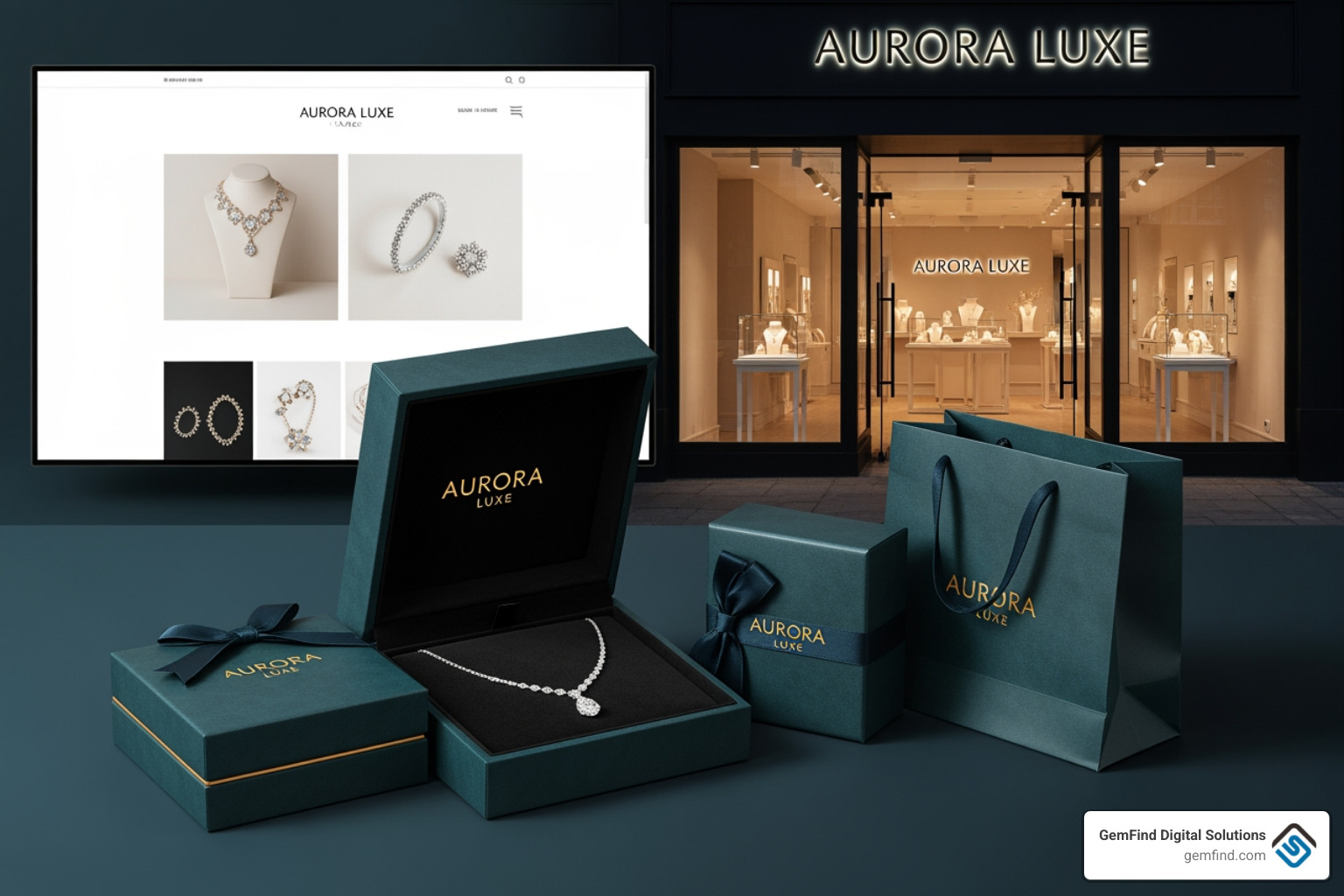
- Visual identity: This includes your logo design, color palette, and typography. Think of Tiffany & Co.'s iconic blue box—a simple color that instantly communicates luxury and recognition. This level of visual impact is achievable for any brand with careful planning.
- Packaging design: This is crucial for jewelry. Neat, thoughtful packaging not only improves the unboxing experience but can also tell your brand's story and encourage user-generated content, like unboxing videos.
Consistency across all these elements is paramount. Your brand voice and feel should be harmonious across every touchpoint. For more insights on strengthening your brand, check out 4 tips to strengthen your brand.
Digital Dominance: A Guide to Jewelry Brand Marketing Online
The digital field is where modern jewelry brand marketing truly shines. An effective online presence is no longer optional; it's essential.
Building Your Digital Showroom: The E-commerce Website
Your website is your primary digital storefront. It needs to be visually stunning, highly functional, and user-friendly.
- Website optimization and user experience (UX): A clean, intuitive design makes it easy for customers to browse and find what they're looking for.
- Mobile-first design: With so many people shopping on their phones, your site must look and function perfectly on mobile devices.
- High-quality photography and videography: This is non-negotiable for jewelry. Products with high-quality photos are nearly twice as likely to convert. We recommend clear, detailed images, 360-degree views, and lifestyle shots that help customers envision wearing the pieces.
- Key features: Your site should include secure checkout, clear product descriptions, and trust signals like customer reviews. Live chat support can also be invaluable for answering questions and building customer confidence. For a deeper dive, explore Key features for a successful jewelry store website.
Attracting Organic Traffic with SEO and Content Marketing
Getting found online is half the battle. Search Engine Optimization (SEO) helps your website rank higher in search results, attracting potential customers actively looking for jewelry.
- Keyword research: We identify the terms your ideal customers are searching for (e.g., "custom engagement rings," "unique jewelry gifts").
- On-page SEO: This involves optimizing your website content, product descriptions, and meta tags with these keywords.
- Local SEO: If you have a physical store, optimizing for local searches like "jewelry stores near me" is crucial, as 85% of people use search engines to find local businesses.
- Content creation: A blog is an excellent way to attract organic traffic and establish your brand as an authority. Think gift guides, style tips, educational articles on gemstone care, or behind-the-scenes stories. Top 5 reasons your jewelry website needs a blog offers more insights.
- Video marketing: This is increasingly important. A staggering 78% of consumers prefer to learn about a product from videos, not articles, and 93% of marketers report a solid ROI from video. Showcase your jewelry through captivating videos that highlight craftsmanship and beauty.
Leveraging Social Media for Jewelry Brand Marketing
Social media platforms are visual powerhouses, making them perfect for jewelry brand marketing.
- Instagram: A must-have, as 81% of users research products and services here. It's ideal for high-quality visuals, Reels, stories, and showcasing new collections. How to use Instagram for your jewelry store provides a comprehensive guide.
- Pinterest: With over 600 million monthly active users, 80% of whom use it to find new jewelry pieces and brands, Pinterest is fantastic for inspiration boards, styling ideas, and rich product pins.
- TikTok: With over 1 billion monthly active users, TikTok offers huge potential for short, engaging videos, unboxing content (which collectively has over 45 billion hashtags), and behind-the-scenes glimpses.
- Facebook: While its organic reach is lower (1.65%), Facebook still boasts three billion active monthly users, making it valuable for targeted ads, community building, and sharing customer testimonials.
We also emphasize User-Generated Content (UGC), as 64% of consumers report that it highly impacts their purchasing decisions. Encourage customers to share their photos wearing your jewelry!
Driving Sales with Paid Ads, Email, and Influencers
Beyond organic reach, strategic paid advertising, email campaigns, and influencer collaborations can significantly boost sales.
- Paid advertising (PPC): Platforms like Google Ads are excellent for reaching high-intent shoppers searching for specific items (e.g., "buy gold earrings"). Social media ads on Facebook, Instagram, and TikTok allow for precise targeting based on demographics and interests.
- Retargeting: This is a powerful tactic. It involves showing ads to people who have already visited your website or interacted with your brand. Personalized ads and marketing can cut Customer Acquisition Cost (CAC) by 50% and increase revenue by 15%. To understand its effectiveness, dig into Why remarketing ads on Facebook work.
- Email marketing: This remains one of the most effective channels, boasting an average Return on Investment (ROI) of $42 for every $1 spent. We use list segmentation to send personalized content, new collection alerts, and exclusive offers custom to subscriber preferences.
- Influencer marketing: The influencer market is projected to reach $33 billion in 2025. Partnering with influencers, especially micro-influencers, can be highly effective. Micro-influencers often have deeply authentic connections and rapport with their audiences, generating up to 60% more engagement than macro-influencers. For guidance on finding the right partners, see How to find social media influencers for jewelry.
Advanced Growth Strategies and Emerging Trends
To stay ahead in jewelry brand marketing, we must accept innovation and evolving customer expectations.
Embracing the Future: Tech and Sustainability
The jewelry industry is rapidly evolving, driven by technological advancements and a growing consciousness among consumers.
- Personalization and customization: Tools that allow customers to design their own pieces, choose gemstones, or add engravings are increasingly popular.
- Virtual try-on technology and Augmented Reality (AR): This is a game-changer. Virtual try-on technologies can decrease refund rates by 80% and increase engagement by 200%. Moreover, products with 3D/AR content see an average of 94% higher conversion rates. Major brands are already implementing this, and 61% of shoppers prefer retailers that offer AR experiences. It's like bringing the fitting room to your customer, wherever they are.
- Sustainable materials and ethical sourcing: Consumers, particularly younger generations, are increasingly concerned about the environmental and social impact of their purchases. Brands are committing to using recycled metals and transparently sourcing materials. Communicating your jewelry industry sustainability commitments is vital for building trust.
Building Loyalty and Driving Action
Acquiring new customers is important, but retaining existing ones is often more cost-effective and profitable.
- Limited-time promotions and exclusive collections: These create a sense of urgency and reward loyal customers.
- Customer testimonials and reviews: Social proof is powerful, especially for high-value items. We encourage customers to leave reviews and feature them prominently on your website and social media. The importance of these is highlighted in The importance of customer reviews for your jewelry store & where to feature them.
- Loyalty programs: Rewarding repeat purchases fosters long-term relationships. Learn how to set one up with How to create a loyalty program for your jewelry store.
- Omnichannel experience: Customers expect a seamless experience whether they're shopping online, on social media, or in-store. We strive to meet them wherever they prefer to shop, ensuring consistent branding and service across all touchpoints.
Integrating Offline and Online Marketing
While digital marketing is dominant, traditional and experiential marketing still hold significant value, especially for jewelry.
- Community events and sponsorships: Participating in local events or sponsoring causes can build brand awareness and goodwill, particularly for brands with a physical presence.
- Pop-up shops and in-store events: These allow customers to physically interact with your jewelry, which is incredibly impactful for such tactile products. Think custom engraving pop-ups or exclusive preview events.
- Phygital experiences: This blends the physical and digital. For example, Bulgari's 75th Serpenti Anniversary campaign combined a short film with AI art installations, changing physical experiences into digital touchpoints. We can integrate QR codes in-store that lead to virtual try-ons or online collections. How to integrate traditional marketing with digital marketing offers more strategies.
Scaling Your Business: Measurement, Challenges, and Planning
As your jewelry brand grows, so does the complexity of its marketing. Strategic planning, rigorous measurement, and proactive problem-solving are vital for sustainable scaling.
Developing a Comprehensive Jewelry Brand Marketing Plan
A well-defined marketing plan is your roadmap to success.
- Setting SMART goals: Specific, Measurable, Achievable, Relevant, and Time-bound goals help us track progress.
- Budgeting: We allocate resources effectively across different channels. Understanding How much should jewelers spend on PPC ads? is crucial for paid campaigns.
- Defining marketing funnel stages: From awareness to loyalty, we tailor strategies for each stage of the customer journey.
- Creating a marketing calendar: This ensures consistent messaging and timely campaigns throughout the year. For a full breakdown, consult The complete marketing plan for your jewelry store.
Measuring Success and Optimizing Performance
Data is your best friend in marketing. We continuously monitor Key Performance Indicators (KPIs) to understand what's working and what needs adjustment.
- Key metrics: These include website traffic, conversion rates, Customer Acquisition Cost (CAC), and Return on Investment (ROI). How to measure ROI across all of your marketing efforts is a great resource.
- Brand perception monitoring: We track customer feedback and social media mentions to understand how your brand is perceived.
- Data analytics: Using analytics tools helps us refine and optimize campaigns, ensuring every marketing dollar is spent effectively.
Overcoming Scaling Challenges
Scaling a jewelry business comes with its unique problems.
- Inventory management: Balancing stock to meet demand without tying up excessive capital is a constant challenge.
- Marketing investment: Transitioning from scrappy startup marketing to serious, data-driven investment in web-based channels is necessary for growth.
- Maintaining brand consistency: As you grow, ensuring your brand message remains cohesive across all new products, markets, and marketing efforts is vital.
We've seen incredible scaling success stories. For example, Wove’s website traffic surged by 5,000% and sales spiked by over 470% after a celebrity endorsement. Another inspiring example is Gillian Crawford, who leveraged her grandmother's jewelry inspiration to build Lily Blanche, a successful e-commerce brand, pivoting from traditional sales to achieve significant annual revenue. These stories highlight the power of effective marketing and adaptability.
Frequently Asked Questions about Jewelry Brand Marketing
What is the most effective marketing channel for a new jewelry brand?
For a new jewelry brand, we often recommend focusing on highly visual social media platforms like Instagram and Pinterest. These platforms allow you to showcase your products beautifully and build a community. Influencer marketing, especially with micro-influencers, can also provide authentic reach. Complement this with strong content marketing and SEO to ensure organic visibility as you grow.
How much should a jewelry brand spend on marketing?
Marketing spend varies significantly depending on your growth stage and goals. Generally, businesses might allocate 5-15% of their revenue to marketing. For new brands focused on rapid growth, this percentage might be higher. The key is to focus on channels that offer the highest ROI for your specific brand. For more details on paid advertising budgets, refer to How much should jewelers spend on PPC ads?.
How can I make my jewelry brand stand out without a huge budget?
Even without a massive budget, you can make your brand shine by:
- Niche down: Focus on a very specific style, material, or target audience.
- Focus on storytelling: Share the unique narrative behind your brand and products.
- Leverage User-Generated Content (UGC): Encourage customers to share photos of your jewelry.
- Build a community: Engage authentically with your audience on social media.
- Provide exceptional customer service: Word-of-mouth is priceless.
Conclusion: Craft Your Legacy in the Jewelry World
The world of jewelry brand marketing is dynamic, challenging, and incredibly rewarding. It demands more than just beautiful products; it requires a strategic vision, a compelling brand story, and a mastery of both digital and traditional marketing channels.
By focusing on foundational branding, establishing a strong digital presence, embracing emerging technologies, and continuously measuring your efforts, you can build a brand that not only sells jewelry but also creates lasting emotional connections.
At GemFind Digital Solutions, we understand the unique nuances of the jewelry industry. With over 25 years of specialized expertise, we combine our deep industry knowledge with cutting-edge digital strategies to help your brand sparkle. Ready to lift your online presence and carve out your legacy? Let us help you Build a powerful online presence for your Shopify jewelry store with expert help.


