


What is Jewelry Programmatic Advertising and Why Does it Matter?
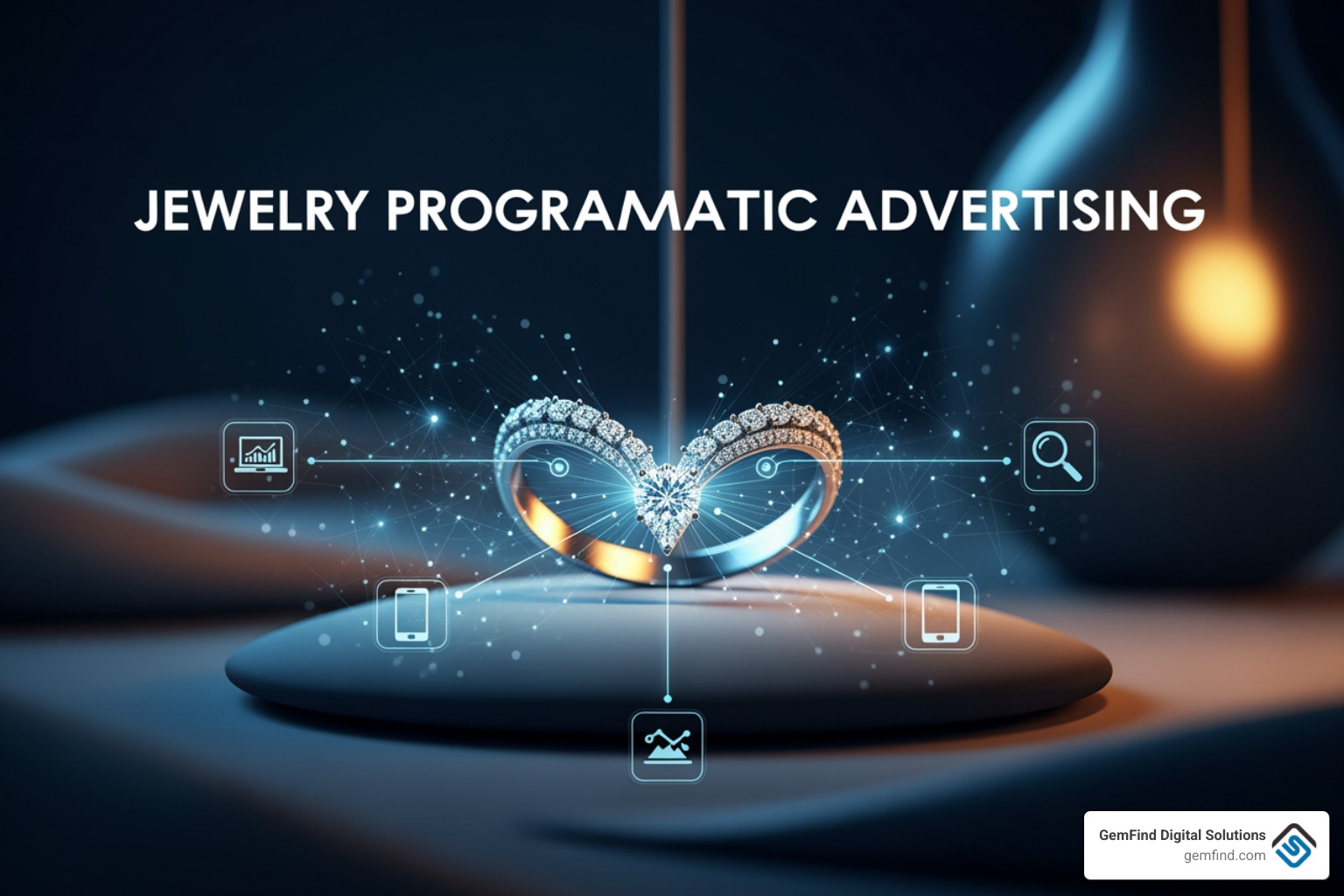
At its core, Jewelry Programmatic Advertising is the shift from buying "ad slots" to buying "audiences." In the old days of marketing, if you wanted to reach people in your city, you bought a billboard on a busy highway or a 30-second spot on the local evening news. You were paying for everyone to see your ad, even if 95% of those people weren't in the market for a diamond engagement ring.
Programmatic changes the math. It uses automated technology and Real-Time Bidding (RTB) to purchase ad space across the internet in milliseconds. When a high-value user—perhaps someone who has been researching "GIA certified diamonds" or browsing bridal Pinterest boards—loads a webpage or opens a streaming app, an automated auction happens. Your ad is placed in front of that specific person because the data shows they are a high-intent buyer.
This level of precision is why we emphasize jewelry store google ads complete guide strategies alongside programmatic; they both rely on capturing intent. However, programmatic goes a step further by accessing premium digital inventory that isn't always available through standard search networks. It allows for a scalable reach that follows the customer across the entire web, from niche luxury lifestyle blogs to major news outlets, ensuring your brand stays top-of-mind during the often lengthy jewelry buying journey.
Efficiency is the biggest "why." Instead of wasting budget on broad demographics, programmatic allows us to focus on high-intent signals. If someone is at a specific life stage—like "recently engaged" or "approaching a 10-year anniversary"—programmatic identifies those markers and serves your ad accordingly. It’s about being smart with your spend so that every dollar works harder to find a buyer, not just a viewer.
The Power of Streaming TV (CTV/OTT) for Luxury Brands
One of the most exciting frontiers in Jewelry Programmatic Advertising is Streaming TV, often referred to as Connected TV (CTV) and Over-the-Top (OTT) advertising. As consumers continue to cut the cord and move away from traditional cable, they are spending their evenings on platforms like Hulu, Roku, and Paramount+.
For a jewelry brand, this is a goldmine. Traditional TV commercials are often skippable or ignored during "bathroom breaks." CTV ads, however, are typically non-skippable and delivered to a lean-forward audience. More importantly, we can target these ads at the household level. We aren't just showing a commercial to "everyone watching the game"; we are showing it to a specific household that fits an affluence profile or has shown interest in luxury goods.
The impact of the big screen cannot be overstated. Jewelry is a visual, emotional product. Seeing a high-definition video of a shimmering tennis bracelet on a 65-inch 4K screen creates a much deeper brand connection than a small banner ad on a mobile phone. This "big screen impact" combined with digital precision is why a luxury jewelry CTV case study and ROAS recently showed a retailer achieving a 24x incremental ROAS (Return on Ad Spend).
Unlike traditional TV, where "success" is measured by vague ratings, programmatic CTV provides measurable performance metrics. We can see how many people watched the ad to completion and, through identity resolution, track if those same people later visited your website or walked into your store.
Precision Targeting: Reaching High-Value Jewelry Buyers
The "secret sauce" of Jewelry Programmatic Advertising lies in the data layers we can apply to every campaign. To find the right eyes, we look far beyond basic age and gender. We dive into:
- Affluence Markers: We can target households based on net worth, discretionary spending habits, and even those who frequently shop at other high-end luxury retailers.
- Interest-Based Segments: Using data from how to target jewelry buyers on facebook and other social platforms, we can identify people interested in "sustainable fashion," "luxury watches," or "fine jewelry."
- Life Event Targeting: This is the "Holy Grail" for jewelers. We can identify users who are "likely to propose" based on their recent browsing history (searching for ring sizes, romantic destinations, or wedding planners).
- Behavioral Data: We look at what people are actually doing. According to jewelry marketing trends and research, consumers are increasingly looking for stories and ethical transparency. We can target users who have interacted with content related to lab-grown diamonds or ethically sourced gold.
By building these complex audience models—like a "Bridal Audience Model" that combines age, relationship status, and recent high-intent searches—we ensure your ads aren't just seen; they are seen by people who are actually in the "buying window."
Leveraging Geo-Targeting for Local Jewelry Programmatic Advertising
For the local independent jeweler, programmatic isn't just about the internet—it’s about the physical showroom. Geo-targeting (or "geofencing") allows us to draw a digital perimeter around specific locations.
Imagine a high-value prospect walking through a luxury shopping mall or attending a local charity gala. We can serve ads to their mobile devices while they are in that area, or even target high-value zip codes where your ideal customers live. This strategy is designed to drive foot traffic and showroom visits.
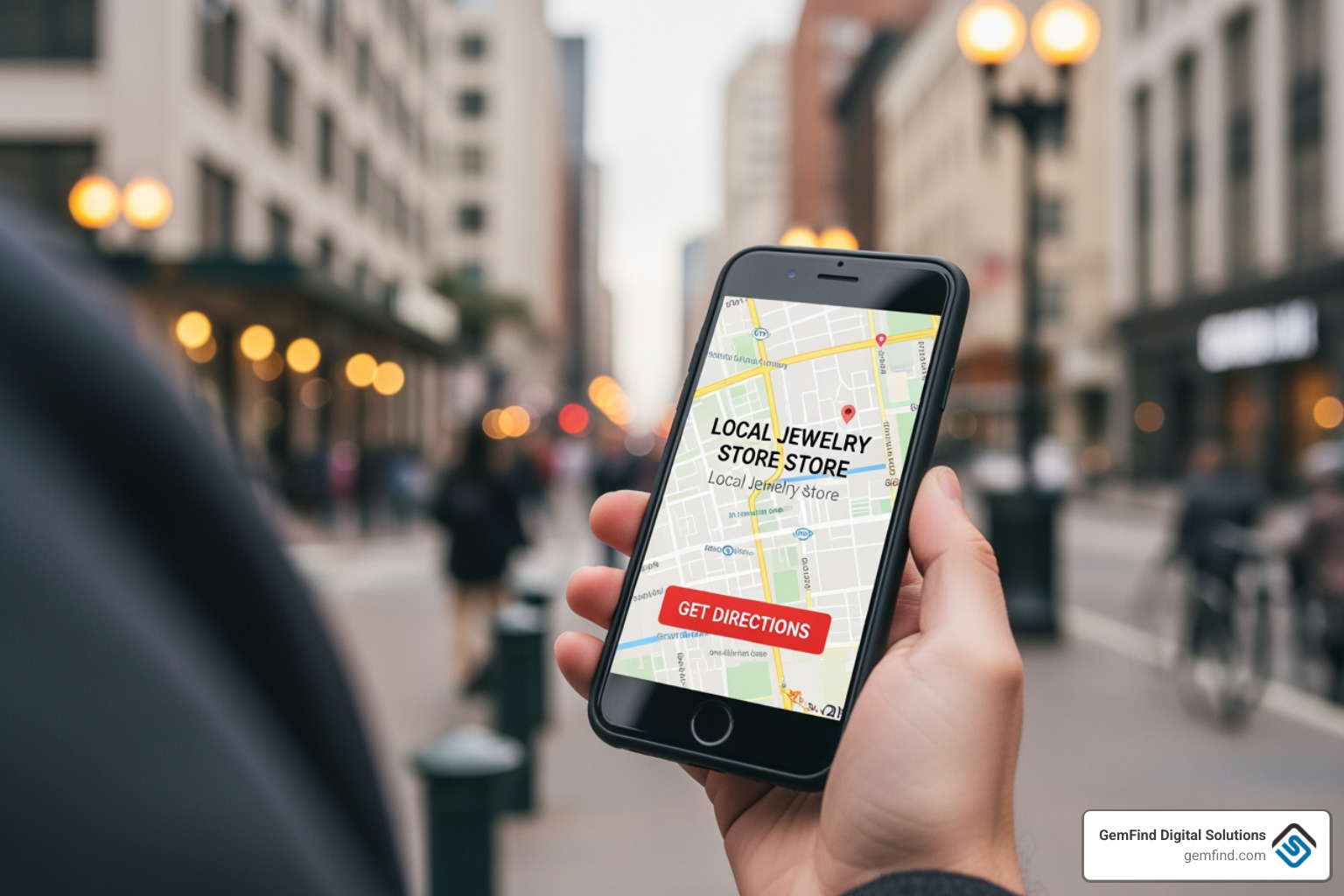
We can even use "event-based targeting." If there is a local bridal expo or a high-end art show, we can target every mobile device that enters that venue. Later, when those people are back home watching Streaming TV, your ad appears again, creating a seamless bridge between their real-world actions and their digital consumption.
Key Components of a Successful Programmatic Strategy
A well-rounded Jewelry Programmatic Advertising strategy is like a multi-layered necklace—each piece needs to work together to create the right look.
- Display Ads: These are the visually striking banners that appear on premium websites. In jewelry, high-quality photography is non-negotiable. Research shows that products with professional photos are nearly twice as likely to convert.
- Video Storytelling: Use 15-to-30-second clips to tell your brand’s story. Whether it's the craftsmanship behind a custom piece or the history of your family-owned store, video builds the trust necessary for high-ticket purchases.
- Native Advertising: These ads match the look and feel of the content around them. They feel less like an "interruption" and more like a recommendation, which is great for educational content like "How to Choose the Right Diamond."
- Brand Safety: One of our top priorities is ensuring your luxury brand never appears next to "junk" content. We use premium inventory lists and brand-safety filters to ensure your ads only appear in environments that reflect your brand’s prestige.
To gauge if your campaigns are on the right track, it's helpful to look at jewelry ad benchmarks. While every market is different, programmatic typically offers a more competitive Cost Per Mille (CPM) than traditional direct-buy media, because you aren't paying for "wasted" impressions.
Cross-Channel Retargeting in Jewelry Programmatic Advertising
Most people do not buy a $10,000 ring on their first visit to a website. They browse, they leave, they talk to their partner, they look at competitors, and they come back. This is where cross-channel retargeting becomes essential.
If a user views a specific pair of diamond earrings on your site, programmatic allows us to "follow" them. But we don't just show them the same ad over and over (which can be annoying). We use sequential messaging:
- Day 1: Show them the earrings they viewed.
- Day 3: Show them a video about your store's 5-star reputation.
- Day 7: Show them a "limited time" offer or a testimonial from a happy customer.
This journey is often mapped out in our facebook ads jewelry complete guide, but programmatic allows this retargeting to happen across the entire web, not just within the Facebook ecosystem. By using frequency capping, we ensure we stay top-of-mind without over-saturating the user, leading to a significant lift in conversions.
Data-Driven Optimization and Future Trends
The beauty of programmatic is that it never stops learning. Unlike a print ad that is "set it and forget it," programmatic campaigns are optimized in real-time.
As we move toward 2026, we are seeing a major shift toward margin-based bidding. Instead of just bidding for a high ROAS, we can integrate your actual inventory data to bid more aggressively on items with higher profit margins. This ensures that your ad spend is always aligned with your bottom line.
AI integration is also playing a massive role. Predictive modeling can now analyze thousands of data points to "score" a user's intent before they even type a search query. If the AI sees a pattern of behavior that typically precedes a jewelry purchase, it can place your ad in front of that user early in their journey.
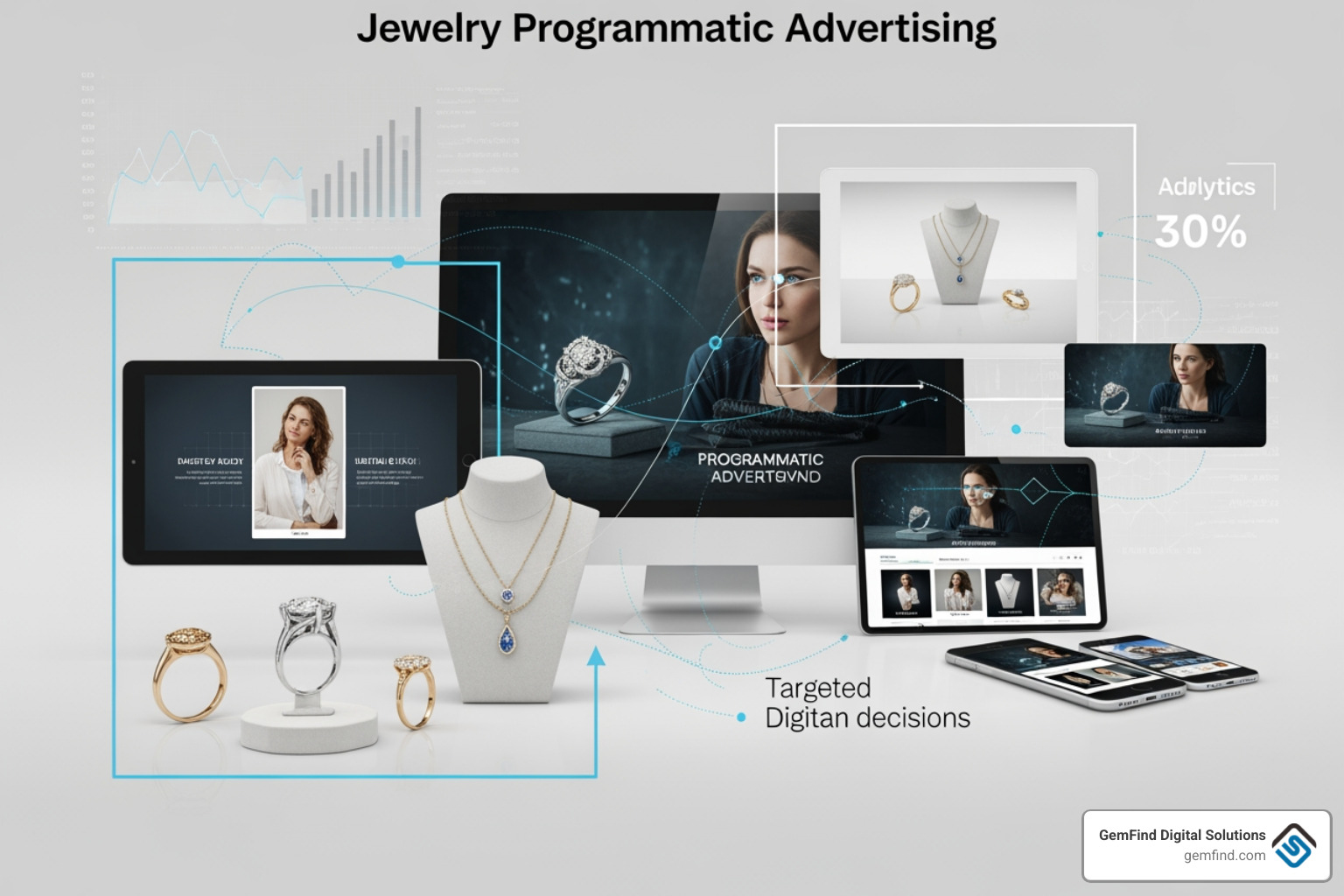
With the decline of third-party cookies, "First-Party Data Flows" are becoming the new currency. By integrating your Edge POS system or Shopify store with your programmatic platform, we can use your actual customer data to find "lookalike" audiences—people who share the same characteristics as your best existing customers.
Frequently Asked Questions about Jewelry Programmatic Advertising
How does programmatic advertising differ from traditional TV ads?
Traditional TV is "broadcasting"—sending one message to everyone in a geographic area regardless of their interests. Programmatic is "narrowcasting." It allows you to serve different ads to different households based on their specific needs, income, and interests, all while providing exact data on who watched the ad and what they did next.
Is programmatic advertising brand-safe for luxury jewelers?
Yes, provided it is managed correctly. At GemFind, we use "white-lists" of premium publishers and advanced brand-safety tools. This ensures your high-end jewelry is only showcased on reputable, high-quality websites and streaming apps, protecting your brand's luxury image.
How can local jewelers measure the success of digital campaigns?
We use a combination of digital and physical tracking. We track website conversions (appointments booked, items added to cart) and "store visit attributions." By matching mobile device IDs that saw an ad to those that later entered your physical store, we can provide a clear picture of how your digital spend is driving real-world foot traffic.
Conclusion
The world of jewelry marketing is no longer just about who has the biggest sign on the street; it's about who has the smartest data in the cloud. Jewelry Programmatic Advertising levels the playing field, allowing local jewelers to compete with national brands by being more precise, more efficient, and more relevant to the modern buyer.
At GemFind Digital Solutions, we have over 25 years of industry-specific expertise. We aren't just "tech people"—we are jewelry people who understand the nuances of the bridal market, the importance of the Edge POS integration, and the emotional weight of every sale. As a Shopify and Google Partner, we specialize in creating tailored marketing ecosystems that connect your stunning pieces with the people who will cherish them for a lifetime.
Ready to see how precision targeting can transform your showroom traffic? Start your jewelry digital marketing journey with us today and let’s put your jewelry in front of the right eyes.


