


Stop Leaving Jewelry Shoppers From Becoming Lost Traffic

Use exit intent jewelry emails to capture a shopper's details at the moment they show signs of leaving, then send a helpful follow-up that fits what they viewed or placed in their cart.
For a jewelry store, the practical approach is simple:
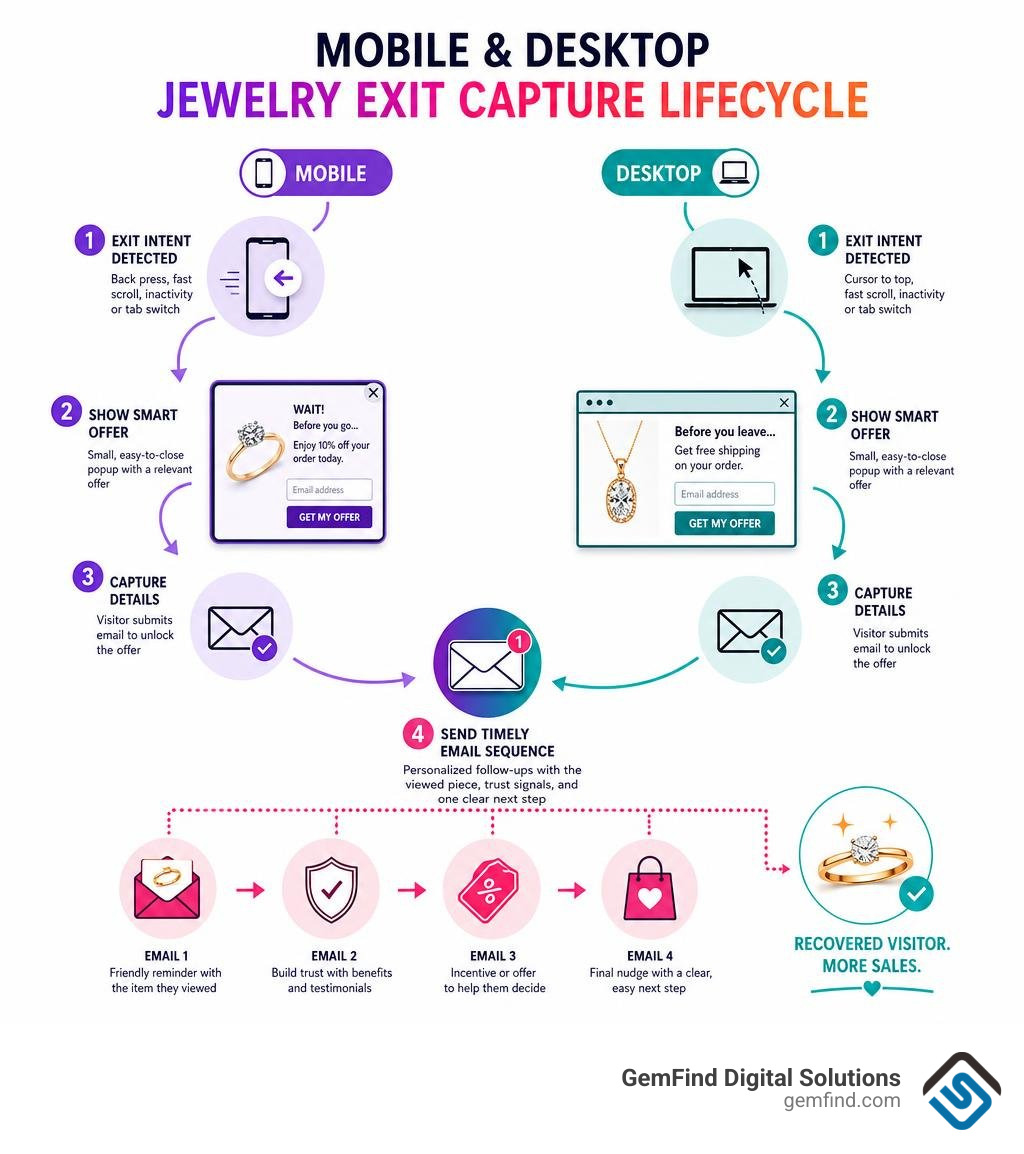
- Detect exit behavior, such as a desktop cursor moving toward the browser bar or a mobile back-button press, fast upward scroll, inactivity, or tab switch.
- Show a small, easy-to-close offer instead of a full-screen interruption.
- Match the offer to intent: use a cart-saving reminder, free shipping, or a modest incentive for high-intent exits; offer a ring-size guide, gift guide, or consultation for shoppers still researching.
- Send a timely email sequence with the viewed piece, trust signals, and one clear next step.
This matters because most visitors leave without taking meaningful action, while mobile now drives the bulk of Shopify traffic. A desktop-only exit strategy misses many of the people browsing jewelry on phones. Done well, mobile exit popups can help recover otherwise lost visitors without turning your site into an annoying obstacle course.
I am Anthony Arechiga, Vice President of Sales at GemFind Digital Solutions, where I have worked with jewelry-industry digital marketing and e-commerce needs since 2007. In this guide, I will explain how jewelry retailers can use exit intent jewelry emails to turn more leaving visitors into qualified leads and sales.
Explore more about exit intent jewelry emails:
Understanding Mobile and Desktop Exit Triggers for Jewelry Stores
In online jewelry retail, traffic abandonment is a daily reality. Out of every 100 website visitors, roughly 96% leave without taking any meaningful action. When someone is shopping for an engagement ring, diamond tennis bracelet, or custom gemstone pendant, they rarely buy on their very first visit. They research, compare metal purities, check pricing, and get distracted.
To stop these valuable shoppers from walking away forever, jewelry brands rely on behavioral triggers to show timely overlays right before the visitor departs. If you want to dive deeper into core mechanics, check out Exit Intent: How Does It Work? - Campaign Monitor to understand the foundational logic.
Desktop and mobile devices communicate user hesitation in fundamentally different ways. The table below outlines how these exit mechanisms function across environments:
| Feature / Mechanism | Desktop Trigger Mechanism | Mobile Proxy Signal |
|---|---|---|
| Primary Detection Method | Mouse tracking & cursor velocity | Behavioral heuristics & touch gestures |
| Exit Signal 1 | Cursor moves past the top viewport boundary | Browser back-button press (popstate event) |
| Exit Signal 2 | Rapid cursor acceleration toward the close button | Rapid scroll-up velocity (swiping to browser URL bar) |
| Exit Signal 3 | Inactivity / idle mouse state | Extended idle inactivity timer (e.g., 20–30 seconds) |
| Exit Signal 4 | Window blur / cursor leaving browser window | Tab-switching / app switching via Page Visibility API |
| Average Capture Rate | ~3.0% to 5.0% conversion | ~2.0% to 4.0% conversion |
| Traffic Share (Shopify) | Under 21% of total store traffic | Over 79% of total store traffic |
Desktop Cursor Tracking vs Mobile Behavioral Signals
On desktop screens, exit detection is precise and mechanical. Scripts monitor mouse coordinates inside the viewport. When a shopper's cursor moves upward rapidly past the upper threshold—aiming directly for browser tabs or the window close button—the script triggers an overlay.
On mobile devices, cursors do not exist. Over 79% of Shopify store traffic arrives through smartphones, especially in fashion and jewelry where mobile visits reach 78% and drive 47% of online purchases. Relying exclusively on desktop mouse tracking means ignoring nearly four out of five potential buyers.
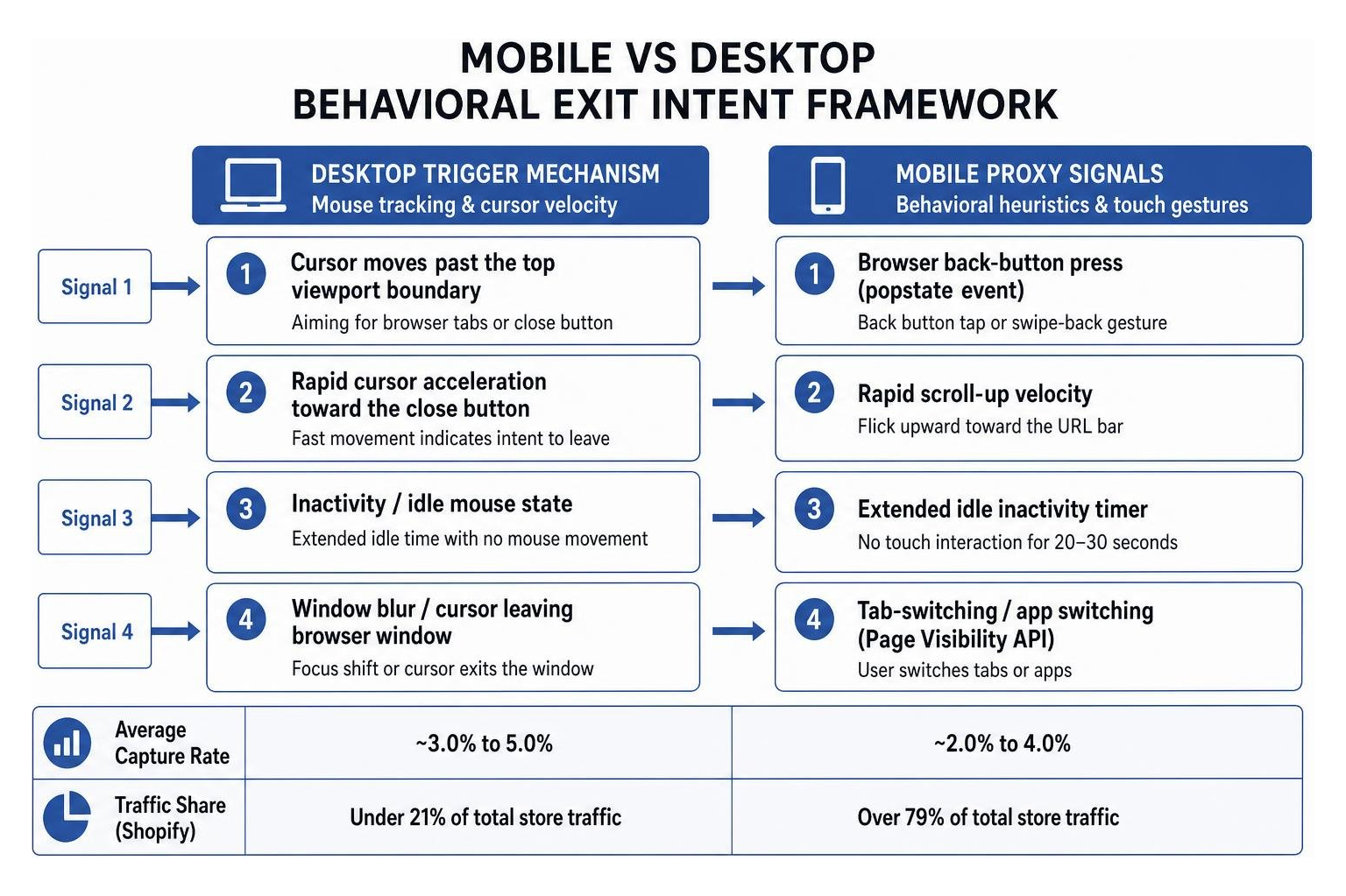
To solve this, mobile exit technology tracks four core proxy signals:
-
Back-Button Press (
popstateAPI): When a shopper taps the browser back button or uses a swipe-back navigation gesture, an event hook intercepts the action before the previous page loads, displaying an exit message. This represents your highest-intent mobile signal. - Scroll-Up Velocity: When mobile users decide to leave or type a new address, they flick their thumb downward, causing the screen to rapidly scroll upward toward the URL bar. Tracking high-velocity upward scrolling lets you anticipate their exit.
- Inactivity Timers: If a shopper pauses on a high-end necklace product page for 25 to 30 seconds without touching the screen, they may be getting distracted by incoming text messages or real-world interruptions. A gentle prompt can re-engage them.
- Tab or App Switching (Page Visibility API): When a user switches tabs to compare a diamond certification or hops to another mobile app, the browser fires an event. You can update the page state so that when they return, a tailored incentive awaits them.
Designing High-Converting Exit Intent Jewelry Emails for Mobile Devices
Mobile screens have limited real estate, making poorly formatted popups frustrating for shoppers and dangerous for search engine rankings. Mobile exit overlays achieve an average 23.7% lift in conversions when executed cleanly.
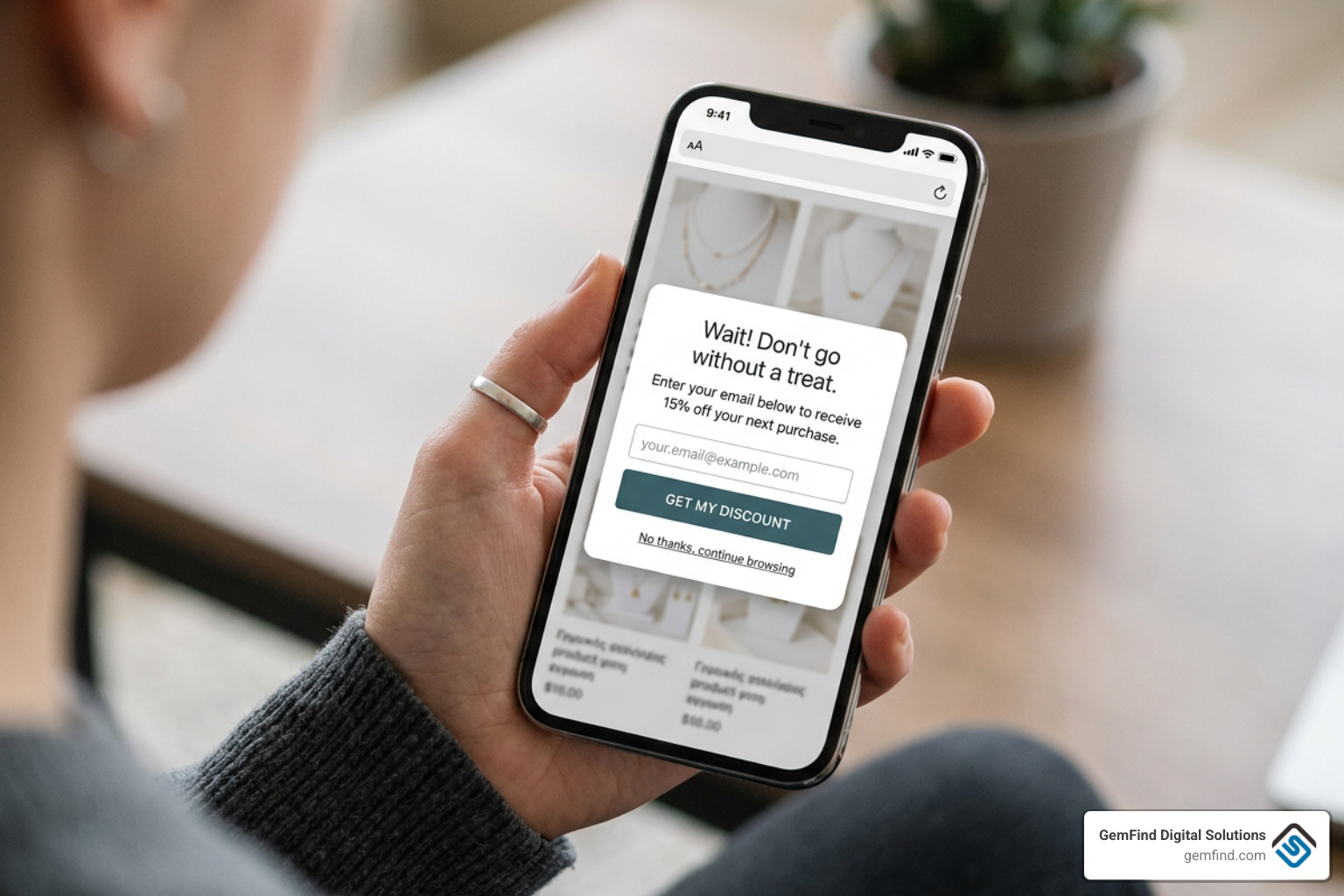
When designing mobile exit modals for jewelry:
- Respect the Thumb Zone: Place form inputs and primary buttons within natural thumb reach in the middle-to-lower portion of the screen.
- Keep Height Below 80%: Never cover 100% of the mobile viewport. Maintain margins so the visitor clearly sees the underlying store.
- Provide an Obvious Dismiss Button: Make the "X" button large, tappable, and high-contrast, while supporting backdrop taps to close.
- Streamline Input Fields: Ask only for an email address. Adding first names, phone numbers, and survey questions in a single screen degrades mobile completion rates.
For a deeper dive into optimizing your mobile campaigns, review our complete Jewelry Email Marketing Guide.
High-Performing Offer Strategies for Exit Intent Jewelry Emails
Because fine jewelry involves high average order values (AOV) and deep emotional investment, blasting a generic popup that screams "GET 30% OFF EVERYTHING!" can damage your brand equity. Luxury buyers care about quality, craftsmanship, trust, and authenticity.
To see how top brands structure these modals across different industries, you can explore 16 Best Exit Intent Popup Examples to Learn From - Visme. Crafting the right incentive requires understanding where the shopper is inside the buying funnel and Motivating Your Customers with Urgency in Your Marketing without coming across as pushy.
Matching High-Intent Cart Reminders to High-Ticket Buyers
A shopper leaving a diamond ring worth $3,500 in their shopping bag is completely different from a casual visitor skimming a blog post about birthstones. You must segment your exit-intent offers based on cart value and visitor intent:
- High-Ticket Carts ($1,000+): Avoid aggressive discount slashing, which can make customers question gemstone quality or diamond grading. Instead, offer a 48-hour complimentary cart reservation, free insured white-glove shipping, or an invitation to speak with a master bench jeweler.
- Mid-Tier Items ($150–$999): Offer a modest 10% welcome savings voucher, a complimentary polishing cloth, or a signature travel jewelry pouch with their order.
- Low-Priced Accessories & Silver Pieces (Under $150): Test immediate monetary vouchers ($15 off $100) or free shipping thresholds to push the order over the finish line.
Explore our dedicated Abandon Cart Recovery Tips for further strategies on recovering high-value checkouts.
Non-Discount Incentives: Ring Size Guides and Bespoke Consultations
If you want to protect your profit margins, non-monetary incentives perform exceptionally well for jewelry shoppers who are still in the evaluation phase.
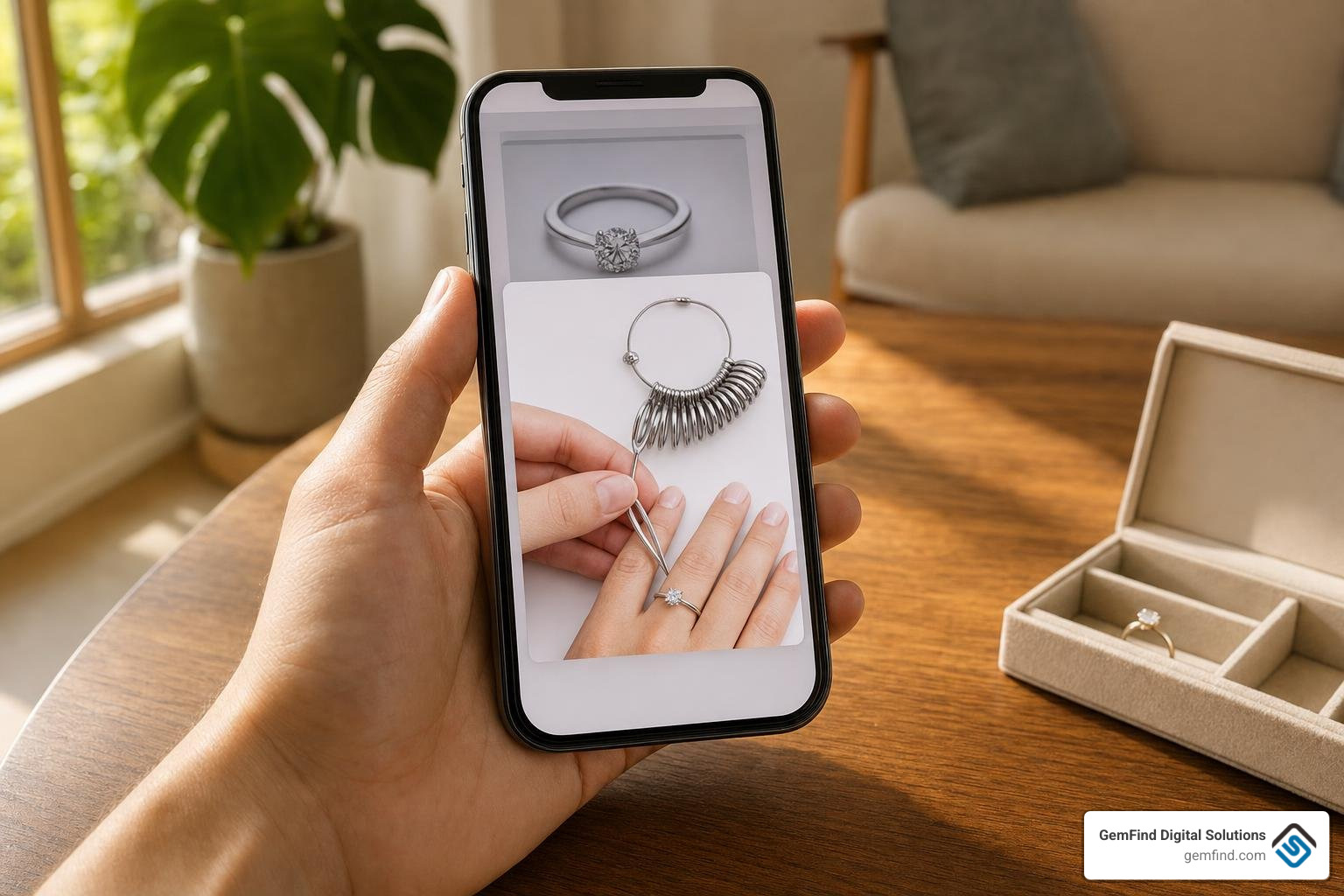
Consider testing these educational, service-oriented exit offers:
- The Printable Ring Sizer & Sizing Guide: The number one friction point for online ring buyers is sizing anxiety. An exit popup offering a "Free Downloadable Ring Size Guide & Metal Selector" solves an immediate pain point while capturing a high-intent email lead.
- The 4Cs Diamond Buying Cheatsheet: Shoppers evaluating diamonds frequently experience information overload. A downloadable comparison guide comparing Cut, Clarity, Color, and Carat weight positions your brand as an objective expert.
- Complimentary Virtual Concierge Session: For custom design or bridal collections, offer an exit prompt that lets visitors book a 15-minute video consultation with an in-house gemologist.
Multi-Channel Lead Capture: Combining Email, SMS, and Push Notifications
While email marketing remains the backbone of long-term jewelry clienteling, combining it with SMS and web push notifications can lift your total recovery rate. Implementing Proven Email Marketing Strategies for Jewelers requires balancing multi-channel convenience against communication fatigue.
The Hybrid Capture Architecture for Mobile Shoppers
Rather than hitting a shopper with an intimidating wall of form fields, use a dynamic two-step capture flow:
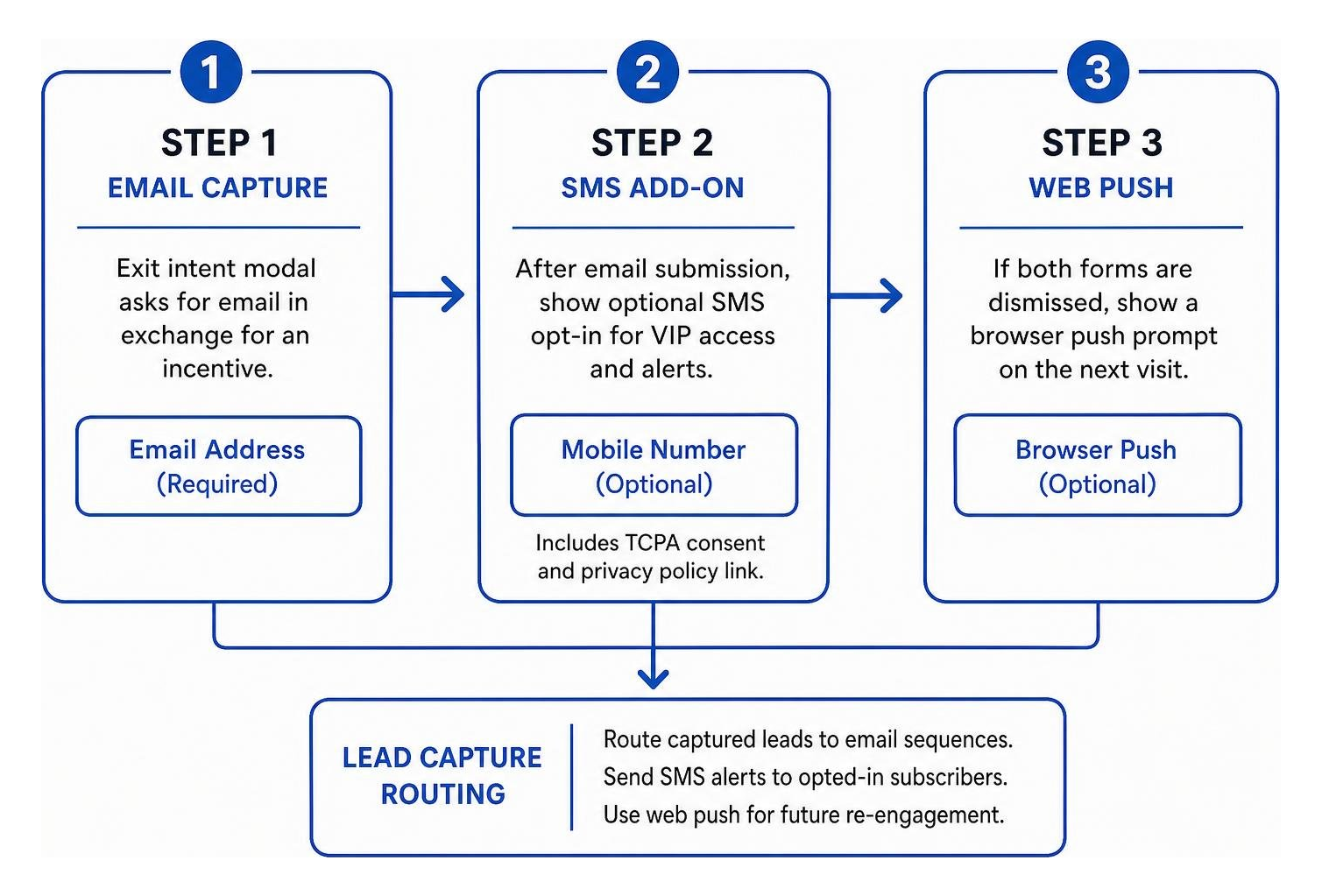
- Step 1 (Email Capture): Display an elegant modal on exit asking for their email address in exchange for an incentive (e.g., "Save Your Selection & Unlock $50 Toward Your First Order").
- Step 2 (Optional SMS Add-On): Immediately upon email submission, transition the modal to show a secondary prompt: "Want instant VIP access via text? Enter your mobile number for real-time order alerts and private vault releases."
- Step 3 (Browser Web Push): For visitors who dismiss both forms, trigger a lightweight browser push prompt on their next visit, providing a zero-typing opt-in mechanism.
Ensure all SMS opt-in boxes include compliant TCPA consent language and links to your privacy policy.
Interactive Elements and Gamified Forms vs Luxury Aesthetics
Gamified lead capture tools, such as "Spin-to-Win" fortune wheels, are popular across general e-commerce and can double conversion rates compared to standard forms. However, independent jewelers must use caution.
A brightly colored carnival wheel spinning across a collection of handcrafted $5,000 platinum rings can cheapen your brand aesthetic. If you want to use interactive elements, adapt the concept for fine jewelry:
- Style Discovery Quizzes: "Find Your Signature Metal & Stone" interactive micro-quizzes shown on exit.
- Mystery Vault Boxes: A minimalist, elegant box animation where shoppers select one of three velvet jewelry boxes to reveal a personalized gift or perk.
- Virtual Ring Matcher: Interactive tools that match band styles to center stones before collecting the shopper's email to save their custom design.
Post-Capture Lifecycle Sequences That Turn Bounces into Buyers
Capturing an email address at the exit stage is only the first step. The real revenue comes from the automated email workflows triggered behind the scenes. For a complete blueprint on setting up these automated systems, consult our Email Automation Complete Guide 2026.
Automated Abandonment Flows and Cart Recovery Sequences
Sending a single, lonely cart reminder is a missed opportunity. Data shows that a three-email abandoned-cart sequence delivers up to 6.5 times more revenue than a single email blast.
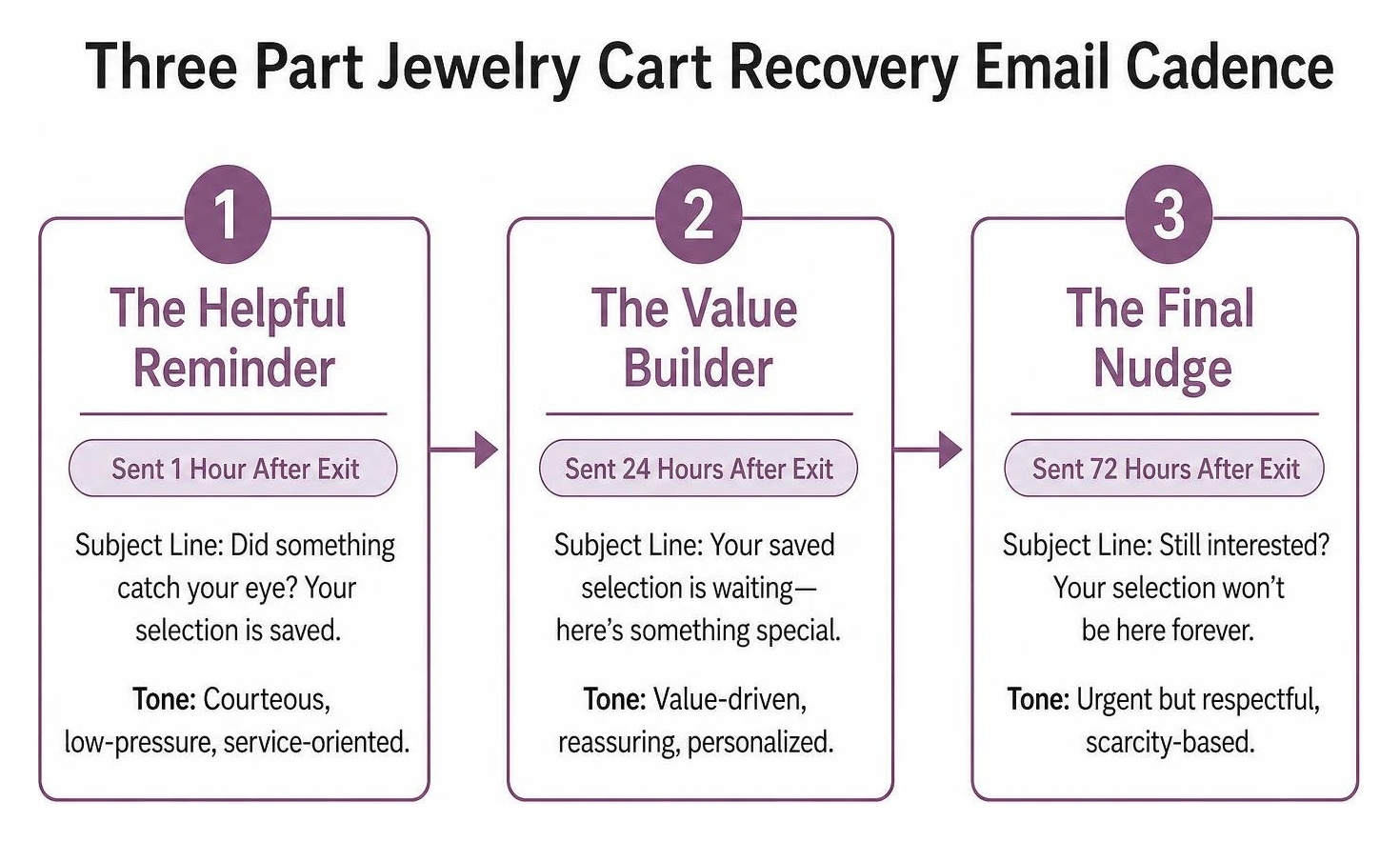
Here is the ideal three-part post-capture sequence for jewelry shoppers:
-
Email 1: The Helpful Reminder (Sent 1 Hour After Exit)
- Subject Line: Did something catch your eye? Your selection is saved.
- Tone: Courteous, low-pressure, service-oriented.
- Content: Display high-resolution imagery of the viewed item, product specifications (carat weight, metal purity), and a clear "Return to My Bag" button. Include a subtle secondary link to speak with a customer care specialist.
-
Email 2: Trust & Reassurance (Sent 24 Hours After Exit)
- Subject Line: Handcrafted perfection takes time (Let’s answer your questions).
- Tone: Educational and reassuring.
- Content: Address common hesitation points. Highlight your 30-day return policy, free insured shipping, lifetime warranty, diamond certifications (GIA, AGS), and verified customer reviews.
-
Email 3: The Gentle Incentive & Expiry (Sent 48 to 72 Hours After Exit)
- Subject Line: Your reserved piece is expiring soon.
- Tone: Clear, time-sensitive encouragement.
- Content: Reiterate that the item reservation or welcome incentive will expire within 24 hours. Provide flexible financing options (such as Affirm or Klarna) to lower payment friction.
Always make sure your email infrastructure complies with standard authentication protocols (SPF, DKIM, and DMARC alignment) to keep spam complaint rates safely below 0.10%.
Audience Segmentation for Exit Intent Jewelry Emails
Never dump all exit-captured leads into a single, generic monthly newsletter bucket. Tailoring your post-capture messaging to specific buyer segments creates personal, engaging emails:
- Occasion-Intent Segment: Separate shoppers browsing bridal/engagement categories from those looking at fashion jewelry, men's bands, or holiday gifts. A bridal shopper needs educational content on diamond quality and timeline planning, while an anniversary shopper wants gift-wrapping and express delivery.
- High-Clickers / Zero Purchases: Subscribers who click every email but have not bought within 60 days should receive curated styling advice, behind-the-scenes bench videos, or invitations to local store events.
- Budget vs. Fine Jewelry Shoppers: Segment users based on the average price point of the items viewed during their exit session to ensure future product recommendations fit their budget.
Optimization, A/B Testing, and Common Mistakes to Avoid
A high-converting exit strategy requires steady optimization and testing. Avoid these common mistakes that drive shoppers away:
- Covering the Full Mobile Screen on Initial Landing: Never trigger an exit modal the second a user arrives from a search engine or social media ad.
- Showing Popups on Every Single Pageview: Set a strict frequency cap of one display per user session to prevent popup fatigue.
- Using Cluttered Desktop Copy on Mobile: Condense your headline and call to action into short, punchy phrases that can be read in three seconds.
- Hijacking the Back Button: Never disable or break the browser's native navigation controls. Use non-blocking event listeners to trigger overlays smoothly.
Avoiding Google Interstitial Penalties and User Frustration
Google enforces strict guidelines regarding intrusive mobile interstitials. To ensure your exit popups comply with SEO best practices and protect your organic search traffic:
- Never trigger on page load: Ensure overlays fire only in response to genuine exit signals or meaningful scroll depth.
- Keep modal height proportional: Keep your mobile modal height under 80% of the visible viewport so background content remains visible.
- Ensure easy dismissal: Make close buttons prominent and accessible, allowing users to dismiss the popup with a single tap.
Split-Testing Triggers, Timing, and Messaging
To get the best return from your exit-intent program, run continuous A/B split tests with one variable at a time:
- Trigger Type: Test back-button gesture triggers against 25-second inactivity timers.
- Headline Messaging: Compare emotional headlines ("Keep Your Sparkle Close") against direct value propositions ("Save $50 on Your Custom Setting").
- Visual Formats: Test clean, text-driven minimalist cards against lifestyle imagery featuring styled models.
- Call-to-Action (CTA) Copy: Compare direct buttons ("Claim My Code") with service-focused language ("Save My Ring Size").
Aim for statistical significance (at least a 95% confidence level) before rolling out winning variants across your store.
Frequently Asked Questions About Jewelry Exit Popups
What is the average conversion rate for jewelry exit-intent popups?
Across e-commerce, exit-intent popups average a conversion rate of roughly 3.94%. In the fine jewelry and luxury goods sector, mobile exit modals typically convert between 2.0% and 4.0%, while desktop modals average around 4.0% to 5.0%. When properly configured, exit popups can recover 10% to 15% of visitors who would otherwise leave your store without taking action.
Will mobile exit popups hurt my jewelry store's SEO rankings?
No, as long as you follow Google's mobile interstitial guidelines. Google penalizes intrusive interstitials that block content immediately upon page load from search engine results. Because exit-intent overlays trigger only when a visitor displays exit behavior, occupy reasonable screen area, and are easily dismissible, they do not trigger search ranking penalties.
How soon should the first abandoned cart email be sent after capture?
The first abandoned cart email should be sent between 45 minutes and 1 hour after the shopper leaves your site. Sending it sooner can feel overly aggressive, while waiting longer than two hours allows purchase intent to cool significantly.
Conclusion
Every day, qualified jewelry shoppers browse your collections, evaluate diamond settings, and slip away without leaving a trace. By implementing responsive, behavior-driven exit capture systems and pairing them with structured lifecycle email workflows, you can turn missed opportunities into lasting client relationships.
At GemFind Digital Solutions, we have spent over 25 years helping independent retail jewelers, diamond manufacturers, and luxury brands scale their e-commerce revenue. As certified Shopify and Google Partners, we provide complete, industry-tailored strategies—from custom web design and Edge POS inventory integrations to automated email flows.
Ready to stop losing traffic and build high-converting email campaigns for your jewelry store? Explore our specialized digital marketing services and speak with our team of jewelry e-commerce experts today.


