



The Real Path to Growing a Jewelry Business (Without Burning Out)

If you want to grow your jewelry business, you're stepping into one of the most exciting — and competitive — markets in the world. The global jewelry market is projected to reach $480.5 billion in 2025, and online sales are accelerating fast. But bigger opportunity also means more noise to cut through.
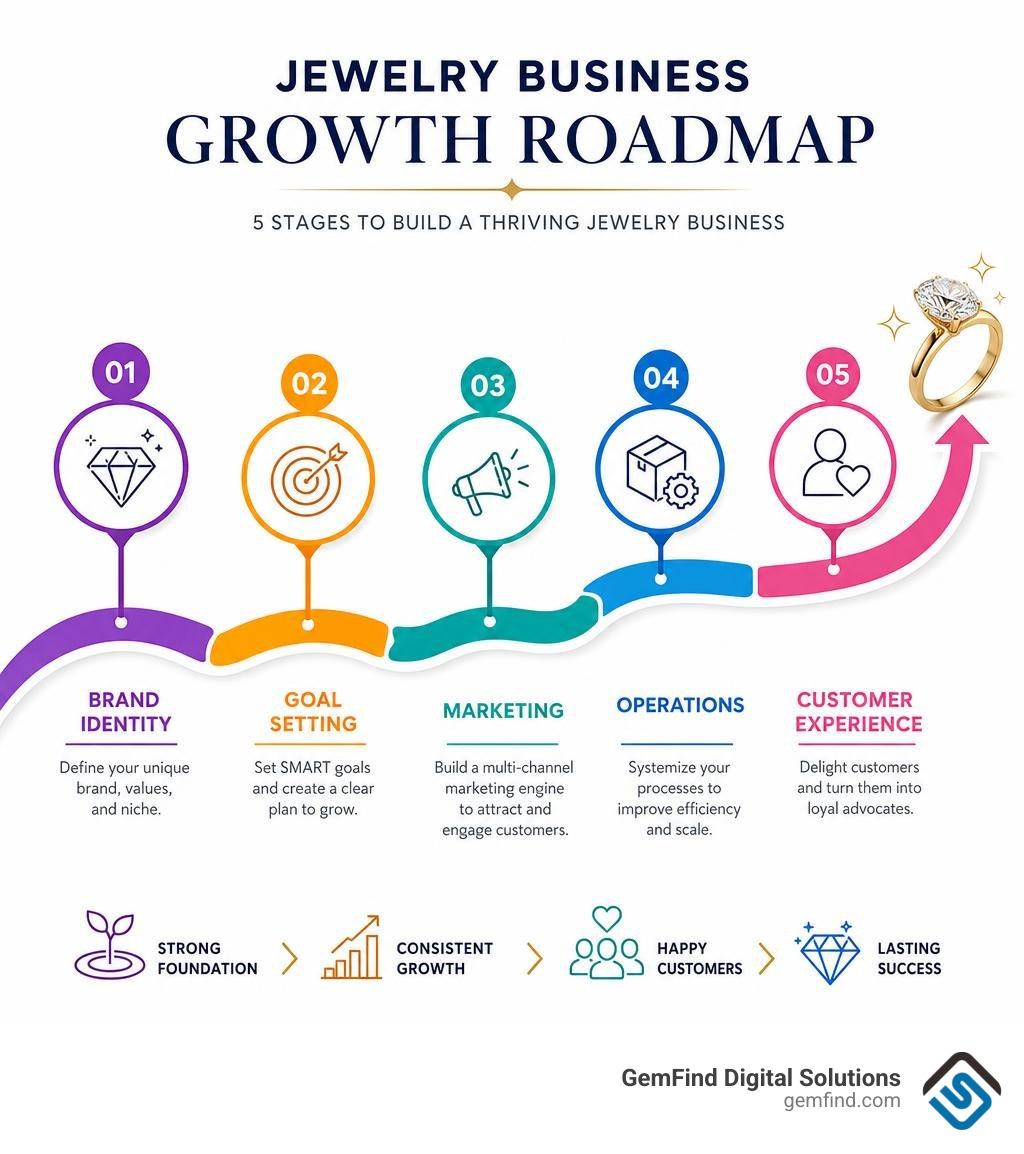
Here's a quick roadmap of what actually moves the needle:
- Define a clear brand identity and niche — stop trying to sell to everyone
- Set SMART goals — tie every action to a measurable outcome
- Build a multi-channel marketing engine — social, email, SMS, and in-person
- Systemize your operations — inventory, fulfillment, and workflows
- Elevate the customer experience — packaging, service, and loyalty programs
Many jewelry makers start strong but hit a wall. Sales plateau. Hours pile up. The shop runs them instead of the other way around. The problem is rarely the product — it's the lack of systems, strategy, and focus underneath it.
This guide walks you through each growth layer, from branding and marketing to scaling operations, so you can build a business that's both profitable and sustainable.
I'm Anthony Arechiga, Vice President of Sales at GemFind Digital Solutions, where I've spent nearly two decades helping jewelry retailers find smarter ways to grow their jewelry business through web design, digital marketing, and e-commerce strategy. I'll share what I've seen work — and what to avoid — at every stage of growth.
Grow jewelry business terms explained:
- Increase jewelry sales
- Jewelry marketing strategies
- Jewelry e-commerce solutions
Finding Your Sparkle: Brand Identity and Niche Definition
Many business owners believe that to grow your jewelry business, they must appeal to everyone. They design delicate bridal rings, chunky statement necklaces, and minimalist silver studs all under the same brand. While variety seems like a safe bet, it often dilutes your messaging, confuses your target audience, and exhausts your creative energy.
In a highly competitive landscape, the most successful brands are those that stand for something specific. Defining a clear brand identity and narrowing your focus is the ultimate strategic growth tool. It transforms your jewelry from a simple commodity into a highly sought-after lifestyle product. To build a solid foundation, you must understand exactly how your brand compares to others, which is why learning How to Stand Out from the Competition is an essential first step.

Crafting a Memorable Brand Story
At the heart of every iconic jewelry brand is a compelling story. Because jewelry is an incredibly personal purchase — often marking engagements, anniversaries, birthdays, or personal milestones — consumers do not just buy precious metals; they buy emotional connections.
Your brand story should answer the "why" behind your business:
- What inspired you to start making jewelry?
- What are your core values? Do you prioritize ethical sourcing, local craftsmanship, or recycled precious metals?
- How do you want your customers to feel when they wear your pieces?
By highlighting your commitment to sustainable practices or showing behind-the-scenes glimpses of your bench work, you build transparency and trust. This emotional resonance is what turns a one-time buyer into a lifelong brand advocate.
Narrowing Your Focus to Stand Out
A niche does not limit your growth; it accelerates it. By narrowing your focus, you can dominate a specific segment of the market before expanding.
Consider these ways to carve out your unique space:
- Signature Collections: Instead of constantly redesigning your catalog, focus on a core line of signature pieces that define your aesthetic. This makes manufacturing repeatable and marketing highly targeted.
- Material Specialization: You might focus exclusively on hypoallergenic materials for sensitive skin, or build your brand around lab-grown diamonds, which have grown into a massive multi-billion-dollar global market.
- Aesthetic Anchors: Whether you specialize in bold, colorful statement earrings or ultra-minimalist daily wear, a consistent design language ensures that your pieces are instantly recognizable on social media.
Setting SMART Goals to Grow Jewelry Business Operations
Scaling a business successfully requires a shift from a creative hobbyist mindset to an analytical operator mindset. You cannot rely on hope or "scrappy hacks" to reach the next level. Instead, you must establish structured, measurable targets using the SMART framework (Specific, Measurable, Achievable, Relevant, and Time-bound).
To ensure your goals align with your broader digital presence, we recommend reviewing our guide on How to Define Your Digital Marketing Goals.
Defining Sales and Visibility Milestones
To drive sustainable growth, your goals must span visibility, customer acquisition, and revenue. Rather than setting a vague goal like "I want to sell more rings," apply the SMART framework:
- Sales SMART Goal: Increase online sales by 20% over the next six months by launching a targeted email campaign and optimizing our website's checkout flow.
- Visibility SMART Goal: Grow our email subscriber list by 1,000 new contacts within 90 days by offering a 10% discount incentive on our website.
- Product Expansion SMART Goal: Design, prototype, and launch a three-piece bridal capsule collection within nine months while maintaining a minimum gross margin of 60%.
To see how real-world jewelry brands have scaled using structured plans and pricing adjustments, you can read more and Steal These Strategies to Grow to 7+ Figures | Flourish & Thrive .
Designing Your Business for Scalability
Setting goals is only half the battle; your underlying business model must be designed to support that growth without causing personal burnout. Many independent designers hit a ceiling because they handcraft every single piece themselves. When orders double, their labor hours must double, leaving no time to run the business.
To design for scalability:
- Build Repeatable Systems: Create standard operating procedures (SOPs) for every repetitive task, from product photography and writing descriptions to packaging orders.
- Optimize Pricing and Margins: Many six-figure jewelry brands struggle because their margins are too thin to pay the owner a real salary. Ensure your retail prices are at least 2 to 3 times your total cost of materials and labor. If you are selling fine jewelry, establishing a solid pricing floor is critical to maintaining luxury positioning and healthy cash flow.
- Protect Your Creative Energy: Outsource non-creative tasks (such as accounting, shipping, or digital marketing) as early as your budget allows. Even hiring a virtual assistant for five hours a week can free up crucial time to focus on strategic growth.
Designing a Multi-Channel Marketing and Sales Engine
To sustainably grow your jewelry business, you cannot rely on a single sales channel. If you only sell on third-party marketplaces, you are vulnerable to algorithm changes. If you only sell in a physical store, you miss out on a global audience. The solution is an omnichannel strategy that meets your customers wherever they are.

To build a cohesive experience across all platforms, explore our insights on Omnichannel Strategies for Boosting Jewelry Sales in 2026.
Leveraging Digital Marketing to Grow Jewelry Business Sales
Digital marketing is the most powerful tool in your growth arsenal. Because jewelry is highly visual, platforms that emphasize imagery and video are your best allies.
- Social Commerce: Utilize Instagram Shop and Pinterest boards to make your posts instantly shoppable. Since 87% of consumers say social media influences their purchasing decisions, removing friction by allowing direct checkouts is incredibly effective.
- Micro-Influencer Partnerships: Collaborate with niche influencers whose style aligns with your brand. Sending a free piece of jewelry to a micro-influencer with a highly engaged following of 5,000 to 20,000 people often yields a much higher return on investment than partnering with massive celebrities.
- Email and SMS Marketing: Email marketing is one of the highest-ROI channels available. Segment your list based on purchase behavior — for example, send wedding band suggestions to customers who recently bought an engagement ring. Additionally, text message marketing is highly effective; 75% of customers are comfortable receiving SMS promotions if they have opted in, and SMS coupons are redeemed up to 10 times more often than traditional email offers.
To understand how high-impact digital campaigns shape the modern buyer's journey, read The Digital Advantage: How Digital Marketing is Shaping Customer Experience for Jewelry Stores.
Balancing Online and Offline Sales Channels
While e-commerce offers incredible scale, physical touchpoints build deep trust. Seeing the sparkle of a gemstone in person or feeling the weight of a solid gold band cannot be perfectly replicated online. Successful brands balance both worlds.
| Sales Channel | Key Advantages | Primary Challenges | Best Practices for Success |
|---|---|---|---|
| E-commerce Website | Global reach, 24/7 availability, high profit margins, direct customer data ownership. | High digital marketing costs, requires technical maintenance, no physical interaction. | Optimize for mobile, use professional photography, and offer virtual try-ons. |
| Craft Fairs & Local Markets | Immediate cash flow, direct customer feedback, local brand awareness. | Physically demanding, limited by geography and weather, time-consuming. | Bring professional displays, collect email addresses at checkout, and hand out beautifully designed business cards. |
| Wholesale Partnerships | Large bulk orders, brand validation, placement in established boutiques. | Lower profit margins, strict delivery deadlines, less control over retail pricing. | Create a professional linesheet, set clear minimum order quantities (MOQs), and maintain consistent wholesale margins. |
Scaling Operations: Inventory, Fulfillment, and Systems
As your marketing engine begins to drive consistent sales, your operational backend will face intense pressure. Without structured systems, scaling up will lead to shipping delays, stockouts, and unhappy customers. To transition your brand from a small studio to a highly efficient e-commerce powerhouse, you must optimize your supply chain and logistics.
For a deep dive into navigating this transition successfully, read How to get your jewelry brand from $1M-$10M - the definitive growth guide .
Implementing Systems to Grow Jewelry Business Logistics
Managing inventory is one of the trickiest balancing acts in the jewelry industry. Because precious metals and gemstones are expensive, tying up too much cash in raw materials can stifle your business. Conversely, running out of stock during peak seasons like Valentine's Day or the winter holidays means missing out on vital revenue.
To streamline your logistics, implement these standard practices:
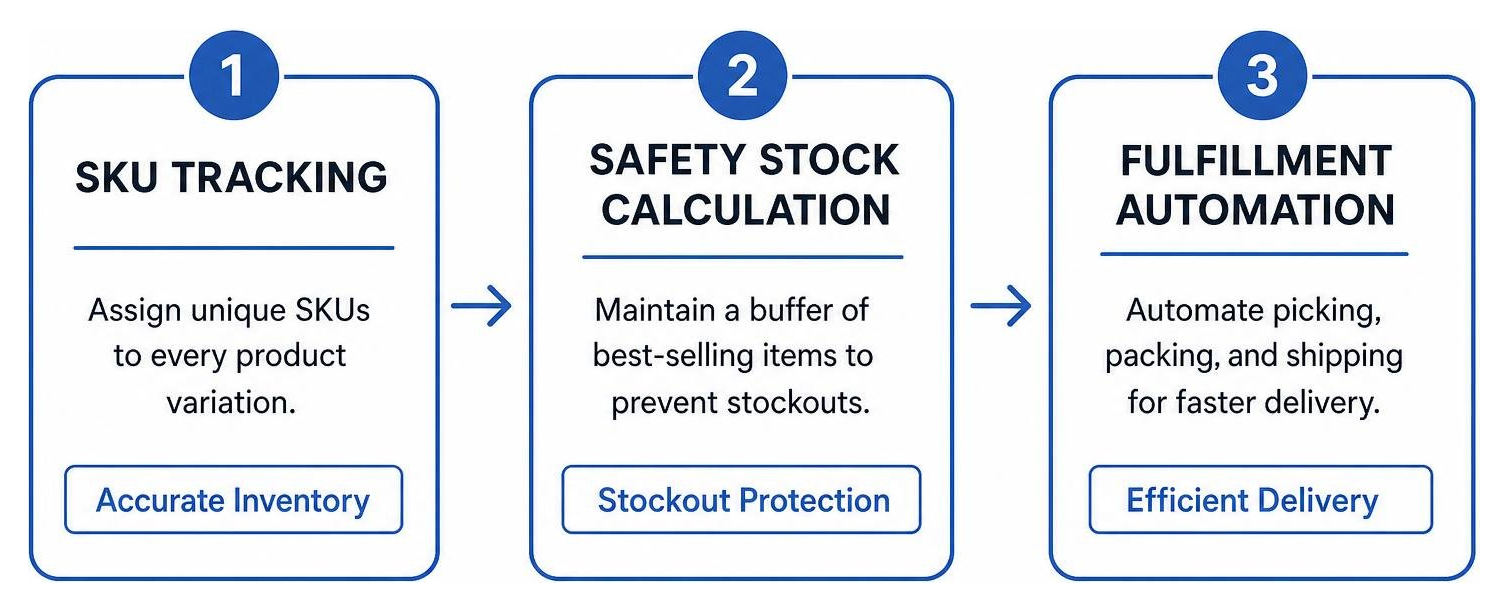
- SKU-Level Tracking: Assign a unique Stock Keeping Unit (SKU) to every product variation (including different metal types, ring sizes, and gemstone options) to maintain absolute inventory accuracy.
- Calculate Safety Stock: Keep a small buffer of your best-selling pieces on hand to protect against unexpected supply chain delays.
- Eliminate Dead Stock: Routinely analyze your sales data to identify slow-moving designs. Melt down unsold precious metals or discount slow items to free up cash flow for high-demand products.
- Automate Fulfillment: As your order volume grows, consider partnering with a third-party logistics (3PL) provider or utilizing a dedicated Warehouse Management System (WMS) to automate packing and shipping.
Elevating Brand Perception with Custom Packaging
In the luxury and fashion space, the unboxing experience is an extension of the product itself. High-quality packaging reinforces your brand identity and justifies premium pricing.
- First Impressions: A sturdy, custom-branded box wrapped in tissue paper with a handwritten thank-you note makes the customer feel valued.
- Sustainability: Modern consumers increasingly expect eco-friendly packaging. Utilizing recycled cardboard, organic cotton pouches, and soy-based inks shows that your brand is socially responsible.
- Seasonal Touches: Use custom packaging or limited-edition inserts for holiday promotions to create a sense of urgency and excitement.
Frequently Asked Questions about Growing a Jewelry Business
How do I price my handmade jewelry for sustainable profit margins?
To ensure your business is profitable, use a structured pricing formula rather than guessing. A standard formula is:
$$(\text{Cost of Materials} + \text{Labor Cost}) \times 2 = \text{Wholesale Price}$$ $$\text{Wholesale Price} \times 2 = \text{Retail Price}$$
Your labor cost should be based on a fair hourly wage, not just what is left over. If you plan to sell directly to consumers online, maintaining these margins is essential because it gives you the financial room to offer wholesale pricing to retail boutiques in the future without losing money.
What are the biggest challenges when scaling a jewelry brand?
The most common challenges include:
- Inventory Cash Flow: Jewelry requires expensive raw materials, making inventory funding a constant challenge.
- Production Bottlenecks: Relying entirely on handcrafting every piece limits your output. Scaling often requires transitioning to trusted manufacturing partners.
- Intense Competition: Standing out in a saturated market requires constant innovation and highly targeted digital marketing.
How can I increase repeat purchases from existing jewelry customers?
Acquiring a new customer is significantly more expensive than retaining an existing one. To drive repeat sales:
- Implement a Loyalty Program: Reward customers with points for every purchase, social media share, or referral.
- Personalized Email Follow-ups: Send automated emails with styling tips, jewelry care guides, or matching product recommendations based on their purchase history.
- SMS Coupons: Send exclusive, time-sensitive discounts directly to your most loyal customers' phones.
Conclusion
To successfully grow your jewelry business, you must balance your creative passion with strategic operational discipline. By defining a clear niche, setting SMART goals, building a multi-channel marketing engine, and automating your backend logistics, you can scale your brand sustainably without losing your spark.
At GemFind Digital Solutions, we have spent over 25 years helping jewelry brands navigate this growth journey. As a certified Shopify and Google Partner, we design custom websites, integrate advanced tools like Edge POS, and build tailored digital marketing strategies that turn browsers into lifelong buyers.
Ready to scale your store to the next level? Explore our digital marketing services and let's start growing your jewelry brand today.


