


Local Maps SEO: The Fastest Path to More Store Visits and Calls

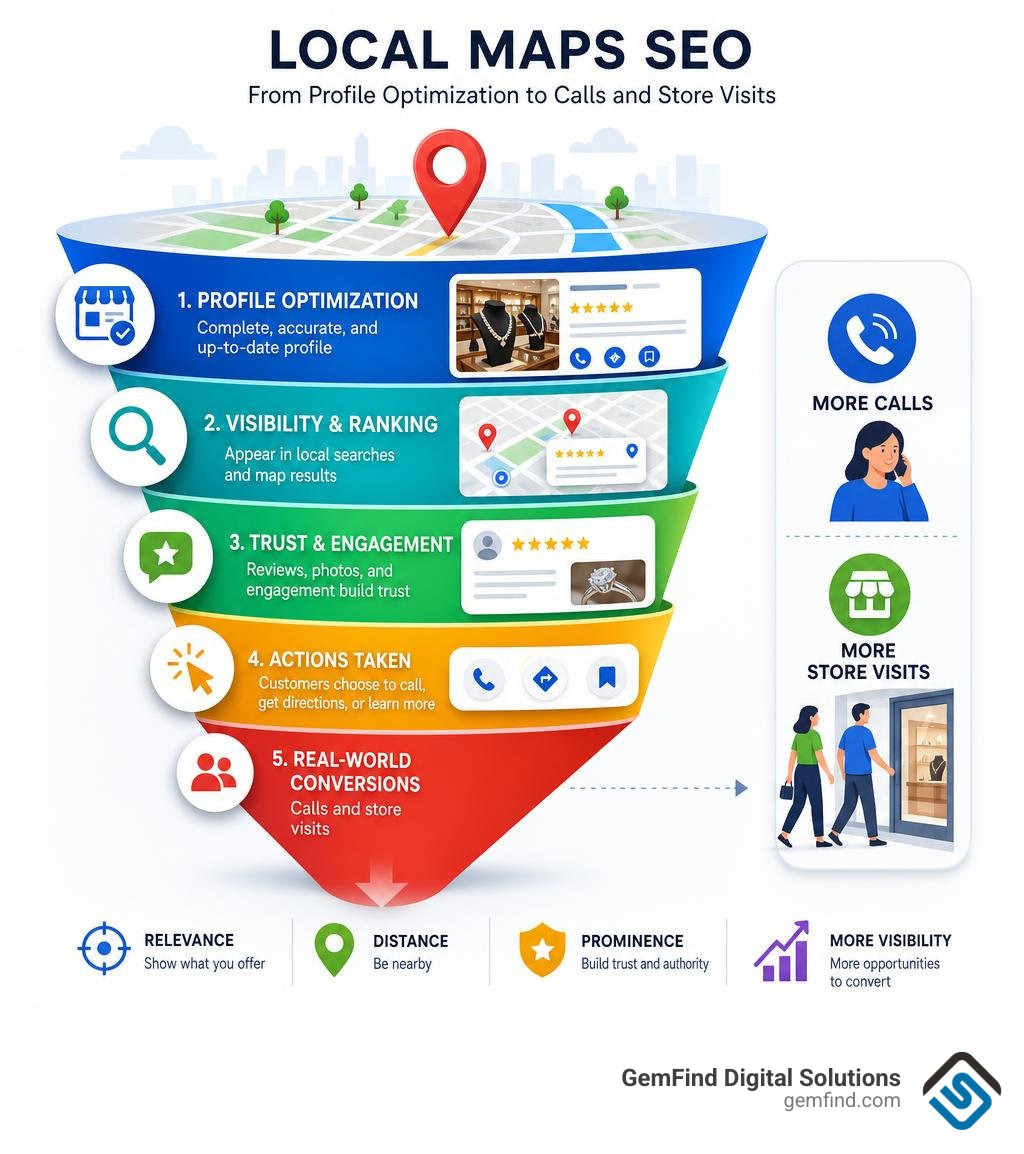
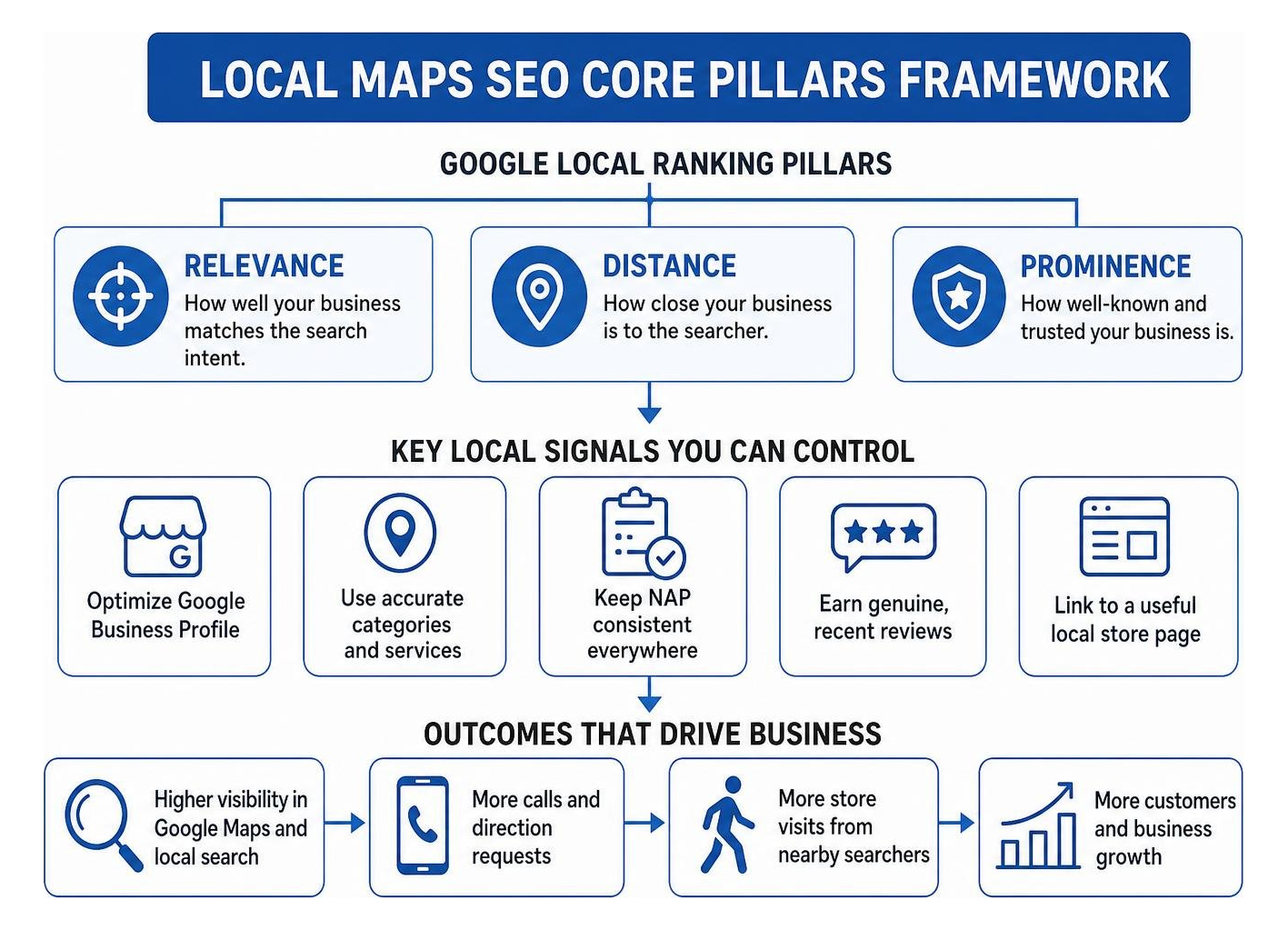
To improve your Google Maps rankings, focus first on the signals you can control: fully complete your Google Business Profile, use the most accurate jewelry-store category and services, keep your name, address, and phone number identical everywhere, earn genuine recent reviews, and link your profile to a useful local store page.
For a jewelry retailer, this work helps you appear when shoppers search for terms such as "engagement rings near me," "jewelry repair," or "custom jeweler." Google ranks local results around relevance, distance, and prominence. You cannot move closer to every searcher, but you can make it easier for Google to understand what you offer and why local customers trust you.
That visibility matters. Research shows that 76% of people who search for something nearby on a phone visit a business within a day, while businesses that add photos to their Google Business Profile receive more direction requests and clicks. A strong local presence also gives searchers the details they need to call, get directions, browse inventory, or visit your showroom.
Local Maps SEO now reaches beyond the Google three-pack. AI tools such as ChatGPT, Gemini, and Perplexity increasingly recommend nearby businesses, but they depend on clear, consistent, current facts across your website, profiles, reviews, and trusted local sources.
I am Morgan Price, a white-hat backlink outreach specialist who helps businesses build credible local authority through careful research and real editorial relationships. In this guide, I will show how local maps SEO connects profile accuracy, local proof, reviews, and useful location content to turn nearby searches into customers.
Discover more about local maps seo:
- affordable seo companies
- local seo services for small business
- seo services
Core Pillars of Local Maps SEO and Ranking Algorithms
When a customer opens their smartphone to find an artisan jeweler or fine diamond showroom, search algorithms execute a hyper-localized calculation in fractions of a second. The Map Pack—the prominent three-listing showcase that appears at the top of local search engine results pages (SERPs)—drives roughly 50% of all inbound telephone inquiries and over 78% of direct calls for high-intent queries.
Winning these top spots requires understanding the underlying mechanics of spatial salience and entity authority. Local algorithms evaluate not just traditional text on a web page, but also geospatial data points, user location coordinates, real-time engagement patterns, and the consistency of your entity across the web.
Understanding Relevance, Distance, and Prominence
According to Google's official local ranking guidelines, the local algorithm evaluates three fundamental pillars to determine which businesses appear in Google Maps and the Local Pack:
- Relevance: How well your business listing matches the intent behind the user's search query. Choosing the right categories, providing comprehensive service menus, and maintaining targeted on-page content establish this topical alignment.
- Distance: The physical proximity between the searcher’s mobile device coordinates and the business location. While you cannot physically move your storefront closer to every shopper, establishing strong neighborhood-level signals expands your competitive radius across surrounding zip codes.
- Prominence: The recognized authority and reputation of your business offline and online. Prominence is powered by review volume, review sentiment, high-authority inbound local backlinks, directory citations, and overall engagement velocity.
Optimizing Your Google Business Profile for Maximum Visibility
Your Google Business Profile (GBP) is the cornerstone of your local digital presence. When you optimize your Google listing, you supply the core data points search engines rely on to assess relevance.
To maximize your local profile setup, work through these essential completeness checkpoints:
- Primary and Secondary Categories: Select the single most accurate primary category for your core offering (such as Jewelry Store or Jewelry Designer). Add relevant secondary categories (like Jewelry Repair Service, Watch Repair Service, or Appraiser) without adding unrelated classifications.
- Exhaustive Service Catalog: Define individual services with clear descriptions, estimated turnaround times, and starting prices to capture long-tail conversational searches.
- Comprehensive Business Description: Utilize the 750-character limit to outline your brand history, custom design capabilities, master bench certifications, and local roots, keeping the language natural rather than keyword-stuffed.
- High-Resolution Geo-Tagged Media: Upload original, crisp photography of your physical showroom, master craftsmen at work, exterior storefront signage, and custom jewelry pieces. Profiles featuring rich imagery receive 42% more direction requests and 35% higher click-through rates.
- Active Real-Time Features: Turn on direct messaging, publish weekly GBP updates, seed authentic Questions & Answers (Q&A), and configure real-time appointment booking integrations.
For additional actionable optimization strategies, you can explore our guide on 5 Easy Steps to Boost the Google Map Ranking of Your Jewelry Business and Get More Customers or review fundamental listing setup steps in our overview of Google My Business Basics.
High-Impact Signals: Reviews, Citations, and On-Page Architecture
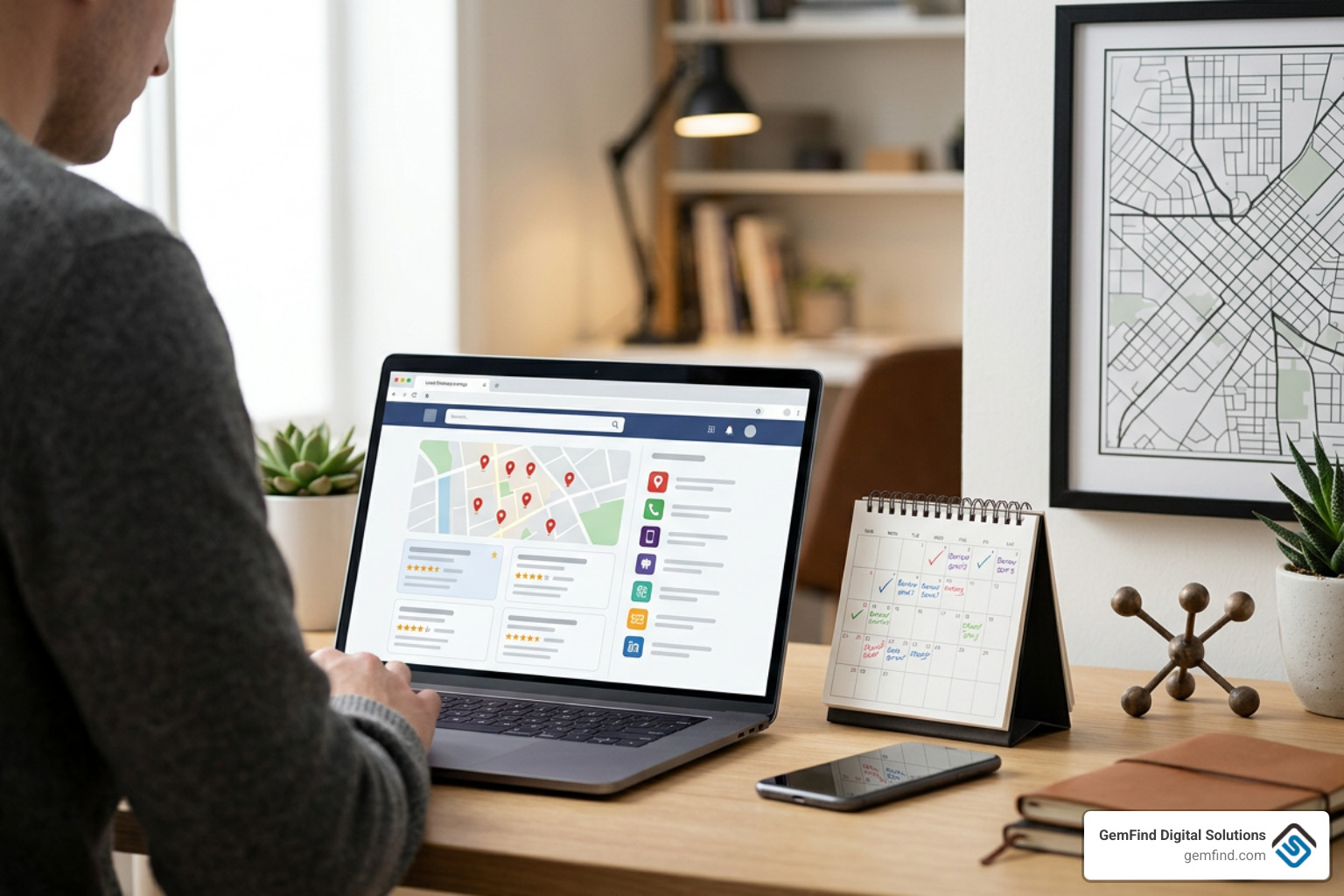
Ranking in competitive local markets requires reinforcement from signals outside your listing dashboard. Your review acquisition rate, external citation ecosystem, and website technical architecture work together to validate your geographic prominence.
Review Velocity and Reputation Management Strategies
Online reputation directly fuels local pack visibility and conversion rates. Today, 97% of consumers read reviews before visiting a local merchant, and 90% specifically read business owner responses.
When you systematically leverage customer reviews, you build trust with both search algorithms and prospective buyers:
- Maintain Natural Velocity: Rather than gathering 40 reviews in a single weekend after a trunk show and sitting idle for months, aim for a steady pace of 2 to 4 authentic reviews each week.
- Encourage Descriptive Feedback: Reviews containing specific service keywords, diamond shapes, or designer collections provide rich context that strengthens your topical relevance for long-tail searches.
- Respond Within 24 to 48 Hours: Provide personalized, professional responses to every review. Acknowledge customer milestones (such as custom engagement ring commissions) while maintaining FTC compliance by avoiding review gating or artificial incentives.
To deepen your understanding of how reputation drives discovery, review our insights on How Local SEO Can Help Jewelers Attract More Customers.
Structuring Location Pages and LocalBusiness Schema for Local Maps SEO
Your website provides the structural backing that verifies your Google Business Profile data. Building high-performing location-specific landing pages anchors your physical showroom to regional searches.
Implement these technical elements on your website:
- LocalBusiness JSON-LD Structured Data: Embed structured markup featuring your exact legal business name, street address, telephone number, geo-coordinates (latitude and longitude to five decimal places), opening hours, accepted currencies, and direct links to your social profiles.
- Interactive Map Embeds & Directions: Embed a responsive Google Map corresponding to your verified listing on the location page, accompanied by neighborhood landmarks and parking instructions.
- Hyper-Local On-Page Content: Avoid generic boilerplate copy across your regional pages. Showcase local custom design case studies, community sponsorships, neighborhood event participation, and customer testimonials.
- Keyword Mapping: Align your on-page heading hierarchy (H1, H2, H3) with local search terms to help your showroom rank in near me searches.
Scaling Multi-Location Management and Service Area Polygons
For multi-showroom brands or mobile appraisal services, scaling local visibility requires clear architectural governance:
- Absolute NAP Consistency: Standardize your Name, Address, and Phone number (NAP) formatting across every directory, aggregator, and social platform. Even minor variations in suite numbers or abbreviations can dilute search engine confidence.
- Dedicated Landing Pages per Storefront: Link each physical GBP listing to its corresponding regional page rather than directing all traffic to the root homepage.
- Service Area Configuration: Service-area businesses (SABs) operating without walk-in retail storefronts should designate specific service cities and zip codes within their profile settings while keeping their private residential addresses hidden, staying fully compliant with Google guidelines.
- Preventing Thin Duplicate Content: Avoid programmatic doorway pages that swap only city names. Ensure every published regional page contains at least 60% unique, regionally relevant content.
To see how specialized multi-store strategies drive measurable market share, explore our comprehensive programs for Google Map Domination for Jewelers and Local Organic Ranking Domination for Jewelers.
The Generative AI Search Shift: Winning Beyond the 3-Pack
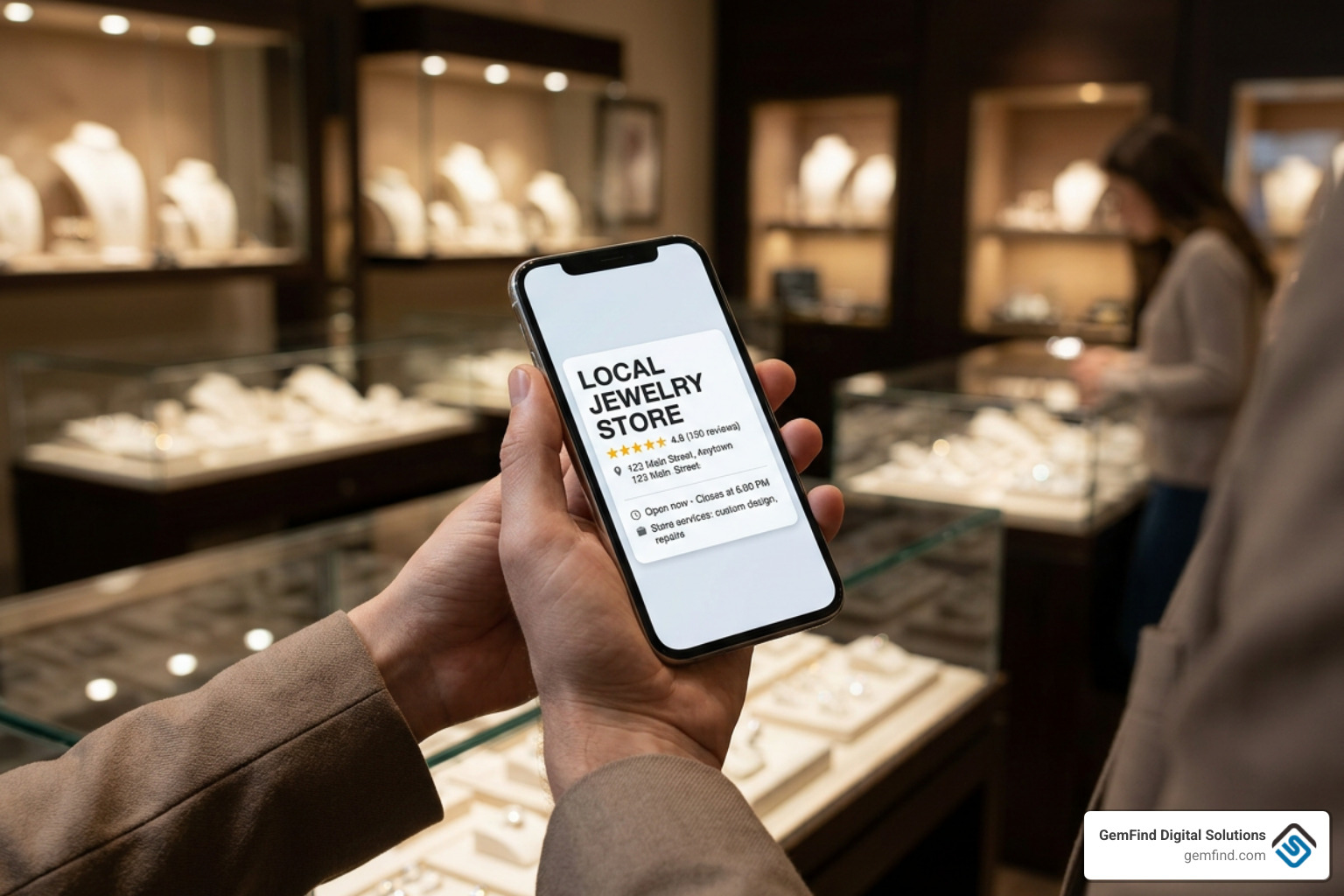
The local search ecosystem has expanded into zero-click environments and conversational engines. Today, 45% of consumers turn to AI discovery platforms when researching local specialists and luxury products. Generative engines deliver concise recommendations directly in the interface, making presence in knowledge graphs as critical as ranking in the traditional Map Pack.
How AI Search Engines Evaluate Local Entities
As detailed in recent Generative Engine Optimization research, conversational models evaluate entities differently than traditional index crawlers.
| Evaluation Metric | Traditional Google Map Pack | Generative Engine Optimization (GEO) |
|---|---|---|
| Primary Data Source | GBP Dashboard & Local Backlink Graph | Multi-Platform Knowledge Graphs, Mapbox, Bing, Live Web Index |
| Visibility Format | Visual 3-Pack Map Pin & Directory Card | Natural Language Recommendation & Sourced Conversational Citations |
| Query Matching | Exact/Phrase Match & Proximity Geolocation | Semantic Entity Disambiguation & Contextual Conversational Intent |
| Trust Verification | Listing Completeness & Direct Reviews | Cross-Platform NAP Concordance, POS Verification, Brand Mentions |
| Information Lifespan | Static Updates & Periodic Posts | High Recency Requirement; Citation Decay Occurs After 90 Days |
Conversational AI platforms like ChatGPT, Gemini, and Perplexity synthesize data from dozens of disparate directories and customer platforms. If your showroom address or telephone line differs across major portals, large language models (LLMs) may exclude your business due to low factual confidence.
Adapting Local Maps SEO for AI Overviews and Search Agents
To secure citations within AI Overviews and answer engines:
- Publish Citable, Factual Content: Add concise, objective FAQ sections to your location pages that address common customer questions, turnaround times, appraisal standards, and pricing policies.
- Maintain Multi-Platform Listings: Claim and optimize your secondary brand listings across Apple Business Connect, Bing Places, Yelp, and industry registries to ensure entity clarity across all index sources.
- Integrate Real-Time Data Streams: Utilize modern cloud POS integrations—such as connecting your inventory systems to your digital profiles—to verify active operational status and real-time product availability.
For a deeper dive into the technical overlap between traditional search algorithms and generative models, read our analysis on A Guide to Google Maps for Your Jewelry Store alongside our recommendations on how to Optimize Your Jewelry Stores Google Listing for Maximum Visibility.
Auditing, Tracking ROI, and Avoiding Critical Mistakes
Effective local SEO relies on systematic tracking and regular auditing. Because search results fluctuate across physical street corners, measuring visibility from a single office desktop gives an incomplete view of real-world performance.
Tracking Multi-Point Geolocation Rankings and Conversions
Modern local optimization utilizes multi-point geolocation rank trackers to generate visual heatmaps across your market. These grid trackers simulate consumer mobile searches at 1-kilometer intervals across your city, highlighting exactly where your Map Pack visibility drops off.
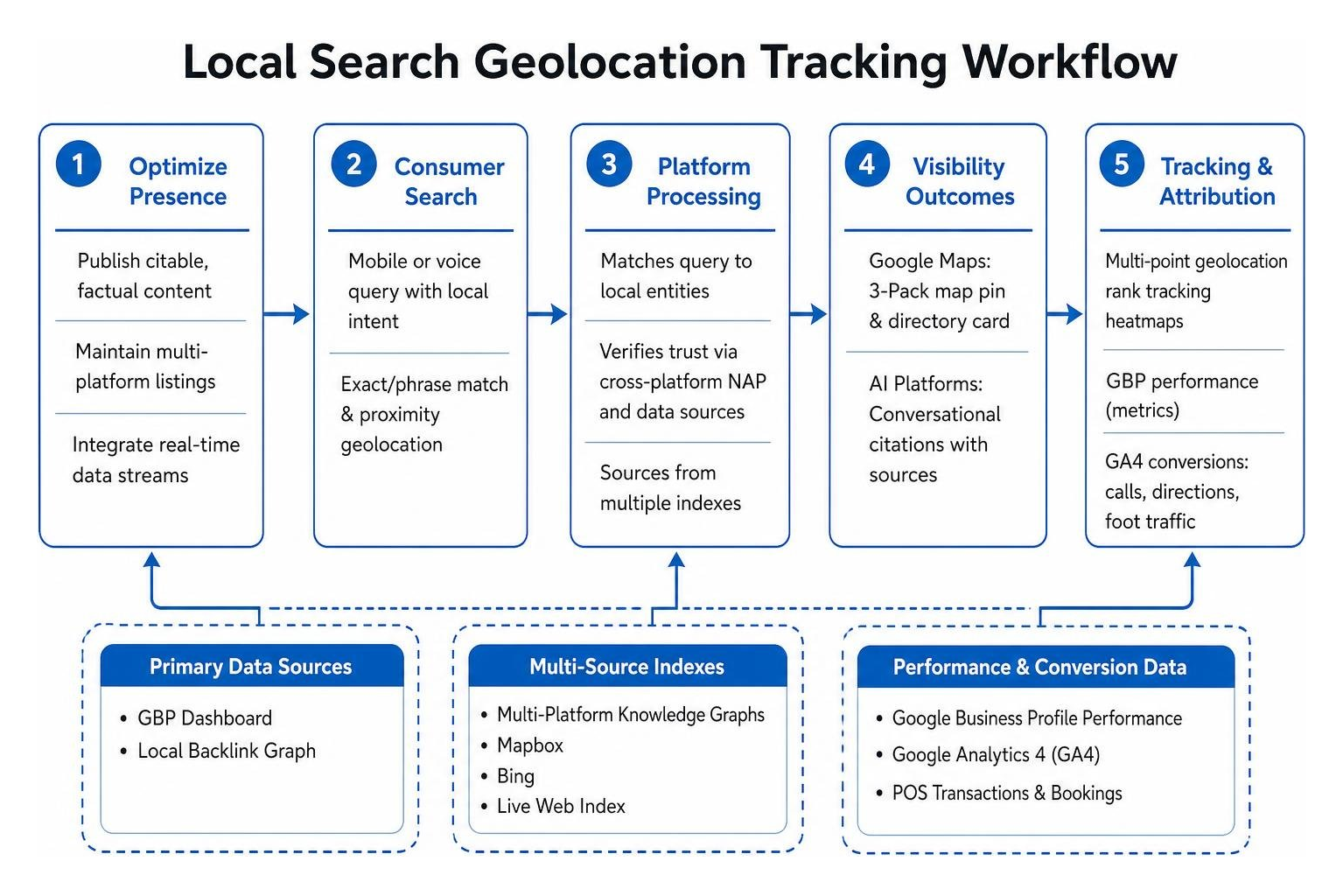
Pair rank heatmaps with concrete conversion metrics inside Google Business Profile Performance reports and Google Analytics 4 (GA4):
- Direct Inbound Phone Calls: Track call volume initiated directly from your Google Maps profile button.
- Showroom Direction Requests: Monitor monthly navigation requests to assess physical foot traffic intent.
- Showroom Foot-Traffic Attribution: Correlate peak Map Pack ranking periods with in-store POS transaction volume and private consultation bookings.
- Local Landing Page Clicks: Track organic traffic to your regional URLs using tagged UTM parameters on your profile website button.
Resolving Common Compliance and Setup Errors
Avoid these common mistakes that lead to visibility loss or profile suspensions:
- Keyword Stuffing Your Business Name: Adding unauthorized city names, services, or adjectives to your registered business name violates Google’s terms and risks immediate listing suspension.
- Selecting Inaccurate Categories: Setting overly broad or incorrect primary categories weakens your relevance for core offerings.
- Pin Location Drift: Ensure your map pin sits precisely above your physical building entrance (accurate to five decimal places) rather than defaulting to the center of a zip code or a remote parking structure.
- Review Gating Violations: Filtering negative feedback through third-party surveys while routing only positive reviews to Google violates FTC regulations and search guidelines.
- Duplicate Listings: Consolidate accidental duplicate profiles created by past staff or legacy directories to prevent diluted review signals and divided authority.
For additional practical steps to safeguard your brand profile, review our guide on 4 Tips to Increase Your Jewelry Store's Local Visibility on Google.
Frequently Asked Questions About Local Maps SEO
How long does it take to see tangible results from local map optimization?
Most businesses see measurable improvements in map pack visibility and direction requests within 90 to 120 days of consistent optimization. Initial improvements from profile updates and citation cleanup often emerge within 30 to 45 days, while competitive market expansion—fueled by review velocity and authority backlinks—builds over 3 to 6 months.
Can a service-area business rank without a public physical storefront?
Yes. Service-area businesses (SABs) that travel to clients can verify their business through Google while selecting the option to hide their physical street address. By designating clear service area cities and supporting those zones with dedicated service pages, SABs can rank competitively across local search results without exposing private residential locations.
What is the most common mistake that causes sudden map rank drops?
The most frequent cause of sudden local ranking drops is Google Business Profile suspension caused by unauthorized business name edits, followed closely by category changes, unaddressed duplicate listings, or unverified address updates. Unchecked citation drift across major data aggregators can also steadily erode algorithm confidence over time.
Conclusion
Dominating local map results is one of the most reliable ways to attract qualified, high-intent shoppers to your showroom. By aligning complete profile data, steady review acquisition, clean citations, and high-performance technical location pages, you establish the relevance, distance, and prominence search engines require.
As search experiences expand into generative AI summaries and conversational assistants, maintaining an accurate, authoritative digital footprint ensures your business remains the trusted recommendation across all discovery channels.
At GemFind Digital Solutions, we provide digital marketing, web design, and jewelry-specific technology tailored to the retail diamond and jewelry industry. Backed by over 25 years of industry experience and Premier partnerships with Google and Shopify, we help independent jewelers and luxury multi-store retailers capture market share through end-to-end local marketing and POS integrations.
Ready to build your complete local search and conversion strategy? Explore our comprehensive jewelry SEO guide for 2026 and partner with our team to elevate your store's digital visibility.


