



Why Your Jewelry Business Needs a Powerful Online Presence
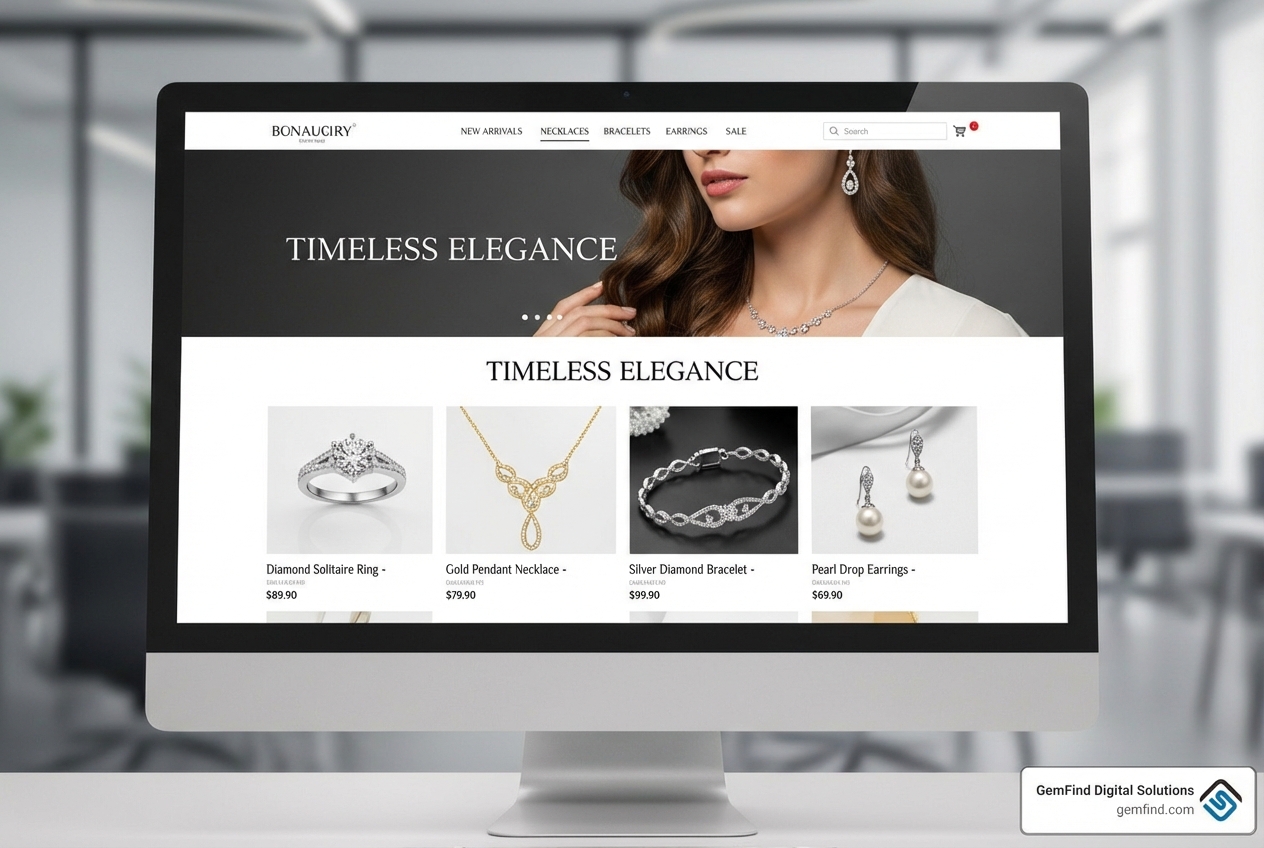
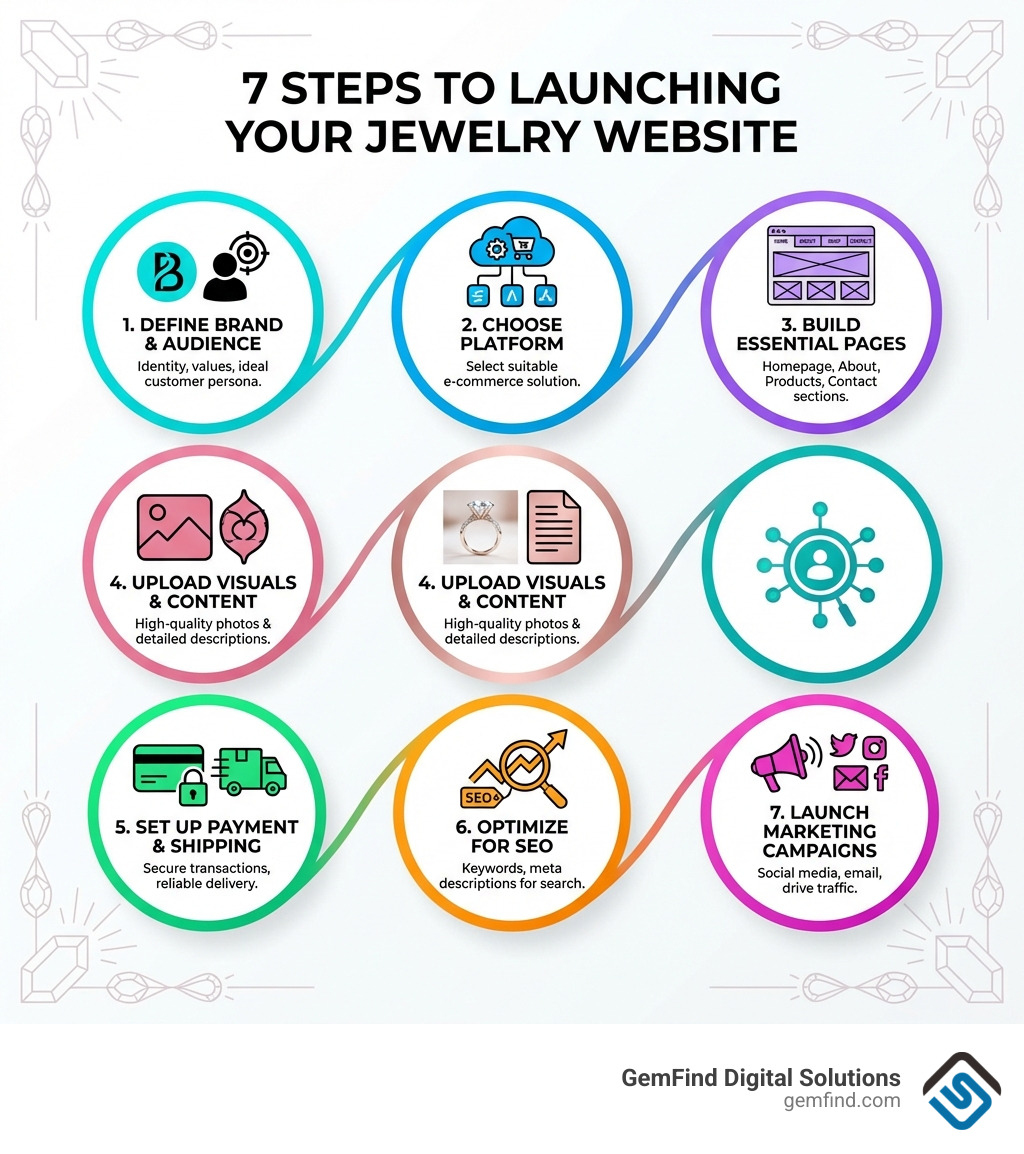
To create jewelry website that drives sales, follow these essential steps:
- Choose the right e-commerce platform
- Define your brand identity (logo, colors, fonts)
- Build essential pages (homepage, about, product listings, contact)
- Upload high-quality product photos and detailed descriptions
- Set up secure payment and shipping options
- Optimize for search engines (SEO keywords, meta descriptions)
- Launch marketing campaigns (social media, email, paid ads)
The online jewelry market is booming. By 2027, the global online jewelry market is expected to reach $115 billion, with revenues growing 5-6% annually. More customers than ever are shopping for jewelry on their phones and laptops, making a professional website no longer optional—it's essential for survival.
But here's the challenge: your website isn't just a digital catalog. It's your digital storefront, your brand's first impression, and often the deciding factor between a sale and a bounce. A poorly designed site means lost revenue. A stunning, intuitive one? That turns browsers into buyers and builds lasting customer relationships.
Creating a jewelry website might seem daunting, especially if you're not tech-savvy. The good news? Modern platforms and tools have made it easier than ever. You don't need to be a web developer to launch a beautiful, high-performing online store. What you do need is a clear strategy, the right platform, compelling visuals, and smart marketing.
This guide walks you through every step—from defining your brand and choosing between template-based and custom-built sites, to showcasing your products with stunning photography and driving traffic through SEO and social media. Whether you're selling handmade pieces, curating fine jewelry, or dropshipping, you'll find actionable advice custom to your business model.
I'm Morgan Price, and I've helped countless jewelry retailers create jewelry website strategies that build authority, attract customers, and generate sustainable growth through ethical SEO and digital marketing. Let's turn your jewelry business into an online success story.
Laying the Foundation: Strategy and Branding
Before we even think about pixels and code, the first step to create jewelry website is to lay a solid strategic and branding foundation. This is where we define who you are, who you serve, and what makes you sparkle in a crowded market. A strong brand identity and a clear understanding of your target audience are paramount. As one expert put it, a polished website gives customers confidence in your brand and the products you sell.
We need to identify your target audience persona. Who are your future buyers? Are they seeking custom, high-end pieces, or affordable, trendy accessories? Do they buy for themselves or as gifts? Understanding their demographics, psychographics, and purchasing habits will inform every design and marketing decision we make. This analysis helps us create suitable products, pricing, and campaign strategies.
Next, consider your business model. Will you be making your own handmade jewelry, curating designs from various manufacturers, or utilizing a dropshipping model? Each approach has different implications for inventory management, product presentation, and fulfillment. For instance, handmade jewelry sellers often focus on storytelling and craftsmanship, while fine jewelry retailers might emphasize authenticity and certification.
Your unique value proposition is what sets you apart. Is it bespoke design, ethically sourced materials, unparalleled craftsmanship, or perhaps a unique aesthetic? This "why" should be woven into every aspect of your online presence.
Finally, let's talk about choosing a memorable domain name. A good domain name is short, easy to recall, and ideally reflects your brand. Make sure to verify its availability, along with corresponding social media handles, to maintain consistency. Legal considerations are also crucial; consider registering your business (e.g., as an LLC) to protect yourself and take advantage of tax incentives. It's also wise to check with the patent office to ensure you're not infringing on another business's name or designs.
Defining Your Jewelry Brand
Your brand is more than just a logo; it's the entire experience customers have with your business. When we create jewelry website, we're building a digital extension of that brand.
- Logo design: This is often the first visual representation of your brand. It should be professional, memorable, and reflect your aesthetic.
- Color psychology: Colors evoke emotions and perceptions. Luxury brands often use sophisticated shades like gold, black, and deep jewel tones, while delicate or minimalist brands might opt for pastels. Consistency in your color palette across all platforms can boost sales by as much as 33%.
- Typography: The fonts you choose convey personality. Neat serifs or script fonts can communicate luxury and tradition, while clean sans-serifs offer a modern, minimalist feel. Pairing a stylish heading font with a simple body text font creates visual harmony.
- Brand voice: This is how you communicate. Is it sophisticated, playful, educational, or inspiring? Your website copy, social media posts, and customer interactions should all reflect this consistent voice.
- Storytelling: Especially for handmade or custom jewelry, sharing your origin story, your passion, and the inspiration behind your designs creates a deeper connection with customers. They want to know the "who" behind the beautiful pieces.
Essential Website Assets
Once your brand identity is defined, we need to gather the digital assets that will bring it to life on your website. These include:
- High-quality logo files (in various formats for web and print).
- Professional brand photography that aligns with your aesthetic.
- Consistent color palette codes (hex, RGB) to ensure brand uniformity.
- Selected brand fonts (font files or web-safe alternatives).
- Graphics and icons that improve user experience and visual appeal.
Choosing Your Platform and Building Your Site
The platform you choose is the engine of your online jewelry store. It needs to be robust enough to handle sales, inventory, and customer interactions, while also allowing for stunning visual presentation.
When evaluating e-commerce platform features, we look for ease of use, scalability, built-in payment systems, inventory tools, and a good selection of jewelry-focused templates.
A non-negotiable in today's digital landscape is mobile-first design. More people are shopping on mobile devices than ever before, and mobile commerce shows no signs of slowing down. Your website must function flawlessly and look beautiful on smartphones and tablets to provide a seamless shopping experience. A non-responsive site will frustrate users and lead to lost sales.
The big question often comes down to template-based versus custom-built websites. Both have their merits, and the right choice depends on your budget, technical comfort, and specific business needs.
Finally, website security is paramount, especially when dealing with high-value items and customer payment information. We must ensure your site has an SSL certificate (the padlock icon in the browser) to encrypt data and build trust with your customers. PCI compliance for payment gateways is also a critical consideration.
Must-Have Pages for Your Jewelry Website
To create jewelry website that converts, certain pages are absolutely essential. These pages not only provide crucial information but also guide customers through their shopping journey and build trust.
Here's a list of the must-have pages:
- Homepage: This is your digital storefront window. It needs a prominent, attention-grabbing photo, clear navigation, and highlights of your best-selling or new items. It should immediately convey your brand's aesthetic and value proposition.
- About Us page: This is where you tell your brand's story. Share your passion, craftsmanship, values, and what sets you apart. For handmade jewelry, this is an opportunity to connect with customers on a deeper level by explaining the origins of your products.
- Product Category pages: These pages organize your jewelry by type (e.g., necklaces, rings, earrings), material (gold, silver, platinum), or collection. They should feature clear visuals and intuitive filtering options (price, metal type, gemstone) to help customers find what they're looking for.
- Individual Product pages: Each product needs its own dedicated page with high-quality photos (multiple angles, lifestyle shots, macro details), compelling and SEO-friendly descriptions (including measurements, sizes, and materials), accurate pricing, and clear calls to action like "Add to Cart."
- Contact page: Make it easy for customers to reach you. Include an email address, phone number, physical address (if applicable), and a contact form. Live chat options can also significantly improve customer support.
- FAQ page: Proactively answer common questions about your products, ordering process, shipping, and returns. This reduces customer service inquiries and builds confidence.
- Shipping & Returns Policy: Transparency is key for online jewelry sales. Clearly outline your shipping costs, delivery times, return procedures, and any guarantees. This eliminates surprises and builds trust.
Template vs. Custom-Built: What's Right for You?
When we decide to create jewelry website, one of the first big decisions is whether to use a template or invest in a custom build. Let's break down the differences:
| Feature | Template-Based Websites - | |
|---|---|---|
| Upfront Cost | Typically between $2,000 and $4,000. - | |
| - Ongoing Cost | Approximately $400 per month. - | |
| Customization | Limited to template features; some platforms allow more flexibility. | High degree of customization; custom to brand. |
| Features | Standard e-commerce features; relies on apps for advanced functionality. | Advanced features can be built in from the start; unique integrations possible. |
Template-based websites (like those offered by Shopify) are generally the more affordable option upfront. They offer a quicker launch, as much of the design and structure is pre-built. You choose from a professional jewelry website template and then customize it with your content, images, and branding. This is ideal for smaller businesses or those with a limited budget who want to get online quickly without extensive technical knowledge. However, customization options can be limited, meaning your site might look similar to others using the same template.
Custom-built websites, designed specifically for your brand, offer a unique, custom look with advanced features. While they start at a higher upfront cost, they provide unparalleled flexibility and scalability. This is a worthwhile investment for many jewelry businesses due to the greater flexibility and a personalized user experience. It allows for unique integrations, bespoke functionality, and a website that perfectly embodies your brand vision. This option is often chosen by established brands or those with complex needs.
Regardless of your choice, ongoing costs for both types of websites typically average around $400 per month. This covers essentials like platform subscription fees, hosting, domain renewal, app/plugin fees, security maintenance, and your marketing budget.
Showcasing Your Sparkle: Products and User Experience
Once we've built the technical framework, it's time to make your jewelry shine! The goal here is to create an online experience that mirrors the luxury and detail of your physical products. User experience (UX) principles are crucial: an intuitive, user-friendly website keeps visitors engaged and guides them smoothly toward a purchase.
Intuitive navigation is key. Your website should be easy to explore, with clear menus, breadcrumb trails to show customers their path, and robust search bar functionality with filters for category, price, and material. Customers should effortlessly move from the homepage to specific product pages or information about your brand's history.
Building trust is paramount when selling high-value items like jewelry online. Since customers can't physically touch or try on your pieces, we rely heavily on visual and social proof. Showcasing customer testimonials, reviews, and high-quality images of real people wearing your jewelry helps build credibility and confidence. Testimonials and social proof, especially with visual evidence, are powerful tools for overcoming buyer hesitation.
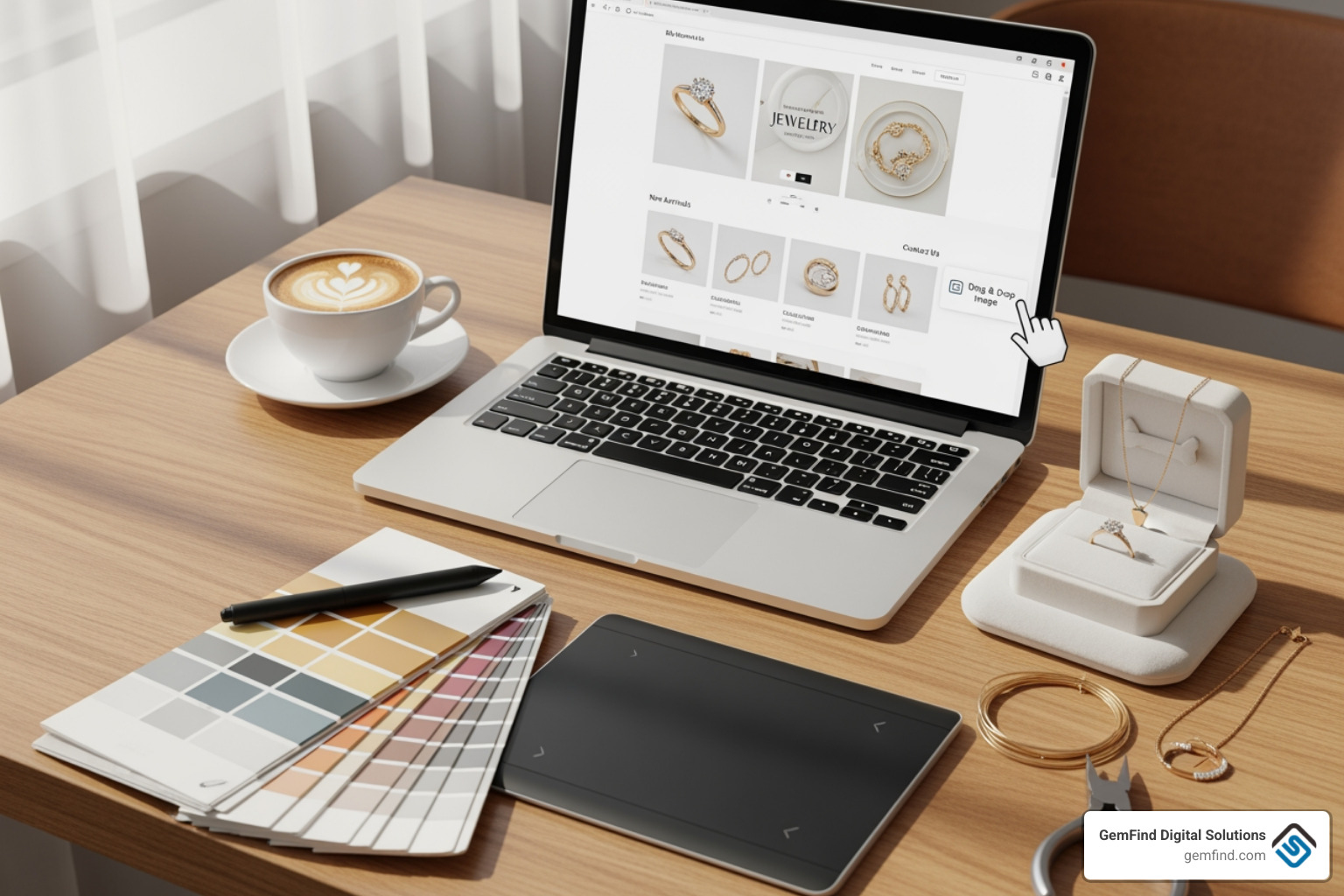
When seeking inspiration for your website's design and user experience, we can always Find inspiration from award-winning designs.
The Importance of Product Photography and Descriptions
In the glittering world of jewelry, your online presence needs to sparkle just as brightly as your merchandise. High-quality imagery is non-negotiable.
- High-resolution imagery: Every piece of jewelry needs crystal-clear, professional photos. Think of them as your virtual display case.
- Multiple angles & lifestyle shots: Show the jewelry from every side. Include lifestyle shots of models wearing the pieces to demonstrate scale and how they look in real life. This helps customers visualize themselves with your products.
- Macro shots for details: Jewelry often has intricate details. Macro shots highlight craftsmanship, gemstone facets, and delicate engravings that might be missed in broader images.
- Video demonstrations: A short video can bring a piece to life, showcasing its movement, sparkle, and how it catches the light. This adds a dynamic element that still photos can't capture.
- Writing compelling, SEO-friendly descriptions: Product descriptions should be under 300 words, clear, concise, and engaging. They need to include essential details like measurements, sizes, and materials. We also incorporate relevant keywords into product names and descriptions to help your products rank in search engine results.
- Material specifications: Clearly state the metals used, gemstone types, carat weights, dimensions, and any other relevant specifications. Transparency builds trust.
Key Features for a High-Converting Jewelry Website
Beyond beautiful photos, certain features can significantly improve the buyer journey and increase conversion rates.
- 3D jewelry viewers: Imagine a customer being able to rotate a ring, zoom in on a diamond, or see an engraving from every angle. A 3D jewelry viewer significantly improves interaction and builds confidence in the purchase.
- Product customization tools: For engagement rings or personalized gifts, customization is key. Tools that allow customers to select stone types, metal colors, engraving options, or even design their own pieces (like a ring builder or watch finder) are incredibly powerful. An interactive 3D configurator with live engraving previews can be a game-changer.
- Advanced search and filtering: Help customers quickly narrow down their choices. Filters by price, style, metal type, gemstone, and collection are essential for a smooth shopping experience.
- Wishlist functionality: Allows customers to save items they love for later, encouraging repeat visits and purchases.
- Secure and simple checkout process: A complicated checkout is a conversion killer. We need a seamless, secure process with multiple payment options (credit cards, PayPal, digital wallets like Amazon Pay, Google Pay, and Apple Pay). Robust fraud protection is also built-in to guarantee security for every transaction. Offering financing options through partners like Wells Fargo or Affirm can also improve the customer experience for higher-value items.
How to create jewelry website that attracts and converts
Building a beautiful website is only half the battle. To truly succeed, we need to drive traffic to your digital storefront and convert visitors into loyal customers. This requires an integrated digital marketing strategy, continuously measuring success with analytics.
Essential steps to create jewelry website SEO
Search Engine Optimization (SEO) is crucial for helping potential customers find your jewelry website through organic search. It's about making your site findable.
- Keyword research for jewelry: We identify the terms and phrases your target audience uses to search for jewelry online. This includes specific product types, materials, styles, and even gift occasions.
- On-page SEO: This involves optimizing elements directly on your website. We'll ensure your product titles, meta descriptions, and product descriptions incorporate these keywords naturally.
- Image optimization: Every image on your site needs descriptive file names and alt text (alternative text). This helps search engines understand what your images are about and makes your site more accessible.
- Local SEO for physical stores: If you have a brick-and-mortar location, we'll optimize your Google My Business profile and local listings to help nearby customers find you.
- Content marketing: Creating valuable content, such as blog posts about jewelry trends, style guides, or behind-the-scenes stories of your craftsmanship, can attract organic traffic and establish your brand as an authority.
How to create jewelry website content that engages
Once customers land on your site, engaging content keeps them there and encourages them to explore and purchase.
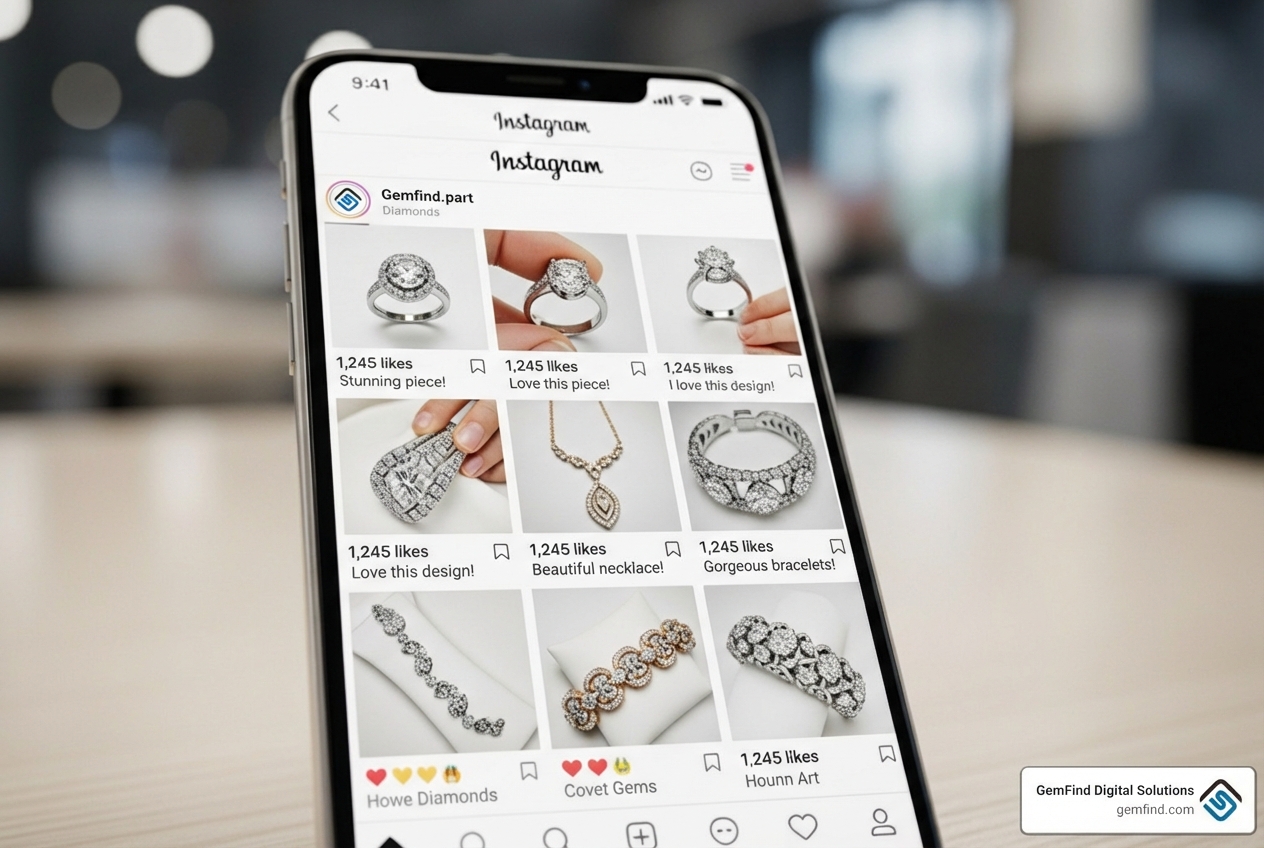
- Social media marketing: Jewelry is highly visual, making platforms like Instagram, Pinterest, and TikTok perfect for showcasing your pieces. Share high-quality images and captivating videos, styling tips, and customer testimonials. Social sharing buttons on product pages make it easy for customers to spread the word.
- Email marketing campaigns: Building an email list is incredibly valuable. We can use email to send newsletters about new collections, exclusive discounts, abandoned cart reminders, and personalized recommendations. Offering a small discount or a valuable resource (like a jewelry care guide) for newsletter sign-ups is a great incentive.
- Paid advertising: Platforms like Google Ads and social media ads (Facebook, Instagram) allow us to target specific demographics and interests, driving highly qualified traffic to your website.
- Influencer collaborations: Partnering with micro-influencers or fashion bloggers can introduce your brand to new, engaged audiences.
Frequently Asked Questions about Creating a Jewelry Website
We understand you likely have many questions about building your online jewelry presence. Here are some of the most common ones we encounter:
What are the ongoing costs associated with a jewelry website?
Beyond the initial setup, maintaining a thriving jewelry website involves several ongoing expenses. These typically include hosting fees, annual domain renewal, recurring platform subscription fees (for platforms like Shopify), and any premium app or plugin fees. We also factor in costs for security maintenance, regular software updates, and, crucially, your digital marketing budget for SEO, social media, and paid ads. Based on industry averages, ongoing costs for both template-based and custom-built websites are approximately $400 per month, covering these essential operational and growth-oriented aspects.
What are the main benefits of having an e-commerce jewelry website?
The benefits of having an e-commerce jewelry website are immense in today's digital age. Firstly, it allows us to reach a global audience 24/7, transcending geographical limitations and keeping your store "always open." This dramatically expands your customer base beyond your local area. Secondly, a professional online presence establishes brand credibility and builds customer confidence in your products and brand. It provides a platform to powerfully showcase your unique designs and craftsmanship through rich visuals and detailed descriptions. It gives us greater control over the customer experience and significantly increases your sales potential, driving high-volume sales and personalized customer journeys.
How can a jewelry website effectively showcase customization options?
Showcasing customization options effectively is key to engaging customers and driving sales for personalized jewelry. We achieve this by using high-quality visuals that clearly depict the various choices. Interactive 3D configurators are incredibly powerful, allowing customers to virtually design their own pieces, rotating them and zooming in to see every detail. Clear drop-down menus for selecting materials (e.g., gold, platinum), stone types (e.g., diamond, sapphire), cuts, and engraving fonts make the selection process straightforward. Crucially, an instant preview feature that updates in real-time as customers make their selections helps them visualize their unique creation, building excitement and confidence in their personalized purchase.
Conclusion
Creating a jewelry website is an exciting journey that merges artistry with technology. We've covered the essential steps, from laying a strong brand foundation and choosing the right platform to showcasing your exquisite products with stunning visuals and driving traffic through smart marketing strategies. Your website is your digital storefront—a powerful tool to expand your reach, build trust, and convert browsers into loyal buyers.
The power of a professional online presence cannot be overstated. In a market projected to reach $115 billion by 2027, having a well-crafted, high-performing website is not just an advantage; it's a necessity for any jewelry business looking to thrive.
At GemFind Digital Solutions, we understand the unique nuances of the jewelry industry. With over 25 years of industry-specific expertise, we're dedicated to helping jewelers like you shine online. As a Shopify and Google Partner, we provide custom solutions, from web design to specialized apps and integrations, ensuring your digital storefront is as brilliant as your creations.
Ready to transform your vision into a sparkling online reality? Let us help you build a high-performance Shopify jewelry store with expert guidance. Build your high-performance Shopify jewelry store with expert guidance


