


Understanding Custom Jewelry Design Wholesale: OEM vs. ODM Models
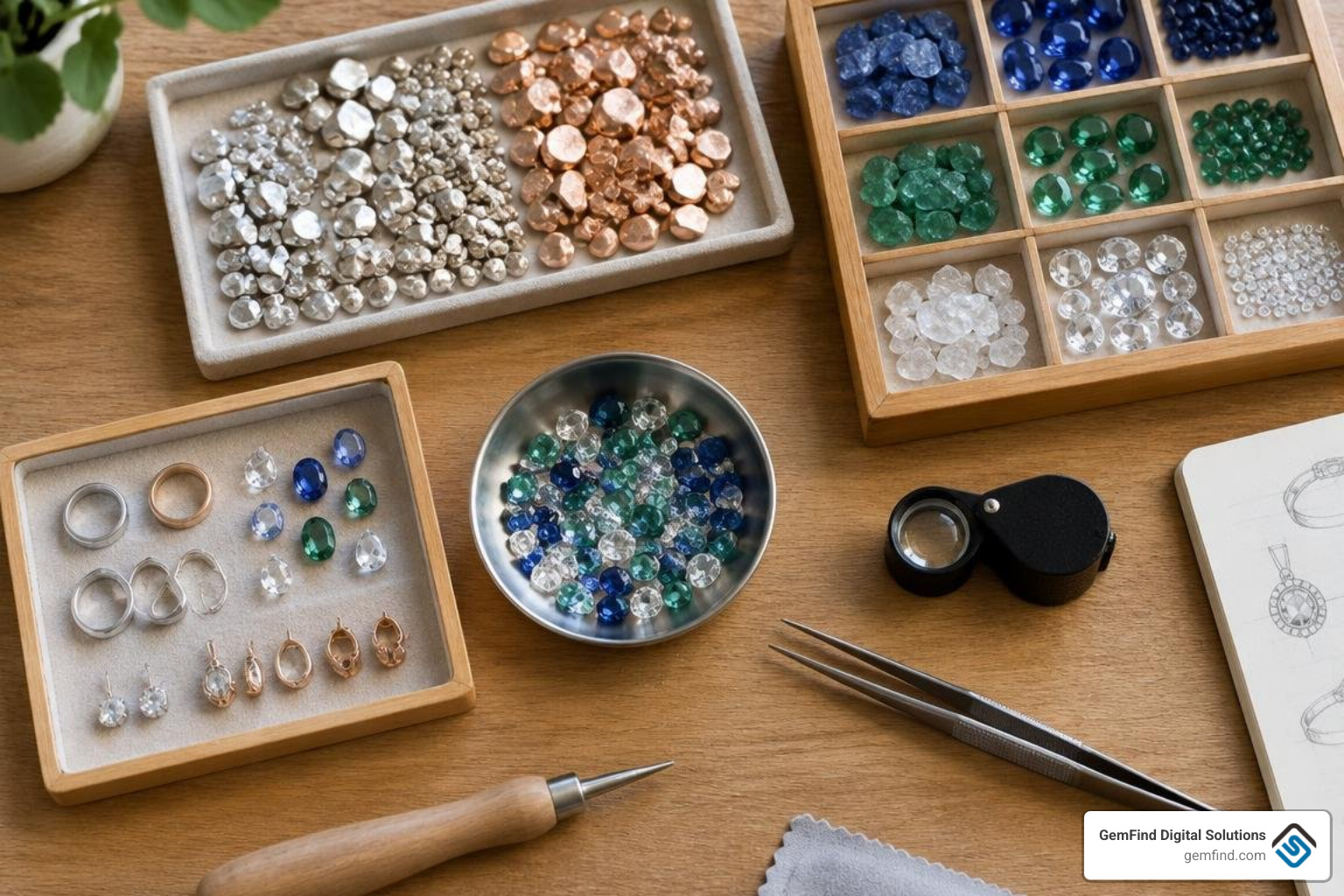
Navigating the wholesale manufacturing landscape begins with choosing the right production framework for your business goals. When developing proprietary jewelry lines, you will encounter two primary production methods: Original Equipment Manufacturing (OEM) and Original Design Manufacturing (ODM). Choosing between them dictates your upfront capital requirements, time to market, and intellectual property ownership.
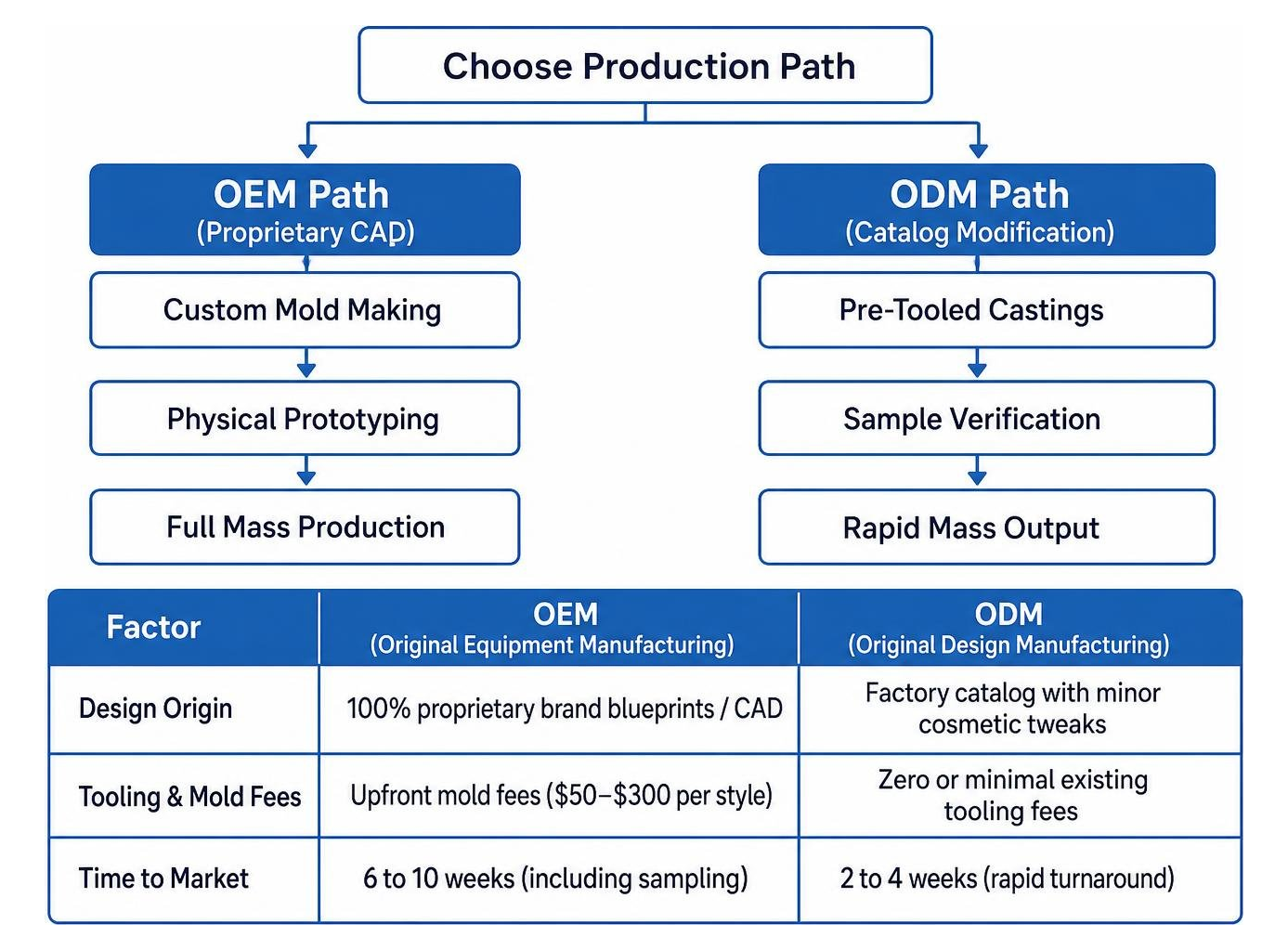
| Factor | OEM (Original Equipment Manufacturing) | ODM (Original Design Manufacturing) |
|---|---|---|
| Design Origin | 100% proprietary brand blueprints / CAD | Factory catalog with minor cosmetic tweaks |
| Tooling & Mold Fees | Upfront mold fees ($50–$300 per style) | Zero or minimal existing tooling fees |
| Time to Market | 6 to 10 weeks (including sampling) | 2 to 4 weeks (rapid turnaround) |
| IP Ownership | Full exclusive design rights | Factory owns core base architecture |
| Typical MOQs | 50 to 100 pieces per SKU | 20 to 50 pieces per SKU |
| Brand Differentiation | Maximum market uniqueness | Moderate (shared market silhouettes) |
Original Equipment Manufacturing (OEM) for Proprietary Designs
OEM manufacturing is the gold standard for jewelers looking to establish a distinct aesthetic identity. Under this model, you supply technical files, 2D sketches, or precise specifications, and the factory brings your original vision to life.
Because you build every setting, prong, and contour from scratch, OEM requires upfront mold creation and technical prototyping. While this path involves initial tooling investments, it yields complete design ownership and strong market differentiation. To streamline your development workflow, reviewing a comprehensive custom jewelry design guide helps ensure your design files meet modern manufacturing tolerances.
Original Design Manufacturing (ODM) for Rapid Market Entry
ODM sourcing allows brands to bypass heavy initial CAD and tooling costs by selecting pre-engineered base styles directly from a manufacturer's catalog. You can customize these designs through private labeling, such as:
- Selecting custom surface finishes (high-polish, brushed, satin, or hammered)
- Specifying metal alloys and plating thicknesses
- Choosing custom gemstone cuts, colors, and lab-grown diamond placements
- Adding laser-engraved hallmarks and custom logo tags
ODM enables fast market testing for emerging trends with minimal inventory risk and lower minimum order thresholds.
Strategic Material Sourcing and Gemstone Selection
Selecting the right materials balances target retail price points with everyday wearability and luxury aesthetics.
Today's fine and fashion jewelry consumers expect durability, non-tarnish performance, and hypoallergenic safety across all price tiers.
Integrating Lab-Grown Diamonds into Custom Jewelry Design Wholesale
Lab-grown diamonds have transformed custom jewelry production by offering identical physical, chemical, and optical properties to mined diamonds at a fraction of the cost. Modern wholesale production facilities routinely supply lab-grown stones spanning DEF color grades and VVS–VS clarity profiles, backed by recognized IGI grading certifications.
Integrating lab-grown diamonds into tennis bracelets, eternity bands, and signature pendants allows retailers to maintain healthy 50% to 70% retail profit margins. For emerging businesses expanding their inventory, sourcing custom wholesale jewelry for retail stores provides an accessible entry point to evaluate evolving consumer trends in lab-grown fine jewelry.
Base Metals and Advanced Plating Techniques
When selecting base metals for your wholesale collections, matching the alloy to customer usage ensures longevity and preserves brand reputation:
- 316L Surgical Stainless Steel: Naturally hypoallergenic, corrosion-resistant, and ideal for waterproof jewelry lines. When coated using Physical Vapor Deposition (PVD), it delivers superior tarnish resistance for daily wear.
- 925 Sterling Silver: The standard for accessible fine jewelry. It provides a premium weight and serves as the ideal foundation for vermeil finishes.
- Solid Gold (10K, 14K, 18K): The foundation of heirloom fine jewelry, offering long-term value and natural non-tarnishing properties.
- Alternative High-Performance Metals: Titanium and tungsten carbide provide extreme scratch resistance and structural durability for modern unisex collections.
To elevate silver and base metal collections, wholesale manufacturers utilize multi-micron gold plating and electrophoretic clear coatings (e-coating) to ensure finishes withstand daily friction, water exposure, and natural skin oils.
The Step-by-Step Custom Jewelry Manufacturing Process and Timelines
Transforming a two-dimensional concept into a market-ready jewelry collection requires a structured, multi-stage production pipeline.
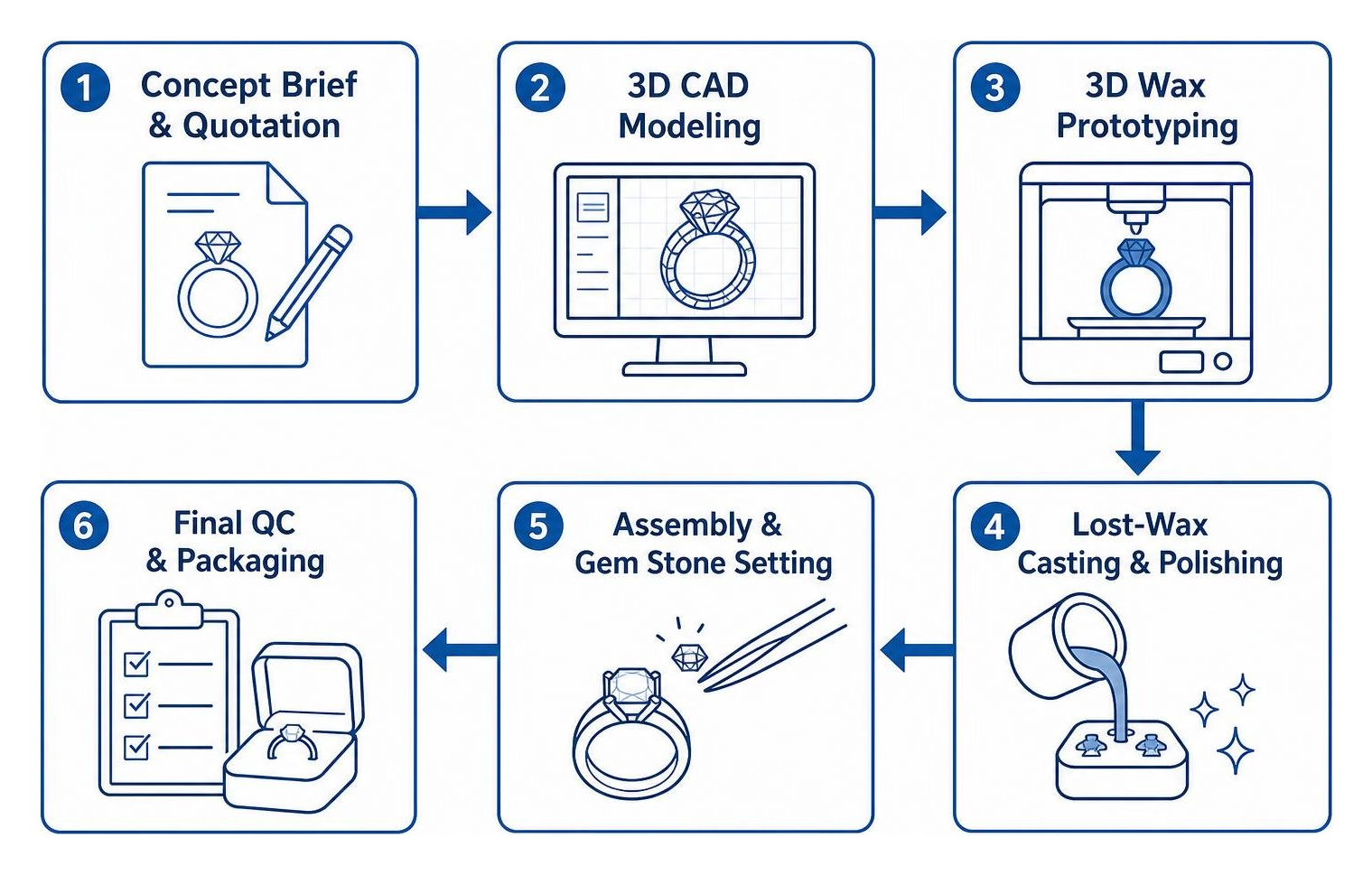
Modern production runs typically span 15 to 45 days from final design sign-off to bulk dispatch. Efficient workflows rely on utilizing custom jewelry design software to generate production-accurate 3D CAD models that eliminate dimensional errors before casting.
From Concept and CAD Modeling to Physical Prototyping
- Design Brief & Quotation (1–3 Days): You submit technical sketches, reference imagery, target dimensions, and metal specifications to receive initial unit pricing.
- 3D CAD Engineering (3–5 Days): Digital artists translate concepts into STL/OBJ files, accounting for structural shrinkage and stone seat depths.
- Wax Printing & Master Prototyping (3–7 Days): High-resolution 3D printers output a castable wax replica to create the initial master sample for your physical review.
Mass Production, Stone Retention, and Quality Assurance
Once you approve the physical prototype, the factory creates production molds for batch manufacturing:
- Lost-Wax Casting: Molten precious metal fills plaster investment flasks under vacuum pressure.
- Precision Polishing & CNC Machining: Artisans and automated lathes deburr sprues and refine metal surfaces through multi-stage tumbling.
- Stone Setting & Stone Retention Testing: Micro-pave and prong settings are hand-set under magnification. Quality facilities run mechanical steel-needle probe checks and 3-meter drop tests to guarantee zero stone loss.
- Final Plating & ISO9001 Inspection: Pieces receive their final plating bath, pass hallmarking inspections, and clear final dimensional checks before shipment.
How to Manage MOQs, Pricing, and Intellectual Property Protection
Sourcing custom inventory requires balancing per-unit costs against Minimum Order Quantity (MOQ) commitments while securing your unique designs.
Navigating Minimum Order Quantities (MOQs) in Custom Jewelry Design Wholesale
Managing production minimums effectively keeps upfront capital accessible:
- Sterling Silver Lines: Many specialized overseas and domestic facilities offer low starting MOQs of 30 to 50 pieces per style.
- Stainless Steel & Brass: Tooling setups generally require 100 pieces per style to amortize machine prep and stamping processes.
- Solid Fine Gold & Diamond Jewelry: Often available with zero minimums or single-piece made-to-order fulfillment.
Ordering in scalable tiers (e.g., 50 vs. 250 vs. 500 units) quickly lowers per-unit prices by spreading initial mold setup fees across larger batch sizes.
Branding, Laser Engraving, and Custom Packaging Solutions
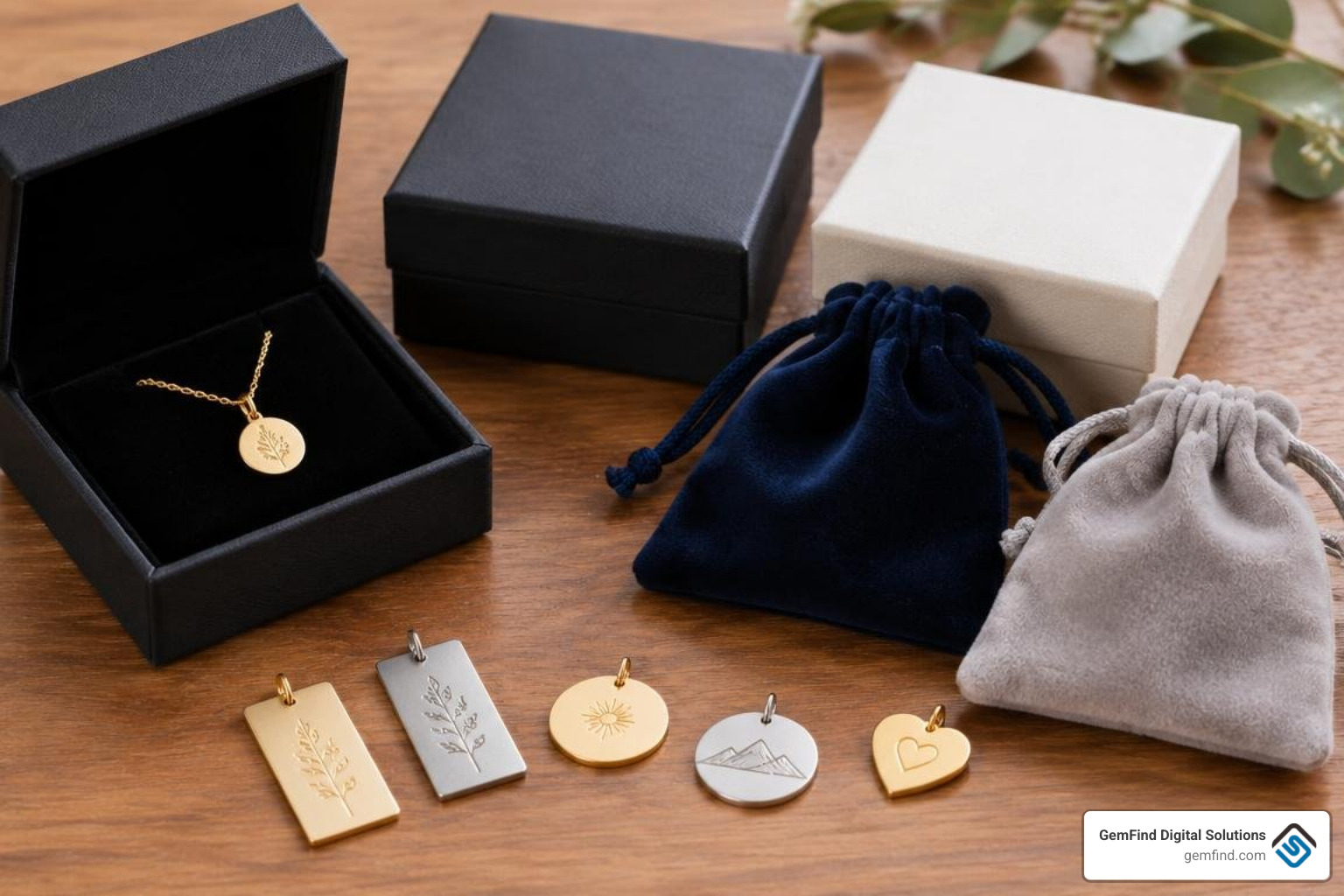
Private labeling transforms standard wholesale manufacturing into a cohesive, branded unboxing experience. Work with suppliers offering wholesale stamping and engraving to add laser-etched hallmarks, serial numbers, and custom logo tags to your collections.
Pairing finished pieces with rigid branded boxes, microfiber travel pouches, and embossed certificates of authenticity creates immediate shelf appeal and drives repeat purchases.
Scaling Your Jewelry Brand: Merchandising and Digital Showcasing
Manufacturing a proprietary line is only half the battle; displaying your collections effectively online drives conversion and wholesale sell-through.
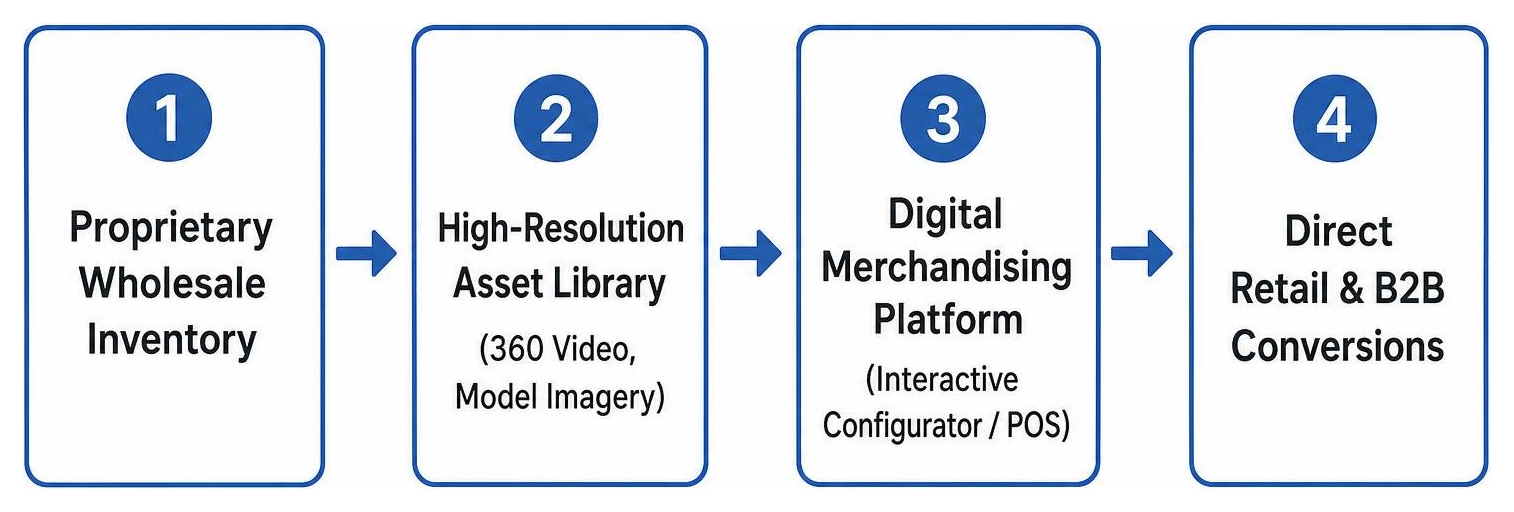
Elevating your digital storefront requires thoughtful visual presentation. Reviewing best practices for showcasing custom jewelry collections on retail websites helps highlight the subtle metalwork and gemstone detailing that set your designs apart.
Furthermore, integrating interactive configuration tools and boosting customer conversion with custom jewelry builders empowers shoppers to personalize engagement settings and gemstone combinations in real time, driving measurable increases in digital sales.
Frequently Asked Questions About Custom Jewelry Wholesale
How long does the end-to-end custom jewelry production process take?
The entire cycle typically takes 4 to 8 weeks. Digital CAD designs and 3D wax prototyping take 1 to 2 weeks, sample shipping and review take 1 week, and mass production requires 3 to 4 weeks. Adding a 5 to 7-day logistics buffer for customs clearance helps keep seasonal product launches on schedule.
What is the best way to protect original designs when manufacturing overseas?
Always execute a bilateral Non-Disclosure Agreement (NDA) and Non-Compete Agreement before transferring proprietary CAD, 3D render, or tech pack files. In addition, register design copyrights within your core consumer markets and ensure manufacturing contracts specify that all production master molds remain your exclusive property.
How can startups launch custom collections with low minimum order quantities?
Start with a focused 3-to-5-piece capsule collection using 925 sterling silver or 316L stainless steel, where factory MOQs remain between 30 and 50 units per SKU. You can also explore modular base designs—such as uniform pendant bails or standardized bezel settings—to share casting molds across multiple gemstone variations and reduce initial tooling costs.
Conclusion
Launching a proprietary jewelry line no longer requires massive upfront capital reserves or enterprise-scale purchase orders. By choosing between OEM and ODM models, selecting high-performance base metals and lab-grown gemstones, and enforcing strict quality control protocols, you can build a distinctive, high-margin brand on your own terms.
Combining smart manufacturing practices with modern digital tools unlocks long-term, scalable growth. If you are ready to modernize your digital presence, explore our guide on building high-converting custom jewelry websites to create an online storefront as polished and compelling as the jewelry you design.


