


Create Meaningful Pieces With Custom Jewelry Design
Custom jewelry design is the process of creating a jewelry piece around a customer's idea, budget, fit, and material choices. Instead of selecting a finished ring or necklace from a display, the customer works with a jeweler to choose details such as the metal, gemstones, setting, shape, and engraving.
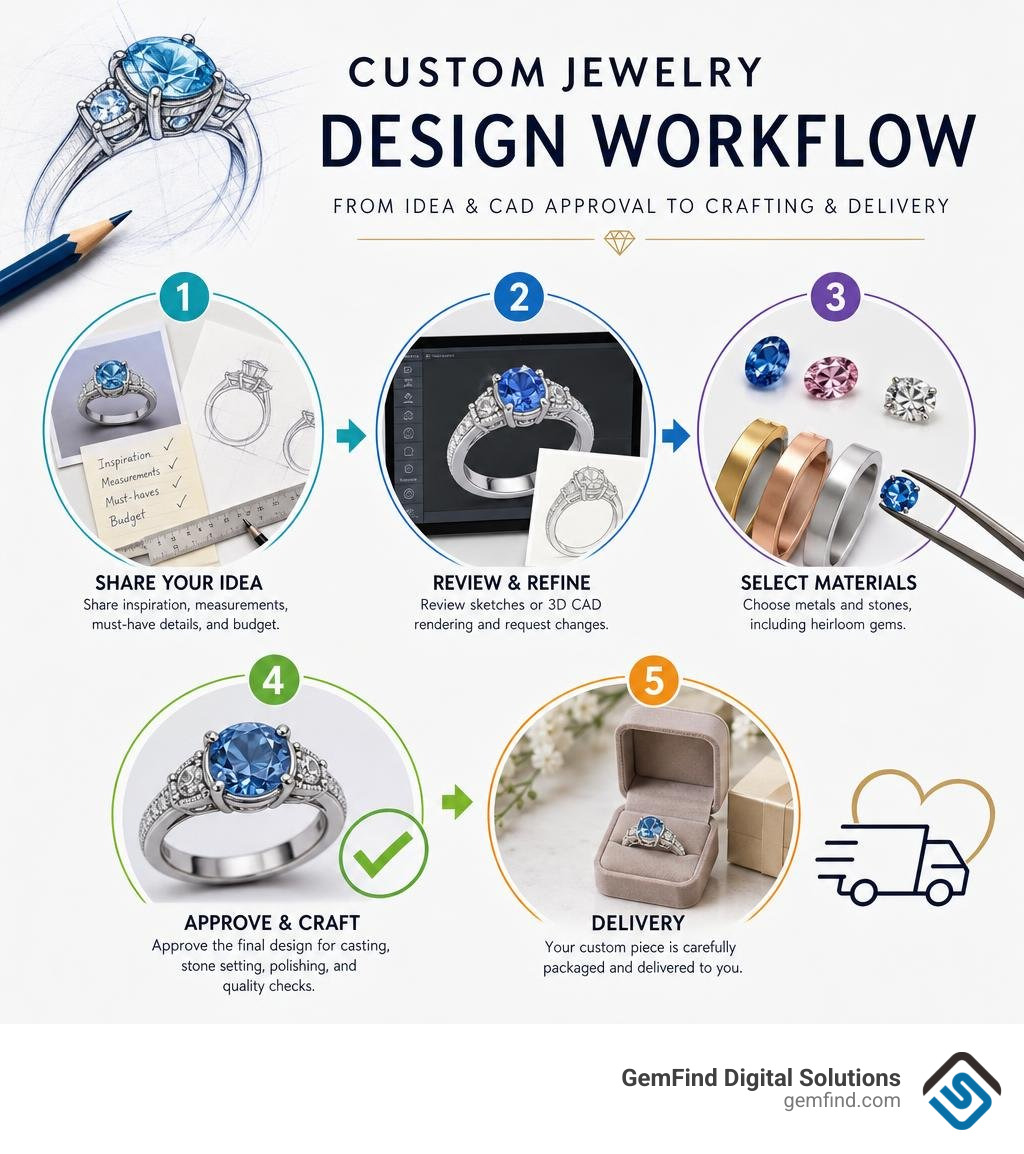
A strong custom project usually starts with four simple actions:
- Share inspiration, measurements, must-have details, and a realistic budget.
- Review sketches or a 3D CAD rendering and request changes before production.
- Select metals and stones, including heirloom gems when they are suitable for resetting.
- Approve the final design for casting, stone setting, polishing, and quality checks.
This route can turn a family stone into a wearable modern piece, create a better-fitting bridal ring, or give a store a distinctive product customers cannot find everywhere else. Timelines vary widely: straightforward projects may take a few weeks after design approval, while detailed bespoke work can take several months.
I am Anthony Arechiga, Vice President of Sales at GemFind Digital Solutions, where I have helped jewelry businesses grow their web, e-commerce, and digital marketing efforts since 2007. My experience in the jewelry industry includes helping retailers present custom jewelry design services online in ways that make the process clearer and easier for customers to begin.
Understanding Custom Jewelry Design: Custom vs. Ready-Made
When shopping for jewelry in 2026, consumers usually face a choice between mass-produced, off-the-shelf inventory and personalized creations. Ready-made jewelry is designed for mass appeal, manufactured in high volumes, and sold as-is. While convenient for quick gifts, standard stock often forces compromises in fit, stone quality, metal preferences, and aesthetic vision.
Bespoke design turns that dynamic upside down. Every curve, prong, and engraving is crafted around your exact specifications. Many forward-thinking retailers now let you explore virtual fitting through interactive custom jewelry try-on tools, bridging the gap between initial concepts and final production.
| Feature | Custom Jewelry | Ready-Made / Mass-Produced |
|---|---|---|
| Personalization | Complete control over metals, stones, proportions, and engravings | Limited to existing sizes and preset configurations |
| Heirloom Repurposing | Can reuse family stones and melt down sentimental gold | Not supported; sold strictly as pre-set items |
| Artistic Control | Full creative input via sketches, CAD renders, and prototypes | Zero artistic input beyond choosing from a catalog |
| Manufacturing Quality | Hand-finished by skilled artisans; checked under magnification | Assembled in assembly lines with varying batch quality |
| Sentimental Value | High; tied directly to a personal story or milestone | Moderate; primarily aesthetic or commercial |
Key Advantages of Bespoke Craftsmanship
Opting for bespoke design offers significant practical and artistic benefits:
- One-of-a-Kind Distinctiveness: Your piece is entirely unique, avoiding cookie-cutter commercial designs.
- Tailored Fit and Ergonomics: Rings, bracelets, and necklaces can be engineered to sit comfortably against your specific anatomy, accounting for knuckle shape, wrist diameter, or collarbone contours.
- Superior Structural Durability: Custom bench jewelers ensure prongs are substantial, shanks are sufficiently thick, and stone seats are cut cleanly to withstand daily wear.
- Ethical Integrity and Standards: Designers can provide certified lab-grown or conflict-free natural diamonds, aligning with strict Gemological Institute of America (GIA) grading standards.
Precious Metals and Gemstone Selection
The materials you select define both the look and longevity of your finished piece:
- Platinum: Naturally white, hypoallergenic, and exceptionally dense. It develops a warm patina over time without losing metal volume.
- Gold (Yellow, White, Rose): Available across 14k and 18k alloys. We also see growing demand for 100% recycled gold, which matches newly mined gold in structural integrity while minimizing environmental impact.
- Diamonds (Natural and Lab-Grown): Lab-grown diamonds share identical chemical, optical, and physical characteristics with mined diamonds, often allowing clients to secure larger carats or higher clarities within a set budget.
- Colored Gemstones: Sapphires, emeralds, rubies, and alternative minerals like spinel and tourmaline allow for vibrant color palettes and unique birthstone combinations.
Step-by-Step Custom Jewelry Creation Workflow
Modern bespoke production balances historic artisan techniques with sophisticated digital modeling tools. For an in-depth review of the software powering this phase, explore our custom jewelry design software guide.
Initial Consultation and Ideation in Custom Jewelry Design
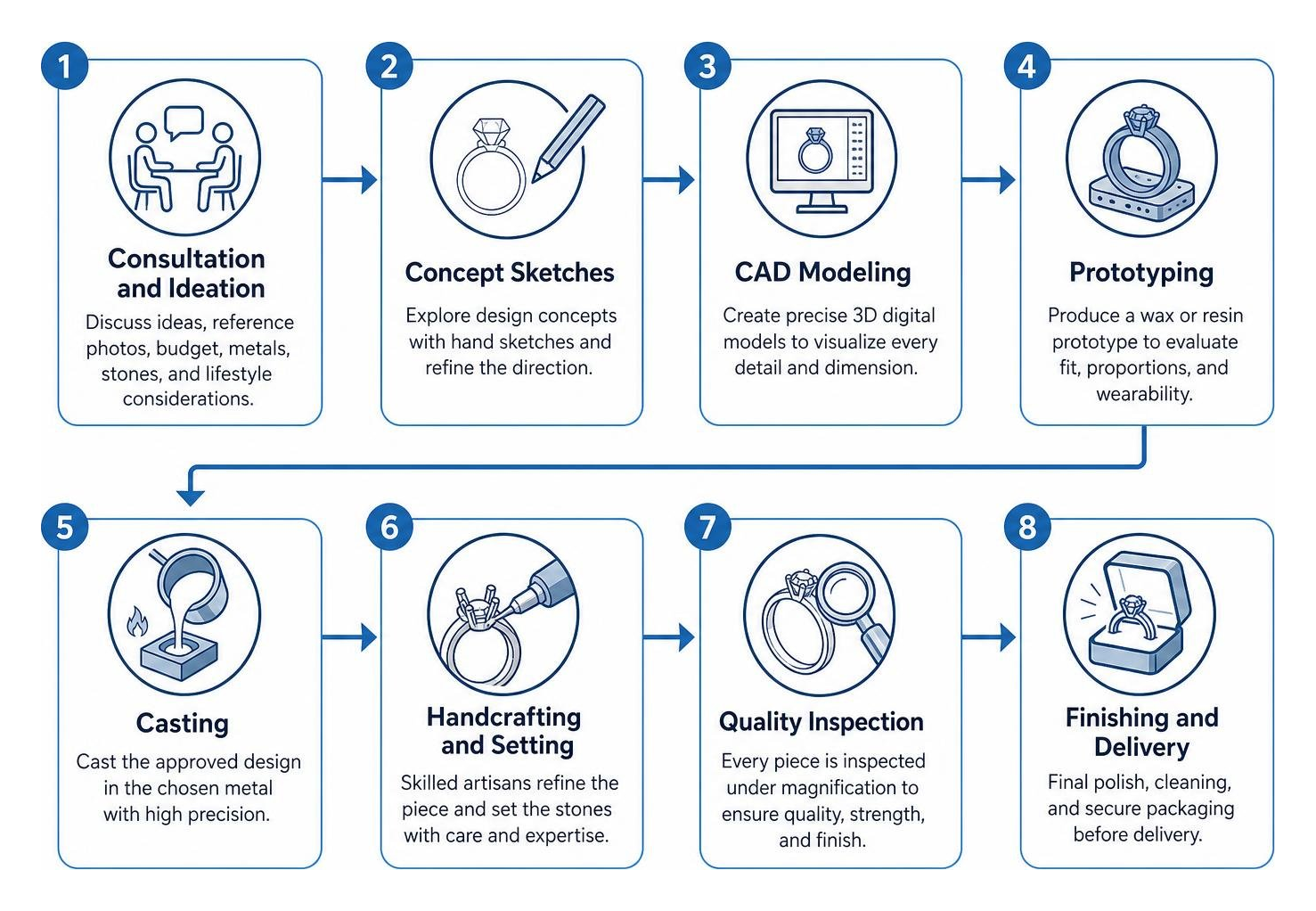
The journey begins with an open conversation. Clients share reference photos, rough sketches, mood boards, or family pieces they wish to remodel. The jeweler establishes key parameters: budget, preferred metals, stone sizes, and lifestyle considerations (such as whether the wearer works with their hands). This collaboration helps designers create personalized jewelry that strikes the right balance between visual beauty and structural integrity.
CAD Modeling, Prototyping, and Production in Custom Jewelry Design
Once the design brief is settled, the technical crafting stages begin:
- 3D CAD Modeling: The jeweler builds a precise 3D digital model, generating photorealistic multi-angle renders for client review.
- Physical Prototyping: Many jewelers print a full-scale wax or resin model, allowing the customer to check dimensions, finger coverage, and height.
- Lost-Wax Casting: The approved prototype is encased in plaster investment, burned out in an oven, and injected with molten gold or platinum.
- Setting and Hand-Polishing: Master stone setters secure the gems under high magnification. Artisans then buff, polish, and apply finishes (such as milgrain or high-polish satin).
- Quality Assurance: Every prong, clasp, and joint undergoes rigorous structural review to ensure the piece meets high durability standards before delivery.
Discerning clients can examine specialized programs like Bespoke Jewellery to see how sustainable materials and modern CAD workflows come together seamlessly.
Popular Styles and Categories to Customize

Virtually any piece of fine jewelry can be created from scratch or remodeled from vintage items. Online platforms like Custom Jewelry Design Online make this process intuitive by connecting clients directly with master craftsmen.
Custom Rings and Bridal Jewelry
Bridal jewelry remains the most popular category for personalization:
- Engagement Rings: Crafting a ring from scratch allows you to choose low-profile bezel settings, hidden halos, or vintage art-deco engraving. Retailers frequently integrate tools like a custom diamond ring builder to help clients visualize stones in real time.
- Wedding Bands: It is common to design your wedding band to curve seamlessly around an engagement ring, preventing friction and gaps between the bands.
- Signet and Family Crest Rings: Deep laser or hand engraving can immortalize monograms, heraldry, or personal motifs into solid signet rings.
Custom Necklaces, Bracelets, and Earrings
Personalization extends well beyond rings:
- Pendants and Necklaces: From organic nature-inspired motifs to modern geometric birthstone arrangements, custom necklaces make versatile, daily wear pieces.
- Bespoke Tennis Bracelets: Adjust length down to the millimeter and choose custom diamond shapes (such as emerald or bezel-set round cuts).
- Earrings and Cuffs: Design matching suites for special occasions, jackets for stud earrings, or drop earrings balanced for all-day comfort.
Timelines, Costs, and Choosing the Right Jeweler
Understanding common timelines and cost variables ensures your custom experience is rewarding from start to finish.
Typical Turnaround Timelines
Production schedules depend on design complexity, material availability, and current jeweler workload:
- Express Online Configured Pieces: As fast as 2 weeks for standardized custom combinations.
- Standard Bespoke Projects: Typically 2 to 4 weeks once the 3D CAD rendering is finalized.
- Complex, Hand-Fabricated Masterpieces: 6 to 10 weeks for intricate pieces requiring rare gem sourcing, complex pavé settings, or multiple review iterations.
Transparent Pricing and Deposits
Custom pricing is built from four main components:
- Materials: Metal weight (grams of platinum or karat gold) and the carat, cut, color, and clarity of stones.
- CAD and Modeling Labor: The technical time required to build and render your piece.
- Bench Craftsmanship: Casting, assembly, precision stone setting, and final hand-finishing.
- Deposits: Most jewelers charge a modest design deposit (often credited toward the total purchase) to begin CAD renderings after the initial consultation.
Vetting Your Jeweler
When selecting an artisan or store, look for clear credentials:
- Proven Portfolio: Look for real photos of finished work alongside their original CAD renderings.
- Transparent Warranties: Work with jewelers offering lifetime manufacturing warranties, complimentary initial ring resizing, and written certificates of authenticity.
- Clear Return Policies: Bespoke items are made to order and rarely eligible for standard refunds, so choose a jeweler who emphasizes multi-stage design approvals to ensure complete satisfaction.
Frequently Asked Questions About Custom Jewelry
How long does the custom jewelry design process take from start to finish?
Most custom projects take between 2 and 6 weeks from the initial consultation to final delivery. The design phase takes as long as you need to review and approve 3D CAD renders. Once the design is locked in, physical casting, stone setting, and hand-polishing generally require 2 to 4 weeks.
What factors influence the cost of a custom jewelry piece?
The price is primarily determined by raw material selection (natural vs. lab-grown diamonds, colored gemstones, platinum vs. gold karat), total metal weight, and the hours of bench labor required for intricate stone setting or hand engraving. Because you control the specs, a jeweler can often adjust diamond dimensions or metal weight to match your target budget.
Can I incorporate family heirloom stones into a custom design?
Yes. Repurposing heirloom jewelry is one of the most rewarding aspects of custom design. A jeweler can safely unmount your vintage diamonds or colored gemstones, assess their structural condition, and reset them into an entirely modern setting. In many cases, old gold can also be refined or credited toward your new creation.
Conclusion
Creating custom jewelry is a deeply personal journey. By choosing bespoke design, you gain complete creative control, high-grade craftsmanship, and a lasting heirloom that reflects your personal story.
For independent jewelry retailers and designers looking to showcase their bespoke services to the world, GemFind Digital Solutions provides the industry's leading digital tools, integrations, and web design. Explore our Custom Jewelry Websites Complete Guide to learn how we help jewelry brands turn digital inquiries into lifelong custom design clients.


