


Why Engagement Ring Ads Are One of the Most Powerful — and Complex — in Retail Marketing
Engagement ring ads occupy a unique space in advertising: they sell not just a product, but one of the most emotionally charged purchases a person will ever make.
Here's a quick snapshot of what makes engagement ring advertising so distinctive:
- Emotionally driven — Buyers aren't shopping for jewelry; they're shopping for a symbol of love and commitment
- High-consideration — Customers research extensively before buying, often across weeks or months
- High-value — Engagement ring prices are typically marked up at least 50% above base value, making conversion extremely profitable
- Trust-dependent — 91% of millennials trust online reviews as much as personal recommendations, making social proof essential
- Mobile-first — Over 60% of purchases are made on smartphones, demanding mobile-optimized ad formats
- Demographically shifting — Younger, more diverse, and LGBTQ+ buyers are reshaping who these ads need to reach
The story of engagement ring advertising is really the story of manufactured desire at scale. Before 1940, diamond engagement rings were rare — only about 1 in 10 first-time brides received one. By 1990, that number had climbed to 8 in 10. That transformation didn't happen by accident. It was the result of one of the most effective advertising campaigns in history.
Today, the landscape is far more complex. Jewelers must navigate lab-grown vs. natural diamond debates, invasive ad tracking controversies, AI-driven search behavior, and a generation of buyers who expect both personalization and authenticity from the brands they choose.
I'm Anthony Arechiga, VP of Sales at GemFind Digital Solutions, where I've spent nearly two decades helping jewelry retailers build smarter digital strategies — including campaigns specifically focused on engagement ring ads and bridal season marketing. In this guide, I'll walk you through everything from the history that shaped this category to the tactics driving results right now.
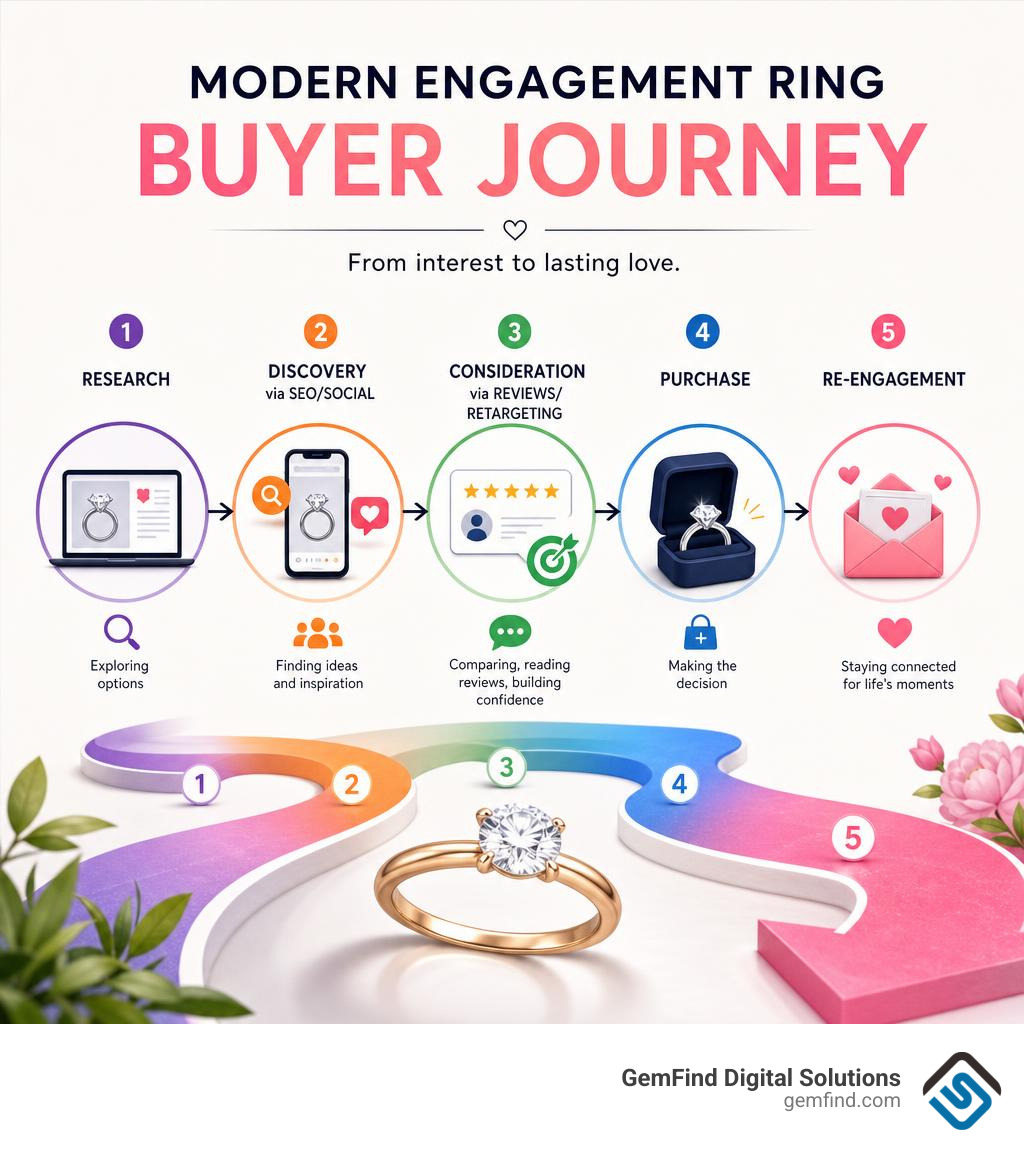
The History of Engagement Ring Ads: From Luxury to Cultural Necessity
To understand how modern engagement ring ads function, we have to look back to the late 1930s. Before this era, proposal rings were often made of simple gold bands, sapphires, rubies, or emeralds. Diamonds were considered a luxury reserved strictly for the ultra-wealthy.
When the Great Depression caused diamond prices and demand to plummet, De Beers Group took action. In 1939, they partnered with the N.W. Ayer & Son advertising agency to orchestrate a cultural shift. The goal was simple but incredibly ambitious: make diamonds an essential, non-negotiable part of the marriage proposal.
The strategy was brilliant because it didn't focus on selling a specific brand or even price points. Instead, it focused on selling the emotion of eternal love. In 1947, a young copywriter named Frances Gerety penned the iconic four-word slogan: "A Diamond is Forever."
This single line changed everything:
- Massive Sales Growth: Between 1939 and 1979, De Beers' wholesale diamond sales in the United States skyrocketed from $23 million to $2.1 billion.
- Expanding Budgets: To fuel this growth, De Beers' advertising budget increased from a modest $200,000 in 1939 to over $10 million a year by 1979.
- A New Cultural Norm: In 1940, only 10% of first-time brides received diamond engagement rings. By 1990, that number rose to 80%.
De Beers didn't just place print advertisements; they planted stories about celebrities proposing with diamonds in newspapers, sent lecturers to high schools to educate young women on diamond quality, and established the "two-month salary rule" to set spending expectations. This historic masterclass in emotional positioning laid the foundation for modern Engagement Ring Ad Campaigns, proving that when you sell the symbol, the product sells itself.
Modern Engagement Ring Advertising Tactics That Drive Sales
The digital era has completely reshaped how we capture the attention of soon-to-be-engaged couples. Because the price of an engagement ring is at least 50% higher than its real value, it remains one of the most profitable items sold by jewelry brands. However, with high profit margins comes intense competition.
To stand out, modern retailers must move beyond static imagery and embrace dynamic, mobile-first strategies. Today, over 60% of purchases are made from smartphones, meaning your digital campaigns must be optimized for the palm of a consumer’s hand.
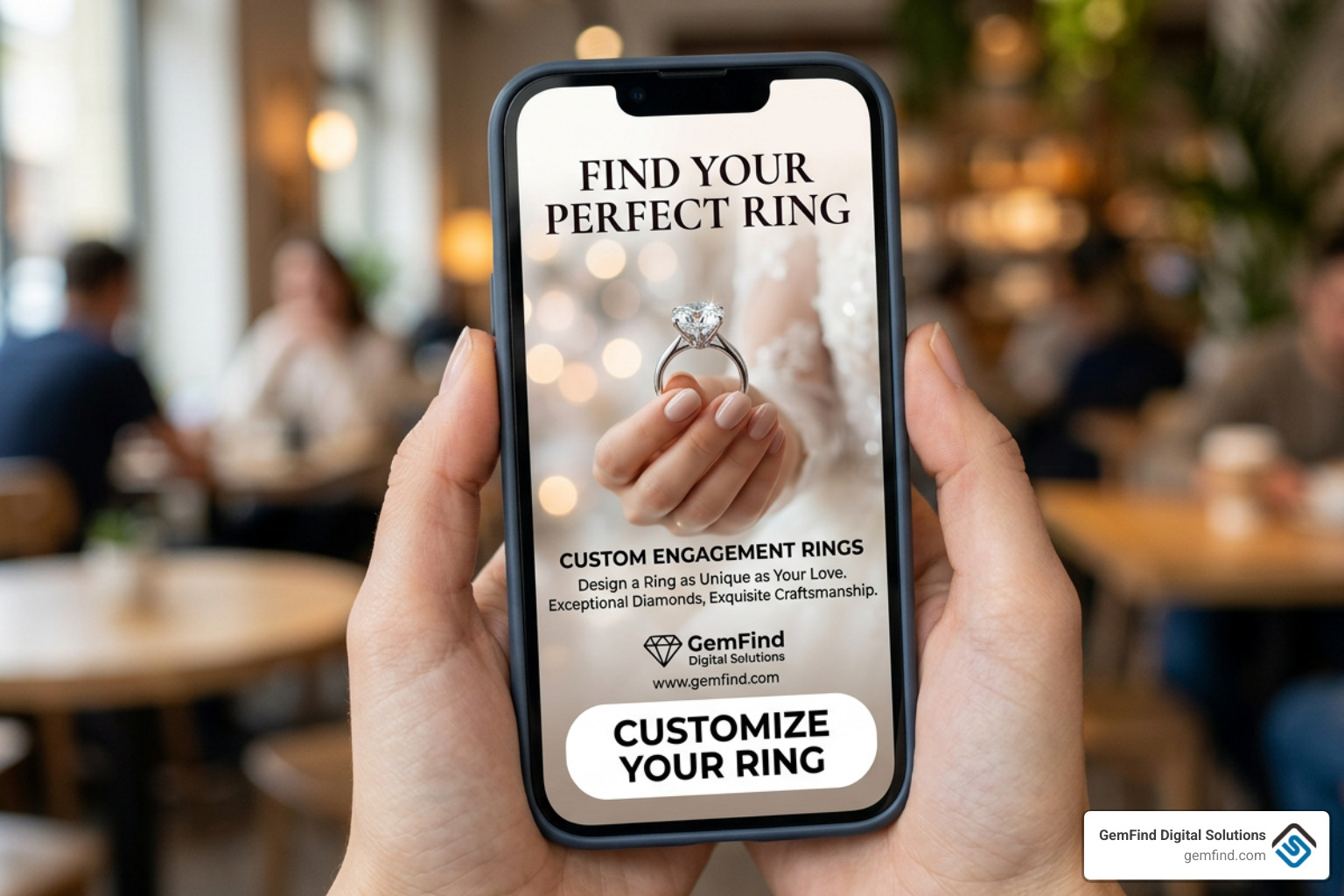
When we look at the most successful digital campaigns, they consistently utilize a specific set of high-converting elements:
- High-Contrast Visuals: On fast-scrolling feeds, contrast is king. Using a stark, clear contrast between the background, the model’s hand, and the glistening facets of the engagement ring stops the scroll.
- Vertical Video Formats: Since most users view content on mobile, vertical videos (9:16) on platforms like Instagram and TikTok outperform square formats by fitting the screen perfectly.
- Exclusivity and Scarcity: Highlighting limited-edition settings or bespoke, one-of-a-kind stones triggers the psychological desire for unique self-expression.
- Bespoke Customization: Promoting the ability to "design your own" speaks directly to younger consumers who reject cookie-cutter designs.
For a deeper dive into structuring these digital funnels, check out The Guide To Selling Engagement Rings With Digital Marketing.
Leveraging Social Proof in Engagement Ring Ads
An engagement ring is a high-ticket, high-anxiety purchase. Because consumers are spending thousands of dollars on an item they cannot always touch beforehand, trust is your most valuable currency.
This is where social proof becomes non-negotiable. Statistics show that 91% of millennials trust online reviews as much as friends and family. To build this trust instantly in your engagement ring ads, we recommend incorporating:
- Verified Trust Ratings: Displaying trust badges from platforms like Trustpilot directly on your ad creatives.
- User-Generated Content (UGC): Showing real, unpolished proposal videos or unboxing reactions. These feel authentic and stand out against overly produced corporate ads.
- Third-Party Press Mentions: Highlighting trust signals and accolades from recognizable lifestyle or business publications.
Visual Contrast and Mobile Formats for Engagement Ring Ads
As we design visual assets, we must optimize for the channels where our audiences spend their time. For instance, utilizing vertical posts and immersive video on Instagram and Facebook is highly effective.
Furthermore, conversational commerce is booming. Brands like Taylor & Hart have successfully leveraged Facebook Messenger advertising to chat directly with potential clients, answering design questions in real-time. To make sure your visual assets look spectacular, you can find inspiration from curated design boards like this Ring Advertisement - Pinterest showcase.
Natural vs. Lab-Grown Diamonds: Differentiating the Marketing Strategies
The rise of lab-grown diamonds has completely disrupted the jewelry industry. Today's jewelers must run parallel marketing strategies to address two distinct consumer mindsets. While lab-grown diamonds are at least 30% cheaper than natural diamonds, consumer preference among young buyers (ages 18-35) is split: 55% prefer lab-grown, while 45% still prefer natural diamonds.
| Marketing Angle | Natural Diamonds | Lab-Grown Diamonds |
|---|---|---|
| Core Message | Rarity, geological history, "forged by fire," heirloom value | Affordability, modern technology, ethical transparency, larger carat size |
| Target Audience | Traditionalists, luxury buyers, investors | Eco-conscious Gen Z, budget-focused Zillennials |
| Primary Value Prop | "Worth the wait," billions of years in the making, holds value | Get a bigger, brighter stone for 30% to 50% less money |
| Visual Style | Earthy tones, raw volcanic energy, timeless luxury | Sleek, futuristic, high-tech, clean aesthetics |
The 'Worth the Wait' Campaign and Zillennial Values
To defend the market share of mined stones, major players are launching highly targeted campaigns. A prime example is the joint venture between De Beers and Signet Jewelers, who launched the Signet and De Beers launch new natural diamond marketing campaign: ‘Worth the Wait’ initiative.
This campaign is specifically designed to target "Zillennials" (the micro-generation bridging Gen Z and Millennials). Instead of pushing outdated notions of instant perfection, the campaign uses natural diamond formation as a metaphor for modern relationship milestones.
According to the Signet and De Beers Target Soon-to-Be-Engaged Zillennials with Film Showcasing Modern Love press release, today's young couples often prioritize personal growth, merging finances, or even weathering minor breakups and reconciliations before committing. The campaign highlights that true love, much like a natural diamond, is pressure-tested and "forged by fire."
By aligning the geological journey of a 3-billion-year-old diamond with a couple's real-life struggles, the Signet and De Beers launch captivating new natural diamond marketing campaign: ‘Worth the Wait’ – De Beers Group and the De Beers and Signet Campaign for Natural Diamonds initiatives successfully elevate the emotional value of natural stones.
Differentiating with Warm-Toned 'Desert Diamonds'
Another clever way natural diamond campaigns are pushing back against lab-grown competition is by celebrating natural "imperfections" and unique color profiles. Because lab-grown diamonds are typically engineered to be colorless and highly clear, natural campaigns are highlighting warm-toned diamonds (cream, champagne, and cognac hues).
As reported in De Beers Expands ‘Desert Diamonds’ Beacon Into Bridal | National Jeweler , this strategy appeals directly to the modern bride's desire for individuality. By positioning warm, desert-inspired hues as rare, bespoke, and full of distinct character, advertisers are creating a highly profitable niche that lab-grown mass production cannot easily replicate.
This is supported by wide-scale educational efforts, such as when Signet and De Beers collaborate to highlight the unique attributes of natural diamonds to a new generation of U.S. couples – De Beers Group to train over 20,000 retail sales associates on how to tell these compelling origin stories.
Targeting Diverse Demographics: Multicultural, LGBTQ+, and Zillennial Couples
The "traditional" bridal demographic no longer exists. According to Signet's proprietary research, over 50% of U.S. engaged couples are multicultural, a figure expected to rise to 60% over the next few years. Furthermore, the LGBTQ+ community and Zillennials are leading the recovery of the bridal sector.
To remain relevant, your engagement ring ads must reflect this diversity in a genuine, non-performative way.
Brands like Shane Co. have successfully pioneered inclusive marketing by featuring same-sex couples and diverse relationship dynamics in their mainstream ad campaigns. When targeting these demographics:
- Show Real, Diverse Stories: Ensure your imagery and video assets represent multicultural and LGBTQ+ couples naturally.
- Speak to Shared Decisions: The old dynamic of "he buys, she browses" is shifting. Today, couples frequently shop together. To understand how to market to these evolving roles, read our guide on She Browses And He Buys Bridal Personas And How To Sell Them Jewelry.
- Focus on Inclusivity: Ensure your website and ad copy use inclusive language that welcomes all love stories.
Balancing Emotional Symbolism with Practical Consumer Concerns
While engagement ring ads must evoke romance, they cannot ignore the practical anxieties of the modern buyer. A consumer might fall in love with a ring design, but they will quickly abandon the purchase if they encounter a lack of transparency, confusing pricing, or rigid return policies.
The most successful jewelry brands balance this emotional-practical tension by offering clear, peace-of-mind benefits directly in their marketing funnel:
- Flexible Financing: Highlighting interest-free financing or "buy now, pay later" options.
- Quality Certification: Promoting GIA or IGI-graded diamonds to assure buyers of their investment.
- Risk-Free Warranties: Offering lifetime warranties, free resizing, and 90-day return policies.
- Interactive Customization: Allowing users to build their own ring online.
By integrating tools like our Engagement Ring Builder App or exploring our Complete Ring Builder App Guide, you empower consumers to take control of their budget and design. They can easily pair their chosen loose stone with a custom setting, bridging the gap between emotional desire and practical financial planning.
Invasive Ad Tracking and the Modern Proposal Surprise
While digital advertising is incredibly precise, it has created a unique, modern dilemma: spoiling the surprise.
Because engagement rings are high-consideration purchases, consumers spend hours researching online. Sophisticated ad-tracking pixels (like those from Meta and Google) instantly register this behavior. Suddenly, a user’s partner starts seeing highly targeted engagement ring ads on their own Instagram feed, Facebook sidebar, or Pinterest account because they share an IP address or household Wi-Fi network.
This invasive ad tracking can instantly ruin months of secret planning. To prevent your brand from being the one that "spoils the surprise," we advise jewelers to adopt smart, privacy-conscious retargeting strategies:
- Cap Retargeting Frequency: Do not oversaturate IP addresses with aggressive remarketing ads.
- Use Subtle Creative: Run lifestyle or brand-focused ads rather than flashing giant diamond rings with "PROPOSE NOW" headlines.
- Promote Private Browsing: Educate your audience on using incognito mode or clearing cookies while ring shopping.
By implementing thoughtful marketing, such as the strategies outlined in 5 Ways To Capture More Sales During Bridal Season With Digital Marketing, you can keep your brand top-of-mind without tipping off the significant other.
Frequently Asked Questions about Engagement Ring Marketing
How did De Beers make diamond engagement rings a cultural necessity?
De Beers partnered with the N.W. Ayer advertising agency in 1939 to link diamonds with the concept of eternal, unbreakable love. Through the iconic slogan "A Diamond is Forever," celebrity product placement, and educational lectures in schools, they successfully shifted public perception. They turned diamond engagement rings from an exclusive luxury into an essential cultural tradition, causing sales to grow from $23 million to $2.1 billion over forty years.
Why are lab-grown diamonds marketed differently than natural diamonds?
Lab-grown diamonds are marketed around themes of modern technology, price accessibility (being at least 30% cheaper), and ethical transparency. In contrast, natural diamond ads focus on rarity, geological history, and the emotional metaphor of a stone "forged by fire" over billions of years. This allows retailers to target distinct consumer segments based on their personal values and budget.
How can jewelers prevent ads from spoiling proposal surprises?
Jewelers can set strict frequency caps on retargeting campaigns, utilize broader brand-awareness creatives rather than direct product catalog ads for retargeting, and avoid targeting entire households based on shared IP addresses. They can also provide helpful tips on their website advising shoppers to clear their cache or use private browsing windows.
Conclusion
The world of engagement ring marketing has come a long way from the print ads of the mid-20th century. Today, running successful engagement ring ads requires a delicate balance of emotional storytelling, cutting-edge digital tactics, and an authentic understanding of modern, diverse couples.
At GemFind Digital Solutions, we have spent over 25 years helping independent jewelers and major brands navigate this complex landscape. As a certified Shopify and Google Partner, we specialize in web design, digital marketing, and proprietary tools like our Edge POS integration to help you build a seamless, high-converting digital storefront.
Whether you want to launch high-impact social media campaigns, optimize your search presence, or integrate interactive tools to let customers design their own rings, we are here to help.
Ready to elevate your bridal sales? Explore The Guide to Selling Engagement Rings with Digital Marketing and contact our team at GemFind today to start shining online!


