


Why Jewelry Store Advertising Requires More Than a Pretty Product Photo

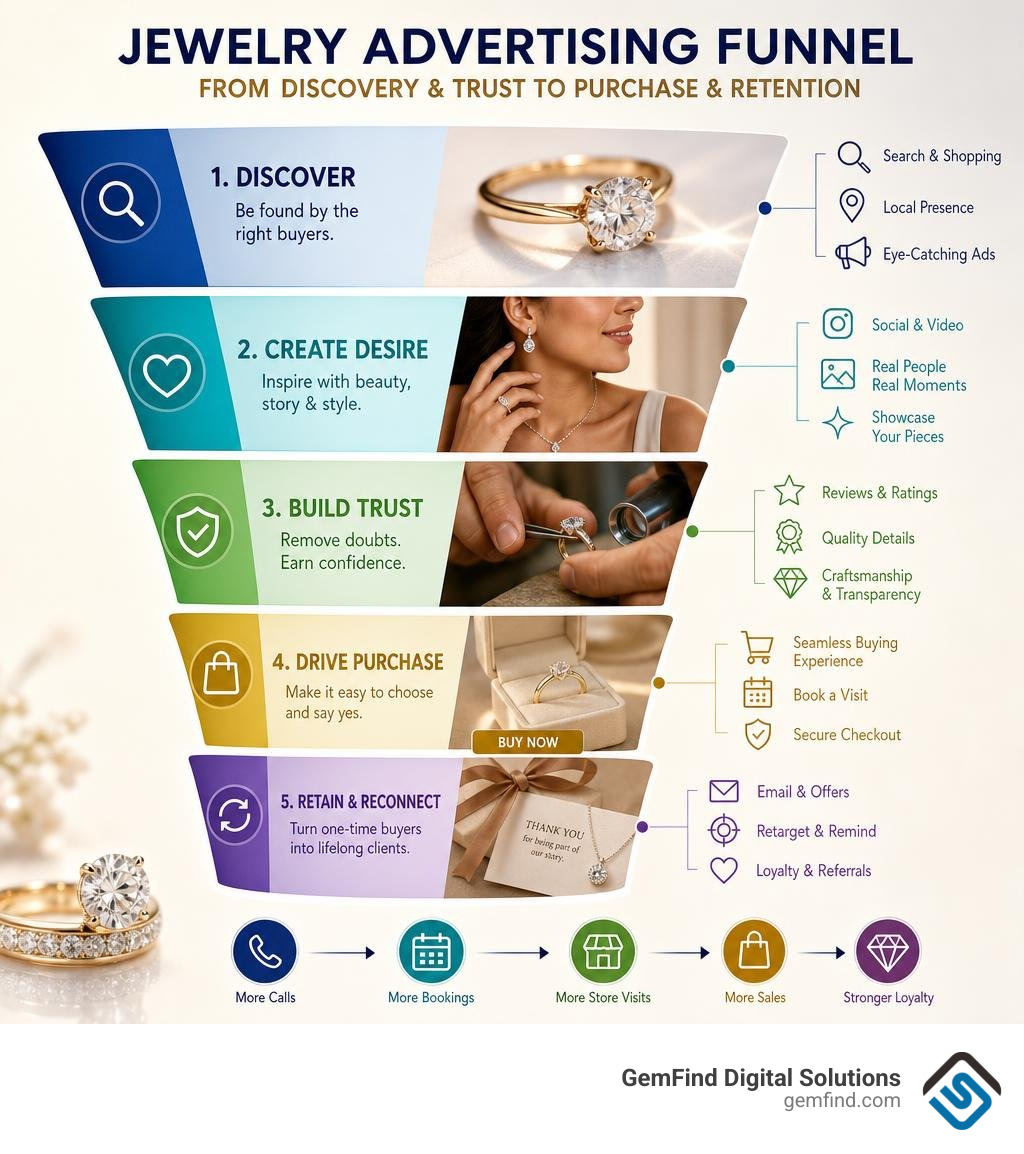
Jewelry store advertising works best when it combines high-intent local search, striking visual content, social proof, and an easy path to book a visit or buy online. Jewelry is rarely an impulse purchase. Buyers often compare options, ask trusted people for input, and need clear proof of quality before they spend.
A simple starting point:
- Capture demand with Google Search, Google Shopping, local SEO, and an accurate Google Business Profile.
- Create desire with Instagram, Pinterest, and short-form video that shows pieces on real people and in real light.
- Build trust with detailed product information, reviews, customer stories, and behind-the-scenes craftsmanship.
- Bring buyers back with retargeting ads, email, and appointment reminders after they browse or leave a cart.
- Measure real revenue by tracking calls, bookings, store visits, online sales, and in-store purchases tied to campaigns.
The stakes are high. Nearly 70% of online jewelry carts are abandoned, often because a high-value and emotional purchase needs more confidence than an ad or product page provides at first glance. The right advertising does not just show sparkle; it helps a buyer feel certain about the store, the piece, and the moment it represents.
I am Anthony Arechiga, Vice President of Sales at GemFind Digital Solutions, where I have helped support jewelry retailers with web, e-commerce, and digital marketing growth since 2007. My experience with Jewelry store advertising centers on connecting the channels that attract attention with the online and in-store experiences that turn interest into sales.
Discover more about Jewelry store advertising:
- Jewelry Digital Marketing Agency
- Jewelry marketing strategies
- Grow jewelry business
Core Pillars: Trust, Emotion, and Audience Targeting
To build campaigns that turn browsers into buyers, we must look deeper than basic demographics. Selling fine jewelry is fundamentally different from selling everyday consumer goods. When someone shops for an engagement ring, anniversary band, or custom heirloom piece, they are investing in emotional equity, status, and long-term memory.
Successful jewelry store advertising requires detailed psychographic profiling. We need to understand not just how old our buyers are or what income bracket they fall into, but what life milestones they are preparing for, what values they hold, and what aesthetic styles make them pause their social media scroll.
The Unique Dynamics of Jewelry Store Advertising vs. General Retail
General retail advertising frequently relies on impulse buys, flash sales, and immediate gratification. Jewelry advertising operates under vastly different parameters:
- High Purchase Friction: Because price points are higher and sentimental risk is substantial, prospective buyers naturally take weeks or even months to finalize a purchase decision.
- Extended Buying Cycles: A shopper might view an ad in March, research diamond cut and clarity through June, and finally step into your showroom or order online in September.
- Emotional Anchoring: Fine jewelry is rarely bought out of physical need. It is tied to love, accomplishment, commitment, or self-expression.
- Lifetime Value (LTV): Winning a first-time engagement ring customer can translate into decades of anniversary gifts, holiday purchases, custom redesigns, and referral business.
Understanding these dynamics shifts how we structure our ad messaging. We move away from generic price discounting and focus instead on building authority, setting emotional anchors, and staying top-of-mind across the entire buyer journey.
Building Emotional Proof and Trust Through Visual Storytelling
When high-ticket items sit in a digital cart, fear is the primary reason shoppers do not hit "complete order." Is the diamond ethically sourced? Will the ring fit? Does this store stand behind its craftsmanship?
To dismantle this hesitation, we lean into visual trust building. According to industry studies, 92% of consumers confirm that user-generated content (UGC) boosts their trust in a brand. Moreover, Google’s retail performance benchmarks demonstrate that ad campaigns explicitly matched to funnel intent yield 44% more Return on Ad Spend (ROAS) than generic broadcast ads.
We recommend deploying founder-led video content that opens up the bench room door. When a master jeweler shows the raw gemstones, explains the setting technique, or shares why a specific design was built, shoppers feel connected to the artisan behind the piece. Integrating verified customer reviews, clear grading certificate mentions, and explicit warranty trust badges directly within your copy and video overlays turns hesitation into enthusiasm. For a deeper breakdown of constructing high-converting social campaigns, check out our facebook ads jewelry complete guide.
Defining Ideal Customer Profiles and Competing with Luxury Giants
How do independent, local jewelry stores compete when multinational luxury brands spend millions on glossy magazine spreads and global celebrity endorsements? By being faster, more authentic, and deeply hyper-local.
To pinpoint your Ideal Customer Profiles (ICPs), start with your store's existing data:
- Analyze Past Sales Data: Review historical purchase patterns to uncover your highest-LTV customer cohorts.
- Post-Purchase Surveys: Run brief surveys offering a small incentive (such as entering a giveaway for a free cleaning kit) asking what prompted their visit or purchase.
- Map Demographic & Psychographic Traits: Define personas based on life stage, local geography, preferred aesthetic (e.g., vintage antique vs. sleek modern minimalist), and price sensitivity thresholds.
When we know our local audience inside and out, we can launch agile ad creatives that big corporate retailers cannot match. A local store can highlight its personal relationship with the community, offer same-day ring sizing, host private showroom wine nights, and speak directly to local regional traditions. You do not need to outspend luxury giants—you simply need to out-connect them. To see how to translate persona traits into precise social audience filters, read our guide on how to target jewelry buyers on facebook.
Modern Channels for High-Impact Jewelry Store Advertising
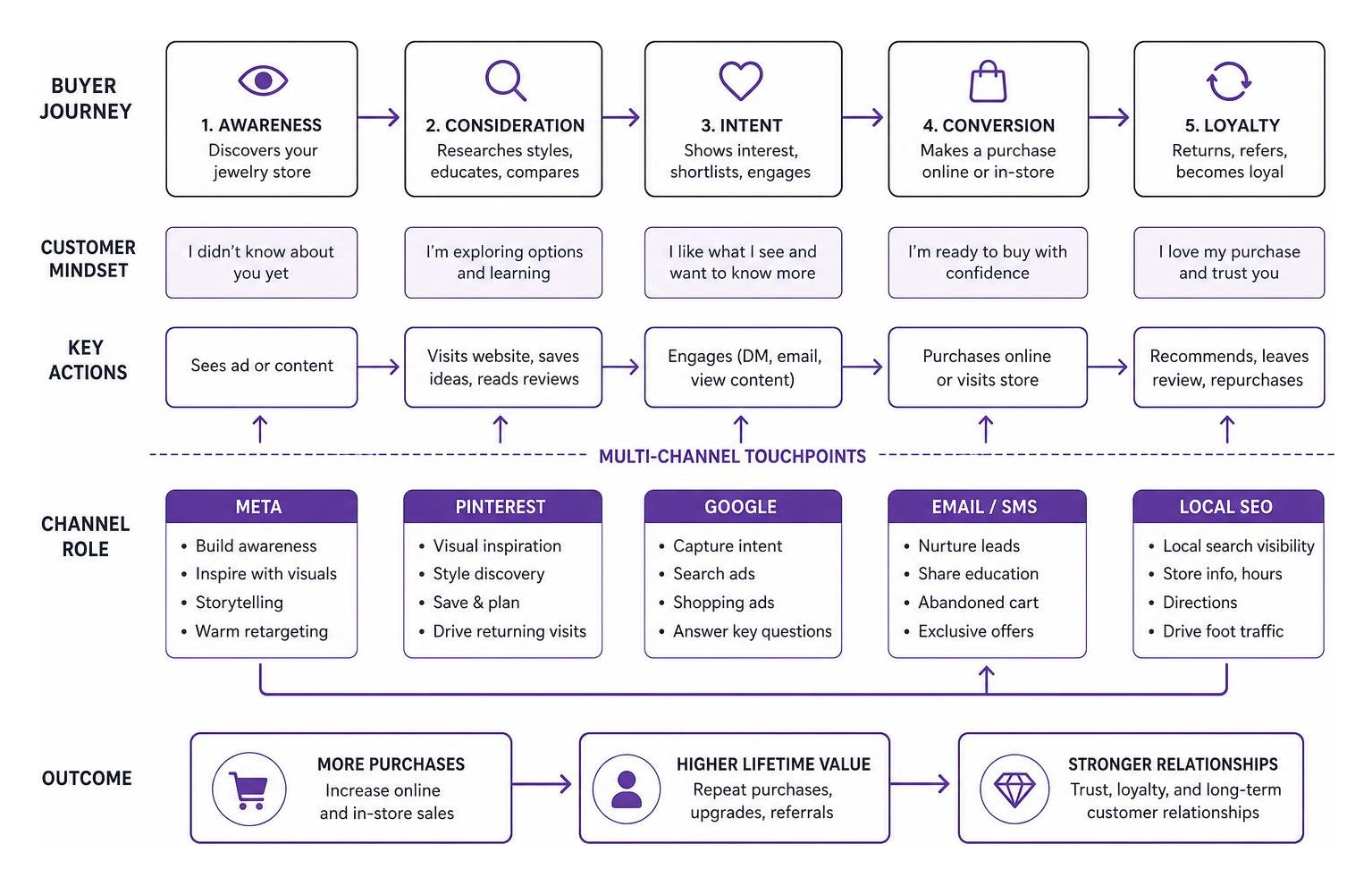
A winning ad strategy does not place all its budget into a single channel. High-performing jewelry retailers construct a connected multi-channel ecosystem where each platform fulfills a precise role: Google captures high-intent searchers, Meta builds brand awareness and warm retargeting, Pinterest serves as an intent-rich visual inspiration engine, and local SEO brings physical shoppers through your front door.
Combining Online Strategies with Offline Foot Traffic
With roughly 75% or more of luxury fine jewelry sales occurring inside physical showrooms, online advertising must directly feed foot traffic. The online and offline experiences should function as one continuous conversation.
Here is how we connect digital campaigns to your physical showroom floor:
- Optimize Google Business Profile: Ensure your store hours, phone number, address, and high-resolution showroom photos are fully up-to-date. Encourage happy customers to leave detailed, keyword-rich reviews.
- Deploy Geofenced Mobile Advertising: Run localized mobile ads targeting luxury shopping districts, high-end event venues, and upscale dining areas within a 5-to-15 mile radius of your storefront.
- In-Store Event Promotion: Use targeted digital ads to invite local residents to trunk shows, designer meet-and-greets, or estate sale weekends, collecting online RSVPs that convert to foot traffic.
- Physical Signage Integration: Combine digital strategies with physical storefront presence. Clean, elegant sidewalk A-frame signage featuring QR codes can capture walking street traffic, directing passersby to book an after-hours consultation or join an exclusive VIP club.
By connecting localized ad setups with physical visits, we ensure no walk-in opportunity slips away. Explore practical campaign blueprints in our article on digital marketing campaigns that can increase foot traffic to your jewelry store.
Leveraging Social Platforms: Instagram, TikTok, and Pinterest
With online channels projected to account for 32.7% of total global jewelry market revenue in 2026, social platforms are essential discovery engines. However, each social platform requires its own distinct strategy:
- Instagram: Drives roughly 48% of initial brand awareness for online jewelry discovery. Instagram carousel posts—showing a ring from multiple angles, on a hand, and in its box—boast average engagement rates exceeding 10%, making them the single highest-performing post format on the platform.
- TikTok: Audiences on TikTok gravitate toward raw, unvarnished content. In fact, 71% of TikTok shoppers state they prefer "looks-real" user-shot clips over overly polished studio video. Demonstrating diamond light refraction on a smartphone camera or participating in trending audio ring-stacking challenges builds rapid organic and paid traction.
- Pinterest: Functions as a visual search engine where brides and jewelry enthusiasts actively curate mood boards. Optimizing Pinterest image pins with gemstone, cut, metal, and occasion keywords creates long-term organic search momentum that drives continuous referral traffic.
According to a comprehensive Jewelry retailer ad data study analyzing tens of thousands of active retail ads, top-performing stores actively balance multi-platform social setups to capture buyers at every stage of consideration.
Harnessing High-Impact Visual Content and User-Generated Content
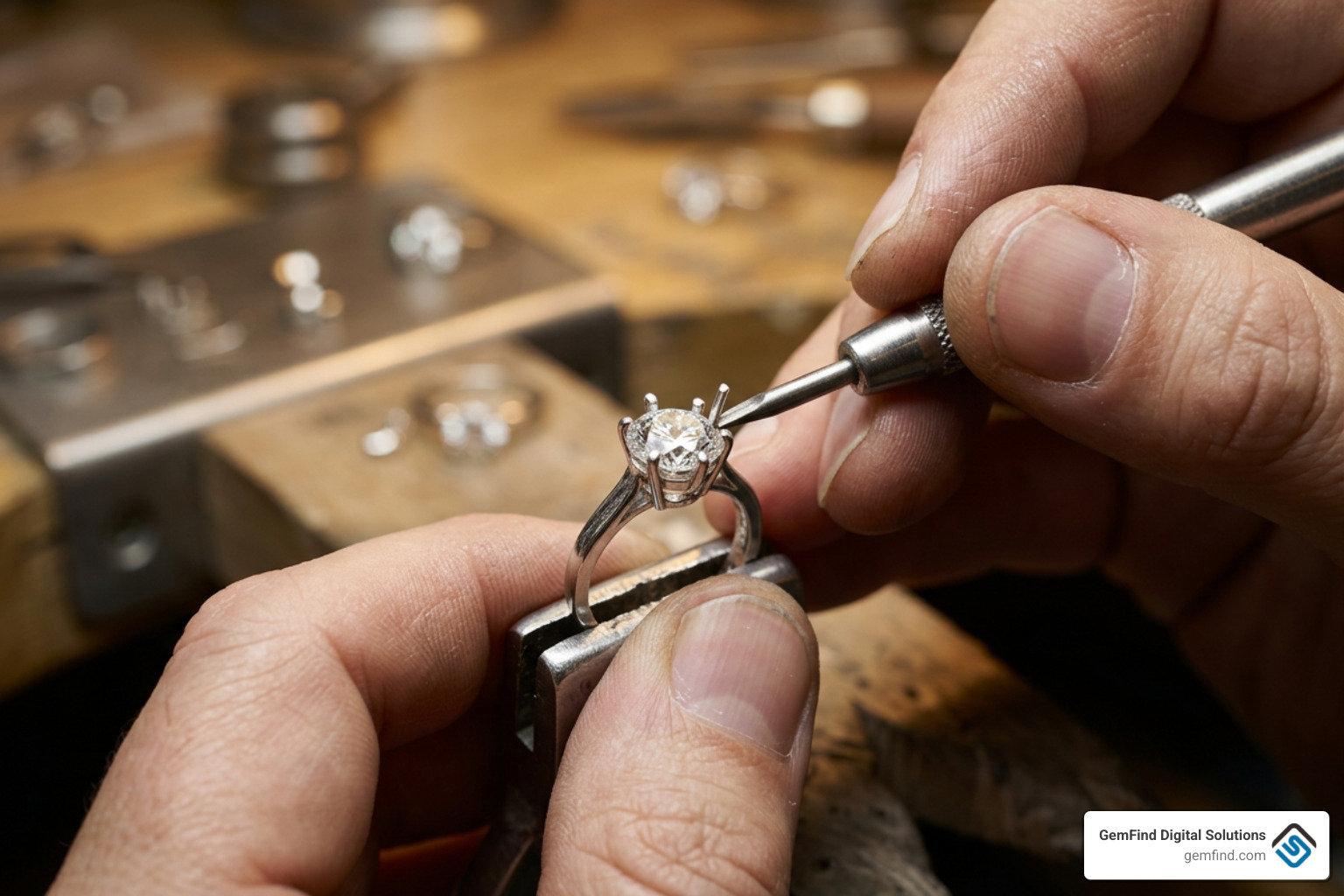
Fine jewelry details are microscopic, but their impact on conversion is massive. Blurry photography or dull, lighting-deprived videos will instantly ruin an ad campaign, regardless of how precise your audience targeting is.
We recommend layering your creative assets across three specific tiers:
- High-Resolution Studio Imagery: Crisp, perfectly lit hero shots that highlight metal polish, stone clarity, and intricate prongs. These establish pristine brand equity.
- 15-Second Smartphone Video Clips: Short, mobile-recorded video snippets showing jewelry in natural daylight. When a ring moves and catches natural sunlight, viewers instantly grasp its real-world sparkle and scale.
- User-Generated Content & Unboxing Clips: Over 90% of consumers consult UGC before making a purchase. Videos of genuine customers opening their velvet boxes, showing off proposal moments, or sharing anniversary reactions provide irreproducible social proof.
Scaling High-Value and One-of-a-Kind Jewelry Campaigns
Advertising one-of-a-kind (OOAK), custom, or high-value estate inventory presents a unique technical hurdle. Standard e-commerce ad strategies rely on Dynamic Product Ads (DPAs) that pull continuous inventory from large stock catalogs. But when you only have a single SKU of an estate sapphire ring or a custom made-to-order piece, standard catalog ads can break down the moment the item sells out.
Promoting One-of-a-Kind Inventory Without Discounting
Discounting fine, handcrafted, or one-of-a-kind jewelry is a dangerous trap. Heavy price cuts cheapen luxury positioning, shrink profit margins, and train your customer base to wait for sales.
Instead of running discount-led ads, we scale handcrafted and OOAK inventory by anchoring campaigns around broader thematic collections and founder storytelling. Rather than spending ad budget solely to promote single inventory items, we advertise the overarching collection theme (e.g., "The Ocean Sapphire Series" or "Hand-Carved Heritage Bands").
In a notable Scaling handcrafted jewelry case study, an artisan jewelry brand successfully scaled paid advertising revenue to over $160,000 per month at a 7.4x account-wide ROAS—with top-performing creative assets compounding at a 16x ROAS. They achieved this without running discount promotions. How? By positioning extended 4-to-8 week made-to-order production timelines as a mark of custom exclusivity and master craftsmanship rather than an shipping delay.
Retargeting and Dynamic Ads to Recover Abandoned Carts
Because high-value jewelry carts stall nearly 70% of the time, retargeting is where most online jewelry ad profit is made. However, carpet-bombing a hesitant shopper with the exact same ring photo five times a day can lead to ad fatigue.
Instead, structure a sequential retargeting flow on Meta and Google:
- Days 1–3 Post-Abandonment: Serve Meta Advantage+ Catalog ads showcasing the exact items viewed alongside complementary items (dynamic product bundling), paired with a gentle reminder caption.
- Days 4–7 Post-Abandonment: Shift creative focus to social proof. Show video testimonials from past buyers, unboxing moments, or highlight your 30-day money-back guarantee and free insured shipping policies.
- Days 8–14 Post-Abandonment: Transition to authority and heritage content. Present founder-led bench videos or educational guides on gemstone care and diamond selection.
By aligning retargeting copy directly with funnel intent, you rebuild buyer confidence step-by-step. Discover why warm retargeting yields exceptional return metrics in our detailed post explaining why remarketing ads on facebook work.
Strategic Budgeting and Revenue Attribution
One of the biggest pitfalls in jewelry store advertising is relying on incomplete tracking. If a shopper sees your Google Search ad, visits your site, and then walks into your store three days later to buy a $10,000 engagement ring at your counter, standard Google Analytics setups will mark that ad click as a $0 conversion.
To eliminate this attribution gap, modern retailers must import offline point-of-sale (POS) conversion data back into Google Ads and Meta Ads Manager. Connecting digital interaction data directly to register counter sales gives ad platform algorithms the data needed to find more high-value buyers.
Key Metrics for Tracking Jewelry Store Advertising Success
To evaluate whether your marketing spend is generating true bottom-line profitability, track these key metrics:
- Return on Ad Spend (ROAS): Calculated as total attributed revenue (online + matched in-store POS sales) divided by total ad spend.
- Cost Per Acquisition (CPA): The total advertising cost required to acquire a purchasing customer or booked showroom appointment.
- Click-Through Rate (CTR): Measures how effectively your visual creative and headline copy engage viewers on social feeds or search engine results.
- Call and Appointment Conversions: Tracking phone calls generated via Google Call-Only campaigns and online showroom booking submissions.
- Foot Traffic & Local Store Visits: Monitoring Google Local campaign metrics that track physical visits tied to ad impressions.
To master calculating multi-channel returns accurately, dive into our step-by-step guide on how to measure roi on your ppc campaigns.
Channel Budget Allocation and Co-Op Advertising Funds
How should jewelers allocate their monthly advertising dollars? While exact splits vary depending on whether you operate a pure e-commerce store or a physical showroom, here is our recommended baseline channel split:
| Channel Category | Recommended Budget Share | Primary Campaign Objective | Target Key Performance Indicator (KPI) |
|---|---|---|---|
| Google Search & Shopping | 40% – 50% | Capture high-intent buyers searching for specific items & local stores | High ROAS, Phone Calls, Form Fills |
| Meta (Instagram & Facebook) | 25% – 35% | Visual discovery, audience building, dynamic cart retargeting | Engagement Rate, ROAS, UGC CTR |
| Local SEO & Geofencing | 10% – 15% | Drive physical showroom foot traffic and local store appointments | Direction Requests, Store Visits |
| Testing & R&D (Pinterest/TikTok) | 5% – 10% | Top-of-funnel creative testing and demographic expansion | Video Completion Rate, New Impressions |
Don't Forget Manufacturer Co-Op Funds: If you are an authorized dealer for major watch or jewelry brands (such as Rolex, Tudor, Hearts On Fire, or Tacori), you likely have access to co-op advertising funds. Manufacturers often cover 50% to 75% of your media spend for campaigns featuring their products. Utilizing these brand co-op funds effectively doubles or triples your local advertising budget.
Seasonal Budget Scaling: Jewelry demand surges dramatically during Q4 (Black Friday through Christmas), Valentine's Day, and Mother's Day. Begin scaling up ad budgets and setting up holiday campaign structures 60 to 90 days ahead of these major retail events to capture early planners before ad space costs spike.
Frequently Asked Questions About Jewelry Store Advertising
How can small independent jewelers compete with luxury giants in advertising?
Independent jewelers excel where corporate giants fail: agility, local presence, and personal trust. Focus ad budgets on tight geographic radiuses (5 to 15 miles around your store), highlight local community roots, feature authentic videos of your in-house bench jewellers, and leverage hyper-personalized customer service. Authenticity beats corporate polish every single time.
What is the most effective channel for advertising engagement rings?
Engagement ring buyers require a blend of intent and visual inspiration. Google Search and Google Shopping are the most effective channels for capturing high-intent search queries (e.g., "lab grown oval engagement ring near me"), while Instagram and Pinterest drive visual inspiration and brand preference during the initial research phase. Learn how to structure winning bridal campaigns in our comprehensive engagement ring ads guide 2026.
How can jewelry stores use dynamic ads without eroding luxury brand equity?
Maintain strict control over visual formatting. Use high-resolution lifestyle templates, anchor catalog items within themed background collections, frame ads around craftsmanship values rather than discount percentages, and combine product carousels with short video overlays explaining your store's quality standards.
Conclusion
Mastering jewelry store advertising does not mean spending endless capital or sacrificing your luxury brand equity. By combining high-intent Google search capture, emotionally engaging social media content, robust local SEO, and seamless retargeting, your store can turn casual online browsers into lifelong customers.
At GemFind Digital Solutions, we have spent over 25 years helping jewelry retailers build profitable, scalable digital marketing engines. As a certified Shopify and Google Partner, our team specializes in industry-specific tools—including custom Edge POS integration, Diamond Link apps, and tailored advertising management—designed specifically for the unique demands of the jewelry industry.
Ready to scale your store's revenue and dominate your local market? Explore our tailored GemFind Digital Marketing Services or reach out to our team today to request a comprehensive audit of your store's advertising strategy.


