


How to Choose a Vintage Style Engagement Ring Setting
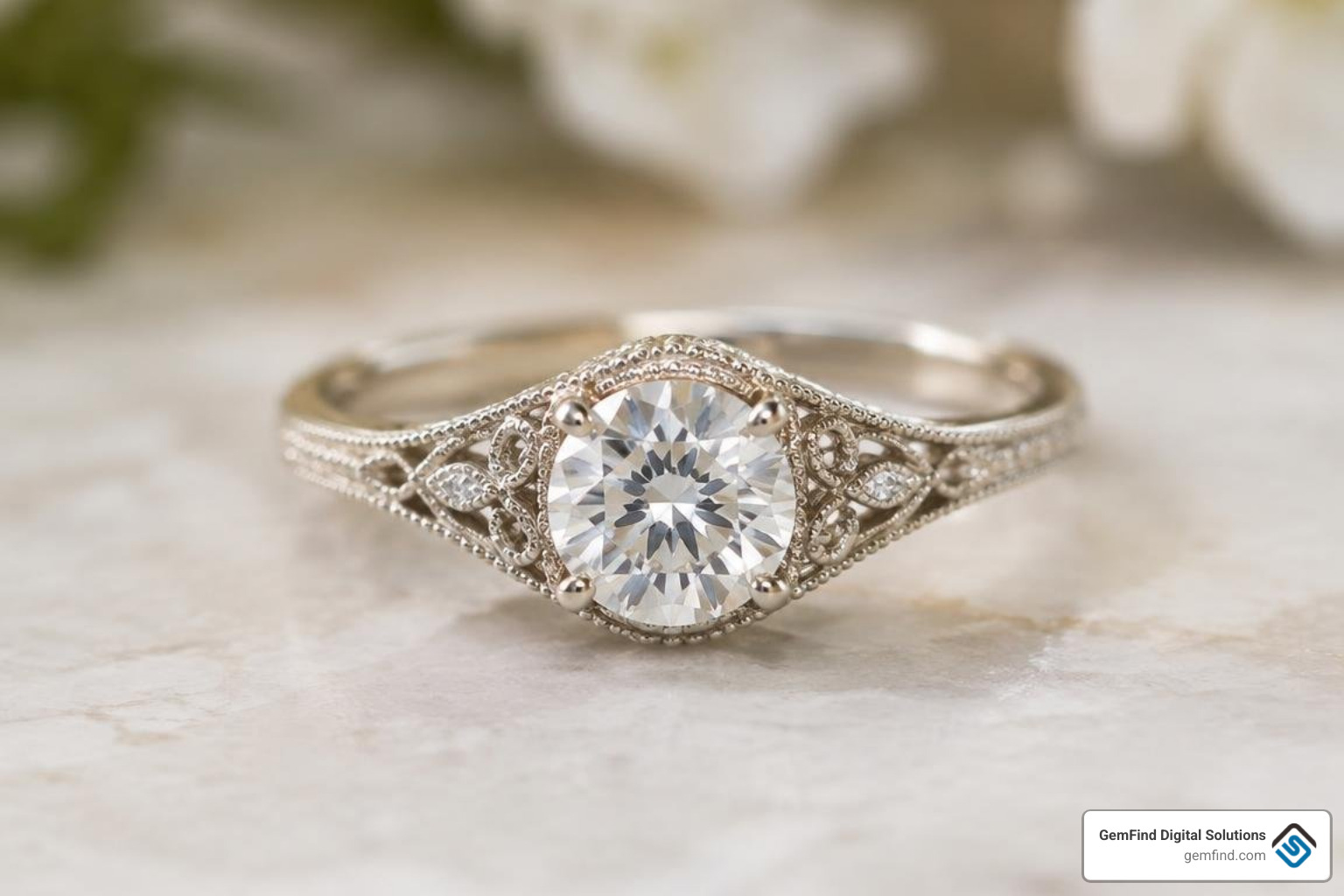
Start with the details you want to see every day. Choose milgrain for a beaded edge, filigree for delicate openwork, or Art Deco geometry for a bolder look. Then compare the metal, center stone, and band fit. A vintage-style setting is newly made to evoke an older design; it is not necessarily an antique ring.
I'm Anthony Arechiga, Vice President of Sales at GemFind Digital Solutions. Since 2007, I've worked with jewelry businesses on digital sales and e-commerce, including how shoppers discover and compare vintage style engagement rings.
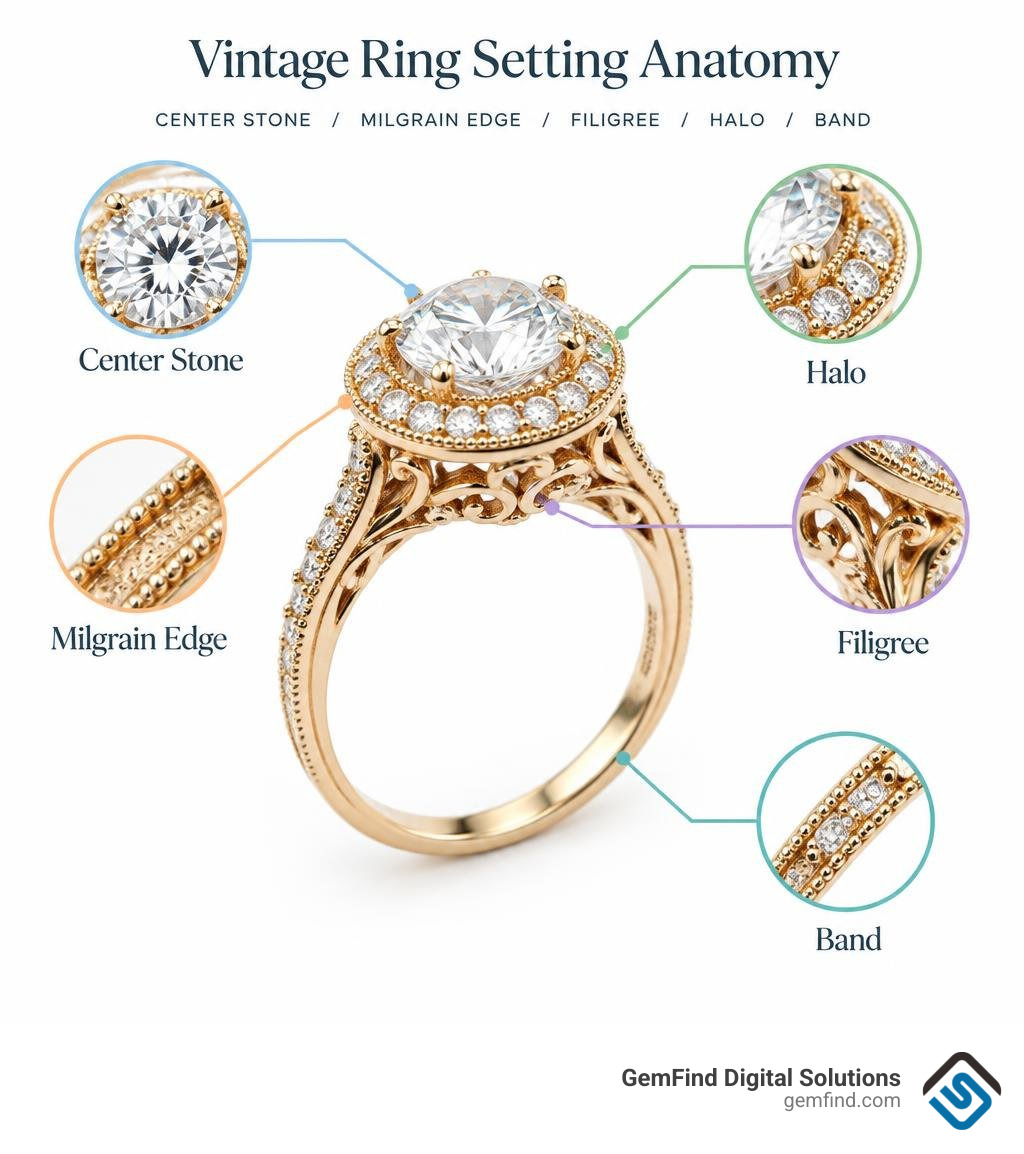
Vintage style engagement rings vocab explained:
Over 15% of modern couples are choosing vintage-inspired designs for their engagement. There is a distinct allure in wearing a piece of jewelry that carries the romantic architecture of a bygone era, yet benefits from modern casting, laser precision, and structural durability.
Defining Eras: Key Historic Aesthetics in Vintage Style Engagement Rings
When shopping for vintage style engagement rings, understanding the distinct historical design periods helps you identify the exact aesthetics that resonate with your personal taste. Each era developed specific jewelry-making techniques influenced by the cultural, architectural, and technological movements of its time.

The Victorian Era (1837–1901)
Named after Queen Victoria's reign, this era is steeped in romance, sentimentality, and nature. Early Victorian pieces often featured floral motifs, serpent silhouettes (symbolizing eternity), and hearts. As the Industrial Revolution progressed, mid-to-late Victorian designs incorporated heavier yellow gold and rose gold settings, accented by intricate engraving and colorful halo clusters.
The Edwardian Era (1901–1915)
The Edwardian period brought lightness, lace-like elegance, and regal sophistication. Jewelers began mastering platinum fabrication, allowing for gossamer-fine metalwork that looked like woven silk or diamond-encrusted lace. Ribbons, bows, garlands, and exquisite openwork defined this time. If you love ethereal, ultra-feminine details, exploring authentic Edwardian era design techniques provides inspiration for delicate filigree and milgrain crowns.
The Art Deco Era (1920–1939)
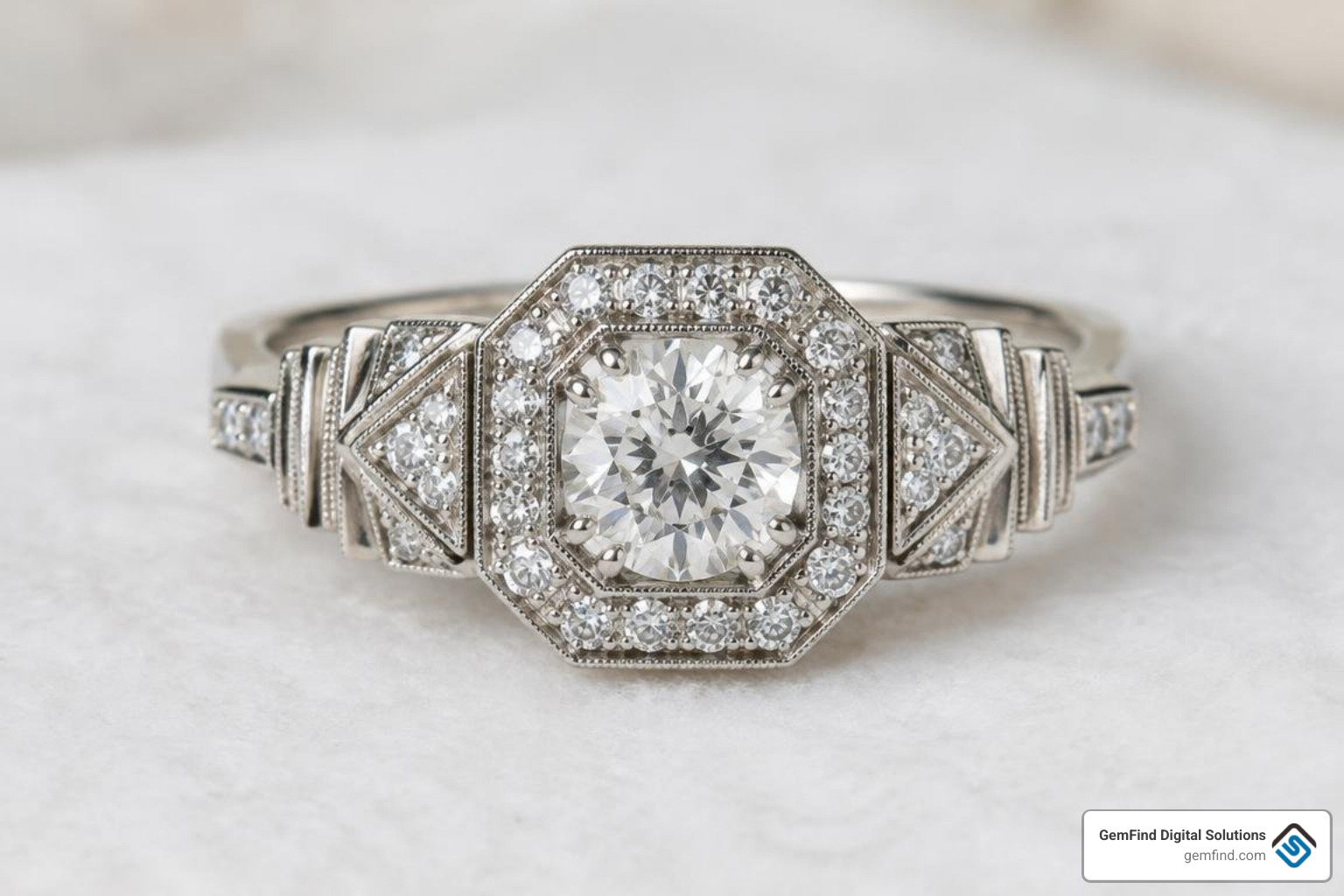
Emerging alongside the Jazz Age and modern industrial architecture, Art Deco abandoned Victorian floridity in favor of bold geometry, clean architectural symmetry, and vivid contrast. Stepped silhouettes, chevron accents, caliber-cut accent gemstones (such as deep blue sapphires and emeralds), and octagonal halo settings became prominent. Looking at the wider engagement ring trend evolution, Art Deco motifs remain among the most sought-after vintage styles in contemporary jewelry design.
The Retro Era (1935–1950s)
Influenced by Hollywood glamour and wartime metal constraints, Retro rings embraced high-polish yellow and rose gold, sculptural curves, and illusion settings that made modest center stones appear substantially larger.
| Era | Defining Motifs | Primary Metals | Popular Gemstone Cuts |
|---|---|---|---|
| Victorian (1837–1901) | Floral motifs, serpents, clusters, nature engravings | Yellow gold, rose gold, silver-topped gold | Old Mine cut, rose cut, colored gemstones |
| Edwardian (1901–1915) | Lace-like filigree, ribbons, garlands, bows, milgrain | Platinum, 18k white gold | Old European cut, round brilliant, pearls |
| Art Deco (1920–1939) | Stepped halos, sharp symmetry, geometric borders | Platinum, white gold | Asscher cut, emerald cut, baguette accents |
| Retro (1935–1950s) | Sculptural curves, illusion plates, bold ribbons | Yellow gold, rose gold, two-tone | Transitional cuts, early round brilliants |
Iconic Metalwork and Architectural Accents
Signature Design Elements of Vintage Style Engagement Rings
What makes an engagement ring immediately recognizable as "vintage-inspired"? The secret lies in the artisanal metalwork that surrounds and elevates the center stone.
- Milgrain Edging: Originating from the French mille-grains ("a thousand grains"), milgrain is a decorative border of tiny, raised metal beads pressed or rolled along the edges of a setting. It frames stones, defines structural lines, and adds a delicate antique texture.
- Openwork Filigree: Filigree involves twisting and soldering fine threads of precious metal into ornamental scrollwork, lacework, or floral motifs beneath the center head or along the gallery walls.
- Illusion Settings: A historic technique where the metal surrounding the prong head is mirrored, faceted, or brightly cut to trick the eye into seeing a larger center diamond.
- Cathedral Shoulders and Scrollwork: Bands that rise gracefully toward the center stone like cathedral arches, often embellished with hand-carved leaf patterns or scrollwork. Designs like cathedral bead set vintage settings blend timeless elevation with secure stone placement.
- Intricate Halo Frameworks: While modern halos are often simple pave rims, vintage halos incorporate geometric octagons, floral petal shapes, or double-tiered diamond steps.
Precious Metals and Setting Durability
Selecting the right precious metal impacts not only the historical authenticity of your ring but also its resilience for everyday wear.
- Platinum (950): The definitive choice for Edwardian and Art Deco rings. Platinum is naturally white, hypoallergenic, and exceptionally dense. When scratched, platinum displaces rather than loses metal, holding fine milgrain beads and delicate filigree threads securely over decades.
- 14K and 18K White Gold: A popular, budget-friendly alternative to platinum. Rhodium-plated white gold offers a brilliant mirror shine, though it requires periodic replating to maintain its bright silver tone.
- 14K and 18K Yellow Gold: Traditional, warm, and classic. Yellow gold provides a beautiful contrast against white diamond halos and enhances Victorian-inspired leaf or vine carvings.
- Rose Gold: Copper alloys create the blush hue characteristic of late Victorian and Retro jewelry, accentuating romantic floral details.
Gemstone Selections and Modern Diamond Cuts
Center Diamond Cuts and Colored Accent Gems
Historic rings relied on stone-cutting methods optimized for candlelight rather than modern electric lighting. Modern vintage-style rings allow you to choose between historic diamond cuts, brilliant modern cuts, or colorful gemstone accents:
- Old European Cuts: Hand-cut with a small table, steep crown, large culet, and chunky facets that throw broad flashes of rainbow fire.
- Asscher & Emerald Cuts: Geometric step-cut diamonds featuring clipped corners that showcase clarity and mirror-like reflections—the cornerstone of Art Deco design.
- Colored Gemstones: Rubies, sapphires, and emeralds were widely used as central stones or caliber-cut accents to frame diamonds. Today, exploring gemstone engagement ring customization allows couples to infuse personal birthstones or vibrant color contrasts into vintage settings.
- Lab-Grown Diamonds & Ethical Alternatives: Modern vintage settings pair seamlessly with lab-grown diamonds or moissanite, offering identical optical sparkle while aligning with modern ethical and budgetary preferences.
Couples who favor an eclectic, organic aesthetic often combine antique scrollwork with non-traditional center stones, drawing inspiration from bohemian and vintage styling.
Pairing Vintage Engagement Rings with Modern Wedding Bands
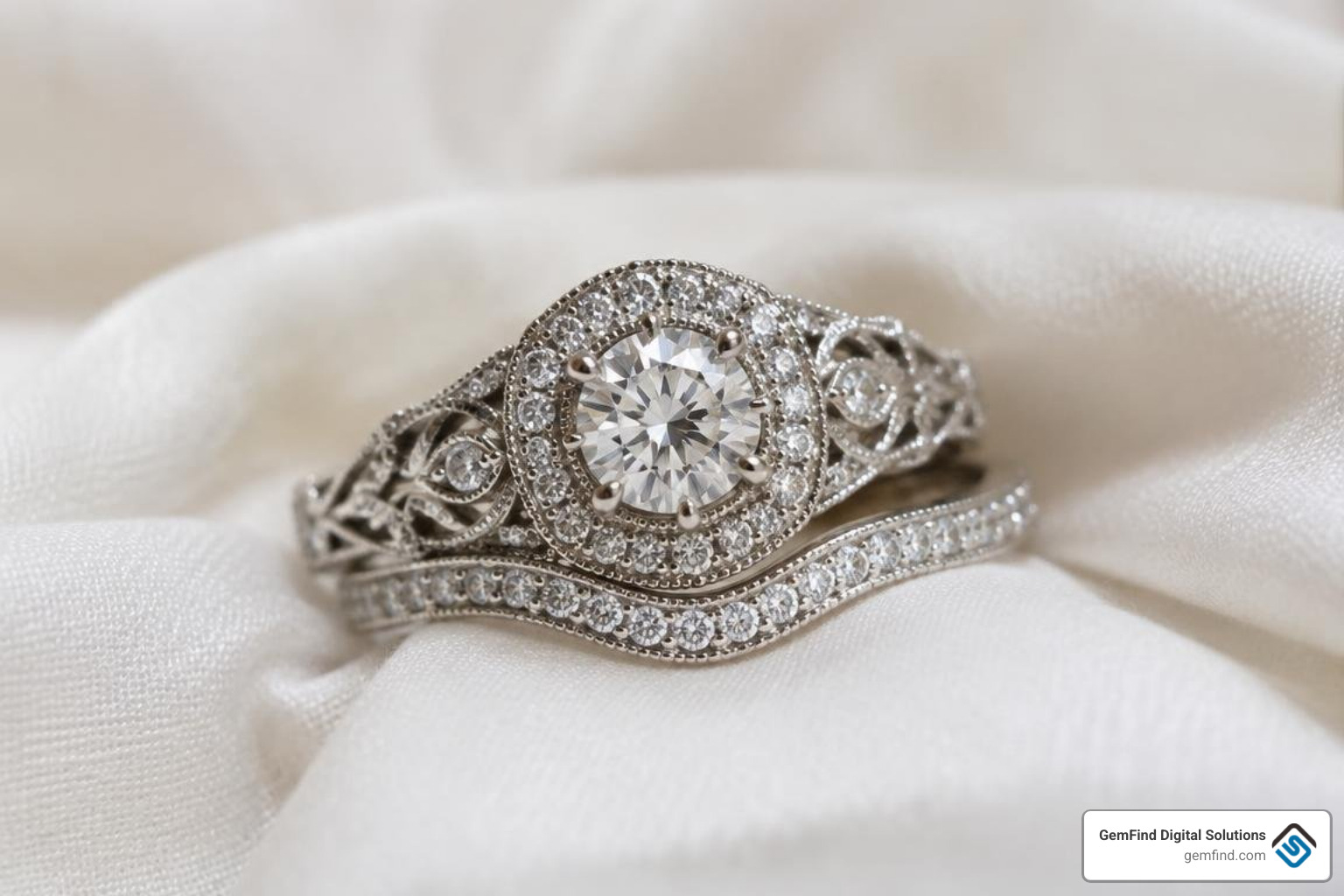
Because many vintage-style rings feature low-set baskets, wide halos, or flared cathedral shoulders, finding a matching wedding band requires thoughtful planning.
- Contoured Curved Bands: Custom-curved or chevron-shaped wedding bands arch around the engagement ring's halo or basket, allowing the two rings to nest flush without rubbing against the intricate filigree.
- Matching Milgrain Stacking Bands: A slim, straight band detailed with matching milgrain beads or bezel-set marquise shapes creates a layered, collected-over-time look.
- Contrasting Modern Bands: Pairing an ornate Art Deco ring with a minimalist, high-polish metal band provides a striking, contemporary balance rooted in foundational classic ring design principles.
Practical Guide: Pricing, Customization, and Ring Care
Customizing and Sizing Vintage Style Engagement Rings
Vintage-style engagement ring settings typically range from $1,650 to $11,000, with the median price for a detailed setting falling around $3,710 (excluding the center stone). Pricing is primarily driven by:
- The amount of hand-engraving, milgraining, and filigree wirework.
- Total accent stone count and caliber-cut gem shaping.
- The precious metal choice (platinum requires more labor and raw material cost than gold).
When customizing or commissioning a vintage-inspired piece, utilizing established custom ring design workflows ensures structural integrity while bringing your artistic vision to life. Retailers leveraging interactive 3D RingBuilder tools make it simple to test different metals, center stone shapes, and head elevations in real time.
Sizing Limitations: Due to continuous pattern work, filigree cutouts, and side-stone channels, vintage-style rings typically should only be resized by ±1.5 sizes. Resizing beyond this tolerance can warp delicate openwork galleries or loosen channel-set accent gems.
Cleaning and Preserving Detailed Metalwork
Intricate metal carvings and filigree crevices require gentle, regular maintenance:
- Gentle Soaking: Soak your ring for 15 to 20 minutes in a bowl of warm water mixed with a few drops of mild dish soap.
- Soft-Bristle Brushing: Use a baby toothbrush with ultra-soft bristles to gently lift dirt, oils, and hand lotion from openwork galleries and behind accent stones.
- Avoid Harsh Polishes: Abrasive chemical dips or aggressive buffing wheels can wear down the fine beads of milgrain over time.
- Professional Annual Checks: Have a bench jeweler inspect your prongs, milgrain borders, and pave stones at least once a year to ensure every gem remains secure.
Frequently Asked Questions About Vintage Engagement Rings
What is the difference between an antique ring and a vintage style engagement ring?
An antique ring is an authentic historical piece crafted at least 100 years ago. A vintage ring typically refers to an authentic piece produced between 20 and 99 years ago.
In contrast, a vintage style engagement ring (or vintage-inspired ring) is a brand-new, modern-crafted ring designed using historical motifs like Edwardian filigree, Victorian floral halos, or Art Deco geometry. Vintage-style rings offer the romantic look of the past with the superior metal durability, precision casting, and modern diamond cut quality of today.
How much do vintage-style engagement ring settings typically cost?
Most high-quality vintage-style settings cost between $2,590 and $5,310, with simpler bezel designs starting around $1,650 and elaborate, multi-stone platinum masterworks reaching up to $11,000. The center stone is budgeted separately based on its carat weight, cut, and whether you choose a natural or lab-grown diamond.
Can intricate vintage engagement rings be resized safely?
Yes, provided the work is performed by a master jeweler skilled in micro-welding and hand-engraving. Most vintage settings can be adjusted by up to 1.5 sizes. If a band has 360-degree engraving or eternity-set accent diamonds, your jeweler will need to carefully re-cut the milgrain or pattern at the sizing joint to maintain seamless visual continuity.
Conclusion: Selecting an Everlasting Heirloom
Vintage style engagement rings offer an extraordinary blend of historical romance, architectural presence, and meticulous hand-craftsmanship. By understanding the signature elements—from Edwardian milgrain borders to Art Deco geometry—you can select an heirloom piece that tells a personal, enduring love story.
For independent jewelers and retailers seeking to showcase these intricate collections online, GemFind Digital Solutions brings over 25 years of industry-specific technology, seamless web design, and digital merchandising tools. Explore our strategic engagement ring marketing guide to discover how digital solutions elevate the fine jewelry buying experience.


