



Why Jewelry Categorization in Google Ads Actually Matters
Is jewelry considered apparel in Google Ads? Yes, according to Google's official Product Taxonomy, jewelry is categorized under "Apparel & Accessories" (Category ID: 166), specifically within the "Jewelry" subcategory (Category ID: 188). This means jewelry products must follow the same data requirements and policy guidelines as other apparel items when advertising through Google Shopping and Google Ads.
Quick Answer:
- Category: Apparel & Accessories > Jewelry
- Required Attributes: gender, agegroup, color, material, brand, imagelink, googleproductcategory
- Why It Matters: Wrong categorization = disapproved ads, wasted budget, and missed sales
- Impact: Affects bidding, audience targeting, and campaign performance
If you've ever wondered why your jewelry ads keep getting disapproved, or why you're required to submit the same product attributes as clothing retailers, this classification is the reason. Many jewelry store owners are surprised to learn that their diamond rings and gold necklaces are treated the same as dresses and shoes in Google's advertising system.
This classification isn't just a technical detail—it directly impacts your ad performance, budget efficiency, and whether your products even show up in search results. According to research from Google's own help documentation, the google_product_category attribute can override Google's automatic categorization to enforce category-specific attribute requirements or target campaigns more effectively. For jewelry sellers, understanding this system means the difference between ads that convert and budget that disappears.
The reality is simple: if you don't correctly categorize your jewelry and provide the required apparel attributes, Google will either disapprove your products or show them to the wrong shoppers. A camping tent miscategorized as curtains would show to people decorating their homes, not camping enthusiasts—and the same logic applies when your engagement rings end up in front of costume jewelry shoppers.
I'm Morgan Price, and through years of building strategic link profiles for jewelry retailers, I've seen how is jewelry considered apparel in Google Ads confusion costs businesses thousands in wasted ad spend and lost opportunities. The good news is that once you understand Google's categorization system, you can turn it into a competitive advantage.
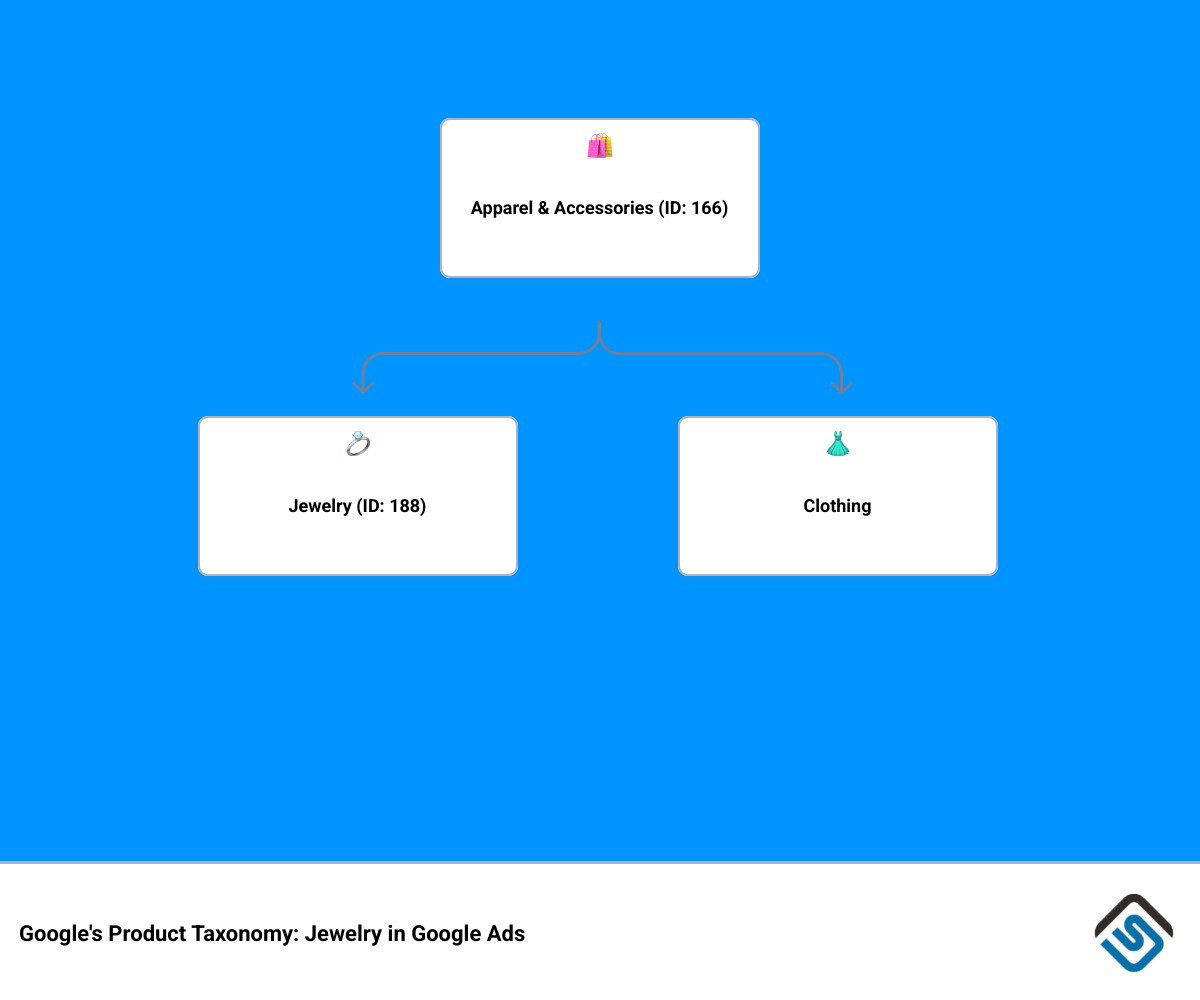
Is Jewelry Considered Apparel in Google Ads? The Official Answer
Let's cut right to the chase: yes, jewelry is considered apparel in Google Ads. More precisely, it falls under the "Apparel & Accessories" umbrella within Google's extensive Product Taxonomy. This top-level category (ID: 166) then branches into a more specific "Jewelry" subcategory (ID: 188). From there, Google's taxonomy drills down further into highly specific types like:
- Rings
- Necklaces
- Bracelets
- Earrings
- Watches (though often treated with slightly different attributes)
You can explore the full, continuously evolving taxonomy and find the specific IDs for your products by checking Google's official Plain text (.txt) Plain text (.txt) list. Why does this matter? Because Google uses this structured categorization to ensure consistency across millions of products and retailers, helping customers find exactly what they're looking for, whether it's a diamond engagement ring or a pair of casual earrings.
Understanding Google's Product Category
Google's system is smart, but it's not a mind-reader. While it attempts automatic categorization based on your product titles and descriptions, relying solely on this can lead to misplacement. This is where the google_product_category attribute comes in. This mandatory attribute allows us to manually specify where our products fit within Google's predefined hierarchy.
Why would we want to override Google's automatic categorization? Well, as we've seen, sometimes Google gets it wrong, like when a fitness tracker might accidentally get listed under "Jewelry" instead of "Electronics > Wearable Technology." By providing the correct google_product_category value, we ensure our products are:
- Compliant: Meeting category-specific attribute requirements.
- Visible: Appearing in relevant searches and filters.
- Targeted: Properly included in our Google Ads campaigns and product groups.
The google_product_category is a crucial field in our product data feed, the comprehensive list of products and their attributes that we submit to Google Merchant Center. For a deeper dive into all the specifications for our product data, Google provides a detailed Product data specification - Google Ads Help. Getting this right from day one is like giving Google a GPS for your products; without it, you might just be sending them into the digital wilderness.
So, is jewelry considered apparel in Google Ads for policy purposes?
Absolutely. The categorization of jewelry under the "Apparel & Accessories" category means that for policy enforcement, jewelry products are held to many of the same standards as clothing, shoes, and other wearables. This isn't just a classification; it's a set of shared requirements.
This means that when Google's AI and human evaluators review our jewelry ads, they're looking for compliance with policies that largely apply across the broader apparel segment. These include rules around image quality, descriptive accuracy, and prohibited content. For instance, just as a clothing item needs a clear image on a white background, so too does a necklace. Any misrepresentation or policy violation, whether for a t-shirt or a diamond ring, can lead to product disapprovals, temporary account suspensions, or even permanent bans for egregious or repeat offenses. It’s Google’s way of ensuring a trustworthy and transparent advertising ecosystem, and we're all playing by the same rulebook.
Why This Classification Matters: Required Attributes for Jewelry
Now that we know jewelry is firmly nestled within the apparel category, let's talk about the practical implications. This classification isn't just an arbitrary label; it means that our jewelry products are subject to a specific set of mandatory attributes. Think of these as the essential pieces of information Google needs to properly understand, display, and advertise your sparkly offerings. Providing these attributes accurately is not just about compliance; it's about ensuring our products get seen by the right customers, both in paid Shopping Ads and free product listings.
The Core Apparel Attributes You Must Provide
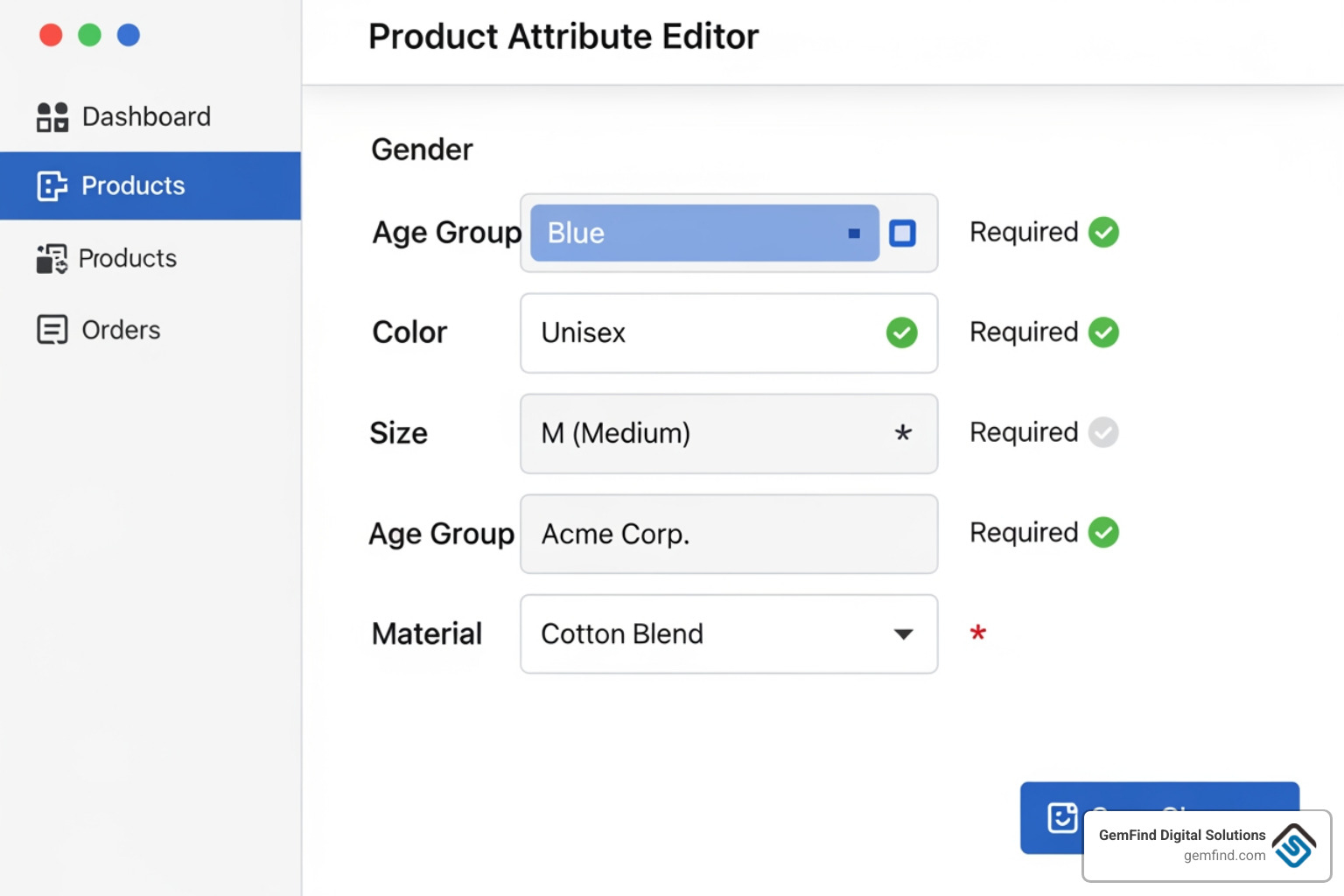
For apparel items, which now definitively include jewelry, Google requires a robust set of attributes. Missing or incorrect information here is a common culprit for product disapprovals. Let's break down the key ones we must provide:
-
gender: This helps Google show your jewelry to the most relevant audience. For example, a men's wedding band should be 'male', while a delicate pendant might be 'female' or 'unisex'. -
age_group: Most jewelry falls under 'adult', but if you sell children's jewelry, you'd specify 'kids'. -
color: Crucial for jewelry! This isn't just about the gemstone; it's also about the metal. We need to be specific. -
size: While less common for all jewelry than for clothing,sizeis vital for items like rings (ring sizes), necklaces (chain lengths), and bracelets (wrist sizes). This attribute ensures customers can find the perfect fit. -
material: This is a big one for jewelry. Is it gold? Silver? Platinum? What kind of gemstone? More on this in a moment. -
brand: If your jewelry has a brand, you must provide it. If it's custom-made or unbranded, you can state 'custom' or 'none' depending on local requirements. -
image_link: High-quality images are non-negotiable for jewelry. Google recommends at least 512x512 pixels, ideally 1024 or higher, with a minimum width of 1500px, and on a solid white or transparent background for main images. -
item_group_id: This attribute is a lifesaver for managing product variants, allowing us to group different versions of the same product (e.g., a ring available in multiple sizes and metal types).
These attributes are not suggestions; they are requirements, especially for products targeting countries like the US, UK, Germany, and Japan, and for free listings. According to Google's Merchant Center Product Attributes documentation, providing these details is key to helping customers make informed decisions.
How the 'Material' and 'Color' Attributes Apply to Jewelry
For jewelers, the material and color attributes are not just checkboxes; they are opportunities to showcase the intrinsic value and aesthetic appeal of our products. These attributes are often what customers filter by when searching for jewelry, making their accurate submission paramount.
Material: This attribute specifies the primary material or fabric used. For jewelry, this means:
- Precious Metals: 'gold', 'silver', 'platinum', 'rose gold', 'titanium', 'sterling silver'. Be specific! "Metal" won't cut it.
- Gemstones: If a specific gemstone is the dominant material, we can include it (e.g., 'diamond', 'sapphire', 'emerald').
-
Required for Variants: The research confirms that the
materialattribute is required for products where it's relevant for distinguishing different variants in a set. So, if you offer the same ring design in both 'gold' and 'silver',materialbecomes mandatory for each variant.
Color: While seemingly straightforward, the color attribute for jewelry demands precision:
- Metal Color: 'gold', 'silver', 'rose gold', 'platinum'.
- Gemstone Color: 'blue' (for sapphire), 'green' (for emerald), 'clear' (for diamond).
- Multi-color Formatting: For items with multiple distinct colors, like a gold ring with turquoise stones, we should list them as 'gold/turquoise', not just 'multicolor'. This level of detail helps customers filter and finds exactly what they envision.
The material attribute, in particular, can be a "real game-changer" for businesses selling jewelry, as more detailed information builds customer trust and leads to more informed purchases.
Handling Jewelry Variants: Size, Metal, and Stone
Jewelry often comes with a dazzling array of choices: different ring sizes, necklace lengths, metal types, and gemstone options. Google understands this and provides the item_group_id attribute specifically to manage these product variants efficiently.
Here's how it works:
-
Unique SKUs, Shared Identity: Each specific combination (e.g., a "14k White Gold Diamond Solitaire Ring, Size 7") should have its own unique
idin your product feed. However, if this ring is also available in Size 6, Size 8, or in Yellow Gold, all these variations belong to the same core product. -
The
item_group_id: This attribute is where we assign a common identifier to all these related variants. For example, all variants of that specific diamond solitaire ring would share the sameitem_group_id. This tells Google, "Hey, these are all versions of the same ring, just with different characteristics." -
Differentiating Attributes: For each variant, we then provide the specific
size,material,color, and any other differentiating attributes. So, one variant might besize: 7,material: 14k white gold,color: white, while another issize: 8,material: 14k yellow gold,color: yellow.
Properly handling variants with the item_group_id is crucial. It ensures that when a customer searches for a "gold ring size 7," Google can show them the exact product, while also allowing them to easily find other available sizes or metals on your landing page. This improves the customer experience and ensures your ads are as relevant as possible.
Best Practices for High-Performing Jewelry Ads
Once we've mastered the technical side of categorization and attributes, the next step is to optimize our ads for performance. It's not enough for our jewelry to simply appear; it needs to shine and convert. This involves crafting compelling ad copy and strategically differentiating our offerings.
Crafting Titles and Descriptions That Convert
Our product titles and descriptions are our digital storefront window. They need to grab attention, convey value, and entice clicks. For jewelry, this means blending essential product details with emotional appeal.
Product Titles: Google recommends putting the most important details within the first 70 characters. For jewelry, this often means:
- Brand Name First: If you have a strong brand, lead with it. Customers often search by brand. You can check brand popularity using Google Trends to see if customers commonly search for your brand name.
- Product Type: Be clear – "Ring," "Necklace," "Earrings."
-
Key Attributes: This is where
material,carat weight, andstylecome in. Don't just say "Diamond Ring"; say "14k White Gold 1 Carat Solitaire Diamond Ring." - Emotional Hooks: While keeping it concise, words like "Handcrafted," "Custom," or "Engagement" can resonate.
Product Descriptions: Here, we have more room to tell our story. Expand on:
- Features & Benefits: Detail the craftsmanship, unique design elements, and quality of materials.
- Emotional Triggers: Jewelry is often bought for special occasions or as an emotional purchase. "Sell the dream, not just the ring," as one insight suggests. Talk about the memories, meaning, and emotion associated with the piece.
- Keywords: Naturally integrate relevant keywords that customers might use, from "delicate gold necklace" to "ethical diamond engagement ring."
- Call-to-Action: Encourage exploration or purchase.
An effective jewelry ad goes beyond just listing features; it evokes desire. For example, instead of "Diamond Ring," consider "Ethically Sourced 14k White Gold 1ct Diamond Engagement Ring – Design Her Dream."
Differentiating Fine vs. Fashion Jewelry in Your Feed
While Google groups all jewelry under "Apparel & Accessories > Jewelry," our business model might depend heavily on the distinction between fine jewelry (high-value, precious metals, genuine gemstones) and fashion jewelry (lower-cost, base metals, imitation stones). We can leverage specific attributes to make this distinction within our own feeds and campaigns, even if Google's taxonomy doesn't explicitly separate them.
-
product_typeattribute: This is our internal, custom categorization. We can use it to create highly specific paths like "Fine Jewelry > Engagement Rings > Solitaire" or "Fashion Jewelry > Statement Earrings > Hoop." This is invaluable for internal organization, creating granular product groups, and managing bids. -
custom_labelattribute: Google allows us to create up to fivecustom_labelattributes. We can use these to tag products with categories like 'finejewelry', 'fashionjewelry', 'highvalue', 'bridal', 'everydaywear', or even 'bestseller'.
These internal distinctions are crucial for:
- Bidding Strategies: We can bid significantly higher for our 'finejewelry' custom label than for 'fashionjewelry', ensuring our ad spend aligns with potential profitability.
- Campaign Segmentation: We can create separate campaigns or ad groups for fine versus fashion jewelry, allowing for custom messaging, budgets, and targeting.
-
Reporting: Analyzing performance by our
product_typeorcustom_labelgives us deeper insights into what's truly driving sales.
By using product_type and custom_label, we gain granular control over our campaigns, ensuring that our high-end pieces are marketed with the appropriate budget and messaging, while our fashion pieces are positioned for broader appeal, all without confusing Google's primary categorization.
Common Mistakes and Policy Considerations
Even with the best intentions, navigating Google Ads can be tricky. For jewelers, the "apparel" classification introduces specific pitfalls. Understanding common mistakes and Google's policies is crucial to avoid disapproved products, wasted ad spend, and even account suspension.
How do Google's policies on jewelry advertising differ from other apparel items?
While jewelry shares the "apparel" categorization, its unique characteristics as a high-value, often emotionally charged purchase, bring additional considerations:
-
Trust Signals are Paramount: For high-value items, trust is everything. Google's policies, while not explicitly different for jewelry, implicitly demand stronger trust signals. This means:
- Certifications: Clearly displaying any gemstone certifications (e.g., GIA, AGS) is vital.
- Reviews: Leveraging customer reviews and seller ratings through review extensions builds credibility. Novica Jewelry, for instance, uses a 4.9-star review extension with over 6,000 reviews.
- Transparency: Being upfront about materials, quality, and origin.
- Secure Transactions: While mandatory for all e-commerce, the need for a robust and secure checkout process is amplified for high-value jewelry. Your site must be secure and functional.
- Clear Return Policies: Transparent and easy-to-understand return and refund policies are essential to reassure customers making a significant purchase online.
-
Misrepresentation: Google has a strict policy against misrepresentation. For jewelry, this means:
- Accurate Descriptions: Don't exaggerate carat weight, metal purity, or gemstone quality.
- Authenticity: Clearly state if a stone is lab-grown, simulated, or natural.
- Pricing: Ensure prices are accurate and match your landing page.
- Prohibited Practices: Beyond specific product attributes, Google's Shopping ads policies also prohibit practices like abusing the ad network, irresponsible data collection, and any form of misrepresentation. These are particularly scrutinized for high-value items where consumer protection is paramount.
While the basic classification is shared, the stakes are higher for jewelry, demanding meticulous attention to detail and unwavering transparency to comply with Google's overarching goal of fostering a trustworthy advertising environment.
What are the implications if jewelry is considered apparel in Google Ads?
The classification of is jewelry considered apparel in Google Ads carries several significant implications for our advertising strategy and performance:
-
Mandatory Data Requirements: As discussed, we must provide all the core apparel attributes:
gender,age_group,color,size(where applicable),material,brand,image_link, anditem_group_id. Failing to do so will result in product disapprovals and lost visibility. - Increased Competition: By being part of the broader "Apparel & Accessories" category, our jewelry products might technically compete with a wider range of items, especially for generic searches. This means that precise keyword targeting and robust negative keyword lists are even more critical to avoid wasted clicks.
-
Bidding Structure: Our bidding strategies need to account for this. While we use Google's
google_product_categoryfor compliance, we can leverage our internalproduct_typeandcustom_labelattributes to create granular product groups. This allows us to bid more strategically on high-value fine jewelry versus lower-priced fashion jewelry, optimizing our ad spend. -
Performance Max Signals: Google's automated campaign types, like Performance Max, heavily rely on the
google_product_categoryand other attributes to understand our products and show them across various Google networks (Search, Shopping, Display, YouTube, Gmail, Find). Accurate categorization ensures these powerful campaigns target the right audiences effectively. -
Audience Targeting: The required attributes help Google understand the context of our jewelry. For example, a "men's wedding band" with
gender: maleandgoogle_product_category: Apparel & Accessories > Jewelry > Ringshelps Google show it to relevant audiences, such as men shopping for engagement rings. Without these signals, our ads could be shown to less interested audiences, leading to wasted budget.
This classification means we need to be more diligent, more precise, and more strategic with our data feed and campaign setup. It's not a barrier, but a framework that, when understood, allows us to excel.
Frequently Asked Questions about Jewelry in Google Ads
We've covered a lot of ground, but a few questions consistently pop up when discussing jewelry and Google Ads. Let's tackle them head-on.
What is the difference between google_product_category and product_type?
This is a common point of confusion, but understanding the distinction is vital for effective campaign management:
-
google_product_category: This is Google's standardized, predefined, hierarchical classification system. We must choose a category from Google's official taxonomy list. It directly impacts where our ads can show, what attributes are required, and how Google understands our product for policy enforcement and search relevance. Think of it as Google's official filing system for every product in the world. For jewelry, this will always start with "Apparel & Accessories > Jewelry." -
product_type: This is our own custom, internal categorization system. We can make this as detailed and specific as we need (e.g., "Fine Jewelry > Engagement Rings > Solitaire > Platinum," or "Fashion Jewelry > Earrings > Hoop > Gold Plated"). Google uses this attribute primarily for our own organizational purposes within Merchant Center. It's incredibly useful for:- Bidding Control: Creating granular product groups for precise bidding strategies.
- Reporting Flexibility: Analyzing performance based on our specific business segments.
- Internal Organization: Keeping our inventory neatly categorized.
To illustrate, imagine you sell a "Diamond Stud Earring." Your google_product_category would be "Apparel & Accessories > Jewelry > Earrings." But your product_type could be "Fine Jewelry > Diamond Earrings > Studs" to help you manage your internal inventory and bidding for high-value diamond pieces versus other types of earrings. While google_product_category tells Google what your product is in its universal language, product_type tells you what your product is in your business's specific language.
How should I handle jewelry sets in my product feed?
Jewelry sets (e.g., a matching necklace and earring set sold as a single unit) are considered "bundles" by Google. Here's how to handle them:
-
Use the
is_bundleattribute: Set this attribute to 'yes' to inform Google that this is a bundled product. -
Product Categorization: The
google_product_categoryfor the bundle should be for the main component of the set. For a necklace and earring set, if the necklace is the primary item, categorize it as "Apparel & Accessories > Jewelry > Necklaces." - Title Optimization: Your product title should clearly describe all components of the bundle. For example, "14k Gold Diamond Pendant Necklace & Earring Set."
- Image: The main image should clearly show all items included in the set.
Treating jewelry sets as bundles ensures that Google accurately understands the offering, and customers see exactly what they're getting, preventing confusion and potential disapprovals.
Can I get my account suspended for incorrect categorization?
Yes, absolutely. Incorrect categorization, especially if it's a pattern of Policy Violations, can lead to serious consequences. Google's enforcement actions vary depending on the severity and frequency of the issue:
- Product Disapprovals: This is the most common outcome for minor errors or missing attributes. Your product simply won't show ads until fixed.
- Temporary Account Suspension: For Repeat Offenses or more significant non-compliance, Google might temporarily suspend your Merchant Center account, halting all your Shopping Ads.
- Permanent Account Suspension: In cases of Egregious Errors or deliberate Misrepresentation (e.g., trying to bypass policies, falsely categorizing products to avoid restrictions), Google can permanently suspend your account. This is a severe blow, as it can be very difficult to get reinstated.
The key takeaway here is accuracy and diligence. Regularly auditing our product feed, staying updated on Google's policies, and ensuring our google_product_category and other attributes are spot-on are non-negotiable best practices for maintaining a healthy and active Google Ads account.
Conclusion: Turn Categorization into a Competitive Advantage
We've explored the fascinating, and sometimes frustrating, reality that is jewelry considered apparel in Google Ads. The definitive answer is yes, firmly placing our precious pieces within the "Apparel & Accessories" category. This classification brings with it a set of mandatory data requirements, from gender and material to item_group_id for variants, all of which are crucial for compliance and visibility.
Understanding this isn't just about avoiding penalties; it's about opening up a strategic advantage. By carefully providing accurate data, crafting compelling titles and descriptions, and leveraging internal attributes like product_type and custom_label to differentiate fine from fashion jewelry, we can ensure our ads reach the right customers at the right time.
At GemFind Digital Solutions, with over 25 years of industry-specific expertise, we understand the unique challenges and opportunities jewelers face in the digital landscape. We're a Shopify and Google Partner, offering custom solutions in digital marketing, web design, and specialized apps designed specifically for the jewelry industry. We know how to steer these complexities, turning what might seem like a technical hurdle into a powerful engine for growth.
Getting your Google Ads categorization right isn't just a task; it's an investment in your business's future. It ensures your products are seen, your budget is well-spent, and your brand shines in the crowded online marketplace. Don't let categorization confusion hold you back.
Master your campaigns with Google Ads for Jewelers to turn every click into a potential customer.


