



Why Multi-Location Jewelers Are Rethinking Their POS Software

jewelry store POS systems are specialized software platforms that help jewelers manage sales, inventory, repairs, customer relationships, and more - all from one place.
Here's a quick look at the top capabilities modern systems should offer for multi-location jewelry retailers:
| Capability | Why It Matters | Example Benefit |
|---|---|---|
| Cloud access | Lets owners and managers work from anywhere | Check inventory or sales from any location |
| Serialized inventory | Tracks each unique piece individually | Better control over diamonds, watches, and one-of-a-kind items |
| Repair and custom job tracking | Keeps service work organized | Faster updates and fewer lost job bags |
| Omnichannel sync | Connects in-store and online selling | Prevents overselling and supports BOPIS |
| Reporting and analytics | Improves decision-making | Spot top sellers, margins, and slow-moving stock |
| Integrations | Connects POS with other business tools | Syncs accounting, certificates, and supplier feeds |
Running a jewelry store with multiple locations is hard enough without your software slowing you down.
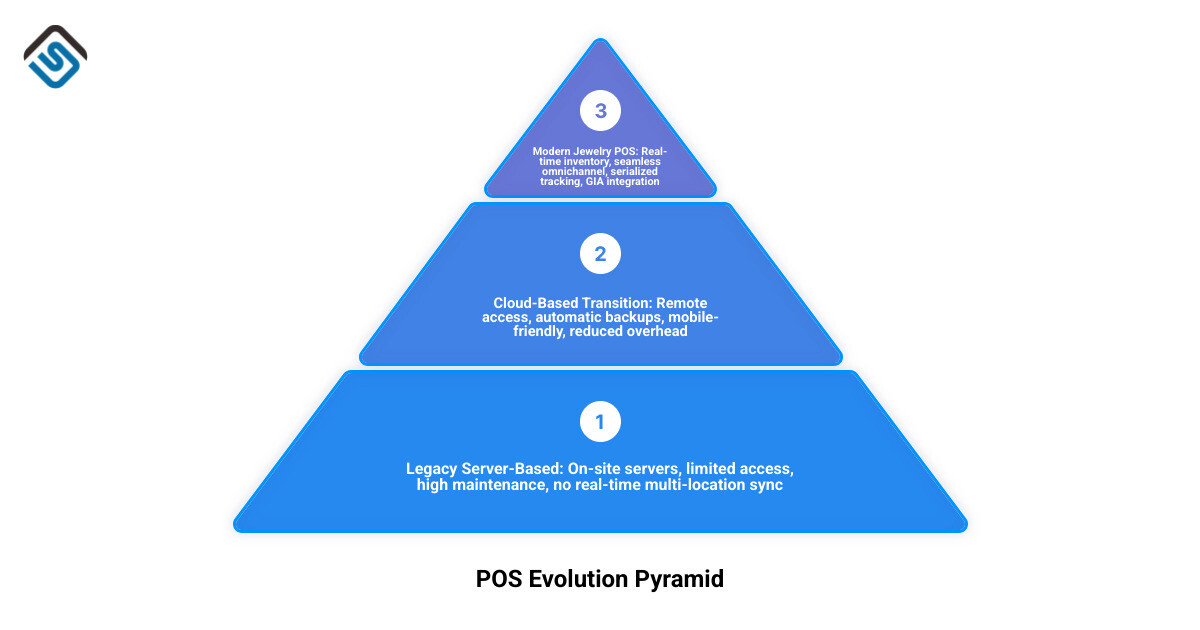
Yet many jewelers today are still running on legacy, server-based systems that were not built for how retail works now. Customers expect seamless experiences - online and in-store. Staff need real-time inventory access across every location. And owners need data they can actually act on.
The gap between what older systems offer and what modern jewelry retail demands is growing fast. Jewelry is also uniquely complex compared to other retail categories. You're tracking individual pieces by serial number, managing custom orders and pricing, handling consignment, and dealing with high-value items that require detailed documentation like GIA certificates and appraisals. Generic retail POS platforms often fall short here.
The good news: a new generation of jewelry-specific POS systems has emerged to fill that gap - and choosing the right one can transform how your business operates.
I'm Anthony Arechiga, VP of Sales at GemFind Digital Solutions, where I've spent nearly two decades helping jewelry retailers navigate technology decisions, including evaluating and implementing jewelry store POS systems across a wide range of store sizes and business models. In that time, I've seen which platforms truly serve multi-location jewelers - and which ones create more problems than they solve.
Essential Features of Modern Jewelry Store POS Systems
When we talk about jewelry store POS systems, we aren't just talking about a cash register. For a multi-location business, the POS is the central nervous system. If it doesn’t understand the difference between a 14k gold mounting and a loose 1-carat round brilliant diamond, it’s going to cause headaches.
Granular Inventory Tracking
In jewelry, inventory isn't just "in stock" or "out of stock." You need to track metal weights, stone clarity, cut, and color. Modern systems allow for serialized inventory, meaning every high-value piece has its own unique history. This is vital for security and for understanding your margins. For a deeper dive into how this works, check out our Jewelry Inventory Management Software guide.
Repair and Custom Work Management
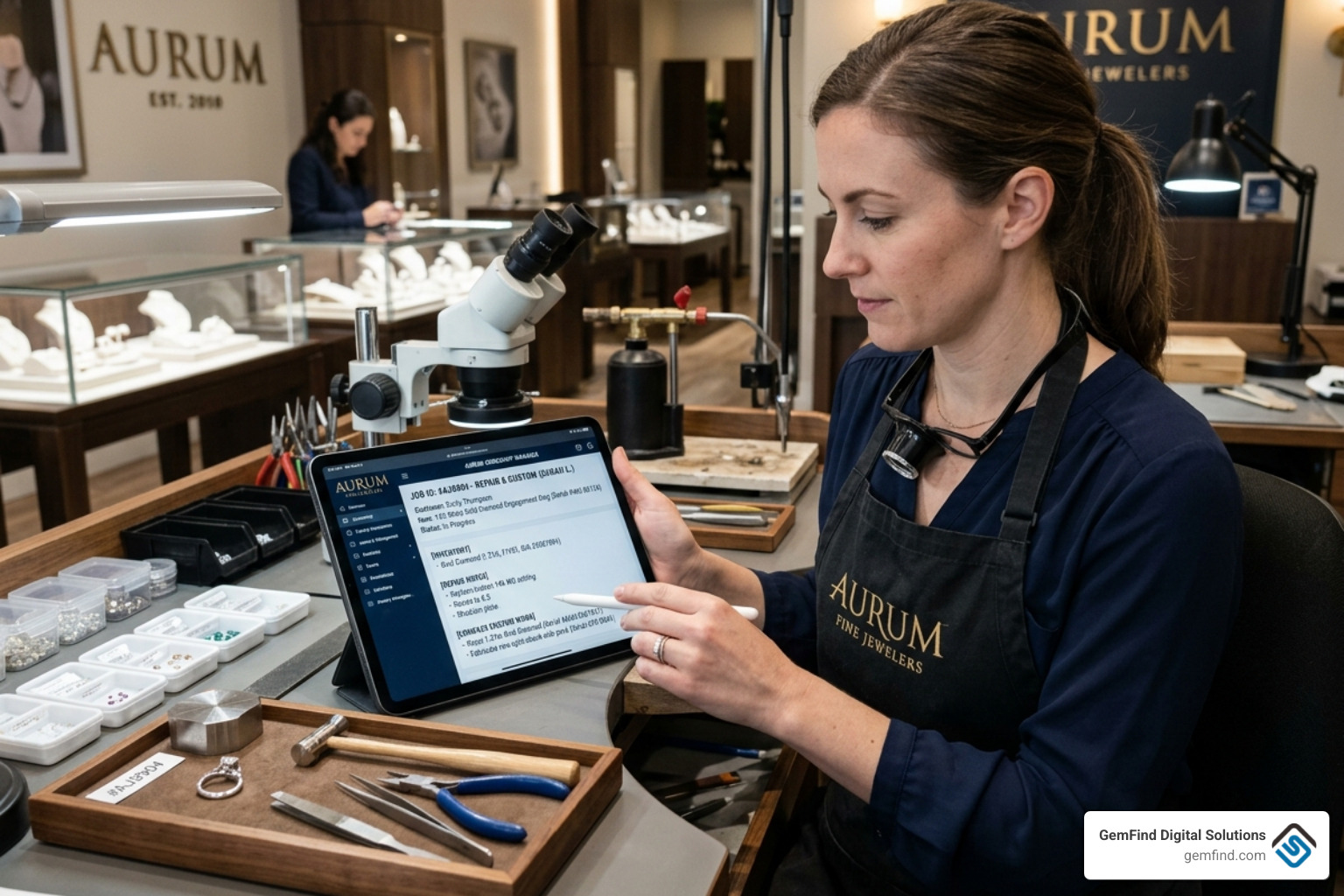
Repairs are the heartbeat of many independent jewelry stores. A modern POS should allow you to take photos of the item upon intake, track its progress through the shop, and automatically text the customer when it’s ready. Without dedicated Jewelry Repair Tracking Software, things get lost, and customer trust erodes.
Professional Appraisals and Labeling
Gone are the days of typing up appraisals in Word. Systems like Crystal POS and Jewel360 allow you to generate professional appraisals directly from the sales record. Furthermore, specialized hardware support for "rat-tail" jewelry labels—those tiny, non-adhesive loops that fit around rings—is a non-negotiable feature found in systems like RetailEdge and WJewel.
For a full breakdown of what your software should handle, see our Jewelry Store Management Software Complete Guide.
Cloud-Based vs. On-Premise: Choosing the Right Architecture
One of the biggest debates in the industry is whether to stay with a traditional on-premise server or move to the cloud. While on-premise systems like the classic version of The Edge have served the industry for decades, the tide is turning toward cloud-based jewelry store POS systems.
| Feature | Cloud-Based (e.g., Luxe, Pavilion) | On-Premise (Legacy Systems) |
|---|---|---|
| Accessibility | Access from anywhere via tablet/phone | Only accessible inside the store |
| Maintenance | Automatic updates; no server to fix | Requires manual updates and IT staff |
| Data Security | Enterprise-grade encryption & backups | Vulnerable to local hardware failure |
| Multi-Store | Real-time sync across all locations | Often requires complex "polling" |
The benefit of the cloud is agility. If you're at a jewelry show in Las Vegas and want to check if a specific diamond is still in your New York vault, you can do it from your phone. Systems like Luxe and Gem Logic offer "white-glove" migration services to ensure your decades of customer data move safely from your old server to their secure cloud environment.
We are proud that Gemfind Is A Certified Edge POS Partner, allowing us to help jewelers bridge the gap between their trusted local databases and the modern digital world.
Maximizing Efficiency with Specialized Integrations
A POS system that doesn't talk to your other tools is just a digital island. The best jewelry store POS systems in 2024 are defined by their integrations.
- Certificate Autofill: Systems like Pavilion POS integrate directly with GIA and IGI. When you receive a stone, you simply scan the certificate number, and the software automatically pulls in the carat, color, and clarity. No more manual entry errors!
- Industry Pricing: Integration with RapNet or the Geller Blue Book ensures your pricing is always accurate and competitive.
- Accounting Sync: Real-time synchronization with QuickBooks Online is essential for keeping your books clean without double-entry.
- Virtual Inventory: Tools like Jewelcloud allow you to display thousands of items from your suppliers on your website or in-store tablets without actually owning the stock.
We also see a rising trend in Jewelry Ar Pos Integration, where augmented reality allows customers to "try on" pieces virtually, with the data flowing directly into your CRM for follow-up.
How Jewelry Store POS Systems Handle Serialized Inventory
In the jewelry world, a SKU isn't enough. You need serialized tracking. This means every individual diamond or high-end watch has a unique identifier. Modern jewelry store POS systems like Flawless POS and Gem Logic excel here. They track the "life" of a piece—from its arrival as a loose stone to its mounting, its time on memo (consignment), and its eventual sale.
RFID (Radio Frequency Identification) is the "gold standard" for this. Instead of scanning every tag one by one, you can wave a wand over a display case and count 50 items in seconds. This significantly reduces shrinkage and saves hours of labor during weekly audits.
The Role of Jewelry Store POS Systems in Omnichannel Retail
Modern customers often start their journey on Instagram, move to your website, and finish the purchase in-store. This is "Omnichannel Retail," and your POS must support it.
If a customer buys a ring on your Shopify site at 2:00 AM, your in-store inventory must update instantly. Systems like Lightspeed and Shopify POS (when integrated with jewelry-specific apps) handle this beautifully. Features like BOPIS (Buy Online, Pick Up In-Store) are now expected by luxury consumers.
To see how we help connect these dots, look at What Is The Diamondlink, which bridges the gap between your diamond feed and your sales floor.
Frequently Asked Questions about Jewelry POS
What are the top features to look for in a jewelry-specific POS?
You should prioritize serialized inventory tracking, integrated repair/job bag management, and the ability to attach digital certificates (GIA/IGI). For multi-store operations, real-time cloud syncing and robust reporting (like GMROI) are essential.
How does data migration work when switching from a legacy system?
Most top providers like Luxe and Flawless offer "white-glove" migration. They take your old database (from systems like Edge, JewelMate, or even Excel), clean the data, and import it into the new system. This usually includes your full history of customers, sales, and current inventory.
Can a modern POS system handle both retail and wholesale operations?
Yes. Platforms like Flawless POS and Pavilion are specifically designed for businesses that do both. They allow you to set different pricing tiers, manage "memos" (consignments to other jewelers), and track bulk gemstone parcels alongside finished retail pieces.
Conclusion
The jewelry industry is built on tradition, but your technology shouldn't be a relic of the past. Upgrading to one of the modern jewelry store POS systems we've discussed isn't just about making sales faster—it's about gaining the insights you need to grow. Whether it's through better inventory turn, more efficient repairs, or a seamless omnichannel experience, the right software pays for itself.
At GemFind Digital Solutions, we specialize in making these technologies work together. From web design to complex integrations, we help jewelers future-proof their businesses. Gemfind Has Announced It Has Reached A Strategic Partnership Agreement With The Leading Industry Point Of Sale Provider The Edge, and we continue to expand our reach to support all major platforms.
Ready to turn your POS into a growth engine? Explore our Jewelry Lead Generation Complete Guide or contact us today to see how we can help you integrate your storefront with the digital world.


