


Is a Cathedral Style Engagement Ring Right for Your Customer?

A cathedral style engagement ring has metal arches that rise from the band to support the center stone. It is a strong choice for someone who wants a raised, classic look and a diamond that stands out. The arches can add support around the setting, but they do not make the ring snag-proof. Check the ring's height, prongs, and wedding band fit before recommending it for daily wear.
For jewelry retailers, those details also make better product pages and ads. Show a clear side view, name the setting style, and explain how it fits the customer's routine.
I'm Anthony Arechiga, Vice President of Sales at GemFind Digital Solutions. Since 2007, I've worked with jewelry businesses on digital sales, and this guide will help you explain the trade-offs of a cathedral style engagement ring in terms shoppers can use.
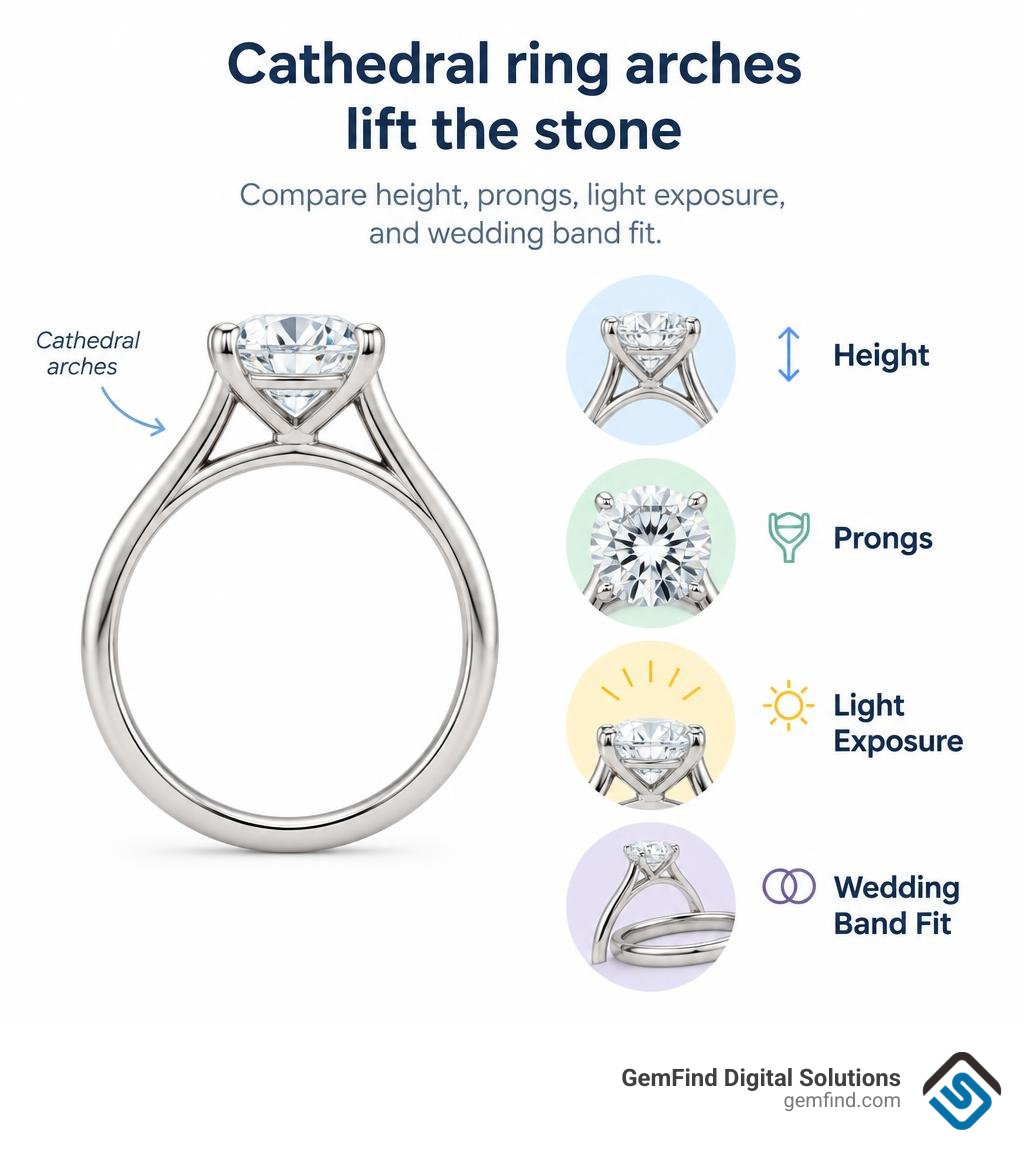
Cathedral style engagement ring basics:
What Is a Cathedral Style Engagement Ring? Anatomy and Design Elements
A cathedral engagement ring takes direct inspiration from classical Gothic architecture. Just as sweeping arches and flying buttresses allowed medieval cathedrals to reach soaring heights while remaining structurally sound, the arches on a cathedral ring slope upward from the shank to secure and elevate the central mounting. For a deeper look at how this setting compares to other architectural designs, see this guide to cathedral engagement ring settings.
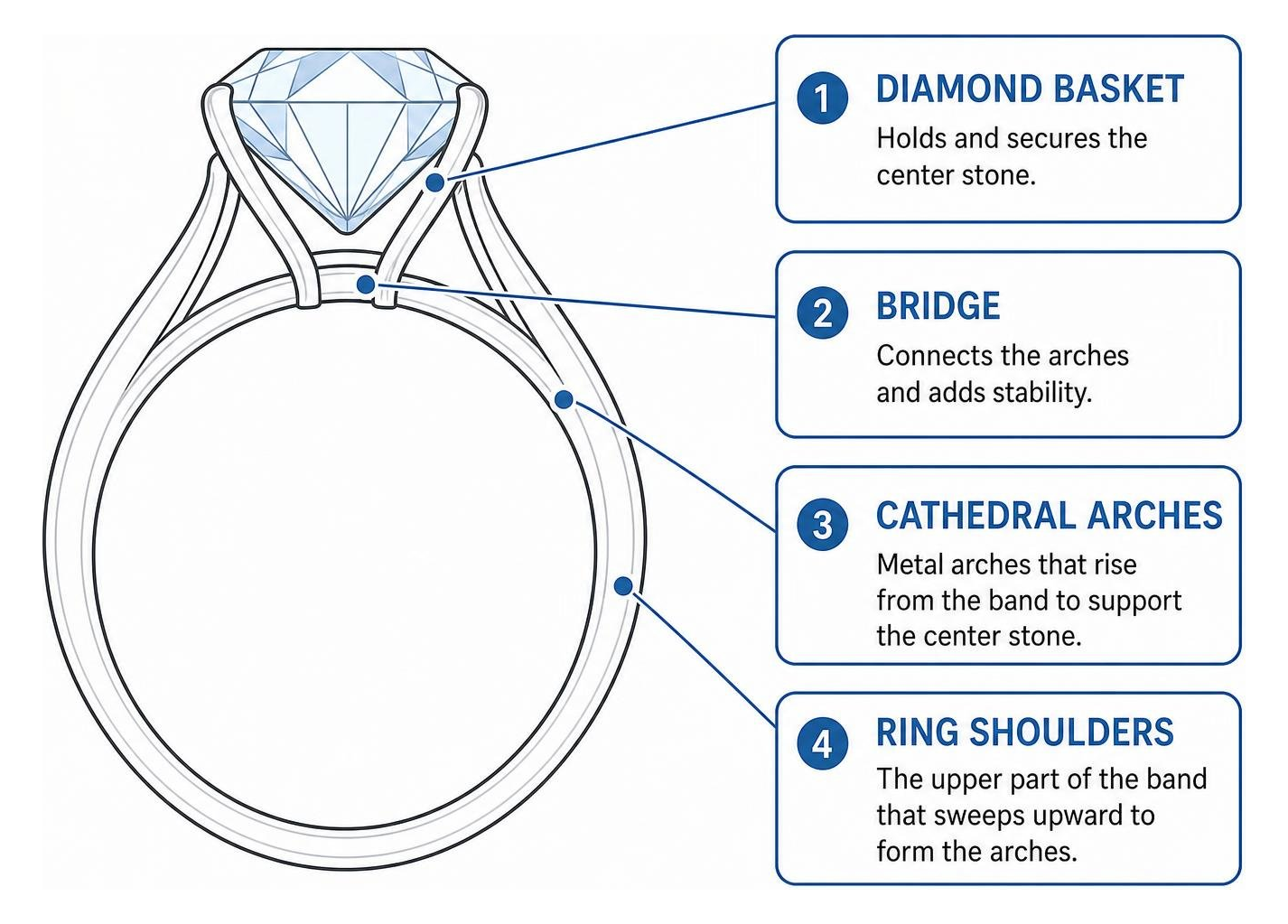
When examining classic ring design for engagement mountings, the cathedral setting stands out because the head is not simply soldered onto the top of a circular band. Instead, the shoulders of the band sweep upward, creating graceful triangular or curved openings (often called windows or galleries) beneath the central gem. This architectural integration delivers two significant advantages: elevated visual drama and reinforced center stone stability.
How Flying Buttress Arches Protect and Elevate the Diamond
In traditional peg-head solitaire rings, the center basket is attached at a single, narrow point of contact on the shank. A hard lateral blow can bend or snap this joint. In contrast, the flying buttress arches of a cathedral setting act as structural reinforcements.
- Impact Resistance: The rising shoulders cradle the basket from both sides, absorbing direct side knocks and distributing mechanical stress evenly across the entire shank.
- Optical Magnification: By lifting the center stone higher above the finger, the arches isolate the diamond from surrounding hand geometry, creating an optical effect that makes the diamond appear larger.
- Maximum Light Return: The open arches beneath the setting permit ambient light to enter the lower pavilion facets from multiple angles, maximizing natural brightness, fire, and scintillation.
Key Components: Prongs, Bridge Accents, and Band Width
The visual balance of a cathedral mounting depends on fine structural details:
- Prong Configurations: Cathedral heads typically feature four or six prongs, claw prongs, or protective split prongs. Four prongs emphasize diamond shape geometry, while six prongs offer superior diamond retention.
- Bridge Accents & Pavé: The space beneath the center stone—known as the bridge—can be left sleek and polished or adorned with micro-pavé diamonds, milgrain accents, or peekaboo gems.
- Band Width & Profile: Band widths typically range from delicate 1.9 mm petite shanks to bold 3.5 mm wide-band designs. Most modern mountings incorporate a comfort-fit interior shank with rounded inner edges to ensure effortless daily wear.
Popular Styles and Setting Variations
Cathedral architecture is exceptionally versatile, adapting seamlessly to minimalist modern rings, intricate vintage heirlooms, and contemporary three-stone arrangements.
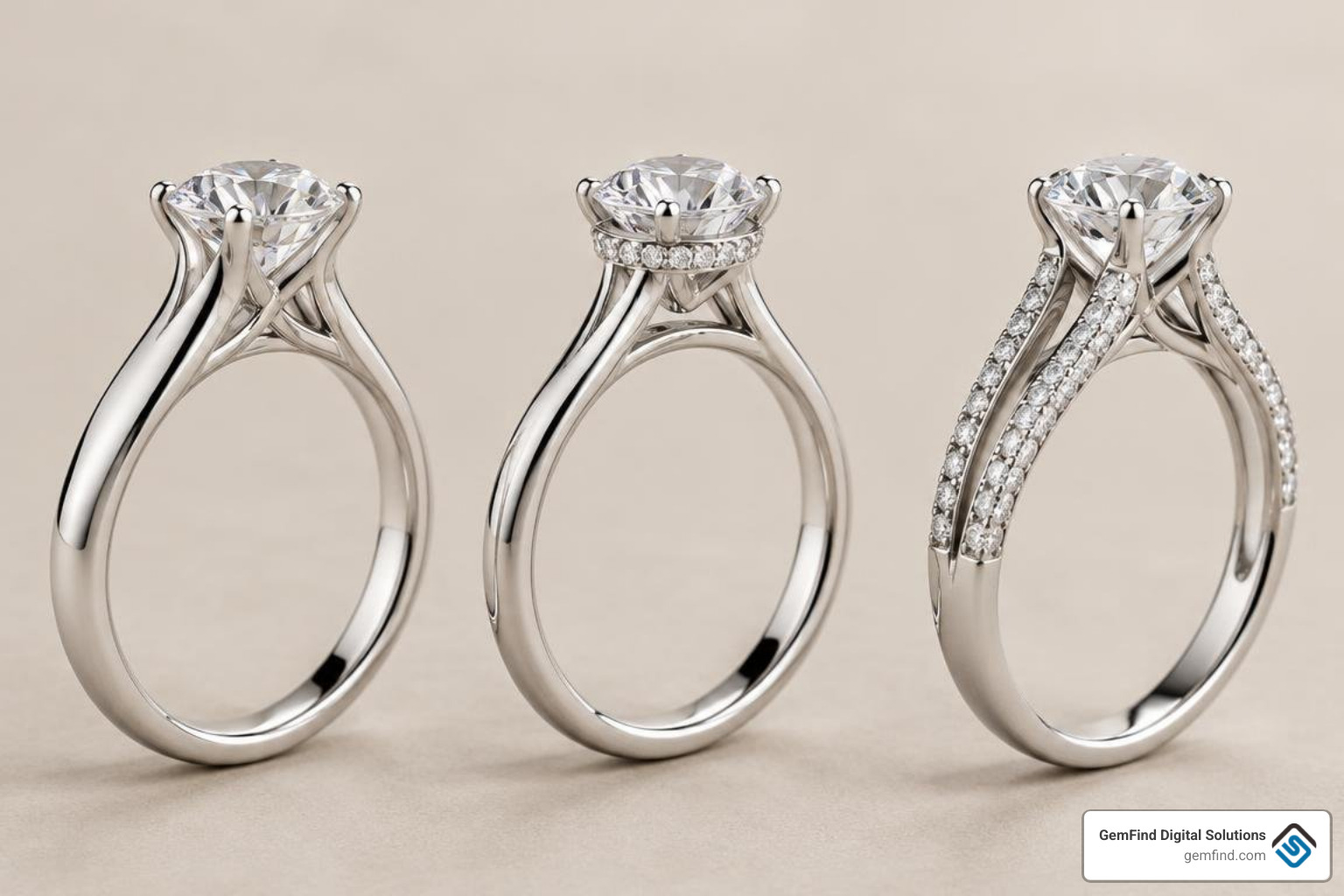
Classic Solitaires, Hidden Halos, and Tulip Baskets
- Classic Solitaire Cathedral: The purest expression of the style, showcasing high-polish metal shoulders sweeping smoothly into a central head. This clean aesthetic highlights the brilliance of the center stone.
- Hidden Halo Cathedral: Adding a subtle ring of micro-pavé diamonds directly below the girdle of the center stone provides hidden sparkle from profile angles without altering the classic solitaire look from the top down.
- Tulip Basket Cathedral: The prongs and arches are sculpted into organic, floral petal silhouettes that cup the base of the diamond like a blossoming flower, blending organic romance with architectural support.
Three-Stone, Bezel, and Vintage-Inspired Cathedral Rings
- Three-Stone Trellis Settings: Side stones (such as tapered baguettes, pears, or rounds) are integrated into interlocking trellis arches, symbolizing a couple’s past, present, and future while maintaining an elevated silhouette.
- Cathedral Bezel Settings: A thin rim of precious metal encircles the perimeter of the diamond, combining the sleek elevation of cathedral arches with snag-free, flush-metal edge security.
- Vintage-Inspired Cathedral Mounts: Detailed with intricate hand milgrain, filigree scrollwork in the gallery windows, peekaboo side diamonds, and antique-inspired east-west diamond orientations.
Evaluating Diamond Shapes and Visual Proportions
The symmetry of cathedral arches complements nearly every diamond geometry, but pairing the right cut with the correct shoulder slope creates visual harmony.
Best Diamond Shapes for a Cathedral Style Engagement Ring
- Round Brilliant Cut: The classic benchmark. Round diamonds naturally align with both gentle curved arches and sharp angular shoulders.
- Oval and Moval Cuts: The elongated profile of an oval diamond pairs effortlessly with high-sloping cathedral shoulders, flattering the natural length of the finger.
- Cushion Cut: Soft, rounded corners contrast beautifully against structured, geometric arches, making cushion cuts an ideal candidate for vintage-inspired peekaboo designs.
- Princess and Radiant Cuts: The sharp 90-degree corners of princess cuts and the cropped corners of radiants echo the crisp architectural lines of chevron and cathedral arches.
- Emerald and Asscher Cuts: Step-cut diamonds feature clean, parallel facets that mirror the structural integrity of wide-arch cathedral bands.
- Marquise Cut: Pointed ends flow organically into sweeping cathedral shoulders, protecting vulnerable tips from snagging or chipping.
Balancing Arch Height with Finger Size and Daily Wear
When helping shoppers select a cathedral mounting, evaluate finger coverage and hand proportions:
- Petite Fingers (Sizes 3–5): A slim 1.8 mm to 2.0 mm cathedral shank with a gradual slope prevents the ring from overwhelming smaller hands while providing ample elevation.
- Larger Finger Sizes (Sizes 7–10): Wide-band cathedral mountings (2.5 mm to 3.5 mm), split shanks, or three-stone arrangements provide balanced finger coverage and prevent the center stone from looking undersized.
- Active Lifestyles: Choose medium-profile arches rather than extra-tall settings to keep the center stone close enough to the hand for everyday practicality while retaining effortless bridal band pairing.
Benefits, Setting Comparisons, and Wedding Band Pairing
Choosing an engagement ring setting involves balancing aesthetics, lifestyle compatibility, and ring stacking preferences.
Cathedral vs. Low-Profile and Standard Solitaire Settings
| Setting Feature | Cathedral Setting | Low-Profile Bezel Setting | Standard Peg-Head Solitaire |
|---|---|---|---|
| Profile Height | High to Medium-High | Low (Flush to finger) | Medium to High |
| Side-Impact Durability | Exceptional (Arches reinforce head) | Superior (Fully enclosed metal rim) | Moderate (Single joint vulnerable to impact) |
| Light Entry & Sparkle | Maximum (Open gallery windows) | Moderate (Enclosed pavilion) | High (Open basket structure) |
| Wedding Band Fit | Flush fit with straight bands | Usually requires curved/notched band | Often requires curved/notched band |
| Snag Potential | Moderate (Prongs elevated, smooth arches) | Zero to Minimal (Smooth metal perimeter) | Moderate to High (Exposed elevated prongs) |
Flush Wedding Band Compatibility and Side-Impact Protection
One of the greatest functional advantages of a cathedral engagement ring is its ability to sit flush against a straight wedding band. In low-profile settings, the basket sits directly on the finger, forcing wedding bands to curve around the center stone or leave a noticeable gap.
Because cathedral arches elevate the diamond's base plate above the finger, standard straight wedding bands, diamond eternity rings, and contoured bands slide directly underneath the center head without resistance. This creates a cohesive, gap-free bridal stack that eliminates rubbing between metal mountings.
Buying Considerations: Metals, Diamonds, and Customization
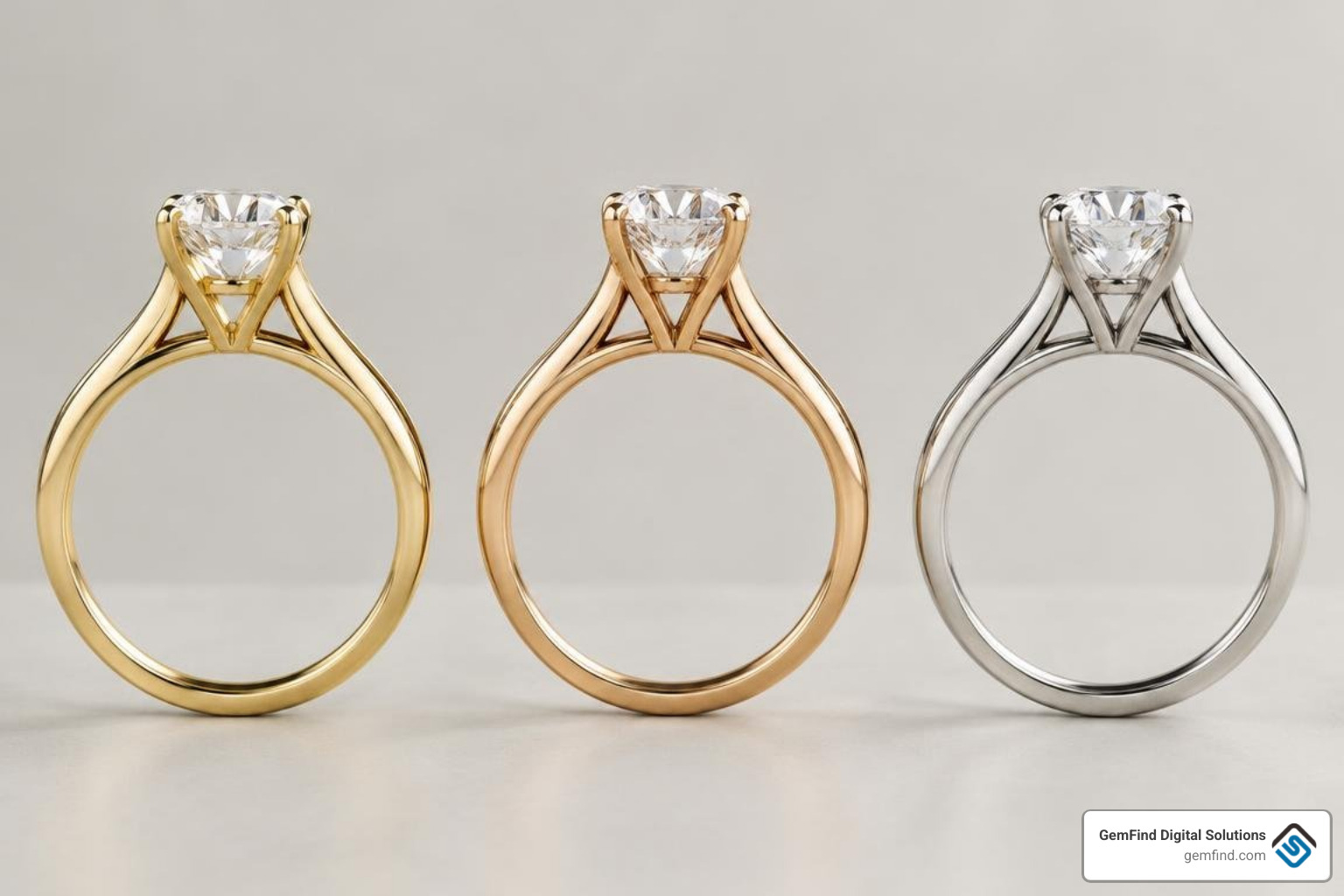
Metal Options and Cost Expectations in 2026
Precious metal selection directly impacts a ring's durability, maintenance schedule, and price point:
- 14K Gold (White, Yellow, Rose): Composed of 58.3% pure gold alloyed with durable metals. Offers excellent scratch resistance and structural rigidity. Base cathedral settings start around $1,000 to $1,390.
- 18K Gold (White, Yellow, Rose): Composed of 75% pure gold, offering rich, warm color saturation and hypoallergenic properties for sensitive skin. Base settings start around $1,150 to $1,895.
- Platinum: Naturally white, hypoallergenic, and exceptionally dense. Rather than losing metal when scratched, platinum displaces, developing a vintage patina over time that holds center stones securely. Platinum settings start around $1,250 to $2,200+.
Specialized variations—such as three-stone cathedral trellis rings or intricate vintage peekaboo designs—range from $1,940 to over $3,540+ for the setting alone, while luxury multi-stone custom mounts can exceed $10,000.
Choosing Between Natural and Lab-Grown Center Stones
Modern shoppers can pair cathedral mountings with either natural mined diamonds or lab-grown alternatives:
- Natural Diamonds: Mined through certified supply chains adhering strictly to the Kimberley Process. Prized for their geological rarity and timeless value. Typically certified by the Gemological Institute of America (GIA).
- Lab-Grown Diamonds: Chemically, physically, and optically identical to mined diamonds, lab diamonds are created via HPHT (High Pressure High Temperature) or CVD (Chemical Vapor Deposition) processes. They allow consumers to secure high-spec stones—such as D-color, VVS-clarity, 1.50 ct to 2.00 ct gems—at accessible price points. Typically certified by the International Gemological Institute (IGI) or GIA.
Designing Your Dream Cathedral Style Engagement Ring
For consumers seeking a personalized look, interactive digital tools make customizing a cathedral ring seamless. Using an interactive RingBuilder module powered by a custom diamond ring builder, shoppers can select their preferred arch profile, choose diamond shapes, and preview metal options in real time.
Whether using a dedicated diamond ring creator tool to select a certified loose stone or learning how to create your own engagement ring from scratch, shoppers should ensure their jeweler offers transparent warranties, clear resizing timelines (typically 4–6 weeks for custom cast pieces), and comprehensive manufacturing guarantees.
Frequently Asked Questions about Cathedral Rings
Do cathedral style rings snag easily on clothing?
Cathedral rings are elevated, which can catch on loose-knit sweaters or pockets if worn carelessly. However, because the metal arches create a smooth, continuous ramp leading up from the shank to the center stone, they snag far less than traditional peg-head solitaires that lack sloping support. Choosing bezel settings or smooth, rounded claw prongs further reduces snagging.
Can any diamond shape be set into a cathedral mount?
Yes. Skilled jewelers can adapt cathedral mountings to accommodate any fancy shape—including round, oval, princess, radiant, cushion, emerald, pear, and marquise cuts. The arches can be customized to follow the exact curvature and width of the chosen center diamond.
How do I clean and maintain a cathedral setting?
Because cathedral settings have open windows and arches underneath the stone, lotion, soap scum, and oils can collect under the center basket.
- Soak the ring in warm water mixed with mild dish soap for 15–20 minutes.
- Gently scrub beneath the bridge and behind the diamond pavilion using a soft-bristled baby toothbrush.
- Rinse thoroughly under warm running water (ensure the drain is covered).
- Pat dry with a lint-free microfiber cloth.
- Schedule a professional jeweler inspection every 6 to 12 months to check prong tension and arch alignment.
Conclusion
Cathedral engagement rings remain a cornerstone of fine bridal jewelry because they harmonize two essential elements: soaring architectural beauty and practical everyday structural security. By elevating the center diamond on graceful, supportive arches, this setting maximizes brilliant light performance while allowing wedding bands to stack completely flush.
For independent jewelry retailers, showcasing cathedral settings with rich 3D visuals, clear side-profile photography, and smooth digital customization experiences is vital for capturing today's bridal shoppers. Discover our comprehensive digital marketing strategies for engagement rings to enhance your digital showroom, integrate Edge POS inventory feeds, and deliver an omnichannel shopping journey.
— Anthony Arechiga, Vice President of Sales, GemFind Digital Solutions


