


Find a Local Custom Jeweler Who Can Build Your Exact Ring
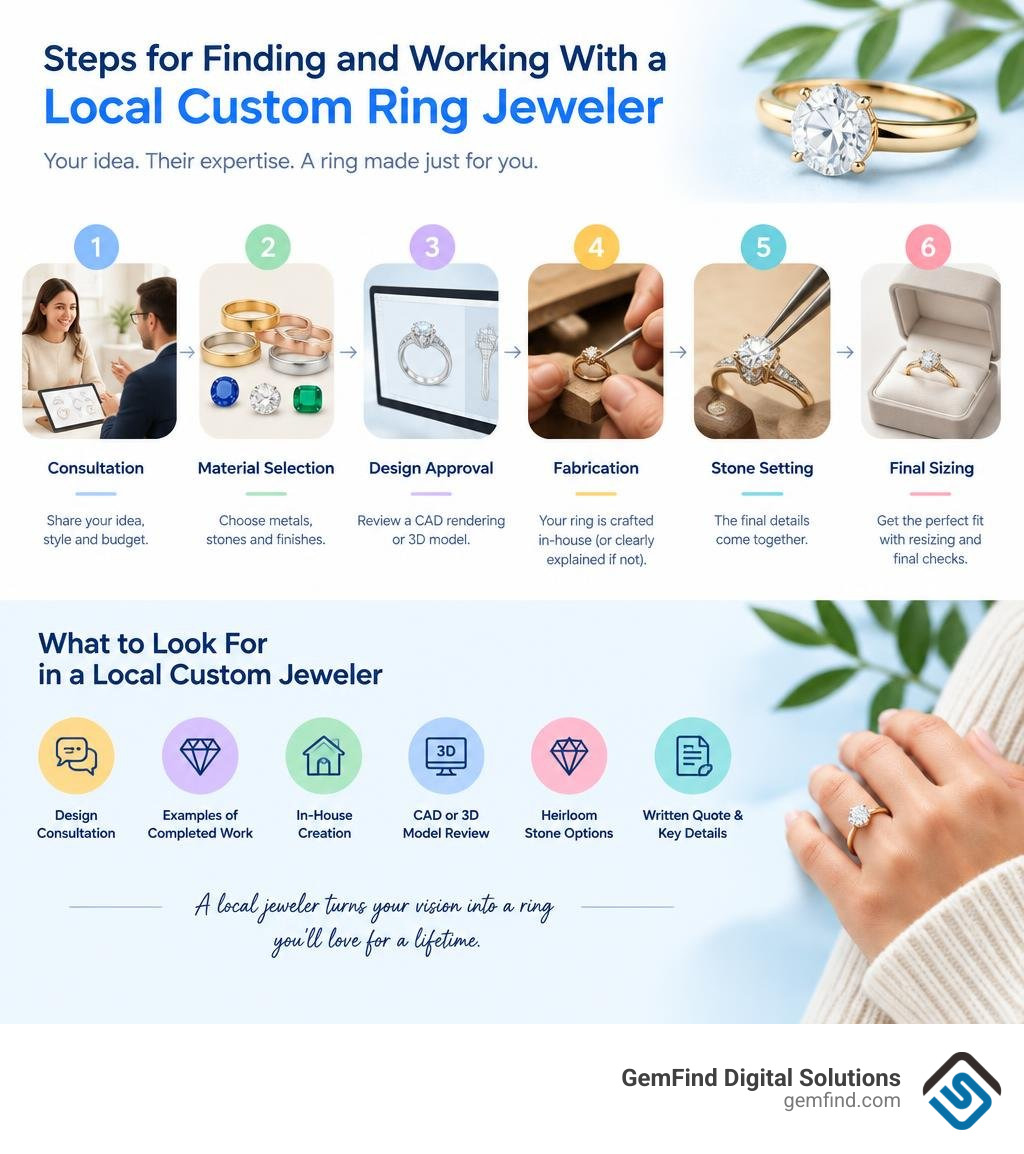
To find the right custom ring jewelers near me, start with local shops that offer a design consultation, show examples of completed work, and create rings in-house or clearly explain who makes them. Ask whether you can review a CAD rendering or 3D model before production, use an heirloom stone, and receive a written quote with the timeline, resizing policy, warranty, and stone details.
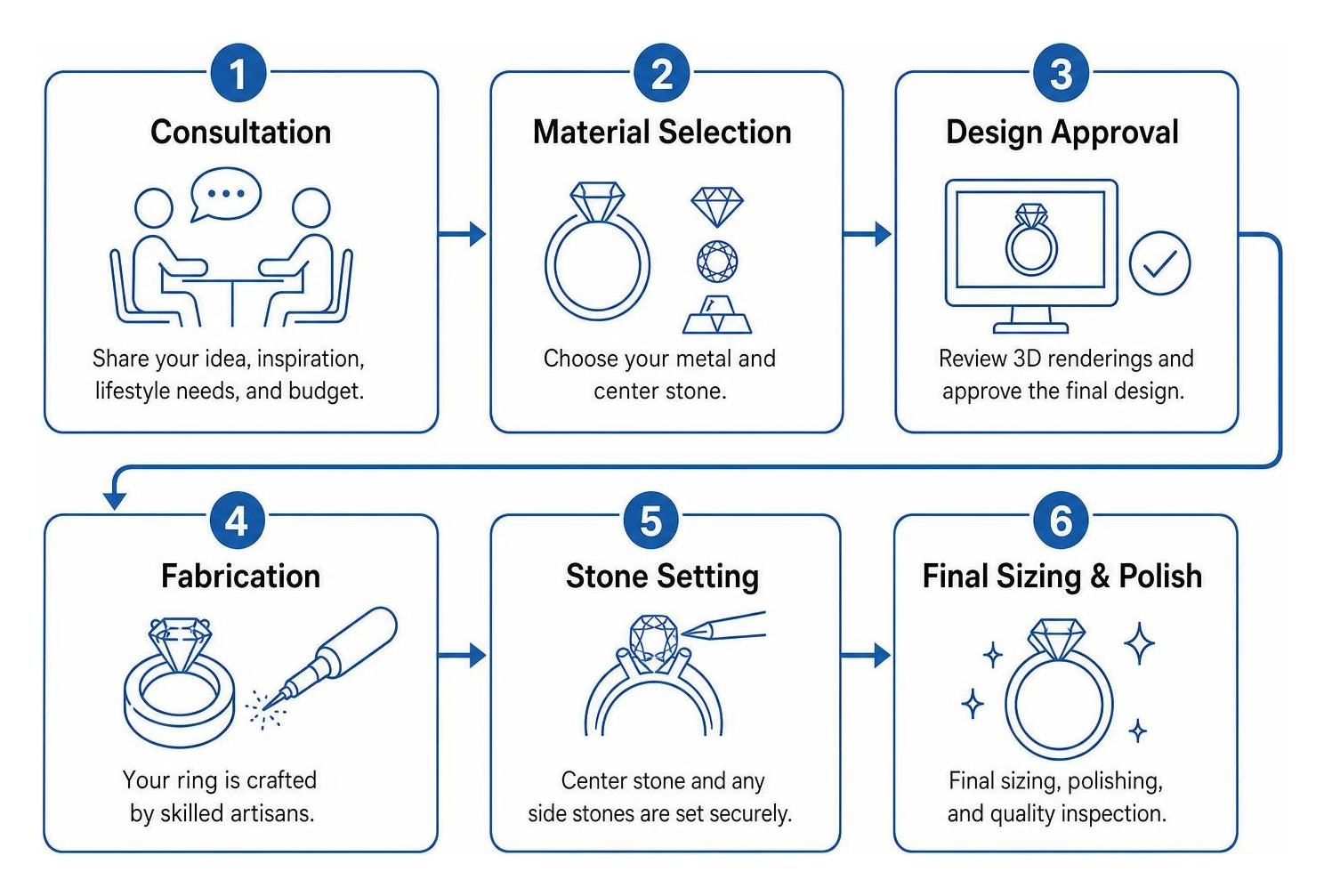
A good local custom jeweler helps turn your idea, sketch, or saved photos into a wearable ring that fits your style, budget, and daily life. The process usually includes a consultation, material selection, design approval, fabrication, stone setting, and final sizing. Depending on the design and stone sourcing, custom rings often take several weeks to complete.
I am Anthony Arechiga, Vice President of Sales at GemFind Digital Solutions, where I have helped jewelry businesses improve their websites, digital marketing, and e-commerce presence since 2007. My work with jewelers gives me a practical view of how shoppers search for custom ring jewelers near me and what online details help them choose a trusted local maker.
Finding the Best Custom Ring Jewelers Near Me: What to Look For
Searching for a local artisan to forge an engagement ring or signature band is an exciting journey. When you begin your search for custom ring makers in your area, looking beyond standard display cases is essential. You want an experienced artisan who listens to your story, understands your aesthetic preferences, and guides you through technical jewelry specifications without high-pressure sales tactics.
To evaluate local businesses, explore our custom jewelry design guide to understand the modern bespoke workflow. A reputable jeweler will maintain an open, welcoming studio atmosphere where master gemologists and bench jewelers work together. Read customer reviews across independent platforms to assess consistency, communication, and overall craft quality.
Evaluating In-House Craftsmanship and CAD Technology
True bespoke jewelry relies on a balance between modern technology and traditional bench skills. The best ateliers use advanced Computer-Aided Design (CAD) software and high-resolution 3D wax printers alongside traditional hand tools. This integration allows you to inspect digital renders and tangible prototypes before any metal is cast.
When visiting a local shop, ask if their casting, setting, and polishing occur in-house or through third parties. As shown by studios specializing in bespoke ring fabrication techniques, keeping designers and bench jewelers under one roof ensures strict quality control and direct communication throughout every design revision.
Checking Certifications, Warranties, and Past Client Portfolios
Never hesitate to ask about professional credentials and post-purchase support:
- Gemological Credentials: Look for teams with GIA-certified gemologists who accurately grade diamonds and colored gemstones.
- Warranty and Care: Reputable jewelers often provide lifetime manufacturing warranties, complimentary annual inspections, free first-time ring sizing, and routine ultrasonic cleanings.
- Portfolio Depth: Review past bespoke projects to ensure the jeweler has experience crafting diverse aesthetics, ranging from vintage milgrain bezels to modern tension settings.
Step-by-Step Guide to Crafting a Bespoke Ring
Creating a one-of-a-kind ring is an intimate, collaborative experience that turns personal concepts into lasting heirlooms.
Modern artisans often enhance this collaborative process with interactive digital tools. Many boutiques now integrate a custom diamond ring builder directly on their websites, allowing you to experiment with various center stones, head styles, and shank profiles before your first face-to-face appointment.
Phase 1: Style Discovery and Setting Your Budget
The process begins with an initial consultation where you share your vision, inspiration photos, lifestyle needs, and preferred budget. During this stage, you will discuss:
- Band Profiles & Metal Alloys: Deciding between delicate rounded bands, flat modern profiles, or knife-edge shanks in platinum or gold.
- Stone Anatomy: Exploring how various center cuts—such as oval, emerald, round brilliant, or cushion—complement your hand proportions.
- Interactive Previews: Using modern innovations like virtual custom jewelry try-on tools to visualize how different carat weights and settings appear on the hand.
Phase 2: Design Approval, CAD Renderings, and 3D Wax Models
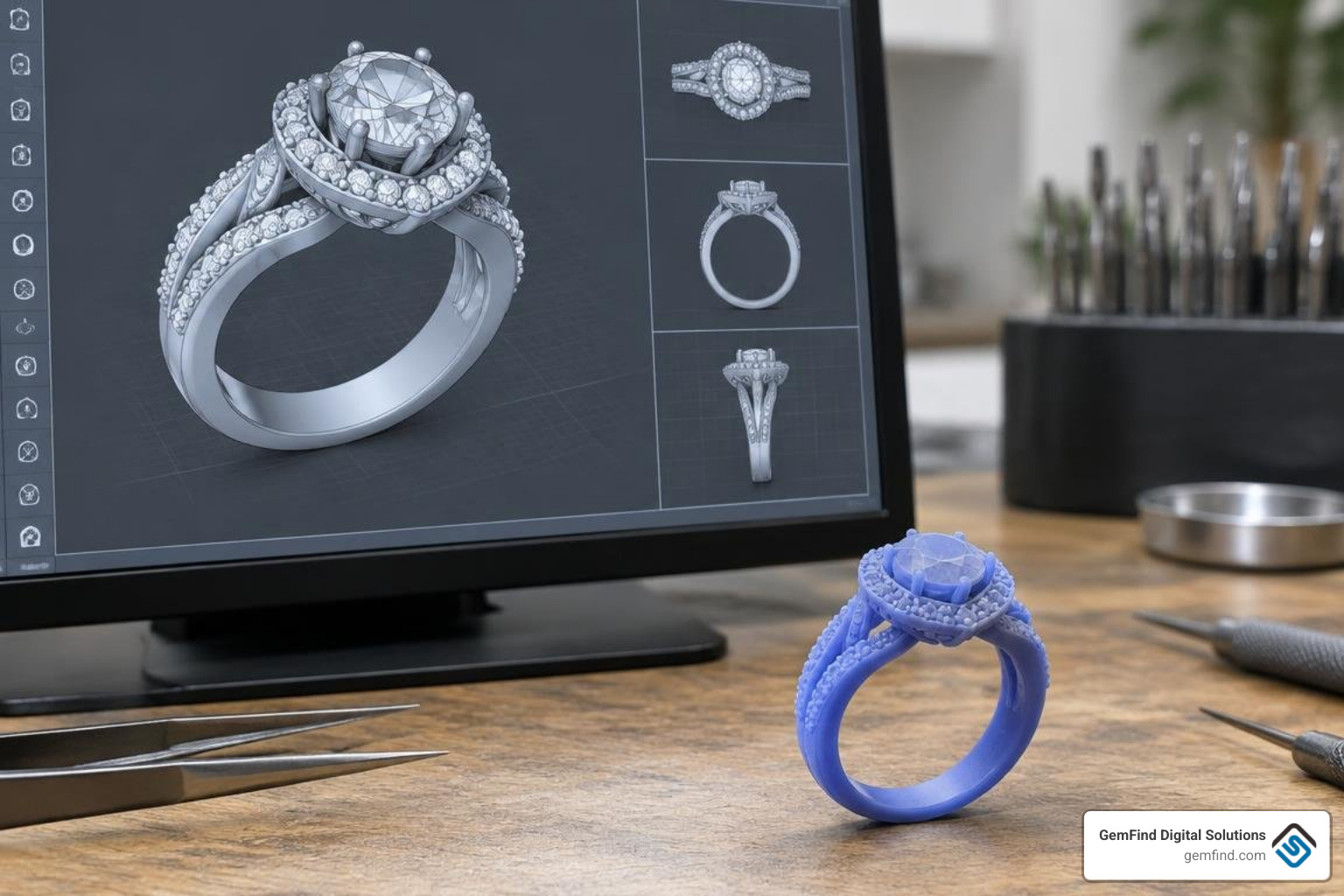
Once your initial ideas are recorded, the jeweler translates the rough sketch into a photorealistic 3D CAD model. This digital blueprint illustrates exact millimeter dimensions, prong placements, and metal volumes.
Most jewelers provide up to three to five design revisions so you can fine-tune small details. After approving the digital render, the shop prints a full-scale resin or wax prototype. Trying on this physical model lets you evaluate the ring's height, comfort, and finger coverage before metal casting begins.
Phase 3: Metal Casting, Stone Setting, and Final Polishing
With the wax model approved, your ring enters the manufacturing workshop:
- Lost-Wax Casting: The wax prototype is encased in a plaster mold, melted away in an oven, and replaced with molten precious metal.
- Bench Assembly & Clean-Up: Master jewelers clean the raw casting, smooth the surface porosity, and assemble multi-piece components.
- Stone Setting: Setters secure your gems using hand-sculpted claw prongs, protective bezels, or micro-pavé techniques under high-powered microscopes.
- Finishing & Engraving: The piece undergoes multi-stage polishing, hand-applied textures or milgrain, custom laser engraving, and a final ultrasonic cleaning.
Material Selection: Choosing Metals and Gemstones for Your Custom Ring
Your choice of materials influences not only the visual appeal of your custom piece, but also its daily durability and long-term care requirements.
| Precious Metal Alloy | Durability & Scratch Resistance | Color Maintenance & Care | Hypoallergenic Properties |
|---|---|---|---|
| Platinum (950) | Extremely high; develops a natural patina over time | Naturally white; never requires rhodium plating | 100% Hypoallergenic |
| 14k White Gold | High; harder alloy than 18k | Requires rhodium plating every 1–2 years | Contains trace nickel; may irritate sensitive skin |
| 18k Yellow Gold | Moderate; rich classic luster | Naturally warm; simple polishing maintains shine | Excellent; highly biocompatible |
| 14k Rose Gold | High; copper creates a durable bond | Warm pink tone; does not tarnish or fade | Contains copper; hypoallergenic for most |
| Custom Titanium | Exceptionally high; lightweight and rigid | Modern gunmetal grey; low maintenance | 100% Hypoallergenic |
How Custom Ring Jewelers Near Me Source Stones and Metals
Local bespoke studios provide transparent sourcing for both natural and lab-grown stones. Because independent jewelers frequently work through direct dealer networks rather than carrying heavy static inventory, they can source curated diamonds based on your precise cut, color, clarity, and dimensions.
For those interested in non-traditional designs, some custom studios incorporate titanium and alternative ring materials alongside organic elements like wood, meteorite, or repurposed family gemstones.
Precious Metals Comparison: Gold, Platinum, and Alternative Alloys
Choosing between 14k and 18k gold comes down to balancing durability with color richness. While 14k contains 58.3% pure gold combined with durable alloys for active lifestyles, 18k offers 75% purity with a deeper hue. If you are creating matching bands, explore custom wedding band design options early to ensure the metal alloys and hardness levels wear evenly together over time.
Timelines and Costs: What to Expect When Designing a Custom Ring

Understanding the pricing and production schedules of custom design helps prevent surprises as your piece comes together.
Evaluating Consultations with Custom Ring Jewelers Near Me
During your initial consultation, a jeweler will assess your project scope and provide a transparent quote. Most shops work with a straightforward deposit system:
- Design Retainer: An upfront fee (often $250 to $500) covers CAD development and 3D wax modeling, which is typically credited directly toward your final balance upon project approval.
- Zero-Pressure Discovery: A quality designer will outline production milestones, discuss diamond certifications, and establish clear delivery targets without forcing an immediate sale.
Cost Factors and Production Timelines
Custom ring costs vary based on design complexity, metal weight, and center stone selection. On average, the center gemstone accounts for 70% to 85% of an engagement ring's overall cost.
Standard production turnaround times range from 3 to 8 weeks from initial consultation to final delivery:
- Design & 3D Modeling: 1 to 2 weeks
- Wax Prototype Review & Adjustments: 1 week
- Casting, Stone Setting, and Polishing: 2 to 4 weeks
- Quality Assurance & Independent Appraisal: 3 to 5 business days
Frequently Asked Questions About Custom Ring Jewelers
How long does the custom ring creation process typically take?
Most custom rings are completed within 3 to 8 weeks. Straightforward solitaire designs or semi-custom modifications can wrap up in as little as 2 to 3 weeks, while intricate, multi-stone rings requiring rare gem sourcing may take up to 8 to 10 weeks. If you are planning a surprise proposal, begin the custom process at least two to three months ahead of time.
Can I use family heirloom stones or old gold in a new custom design?
Yes. Repurposing heirloom diamonds, colored gemstones, and family gold into a new design is a common practice among bespoke jewelers. A gemologist will inspect your stones for integrity, measure their exact tolerances, and build a modern setting that preserves the sentimental value of your family pieces.
Is designing a custom ring more expensive than buying ready-made?
Not necessarily. Because bespoke jewelers source diamonds on-demand through private dealer networks, you avoid the retail markups associated with maintaining large display inventories. Custom design gives you full control over your budget, allowing you to allocate funds toward diamond quality, metal durability, or specific artistic details as you see fit.
Conclusion
Working with a local custom jeweler allows you to create a piece of fine jewelry tailored to your personal taste, lifestyle, and love story. From your initial design concept to the final polished ring, the bespoke journey combines traditional bench craftsmanship with modern 3D visualization tools.
At GemFind Digital Solutions, we have spent more than 25 years helping independent jewelers connect with their communities through technology, web tools, and digital solutions. To discover how modern digital experiences can showcase bespoke craftsmanship, explore our complete guide to custom jewelry websites and see how local artisans bring fine jewelry designs to life.


