


Why Jewelry Ads Are Harder to Get Right Than They Look
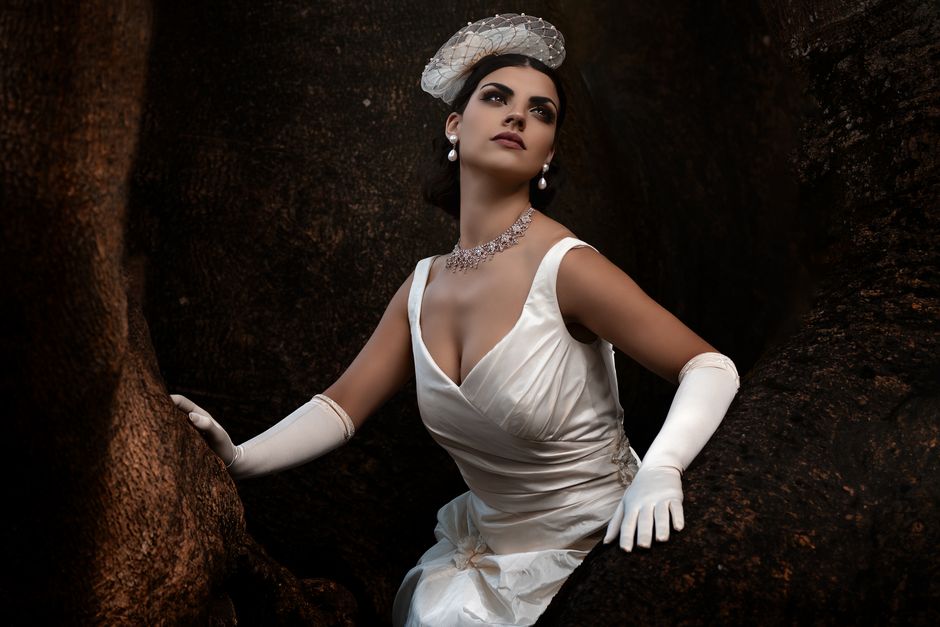
Jewelry ads are one of the most visually stunning — and strategically demanding — forms of digital advertising. The global jewelry market is on track to surpass $330 billion by 2026, and online sales alone are projected to top $90 billion. The opportunity is massive. But so is the challenge.
Here's the hard truth: nearly 70% of online jewelry carts stall at checkout. Beautiful product photos alone won't close the sale. High-value, emotion-driven purchases require trust, the right message, and the right platform — all working together.
What makes a jewelry ad effective? Here's a quick breakdown:
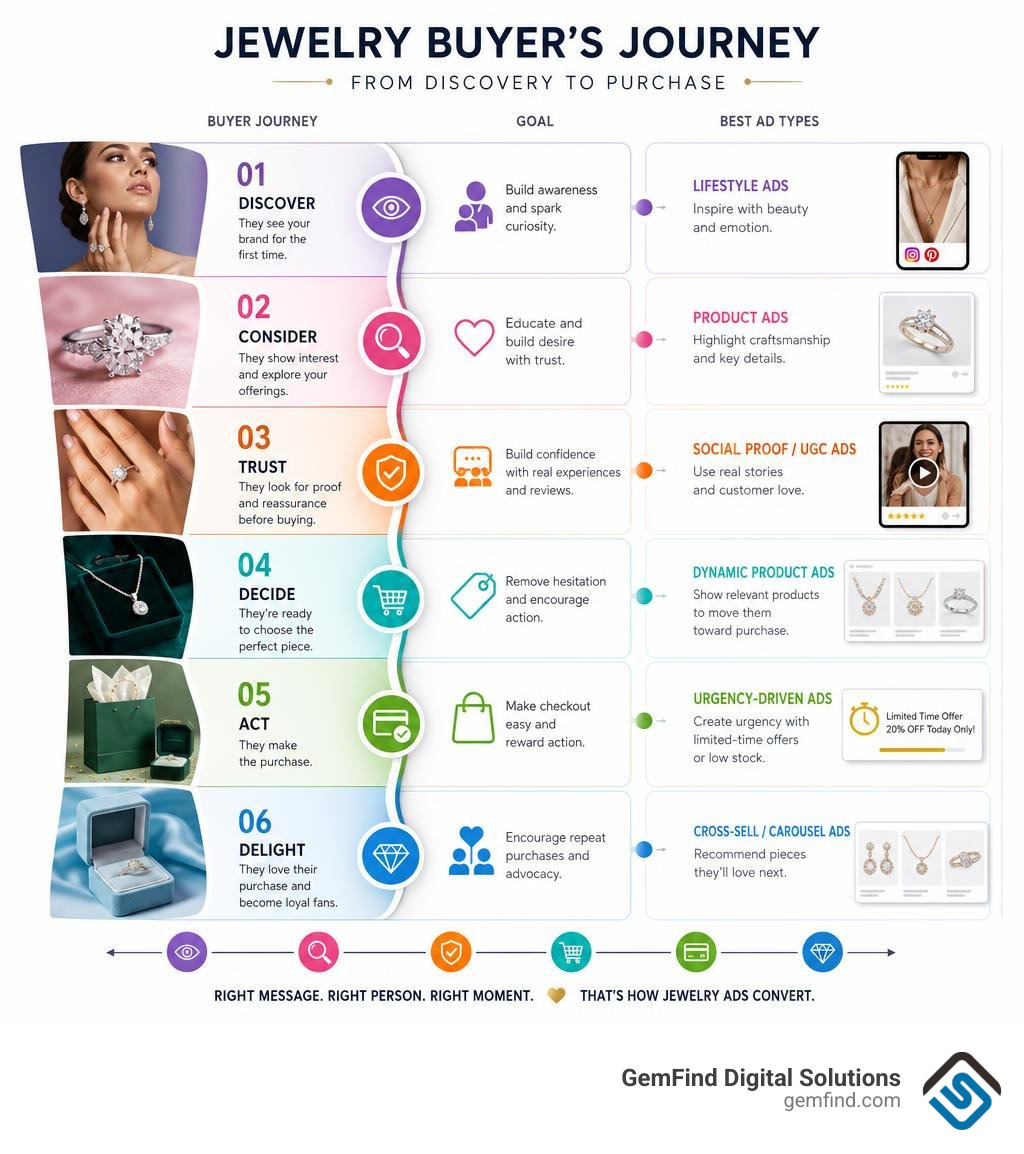
| Ad Type | Best For | Top Platform |
|---|---|---|
| Product-focused | Showcasing craftsmanship | Google Shopping |
| Lifestyle visuals | Building emotional connection | Instagram, Pinterest |
| Social proof / UGC | Building trust | TikTok, Facebook |
| Dynamic product ads | Retargeting, scaling | Meta, Google |
| Urgency-driven | Limited stock, seasonal sales | Facebook, Email |
| Cross-sell / carousel | Boosting average order value | Instagram, Facebook |
The brands winning right now aren't just the ones with the most polished visuals. They're the ones pairing beautiful creative with data-driven strategy — matching the right message to the right buyer at the right moment.
This guide covers everything: ad types, platform playbooks, dynamic creative scaling, key metrics, and common mistakes to avoid.
I'm Anthony Arechiga, VP of Sales at GemFind Digital Solutions, where I've spent nearly two decades helping jewelry brands build smarter jewelry ads and stronger digital marketing strategies. I'll walk you through what actually works — so you can stop guessing and start growing.
The Strategic Pillars of High-Converting Jewelry Ads
To design jewelry ads that stop the scroll and open wallets, we must look beyond pure aesthetics. While a beautifully lit diamond is mesmerizing, modern digital marketing demands a cohesive strategy built on trust, emotion, and precise funnel alignment. Let’s break down the core strategic pillars that turn passive browsers into buyers.
1. Emotional Anchoring & Storytelling
Jewelry is rarely a purely logical purchase. It is bought to celebrate milestones, express identity, or cement relationships. The most effective campaigns anchor their products in deep human emotion.
For example, look at how major global campaigns shift the narrative from physical product attributes to human moments. In the Tanishq Natural Diamonds campaign, titled "Souls in Symphony," the brand uses an intimate backstage setting to portray modern sisterhood and shared laughter. The focus shifts from the diamond necklace itself to the emotional bond of the women wearing it.
Similarly, the Kalyan Jewellers Antara campaign featuring celebrity Sara Ali Khan celebrates "everyday wins" and personal growth rather than traditional bridal milestones, positioning diamonds as daily confidence builders and "heirlooms of the present" for self-purchasing women.
When developing Engagement Ring Ad Campaigns, we must remember that we aren't just selling precious metals and mineral facets; we are selling the promise of a lifetime together.

2. High-Fidelity Product Focus
While storytelling builds the brand, clear, high-contrast product photography builds confidence. High-value purchases demand that we show off the tiny details: the precision of a pavé setting, the depth of a gemstone's color, or the clean lines of a polished band.
- Pro Tip: Use neutral, soft backgrounds (like warm beige, cream, or light turquoise) to make the jewelry pop without distraction.
- The "Looks-Real" Factor: Today's consumers can spot artificial or overly airbrushed images from a mile away. Balance highly styled studio shots with realistic, high-definition close-ups that show the true texture and brilliance of the piece.
3. Visual Trust-Building and Social Proof
Because nearly 70% of online jewelry carts stall due to credibility concerns, trust signals must be woven directly into your creative assets.
- Proof Badges: Stamping your ad carousels with trustworthy badges (such as "Featured in Vogue," "Conflict-Free Certified," or "4-Level Quality Assurance") can increase direct-to-site traffic by up to 35%.
- UGC & Testimonials: 92% of marketers confirm that user-generated content (UGC) boosts trust. Showing real customers unboxing their pieces or wearing them in natural light provides instant social proof that a studio shot simply cannot replicate.
Platform Playbooks: Mapping Channels to the Buyer's Journey
Treating every digital channel the same is a quick way to drain your budget. In fact, a Meta ad study revealed that only 27% of retail campaigns hit positive ROAS because brands fail to match their creative style to channel-specific user behavior.
Conversely, campaigns matched to funnel intent deliver 44% more ROAS than generic, one-size-fits-all blasts. To win, you need a multi-platform funnel design, which you can learn to structure in A Guide to Social Media Advertising for Jewelry Stores. For advanced luxury brands, integrating Jewelry Programmatic Advertising can further extend your reach across premium digital publications.
Visual Discovery and Search: Google Shopping and Pinterest Jewelry Ads
Google Shopping and Pinterest are visual search engines where users go with high buying intent or a desire to curate ideas.
Pinterest Style Boards
Pinterest is the ultimate top-of-funnel discovery engine. Instagram might drive 48% of initial brand awareness, but Pinterest is where shoppers actively plan their future purchases.
- The Strategy: Create themed style boards (e.g., "Everyday Minimalist Gold," "Bridal Sparkle," "Gifts Under $300") using high-resolution, vertical imagery.
- Visual SEO: Fill your image alt-text and pin descriptions with descriptive keywords like gemstone type, metal, and specific gifting occasions. Add a subtle, value-driven call-to-action (CTA) like "Save this board for 10% off your first order."
Google Shopping and Search
When shoppers search on Google, they are looking for specific items. They want to compare prices, styles, and materials instantly.
- Image Requirements: Upload ultra-sharp, 1,500-pixel photos on plain white backgrounds. Blurry or poorly cropped images will cause your listings to be filtered out of search results.
-
The Magic Title Formula: Structure your product titles as
[Stone] + [Cut] + [Metal] + [Item Type](e.g., "1ct Round Cut Lab-Grown Diamond 14k White Gold Engagement Ring"). This simple tweak to your product feed can lift your click-through rates by up to 18%. For a deep dive into optimizing this high-intent channel, check out our Google Shopping Ads Jewelry Stores Guide.
To see how visual storytelling can drive search interest, look at the Tanishq gemstone campaign featuring Triptii Dimri. The campaign’s visual metaphor—a muted, neutral-toned world that bursts into vibrant color once the protagonist selects her gemstone jewelry—captures search interest by linking colorful, natural gemstones to emotional self-expression.
Social Commerce and Engagement: Meta and TikTok Campaigns
Meta (Facebook and Instagram) and TikTok are where you disrupt the scroll with highly engaging, lifestyle-driven, and community-focused content.
Meta (Facebook & Instagram)
Meta remains the powerhouse for both broad prospecting and high-yield retargeting. To master the platform's targeting capabilities, read our Facebook Ads Jewelry Complete Guide.
- Prospecting: Use lifestyle-focused video ads and influencer partnerships to introduce your brand. For example, the Tanishq brand campaign featuring Ananya Panday, titled "Give wings to the girl within," uses nostalgic storytelling to position diamond jewelry as an everyday extension of a woman's personality.
- Retargeting: This is where you close the deal. By serving tailored carousel ads featuring customer reviews or unboxing videos to people who viewed specific products, you overcome final purchase barriers. Discover why this works so well in our guide on Why Remarketing Ads on Facebook Work.
TikTok and UGC
TikTok is all about authenticity. A staggering 71% of TikTok shoppers prefer "looks-real" content over highly polished, traditional studio shots.
- The Strategy: Partner with micro-influencers to create raw, unedited unboxing videos, styling challenges (e.g., "How I style three gold chains for a casual fit"), or "day-in-the-life" vlog style videos. Keep the transitions fast, use trending audio, and let the natural sparkle of the jewelry do the talking.
Scaling Creative Production with Dynamic Product Ads and AI
One of the biggest headaches for jewelry marketers is creative fatigue. You launch a beautiful ad, it performs well for two weeks, and then performance drops as your target audience gets tired of seeing the same image.
To combat this without blowing your entire budget on weekly photoshoots, we must rely on automated creative scaling and smart data feeds.
Leveraging Dynamic Product Ads (DPAs) for Real-Time Personalization
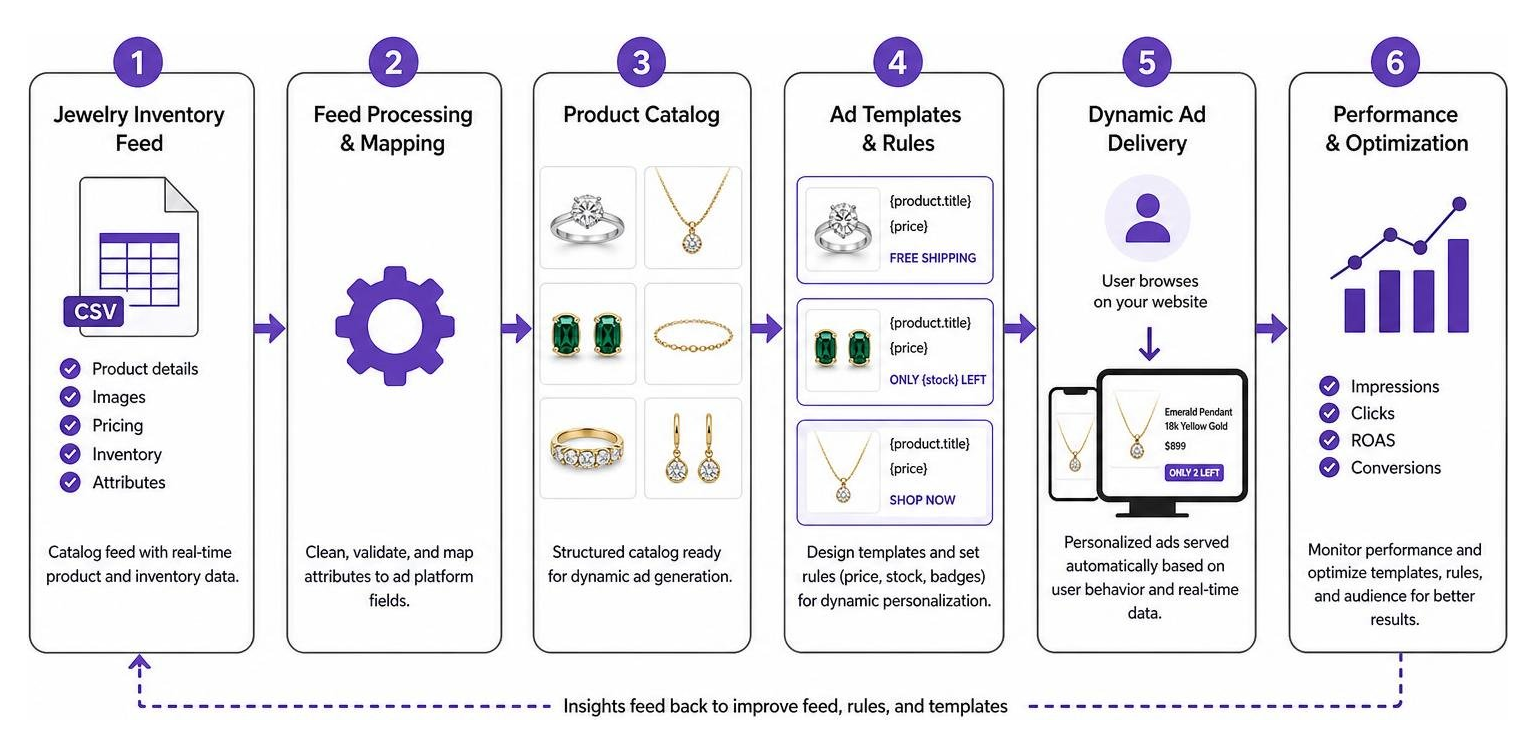
Dynamic Product Ads (DPAs) are automated, personalized ads that update in real time based on a user’s browsing behavior. Instead of manually building hundreds of individual ads, you upload your product catalog feed to Meta or Google, design a few beautiful creative templates, and let the ad platform do the heavy lifting.
- Cross-Selling and Retargeting: If a customer browses a diamond engagement ring on your website but doesn't buy, a DPA can automatically serve them a retargeting ad featuring that exact ring. If they did buy the ring, the DPA can dynamically cross-sell matching wedding bands or diamond earrings to increase their average order value (AOV).
- Real-Time Inventory Integration: You can link your product feed to pull real-time inventory data directly into your ad overlay. For example, if a popular emerald pendant only has two units left in stock, your ad template can automatically display a banner reading: "Only 2 left in stock — order today!" This drives genuine, non-gimmicky urgency.
The Role of AI and CGI in Modern Jewelry Ads
Artificial Intelligence (AI) and Computer-Generated Imagery (CGI) are no longer futuristic concepts — they are actively reshaping how modern jewelry is marketed.
- CGI Campaigns: High-end brands are increasingly using CGI to showcase jewelry in stylized, hyper-realistic, or fantastical digital environments. This allows you to highlight intricate gemstone facets and metal reflections with absolute perfection, without the massive costs of physical set production.
- Rapid Prototyping: AI tools allow creative teams to rapidly prototype and test hundreds of background variations, text overlays, and model placements in minutes. You can take a single, clean product photo on a white background and use AI to generate twenty different lifestyle backdrops — from a sunny European cafe to a candlelit dinner — to see which setting resonates most with your audience.
Measuring Success: Key Metrics and A/B Testing Frameworks
You cannot manage what you do not measure. To run profitable jewelry ads, you must track the right metrics and continuously run structured A/B tests. Let's look at the three primary performance indicators:
| Metric | What It Measures | How to Optimize It |
|---|---|---|
| Click-Through Rate (CTR) | Audience attention and creative appeal. | Test bolder hooks, clearer product close-ups, and more compelling text overlays. |
| Conversion Rate (CVR) | Post-click alignment and landing page trust. | Ensure your landing page matches the ad's offer, improve page load speeds, and add clear trust badges. |
| Return on Ad Spend (ROAS) | Campaign profitability and budget efficiency. | Match ad creative to funnel intent, implement dynamic product ads, and focus on high-margin hero products. |
To make sure you are calculating these metrics accurately and driving real business growth, read our comprehensive guide on How to Measure ROI on Your PPC Campaigns.
Your A/B Testing Framework
Never guess what your audience likes; test it. When running A/B tests, only change one variable at a time so you know exactly what caused the shift in performance. Here are three high-impact tests to run:
- The Hook Test: Compare a romantic, emotional headline (e.g., "Make Her Heart Skip a Beat") against a direct, benefit-focused headline (e.g., "Crafted in Solid 18k Gold — Lifetime Warranty Included").
- The CTA Test: Run identical ad creatives but compare a standard, high-intent CTA like "Shop Now" against a softer, discovery-focused CTA like "Discover Elegance".
- The Visual Test: Test a pristine, studio-shot product photo against a real-life, user-generated unboxing video to see which drives a higher conversion rate.
Common Pitfalls in Jewelry Advertising and How to Avoid Them
Even the most beautiful jewelry ads can fail if the underlying strategy is flawed. Here are the most common mistakes we see jewelers make, and how to fix them:
1. Falling Victim to Ad Fatigue
If you keep serving the exact same image to your target audience, they will eventually tune it out.
- The Fix: Implement a systematic creative rotation. Refresh your ad creatives every 2 to 4 weeks, and use dynamic product ads to automatically serve personalized variations to different segments of your audience.
2. Ignoring the Post-Click Experience
We see this all the time: a jeweler spends thousands of dollars designing a gorgeous social media ad, only to link it directly to their website's homepage. The user clicks the ad expecting to see a specific sapphire necklace, gets lost on the homepage, and leaves.
- The Fix: Always send ad traffic to highly optimized, dedicated landing pages that match the ad's messaging. If your ad features a specific collection, link directly to that collection page. Ensure the page loads quickly, displays high-quality photos, and has an easy, seamless checkout process.
3. Neglecting Omnichannel Tracking and Edge POS Integration
For many jewelry retailers, the customer journey starts online but ends in a physical showroom. If you only track online sales, your digital ads might look like they are underperforming, when in reality they are driving massive foot traffic to your physical store.
- The Fix: Integrate your digital advertising campaigns with your in-store Point of Sale (POS) system, such as Edge POS. By bridging the gap between online click data and offline showroom purchases, you gain a complete, accurate view of your true return on investment. For more platform-specific tips, check out A Jeweler's Guide to Running Successful Facebook Ad Campaigns.
Frequently Asked Questions about Jewelry Marketing
What are the most effective types of fine jewelry campaigns?
The most effective campaigns combine multiple ad styles to guide a shopper through the entire buying journey:
- Product-Focused Ads (using clean, high-contrast imagery) are excellent for high-intent search channels like Google Shopping.
- Lifestyle Visuals (portraying real human emotions and milestones) perform best on top-of-funnel discovery platforms like Instagram and Pinterest.
- Social Proof & UGC (featuring real customer reviews and unboxing clips) are critical on Facebook and TikTok to build trust and overcome cart abandonment.
- Cross-Selling & Urgency Ads (using carousel formats and low-stock warnings) work incredibly well in retargeting campaigns to boost average order value and close pending sales.
How do you use urgency drivers without cheapening a luxury brand?
In the luxury jewelry space, running loud, flashing "SALE!" banners can damage your brand's perceived value. Instead, use elegant, trust-building urgency drivers:
- Real-Time Stock Warnings: Display simple, factual copy like "Only 3 of this limited-edition piece remain" or "Handcrafted in small batches — back in stock soon."
- Value-Add Offers: Instead of slashing your prices, offer premium, limited-time incentives like "Complimentary custom engraving on all orders placed this weekend" or "Free overnight shipping for holiday delivery."
- Rate Protection & Festive Programs: Take a cue from the Tanishq Akshaya Tritiya campaign, which framed gold buying not as a cheap discount, but as a long-term investment in prosperity. They paired this emotional narrative with practical, high-value offers like gold rate protection and transparent exchange programs, lowering the barrier to purchase during fluctuating market conditions without ever cheapening the brand's luxury status.
What is the average cost per click (CPC) for social media campaigns?
While the average cost per click (CPC) for the retail industry on Facebook hovers around $0.70, your actual costs will vary depending on your product's price point and target audience.
To help you plan your ad spend effectively, we recommend structuring your daily budget based on your product price tiers, which we discuss in detail in How Much Should Jewelers Spend on PPC Ads:
- Affordable Everyday Pieces ($50 - $100): Recommended daily budget of $10 - $30.
- Mid-Range Occasion Pieces ($100 - $500): Recommended daily budget of $30 - $70.
- Luxury & Bridal Items (Over $500): Recommended daily budget of $100 - $300+.
Elevate Your Jewelry Ads with GemFind
At GemFind Digital Solutions, we have spent more than 25 years helping independent jewelers, manufacturers, and global brands navigate the digital landscape. As certified Shopify and Google Partners, we specialize in building custom web designs, integrating offline Edge POS data with online ad campaigns, and managing high-converting PPC and social media strategies tailored exclusively for the jewelry industry.
Ready to stop guessing and start scaling your digital marketing?
Explore GemFind's Digital Marketing Services today and let's build a campaign that makes your brand shine.


