


Design a Custom Gemstone Ring Online With Confidence

A ring builder with gemstones helps shoppers design a custom ring online by making a few clear choices: select a center stone, choose its shape and size, pair it with a setting and metal, then add personal details such as ring size or engraving. A strong builder should show accurate visuals, update options as customers design, and make the final purchase feel less risky.
For jewelry retailers, this creates a better path from inspiration to checkout. Shoppers can explore colorful sapphires, rubies, emeralds, and lab-grown options alongside classic diamonds, compare setting styles, and build a ring that fits their budget and style.
In this guide, you will learn the five essential steps to create a custom gemstone ring experience online - from choosing the stone to reviewing the finished design before production.
I am Anthony Arechiga, Vice President of Sales at GemFind Digital Solutions. Since joining GemFind in 2007, I have helped jewelry businesses grow through web design, digital marketing, e-commerce, and tools such as a ring builder with gemstones that make custom jewelry easier to sell online.
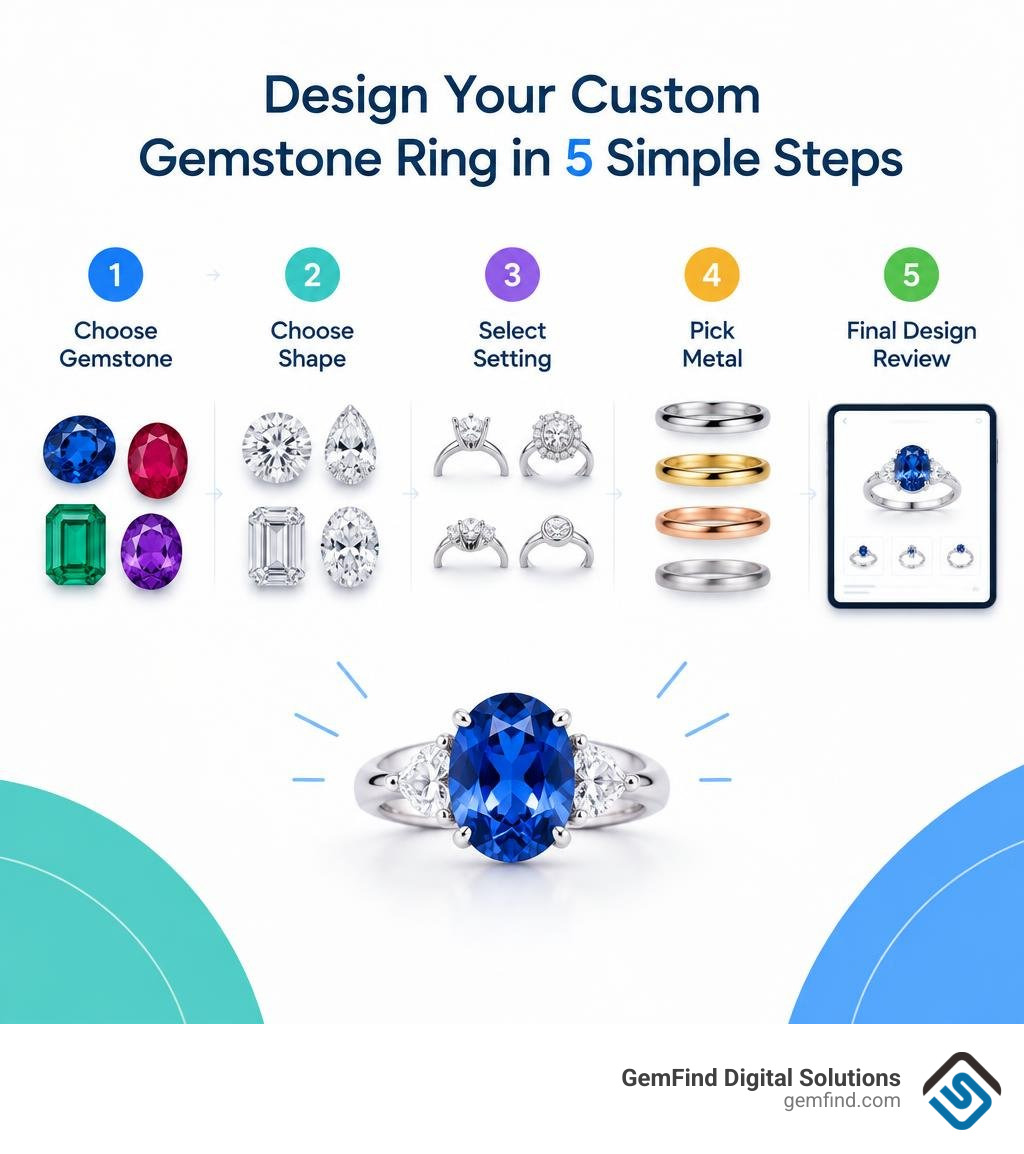
Benefits of Using an Online Gemstone Ring Configurator
Designing fine jewelry used to require multiple visits to brick-and-mortar showrooms, sketching on paper pads, and hoping the final physical piece matched your imagination. Modern online configurators have revolutionized this journey, putting complete creative control directly in your hands. When you use an interactive platform to design your own gemstone engagement rings, you bypass traditional retail guesswork and access an expansive digital vault of loose stones and mountings.
Unmatched Creative Flexibility and Personal Expression
Every love story has its own personality, and fine jewelry should reflect that distinct character. While traditional showcases carry mass-produced settings holding standard white diamonds, an online configurator lets you experiment with rich sapphire blues, forest emerald greens, vivid ruby reds, or pastel morganites. You can combine unexpected design elements—such as pairing an antique-inspired filigree band with a modern geometric hexagon stone—without paying custom design consultation retainers.
Photorealistic 360-Degree Visualization
One of the largest hurdles in buying fine jewelry online has always been the inability to visualize the finished piece. Advanced ring configuration tools solve this by rendering real-time, interactive 3D digital models. As you switch between an 18k yellow gold band and a platinum cathedral mount, the rendered lighting, facet reflections, and proportions update dynamically. This allows you to inspect prongs, side galleries, and gem tables from every angle before committing to production.
Complete Pricing Transparency
Traditional bespoke jewelry quoting can feel unpredictable. Custom software eliminates hidden markups by calculating costs instantly based on your exact selections.
As you toggle between stone weights, clarity grades, metal purities, or accent designs, the total price updates live on your screen. This clear breakdown helps you allocate your budget where it matters most—whether that means prioritizing a larger center gemstone or upgrading to a heavy platinum mounting.
Ethical Sourcing and Sustainability
Modern consumers prioritize mindful luxury. Leading configurators integrate transparent supply chains, allowing you to filter stones by origin, conflict-free traceability, and eco-conscious certifications. Whether you choose a mine-free lab-grown gemstone or an ethically mined natural sapphire, you can pair it with 100% recycled precious metals (such as recycled yellow, white, or rose gold) to craft a sustainable heirloom.
How to Use a Ring Builder with Gemstones in 5 Steps
Creating a bespoke ring online is an intuitive, creative process when broken down into logical phases. By following our structured workflow—supported by industry-leading custom jewelry design software solutions—you can move seamlessly from a raw concept to an artisan-crafted ring. For additional background on how gemstones are classified and valued, the Gemstone entry provides a useful reference.
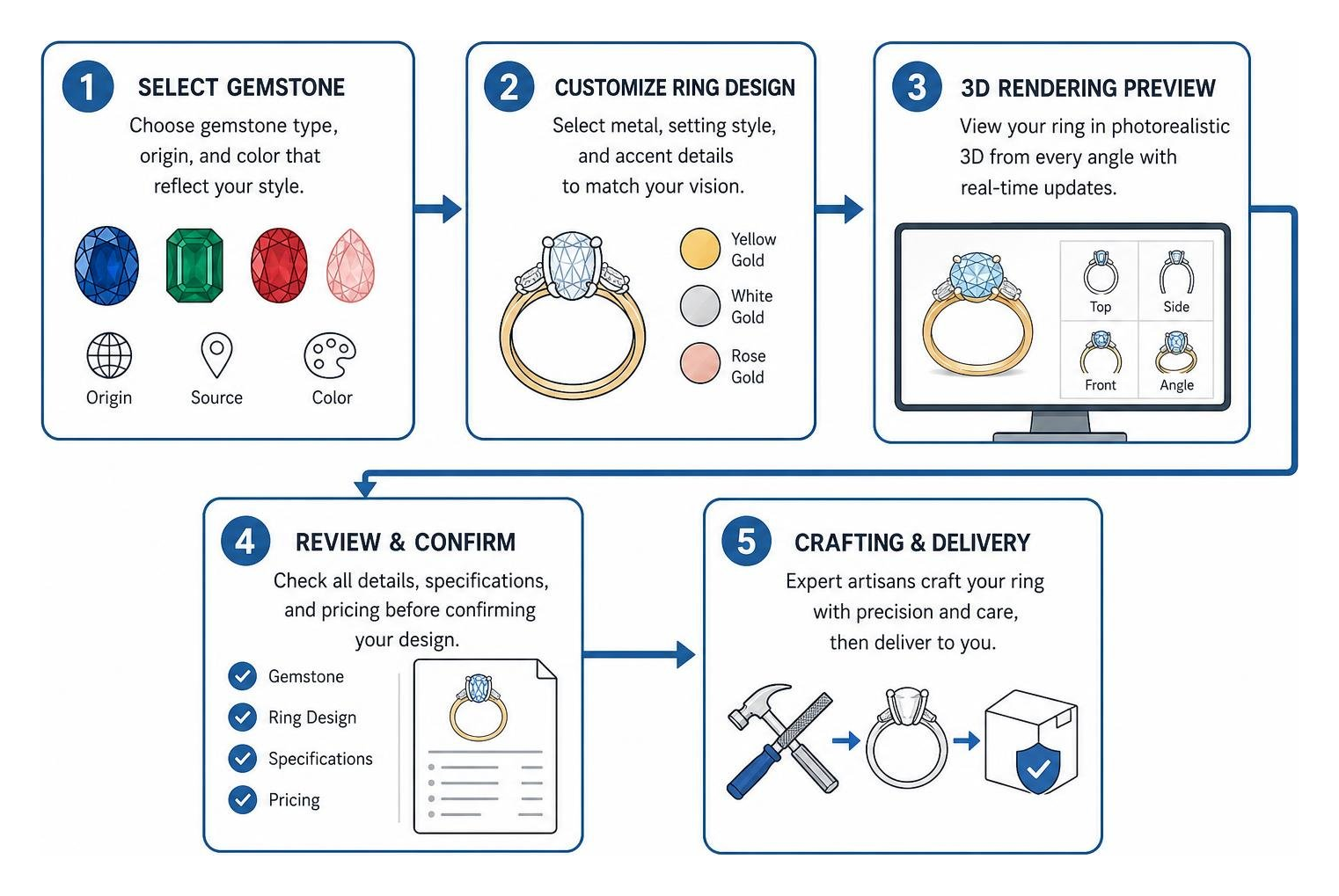
Step 1: Select Your Gemstone Type, Origin, and Color
The center gemstone forms the aesthetic anchor of your ring. The first step is selecting the mineral species, origin, and color saturation that fits both your lifestyle and personal taste.
Understanding Gemstone Durability: The Mohs Scale
Because an engagement or signature ring experiences daily contact, durability is paramount. Gemstone hardness is measured on the Mohs Scale from 1 to 10. A stone's hardness rating dictates how well it resists scratching and abrasion over years of wear:
- Diamond (Hardness: 10): The most durable mineral on Earth, making it ideal for daily, lifelong wear.
- Moissanite (Hardness: 9.25): Exceptional hardness and high refractive brilliance, serving as a durable alternative.
- Sapphire & Ruby / Corundum (Hardness: 9.0): Extremely resilient against chipping and scratching, making them the premier colored gemstone choices for daily wear.
- Chrysoberyl & Alexandrite (Hardness: 8.5): Highly durable stones featuring color-shifting optical properties.
- Emerald & Aquamarine / Beryl (Hardness: 7.5 – 8.0): Beryls require protective settings (like bezels or halos) because internal inclusions can make them more vulnerable to impact.
- Morganite & Topaz (Hardness: 7.5 – 8.0): Beautiful pastel tones that require routine cleaning to maintain their brilliance.
Natural vs. Lab-Grown Colored Gemstones
Modern ring configurators offer both natural earth-mined gems and lab-created stones. Both options possess identical chemical, physical, and optical properties—the difference lies purely in their origin and pricing structure.
| Gemstone Property | Natural Earth-Mined Gemstones | Lab-Grown / Created Gemstones |
|---|---|---|
| Chemical Composition | Identical crystalline mineral structures formed by geological heat/pressure | Identical crystalline mineral structures grown via controlled lab processes |
| Optical Performance | Natural fire, dispersion, and unique internal clarity characteristics | Exact optical refractive index, color saturation, and brilliance |
| Mohs Hardness | 7.5 to 10 (depending on mineral species) | 7.5 to 10 (identical to natural counterparts) |
| Sustainability & Traceability | Requires ethical mine verification; finite natural availability | 100% mine-free; smaller terrestrial footprint |
| Price Point Comparison | Higher cost driven by rarity, especially in large carats | 40% to 75% less expensive for equivalent sizes and clarities |
| Color Consistency | Wide range of natural zoning, undertones, and inclusions | Highly controlled, saturated hues (e.g., royal blue, pigeon blood red) |
Step 2: Choosing Center Stones in a Ring Builder with Gemstones
Once you establish your preferred gemstone species, you can select the individual loose stone using our intuitive ring creator tool.
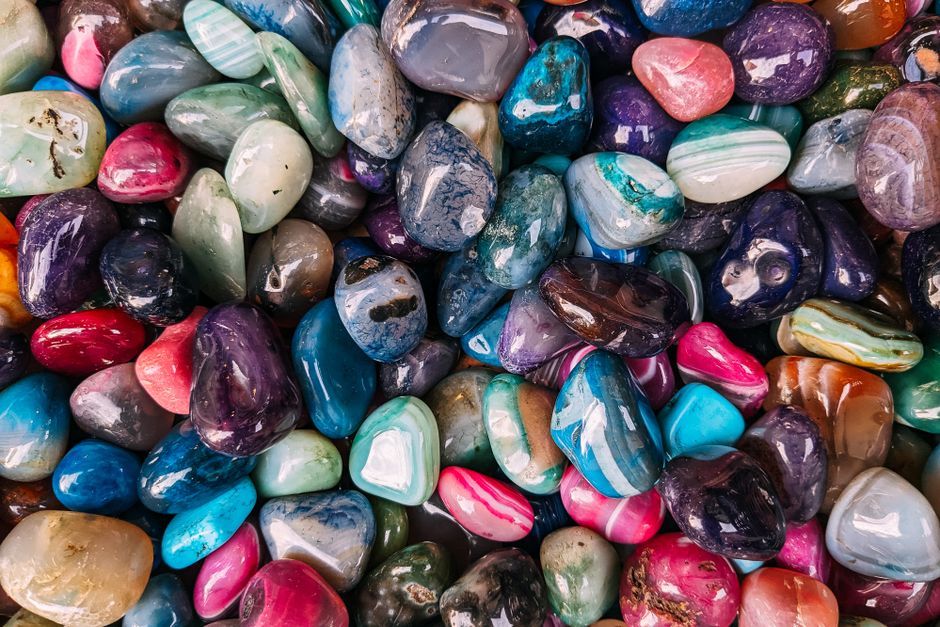
Evaluating Cut, Symmetry, and Color Saturation
Unlike white diamonds—which are graded strictly on standardized D-to-Z color scales—colored gems are evaluated on hue, tone, and saturation:
- Hue: The primary visible color (e.g., blue) along with any secondary modifying colors (e.g., greenish-blue or violet-blue).
- Tone: The relative lightness or darkness of the color, ranging from very light to deep and velvety.
- Saturation: The purity, vibrancy, and intensity of the color. High saturation without overly dark extinction represents top tier quality.
Fancy Shapes and Faceting Styles
Selecting your stone shape establishes the silhouette of your piece:
- Oval & Cushion Cuts: Classic shapes that maximize carat surface area while softening hard angles.
- Emerald & Radiant Cuts: Step cuts (like emerald cuts) highlight deep color depth and clarity, while radiant cuts produce brilliant sparkle.
- Pear & Marquise Cuts: Elongated silhouettes that visually slenderize the wearer's fingers.
- Geometric & Hexagonal Cuts: Distinctive shapes that provide an edgy, modern aesthetic for alternative bridal jewelry.
Step 3: Selecting Settings and Metals in a Ring Builder with Gemstones
The mounting secures your center stone while framing its color. When configuring your mount via a custom diamond and gemstone ring builder, you must balance structural protection with metal color harmony.
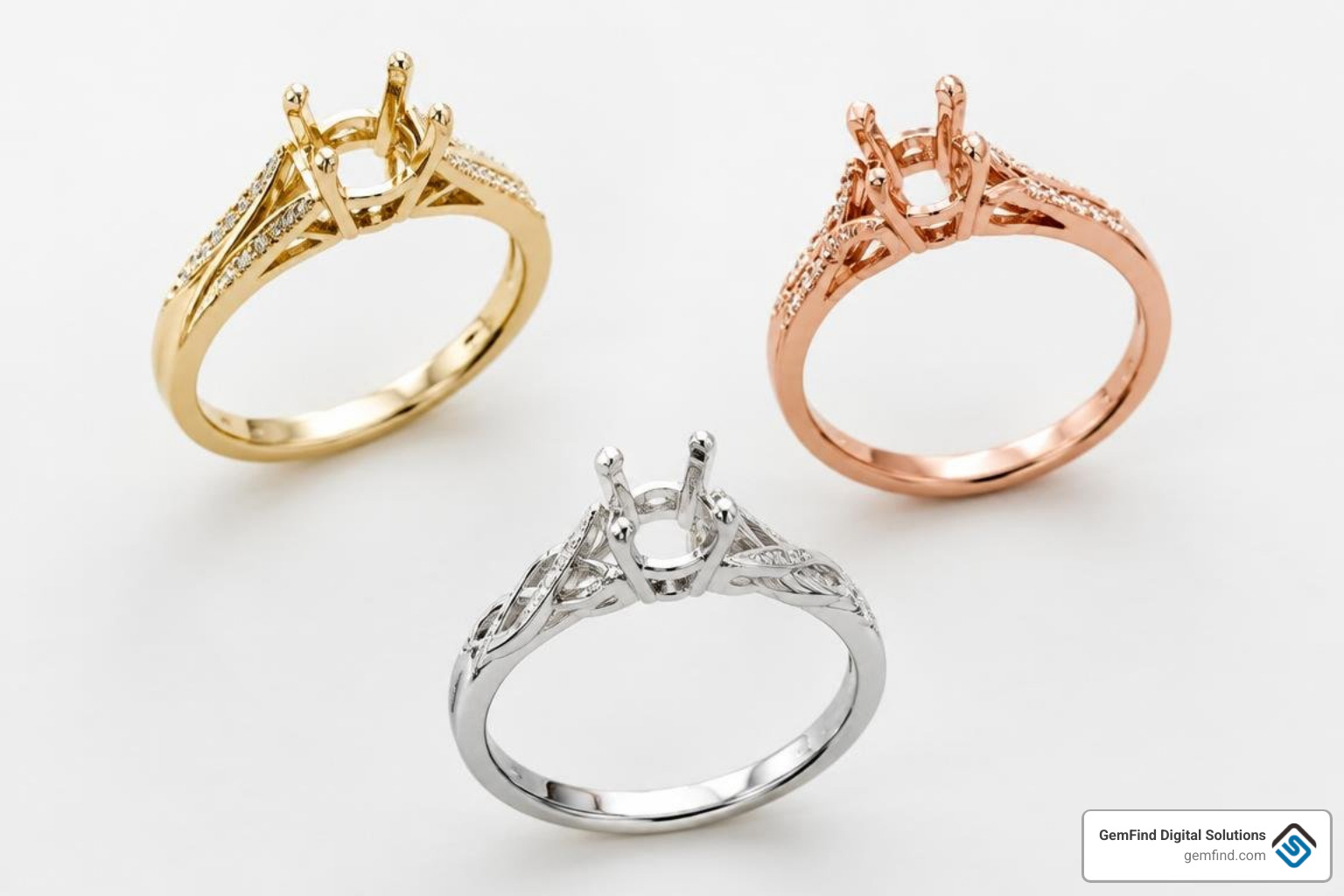
Choosing Your Precious Metal
- Platinum: Naturally hypoallergenic, dense, and exceptionally durable. Its cool silvery sheen highlights vivid blue sapphires and rich green emeralds without casting warm reflections into the gem.
- 14k & 18k Yellow Gold: Classic, warm, and radiant. Yellow gold provides high-contrast framing for deep blue sapphires and matches warm tones like rubies or citrines.
- 14k & 18k White Gold: Rhodium-plated for a bright, mirror-like finish that accentuates vibrant colored center stones.
- 14k Rose Gold: Alloyed with copper for a soft blush finish that pairs well with morganites, peachy-pink sapphires, and teal stones.
Setting Architectures for Optimal Gem Protection
Softer gems (such as emeralds or opals) benefit from protective mountings like full bezels or halo borders, which shield delicate facet junctions from inadvertent impact.
Step 4: Add Custom Accents, Sizing, and Engravings
With the primary center stone and setting geometry locked in, you can personalize the finer details that make the piece truly one of a kind.
- Band Profiles & Accent Stones: Choose from clean high-polish bands, vintage-inspired milgrain edging, diamond-encrusted pavé shanks, or organic split-shank arches.
- Matching Bridal Integration: If you are building an engagement ring, you can preview how it will sit flush when you design your custom wedding band.
- Custom Laser Engravings: Add an anniversary date, personal coordinates, or meaningful phrases inside the inner shank (typically up to 20 alphanumeric characters).
- Finger Sizing Precision: Ring builders accommodate standard US ring sizes from size 3 through 14, including quarter- and half-size increments.
Step 5: Review 3D Previews, Budget, and Production Details
The final stage of the builder process allows you to inspect your finished design through interactive 360-degree rendering before moving into manufacturing.
Once you submit your design, our master CAD jewelers review the digital model for structural integrity. After final CAD approval, the file transitions directly to high-resolution 3D wax printing, precious metal casting, hand stone-setting, and final micro-polishing.
Pricing, Production Timelines, and Warranty Policies
Custom fine jewelry pricing depends on your specific component selections:
- Entry-Level Custom Bands ($300 – $1,200): Dainty gemstone accents, sterling silver or 14k gold solitaires featuring created gemstones.
- Mid-Tier Fine Gemstone Rings ($1,200 – $4,500): Solid 14k/18k gold settings paired with fine natural sapphires, lab-grown diamonds, or halo diamond accents.
- High-End & Bespoke Fine Heirlooms ($4,500 – $15,000+): Heavy platinum settings, rare unheated natural sapphires, pigeon-blood rubies, or large multi-carat center stones.
Fabrication Timelines and Shipping Protection
Custom, made-to-order gemstone rings typically require 5 to 14 business days for CAD rendering, casting, setting, and hand-finishing. Because bespoke jewelry represents a significant emotional and financial investment, leading digital jewelers provide fully insured priority shipping, complimentary 30-day resizing, and comprehensive warranties that protect against manufacturing defects.
Frequently Asked Questions About Custom Gemstone Rings
Can I use my own heirloom gemstone in an online ring builder?
Yes. While online configurators feature extensive digital inventories of loose stones, many custom jewelers allow you to supply an heirloom family gemstone. In this scenario, you use the configurator to design the setting, select your metal, and specify the exact millimeter dimensions of your loose gem.
You then coordinate with the design team to safely ship your stone for cleaning, inspection, and professional bench setting.
How long does custom gemstone ring production take?
From the moment you finalize your digital design and approve the CAD model, fabrication typically takes 2 to 4 weeks. Complex designs requiring custom-cut accent stones, hand engraving, or specialized casting methods may require up to 4 to 5 weeks.
If you have a strict proposal deadline, you should communicate your timeline early to explore expedited production options.
How do I accurately determine my ring size online?
To determine your ring size accurately at home:
- Use a Plastic Ring Sizer: An inexpensive multisizer gauge loops around the finger like a belt, giving you the most accurate reading across knuckle and base.
- Measure an Existing Ring: Measure the exact inside diameter (in millimeters) of a ring that fits the intended finger well, then cross-reference an international ring size chart.
- Account for Band Width: Wider bands (4mm or wider) fit more snugly than thin micro-bands (1.5mm to 2mm). We recommend sizing up by a half-size for wide designs.
- Consider Temperature: Fingers naturally swell in warm conditions or late in the day. Measure your finger at room temperature during midday for the most consistent fit.
Conclusion
Designing a bespoke gemstone ring should be an exciting, transparent, and rewarding journey. By leveraging modern 3D configurators, you can explore colorful loose stones, select protective fine metal settings, and customize every accent with complete pricing clarity.
At GemFind Digital Solutions, we have spent over 25 years developing cutting-edge web design and specialized e-commerce tools for the fine jewelry industry. If you are a jewelry retailer looking to provide this seamless digital experience to your customers, explore our proprietary RingBuilder platform today and elevate your custom jewelry sales.


