


How Augmented Reality Jewelry is Changing the Way People Shop

Augmented reality jewelry is transforming how consumers discover, try on, and buy jewelry online — and if you're a jewelry retailer, this technology directly affects your bottom line. As we explore 2026 retail trends, it's clear that immersive shopping and phygital storytelling are at the heart of this revolution.
Here's a quick overview of what AR jewelry is and why it matters:
| What | How It Works | Why It Matters |
|---|---|---|
| Virtual try-on | Overlays 3D jewelry onto your image via camera | Shop from anywhere, no store visit needed |
| Smart mirrors | In-store screens show jewelry on your reflection | Enhances the physical retail experience |
| NFC-enabled pieces | Physical jewelry unlocks digital content | Creates interactive "phygital" experiences |
| App-free web AR | Works directly in your browser | No downloads, instant access for shoppers |
| AI personalization | Recommends pieces based on face shape and skin tone | More relevant suggestions, higher conversions |
Jewelry has always been a deeply personal purchase. Customers want to feel connected to a piece before they buy it. The problem with online shopping has always been that you can't try it on.
AR solves that problem.
Brands like Swarovski, Tiffany & Co., and Pandora are already using AR try-on to drive engagement and sales. And platforms built specifically for jewelry retailers are making this technology accessible — even for independent stores.
This isn't a far-off trend. In April 2026, AR jewelry tools are plug-and-play, web-based, and proven to lift conversion rates.
I'm Anthony Arechiga, VP of Sales at GemFind Digital Solutions, where I've spent nearly two decades helping jewelry retailers navigate technology shifts — including the rapid rise of augmented reality jewelry in e-commerce. In this guide, I'll walk you through the best AR jewelry solutions available today so you can find the right fit for your store.
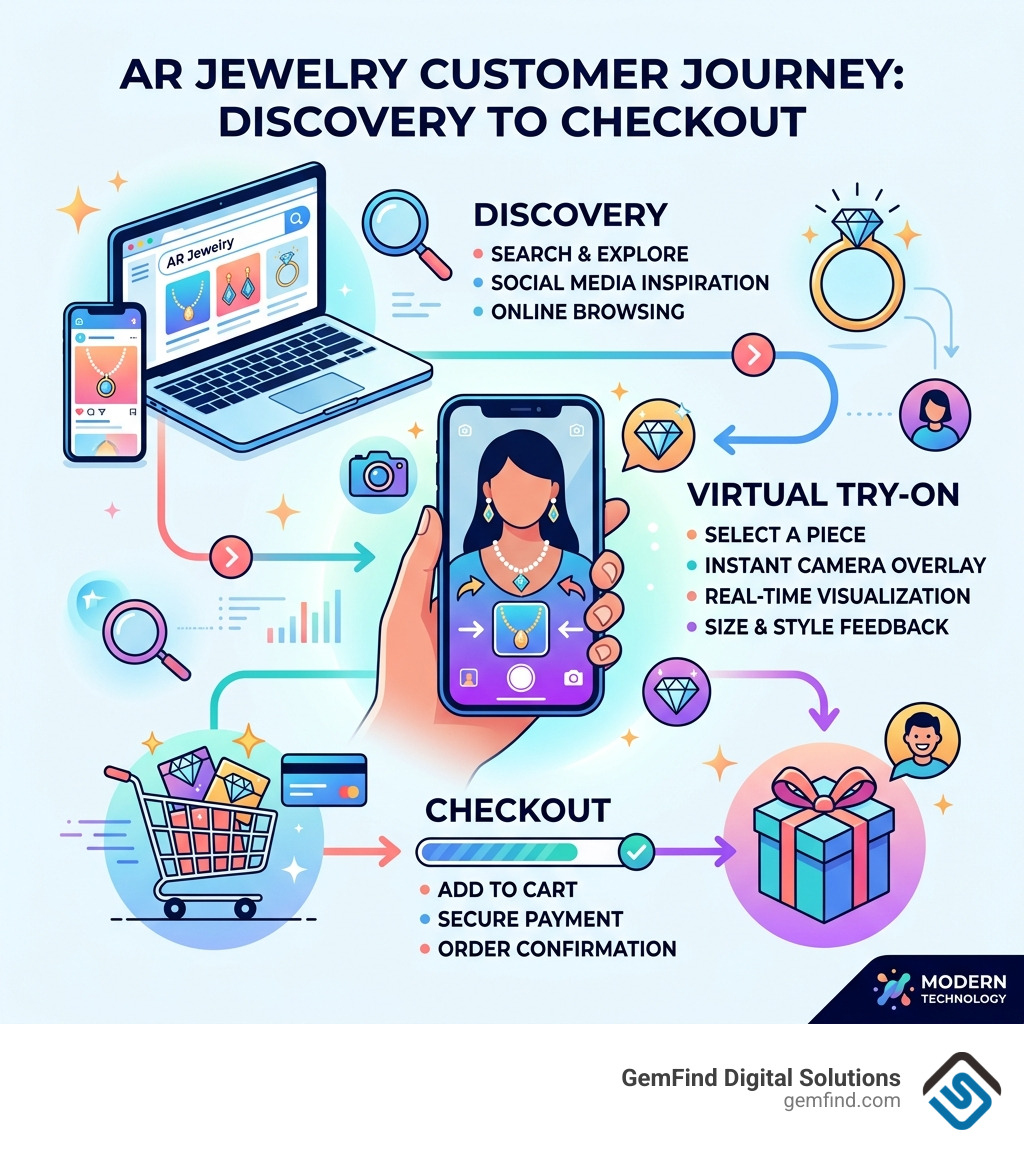
Augmented reality jewelry terms explained:
The Evolution of Augmented Reality Jewelry in 2026
As we navigate through April 2026, the jewelry industry has moved far beyond the "futuristic gimmick" phase of digital tools. We have entered the era of phygital storytelling, where the line between a physical gemstone and its digital representation is almost invisible. In the past, online jewelry shopping was a game of "wait and see"—you’d order a ring, wait for the mail, and hope it didn't look like a toy on your finger.
Today, augmented reality jewelry merges 3D digital models with real-world environments with such precision that the "sparkle" you see on your smartphone screen is mathematically calculated to match the lighting in your actual room. This innovation isn't just about fun filters; it's about creating a fabulous future for jewelry retail where the customer's home becomes the dressing room. This is supported by scientific research on AR jewelry innovation, which demonstrates how virtual try-ons increase consumer confidence.
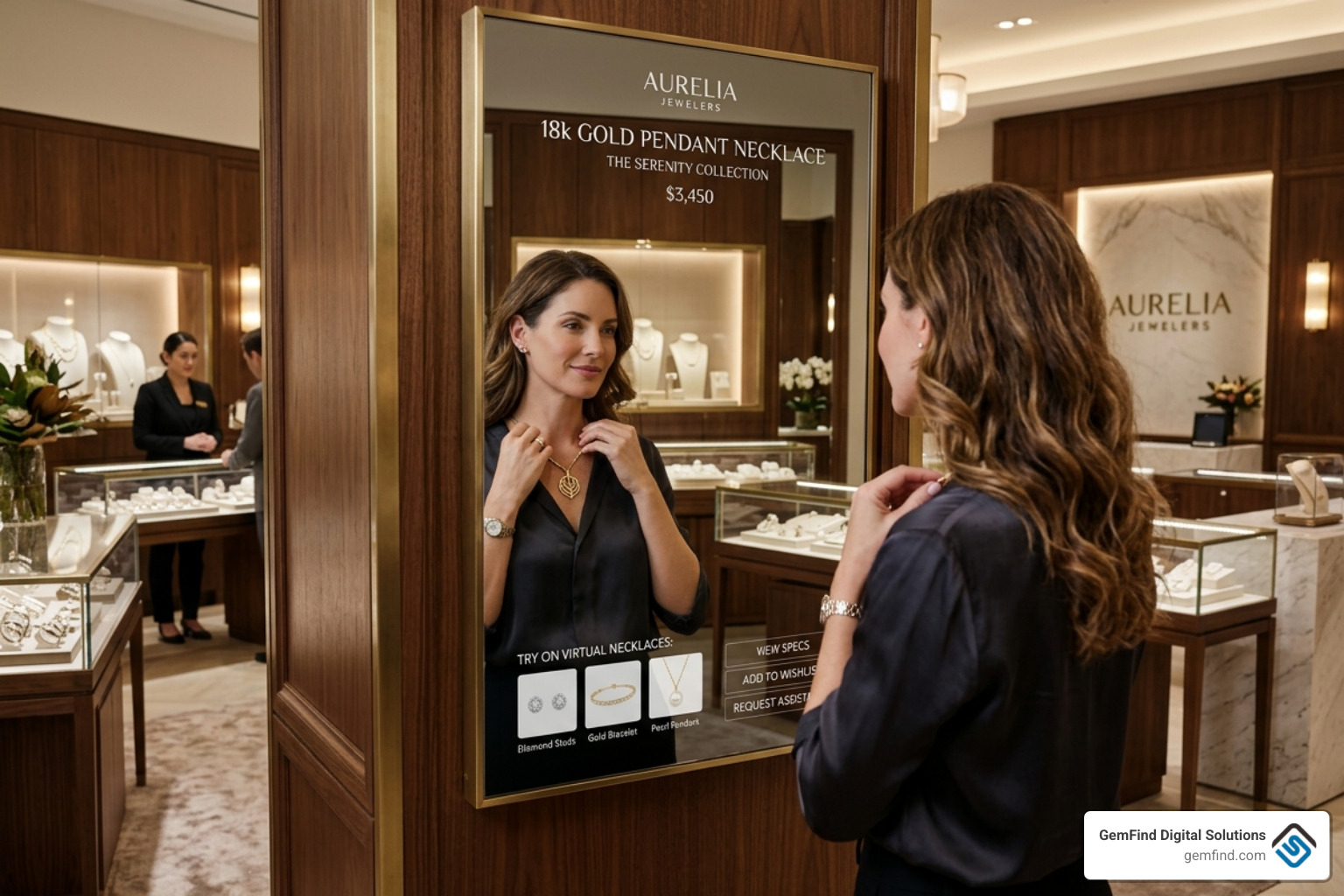
Retailers are now using computer vision to bridge the gap between high-touch luxury and high-tech convenience. Whether it’s through a smartphone or an in-store smart mirror, the goal is the same: to make the digital experience feel as real as the physical one. For a deeper dive into how this looks in practice, check out our virtual try-on jewelry complete guide.
How Augmented Reality Jewelry Works
To the shopper, it looks like magic. To us, it’s a sophisticated blend of 3D modeling and real-time mapping. The technology identifies key anatomical landmarks—the lobe of an ear, the base of a finger, or the curve of a neckline—and "pins" a digital asset to that spot.
The technical components that make this possible include:
- Computer Vision: Algorithms that recognize body parts and track movement in real-time.
- 3D Modeling: High-fidelity renders that include 360-degree views and realistic light reflections.
- Markerless AR: Technology that doesn't require a physical "target" or "marker" to place the jewelry; it simply recognizes your skin and body.
- Sensors and Cameras: Utilizing the advanced depth-sensing capabilities of modern 2026 smartphones to ensure the jewelry sits on the skin, not floating above it.
- AI and Machine Learning: Powering the real-time adjustments needed for different lighting conditions.
This is often delivered via web-based integration, meaning your customers don't have to go through the friction of downloading an app. They simply click a button on your product page, and the camera activates. For more on the technical side, you can read about the Slugjewelry virtual tryon software complete guide.
Why Consumers Love Augmented Reality Jewelry
Why has the adoption rate for augmented reality jewelry skyrocketed? It boils down to purchase confidence. Jewelry is an emotional investment, often tied to major life events like weddings or anniversaries. AR provides:
- Fit Visualization: Seeing the exact scale and proportion of a 2-carat diamond versus a 1-carat diamond on one's own hand.
- Reduced Returns: By seeing the "real-life" look before buying, customers are much less likely to be disappointed upon delivery.
- Social Sharing: Many AR experiences allow users to snap a photo of the virtual try-on and send it to a partner or friend for a "second opinion," mimicking the social aspect of shopping in a mall.
Innovative brands have even pioneered AR-enabled fashion jewelry collections that allow customers to see product details, size, and composition in their own environment as if the designs already existed in their world.
Business Benefits: Why Retailers are Investing in AR
If you’re running a jewelry business, you’re likely looking at the numbers. The data from 2026 is clear: AR isn't just a "nice to have"—it’s a revenue driver. Brands integrating AR on their product pages have reported double-digit increases in conversion rates, particularly for high-ticket and customizable items.
| Metric | Traditional E-commerce | AR-Enabled E-commerce |
|---|---|---|
| Conversion Rate (CVR) | Standard | Double-digit uplift reported |
| Return Rate | Higher (due to sizing/style issues) | Significantly lower |
| Average Order Value (AOV) | Limited by static images | Higher (due to confidence) |
| Average Revenue Per User (ARPU) | Baseline | Increased via engagement |
| Engagement Time | 1-2 minutes per page | 4-6 minutes (interactive play) |
When a customer can interact with a piece, their "time on site" increases, which builds a stronger emotional connection to your brand. This is especially true for custom jewelry try-on experiences, where the user can change stone shapes or metal colors in real-time.
Boosting Conversions with Augmented Reality Jewelry
The "AR Button" on a website acts as a powerful call-to-action. By providing analytics like CVR uplift and Average Revenue Per User (ARPU), retailers can see exactly how much money the AR experience is adding to their bottom line. It turns a passive browser into an active participant.
Furthermore, integrating these tools into your Shopify POS jewelry tryon system allows your in-store staff to show customers items that might not be currently in stock, expanding your "virtual" inventory without increasing your physical overhead.
Reducing Return Rates Through Precision Sizing
One of the biggest headaches for jewelry e-commerce is the "return for resize." Augmented reality jewelry technology now uses precision mapping to calculate fit with pinpoint accuracy. Advanced facial and body mapping ensures that a necklace sits correctly on the neckline and a ring scales perfectly to the finger width.
By simulating natural light interaction, these tools also show the authentic brilliance of a stone. When a customer sees how a diamond reflects the light in their own living room via AR, the "surprise" factor at unboxing is purely positive. This level of accuracy is a core part of modern jewelry AR POS integration.
Leading AR Jewelry Experiences and Phygital Products
The market has evolved to include "phygital" products—physical items that serve as a gateway to digital experiences. This is often achieved through NFC (Near Field Communication) chips embedded in the jewelry.
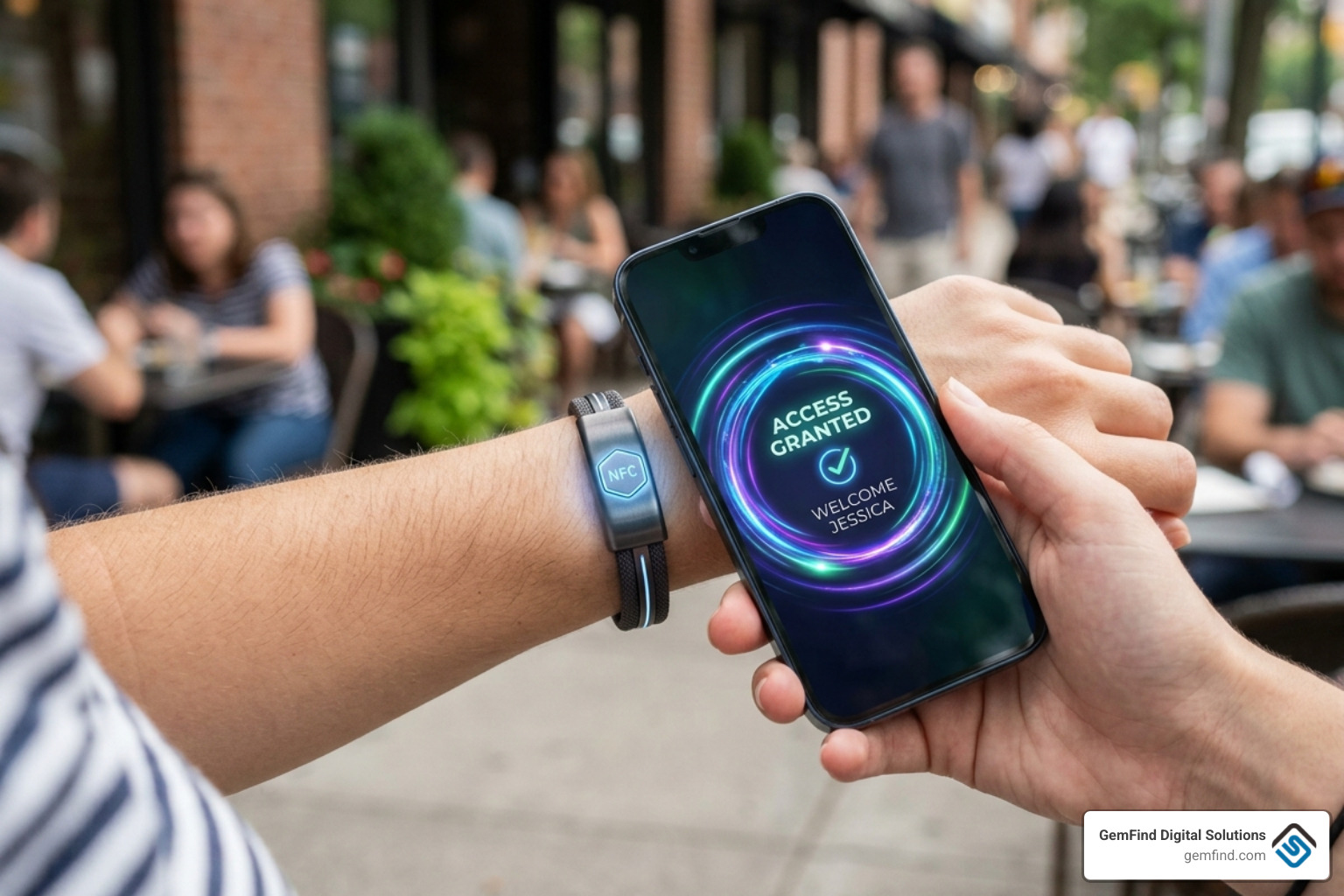
Magical Moments and App-Based Storytelling
Some of the most engaging examples of augmented reality jewelry come from brands that focus on storytelling. For instance, certain pieces are designed as "portals." When scanned with a specific app, the gem might reveal dragons, unicorns, or interactive stories.
These experiences are particularly popular for gifting. Imagine giving a Starlight Bracelet in Rose Gold that doesn't just look beautiful but also unlocks a world of digital wonder for the recipient. This moves jewelry from being a static accessory to an interactive experience.
The Rise of Phygital Jewelry Collections
"Phygital" is the buzzword of 2026 for a reason. By combining physical craftsmanship with digital assets, brands can offer:
- Authentication: Using an NFC chip to prove the jewelry is a genuine brand piece.
- Digital Twins: Owning a physical ring that also exists as an asset for your digital avatar in social spaces.
- Exclusive Content: Unlocking "behind the scenes" videos of the artisan who crafted the piece.
For retailers looking to implement this, understanding the Slugjewelry virtual tryon software complete guide is a great starting point for seeing how digital software and physical products can live in harmony.
Frequently Asked Questions about AR Jewelry
Do I need to download an app to use AR jewelry try-ons?
In 2026, the answer is usually no. While some brands offer specialized apps for deep storytelling (like GemJoy), most retail virtual try-ons are web-based. This means they work directly in your mobile browser (Safari, Chrome, etc.) using "markerless" technology. You just click "Try It On," allow camera access, and you're ready to go.
How accurate is the virtual sizing for rings and necklaces?
It is incredibly accurate. Modern AR engines calculate light, reflection, and fit with pinpoint precision. Advanced mapping ensures that if you are trying on a 16-inch necklace, it appears on your screen exactly where a 16-inch physical chain would sit on your neck. This 360-degree rendering and real-time scaling provide a true-to-life representation.
Can AR jewelry be integrated into existing Shopify stores?
Absolutely. Most modern AR solutions are "plug-and-play." You can often add a small snippet of code (a tag) to your site, and the AR functionality will appear on your product pages. With a 10-minute setup and robust API integration, this technology is compatible with Shopify, Shopify Plus, and most other major e-commerce platforms.
Conclusion
The jewelry industry has always been about more than just metal and stone; it’s about the stories we tell and the moments we celebrate. Augmented reality jewelry is simply the newest chapter in that story, offering a way to connect with customers that is more immersive, personalized, and effective than ever before.
At GemFind Digital Solutions, we have over 25 years of industry-specific expertise. As a Shopify and Google Partner, we specialize in helping jewelry retailers navigate these digital transformations. Whether you are looking for specialized web design or advanced tools like the Slugjewelry virtual try-on software, we provide the tailored solutions you need to succeed in the 2026 retail landscape.
Ready to revolutionize your shopping cart? Let's bring the future of jewelry to your customers today.


