


How to Order Custom Chain Pendants
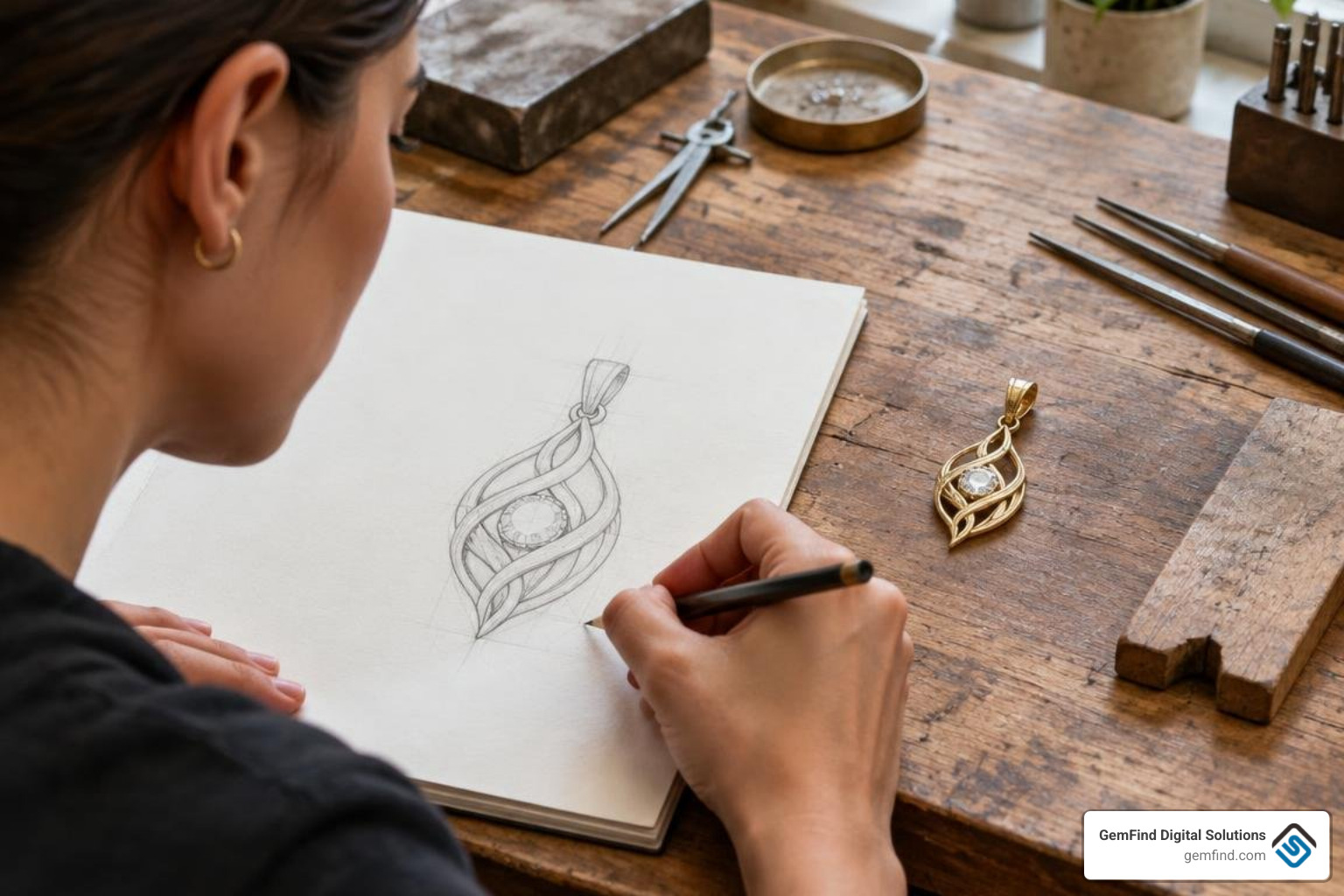
To order custom chain pendants, choose a style such as a nameplate, number, or photo pendant. Share your text or artwork with a jeweler, then choose the metal, stones, and size. Before production, check the design proof for spelling and make sure the bail will fit your chain.
A pendant can mark a person, place, or moment worth keeping close. Taking time to review the design helps turn that idea into a piece you'll want to wear.
I'm Anthony Arechiga, VP of Sales at GemFind Digital Solutions. Since 2007, I've worked with jewelry businesses on web design, digital marketing, and e-commerce, including how stores present custom chain pendants online.
Terms related to custom chain pendants:
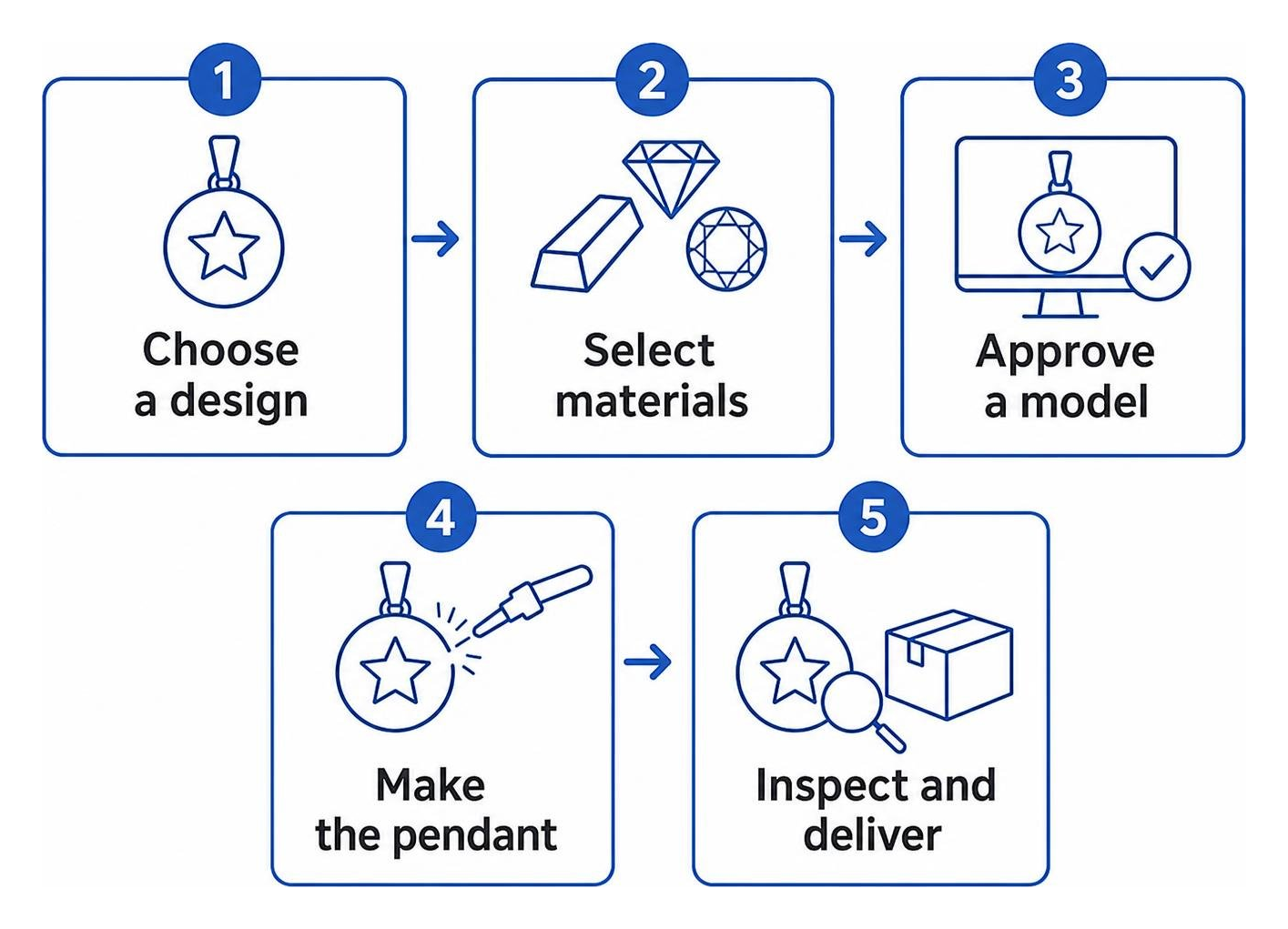
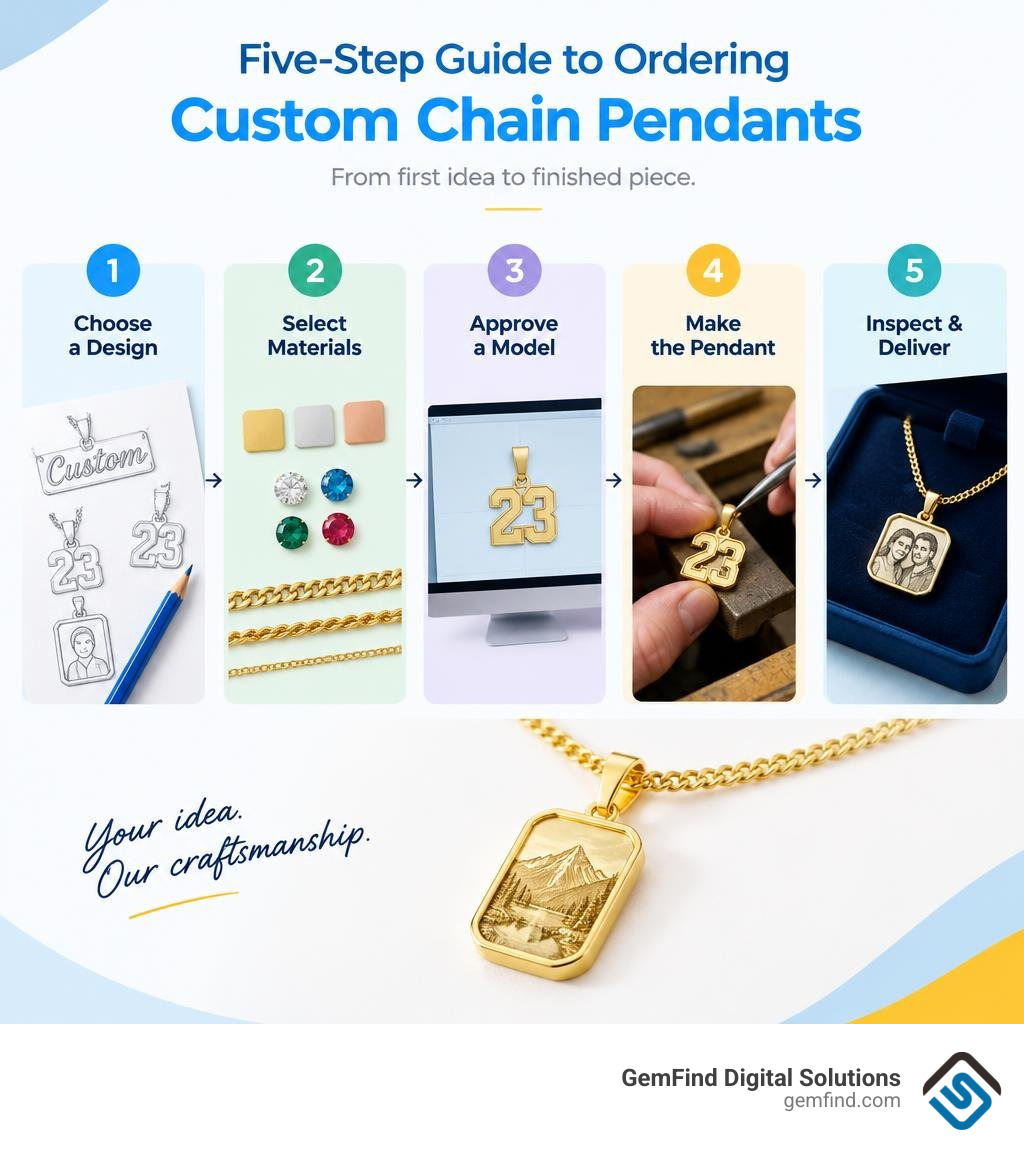
The 5-Step Guide to Ordering Custom Chain Pendants
Commissioning bespoke jewelry once required visiting specialized design studios in major diamond districts. Today, modern jewelry technology allows anyone to transform a quick concept into an heirloom piece from their desktop or smartphone. Behind every stunning piece of jewelry is a structured digital workflow.
Retailers leverage modern tools like those detailed in our custom jewelry design software guide to bridge the gap between creative imagination and physical casting. Navigating the bespoke process step-by-step ensures you get the exact proportions, weight, and sparkle you envision.
Step 1: Conceptualize Your Pendant Style and Lettering
Every custom piece starts with an idea, an aesthetic, and a clear message. When planning your design, consider what format best represents your vision:
- Script Nameplates & Cursive Typography: Classic, flowing text that adds elegance and warmth to individual names or meaningful phrases.
- Varsity Jersey Numbers & Block Letters: Bold, athletic, and architectural styles that stand out with crisp, clean lines.
- 3D Bubble Letters: Playful, rounded designs that provide volume and dynamic surface area for pavé gemstone settings.
- Picture Memory Pendants & Spinning Discs: Lockets or medallion frames designed to encase cherished photographs behind scratch-resistant glass, sometimes featuring custom engraved spinning disc elements.
- Custom Handwriting & Personal Artwork: Sentimental keepsakes that translate real ink on paper into metal engravings, such as a custom handwriting necklace.
- Brand & Team Logos: Intricate multi-layered silhouettes capturing corporate emblems, musical insignias, or family crests.
When you create personalized jewelry, gathering clear reference images, font samples, and dimension preferences beforehand helps ensure the design team captures your exact vision.
Step 2: Select Your Precious Metals and Finishes
Your choice of base metal impacts the weight, longevity, hypoallergenic comfort, and overall cost of your pendant.
- 10K Solid Gold: Containing 41.7% pure gold alloyed with durable metals, 10K gold offers superior scratch resistance and structural hardness at an accessible price point.
- 14K Solid Gold: The gold standard for fine jewelry. Containing 58.3% pure gold, it provides a warm, rich tone while maintaining excellent durability for daily wear.
- 18K Solid Gold: Comprising 75% pure gold, 18K delivers a vibrant, deep yellow hue and premium weight, ideal for luxury statement pieces.
- 925 Sterling Silver: A high-luster precious metal consisting of 92.5% silver and 7.5% copper. It is an excellent canvas for custom engraving and diamond-accented streetwear.
- Performance Stainless Steel & PVD Gold Bonding: Hypoallergenic and highly resistant to corrosion, stainless steel with Physical Vapor Deposition (PVD) coating offers the rich appearance of solid karat gold at an accessible price.
You can also opt for a two-tone bilevel design, where a white gold base plate sits beneath raised yellow gold or rose gold lettering, creating visual depth and contrast.
Step 3: Approve 3D CAD Renderings and Wax Models
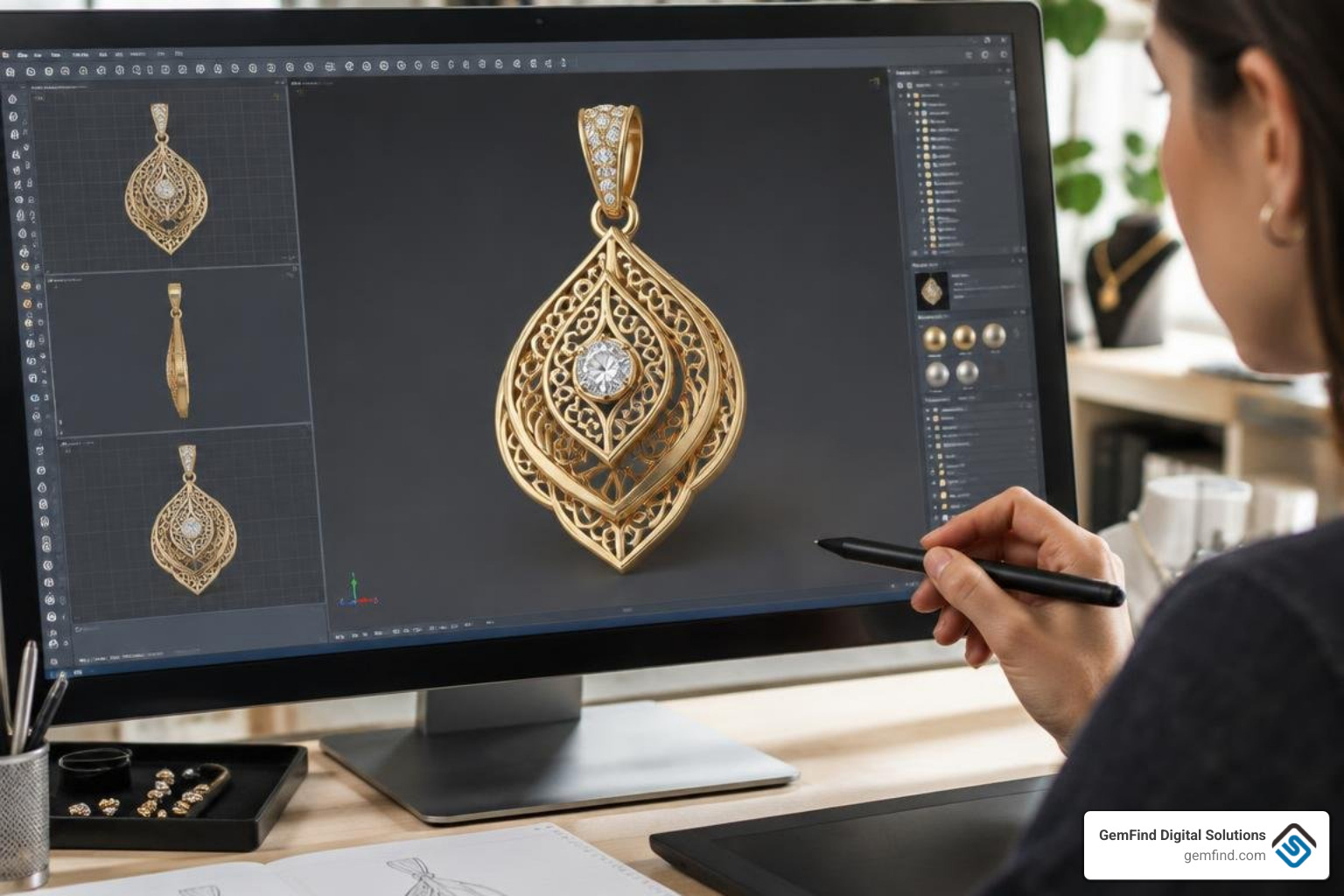
Once you finalize your core design elements, a jewelry designer translates your sketches into a precise computer-aided design (CAD) model. This stage provides an accurate visual rendering of the finished piece.
During CAD review, you can examine:
- Exact Proportions & Measurements: Reviewing millimeter widths, surface depths, and overall gram weights.
- Letter Spacing & Spelling: Double-checking spelling, kerning, and decorative flourishes.
- Bail Clearance: Verifying that the mounting loop (bail) is wide enough to let your chain glide through smoothly.
Most jewelers request a design deposit before generating CAD renders. After reviewing the 3D model, you can request adjustments to letter thickness or gemstone placement. Once approved, the file is 3D-printed into a high-precision wax prototype, as outlined in our custom jewelry design ultimate guide.
Step 4: Casting, Gem Setting, and Bilevel Assembly
With the wax model confirmed, production moves to the foundry for lost-wax investment casting.
The wax model is encased in a plaster investment mold. Once hardened, the mold is baked in an oven where the wax melts away, leaving a cavity. Molten precious metal—whether 14K yellow gold, platinum, or sterling silver—is vacuum-injected into the void.
After the raw metal cools, artisans clean the casting and begin setting the gemstones:
- Pavé Setting: Tiny gemstones are placed closely together across the metal's surface, secured by miniature beads of gold to create a continuous blanket of sparkle.
- Prong & Channel Settings: Sturdy prongs hold larger center stones, while channel walls protect accent gems along the outer borders.
- Bilevel Multi-Layer Assembly: If your piece features a dual-tone or 3D tiered design, the individual cast sections are micro-welded together.
- Enamel Inlay: Colored cold or hot enamel is hand-applied into recessed channels to bring sports emblems or artistic logos to life.
These meticulous manufacturing stages ensure custom pendant necklace recognition, turning raw gold and loose gems into an eye-catching work of art.
Step 5: Hand Polishing, Quality Inspection, and Delivery
The final stage turns raw metal into a mirror-finished masterpiece:
- Lapping and Buffing: Craftsmen use rotating cotton wheels coated with jeweler's rouge to remove surface imperfections and bring out the metal's natural luster.
- Laser Hallmarking: The piece is hallmarked with official purity stamps (such as "14K" or "925") alongside designer maker's marks.
- Quality Inspection: Gemologists examine stone seating under magnification to ensure every prong is secure and verify that the bail articulates freely.
Once inspected, your pendant is securely packaged and dispatched via insured courier services, completing the custom pendant production methods.
Choosing Materials: Metals, Gemstones, and Pricing Factors
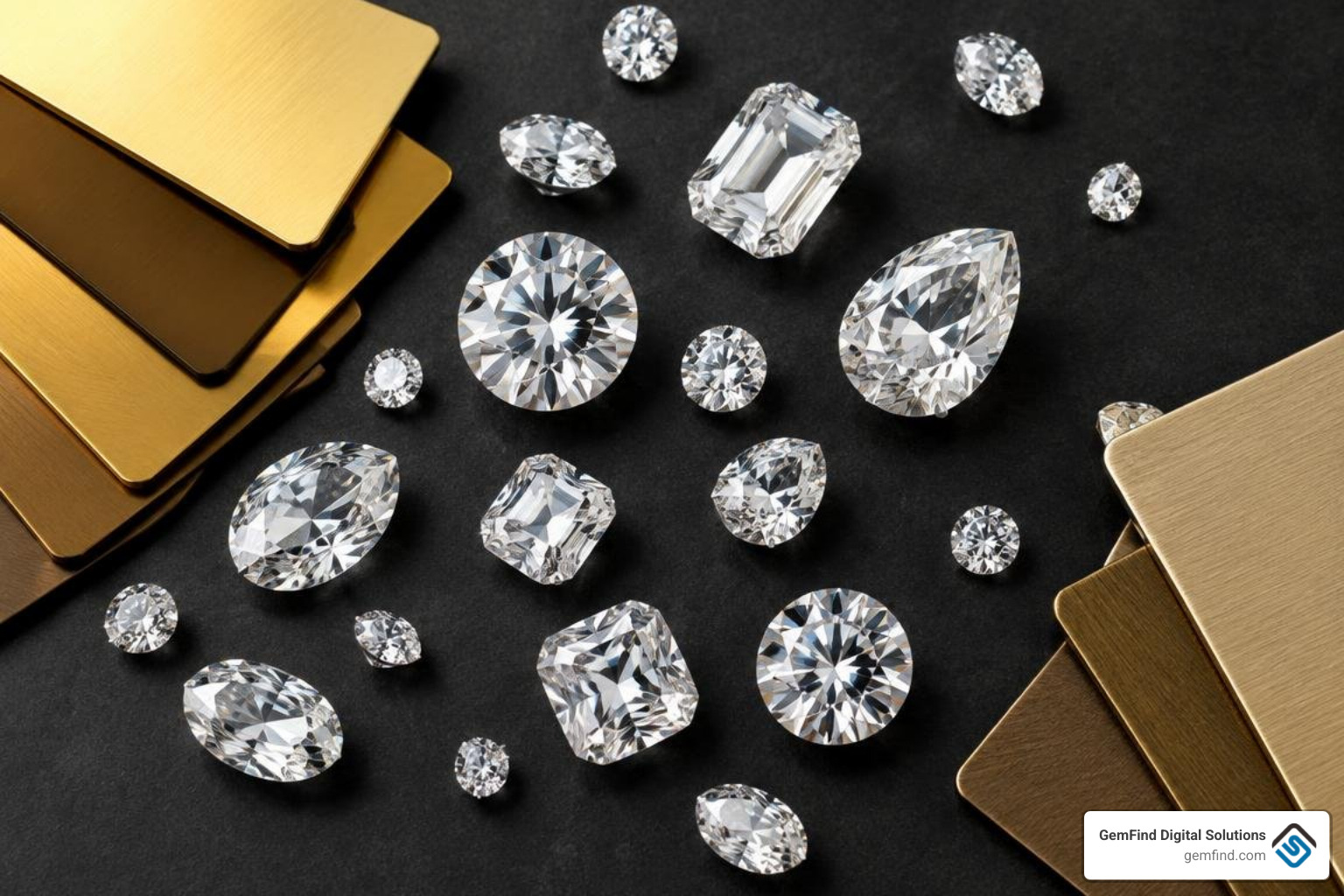
Understanding the factors that influence manufacturing costs helps you design a piece that aligns with your budget and aesthetic goals.
| Metal Type | Pure Gold / Metal Content | Durability Level | Ideal Use Case | Relative Cost Range |
|---|---|---|---|---|
| 10K Gold | 41.7% Gold | Maximum Hardness | Heavy daily wear, athletic pendants | $$ |
| 14K Gold | 58.3% Gold | High (Optimal Balance) | Fine luxury pendants, intricate iced settings | $$$ |
| 18K Gold | 75.0% Gold | Moderate (Rich Luster) | High-end bespoke jewelry, heirloom pieces | $$$$ |
| 925 Silver | 92.5% Pure Silver | Moderate (Prone to tarnish) | Custom emblems, entry fine jewelry | $ |
| Stainless Steel | Hypoallergenic Alloy | Extreme Hardness | Engraved travel tags, everyday fashion | $ |
Custom pendant pricing spans from under $100 for engraved steel or silver to over $15,000 for solid 14K gold pieces encrusted with multi-carat diamond arrangements.
Natural Diamonds vs. Lab-Grown Diamonds vs. Moissanite
When icing out your pendant, you can select from three popular stone choices:
- Natural Mined Diamonds: Formed over billions of years deep within the earth, natural diamonds provide traditional heirloom value and romantic prestige. They rate a perfect 10 on the Mohs hardness scale.
- Lab-Grown Diamonds: Chemically, physically, and optically identical to mined diamonds, lab-created gems provide the same fire and brilliance while offering significant cost efficiencies. They allow you to maximize total carat weight within your budget.
- VVS Moissanite: A lab-grown silicon carbide gemstone featuring a higher refractive index (2.65–2.69) than diamond (2.42), producing remarkable brilliance. Moissanite rates 9.25 on the Mohs scale, resists clouding, and registers as diamond on basic thermal testers.
Modern jewelers often integrate interactive configuration tools on their websites to help clients compare stone options in real time. In fact, learning how a custom jewelry builder can boost sales shows how digital visualization empowers shoppers to select their ideal gemstone and metal combinations with confidence.
Customization Pricing Drivers and Production Timelines
Your final investment is determined by several core production factors:
- Total Gram Weight: The volume of solid gold or platinum required to cast the backing plate and lettering.
- Carat Total Weight (CTW) & Setting Labor: Setting hundreds of micro-pavé stones by hand requires hours of artisan bench work.
- Bilevel & 3D Layering: Multi-piece assemblies require separate casting trees, individual hand-polishing runs, and micro-soldering.
- Turnaround Time: Standard custom production typically takes 3 to 4 weeks from 3D CAD approval to final delivery. Rush production schedules requiring prioritized casting can shorten this window for milestone events.
Chain Selection and Bail Compatibility
A custom pendant requires the right chain to ensure balanced wear, proper proportion, and long-term security.
Best Chain Styles to Pair with Custom Chain Pendants
- Miami Cuban Link Chains: The go-to pairing for bold, heavy statement pieces. Their flat, interlocking links provide substantial tensile strength and sit flat against the chest. A custom solid gold Cuban chain necklace creates a balanced luxury pairing.
- Rope Chains: Classic twisting spirals that catch the light from all directions. Ideal for lightweight-to-medium pendants, circular medallions, and cursive script nameplates.
- Diamond Tennis Chains: A continuous row of prong-set diamonds or moissanite stones that adds maximum brilliance beneath iced-out custom letter sets.
- Figaro & Franco Chains: Sturdy Italian-inspired links that resist twisting and offer dependable support for everyday, medium-weight nameplates.
Sizing Bails and Selecting Chain Lengths
The bail is the metal loop at the top of the pendant through which your chain passes. Mismatched bails are one of the most common issues in custom jewelry ordering.
- Internal Clearance: Always provide your jeweler with your chain's width and lock clasp dimensions. If you wear an 8mm Cuban link, ensure the bail's interior clearance is at least 9.5mm to 10mm to allow free movement.
-
Chain Length Proportions:
- 16 to 18 Inches: Sits high near the collarbone; best for petite nameplates and delicate handwriting charms.
- 20 to 22 Inches: The standard unisex length; places the pendant over the upper chest for optimal balance.
- 24 Inches and Longer: Drops the pendant to the mid-chest, ideal for large statement pieces and layered chain setups.
Frequently Asked Questions About Custom Chain Pendants
Can custom chain pendants be returned or refunded?
Because custom pendants are individually fabricated to your specific wording, dimensions, and specifications, they are almost universally non-refundable and exempt from standard return policies. Once a 3D CAD rendering is approved and metal is cast, production costs are fully committed.
Reputable jewelry brands back their craftsmanship with lifetime manufacturing guarantees that cover material authenticity, structural integrity, and stone-tightening services if defects occur. Reviewing your 3D digital rendering carefully before granting final production approval is the best way to ensure the completed piece matches your vision.
Caring for and Maintaining Custom Chain Pendants
To keep your custom piece sparkling for years to come:
- Regular Cleaning: Soak your pendant in warm water mixed with a few drops of mild dish soap for 10 minutes. Gently brush around the lettering and stone mountings using an ultra-soft toothbrush, rinse with clean warm water, and pat dry with a microfiber cloth.
- Avoid Harsh Chemicals: Remove your chain and pendant before swimming in chlorinated pools, soaking in hot tubs, or applying cologne, sunscreen, or hair products.
- Proper Storage: Store your custom jewelry in individual soft velvet pouches or lined jewelry boxes to prevent metal scratches and chain tangling.
- Prong Inspections: Periodically run your fingertips over pavé-set stones. If a gem feels loose or snags on clothing, visit a bench jeweler for a quick prong tightening.
How long does it take from initial sketch to final delivery?
The complete bespoke process generally takes 3 to 4 weeks. This timeline breaks down into:
- Design Consultation & Digital CAD Rendering: 2 to 5 business days.
- Client Review, Adjustments, & Final Approval: 1 to 3 days.
- Wax 3D Printing, Casting, & Gem Setting: 10 to 14 business days.
- Hand Polishing, Quality Assurance, & Hallmarking: 2 to 3 days.
- Insured Express Delivery: 1 to 3 business days.
Conclusion
Custom chain pendants combine meaningful self-expression with master craftsmanship. Whether you are preserving a loved one's handwriting, marking an athletic milestone with a jersey number, or designing a bold iced-out logo, the journey from initial sketch to finished metal is a collaborative and rewarding experience.
At GemFind Digital Solutions, we help jewelry designers, independent retailers, and manufacturers showcase bespoke craftsmanship to online audiences. With over 25 years of industry-focused digital marketing, tailored web design, and proprietary interactive builder apps, we empower jewelry brands to bring custom design experiences directly to their clients' screens.
To learn how to elevate your store's bespoke jewelry capabilities, explore our complete guide to custom jewelry websites and discover tools built specifically for the fine jewelry industry.


