


How to Design a Custom Engagement Ring
To design a custom engagement ring, start with a budget and a center stone. Choose a setting and metal that suit the stone and the wearer's daily life. Then review a 3D preview or CAD design, confirm the ring size and personal details, and approve the design before it is made.
For jewelry retailers, a clear online design process helps shoppers explore their options and make confident choices. I'm Anthony Arechiga, VP of Sales at GemFind Digital Solutions, where I've worked with jewelry businesses since 2007. That experience shapes this guide to the custom engagement ring journey, from a shopper's first idea to a finished design.
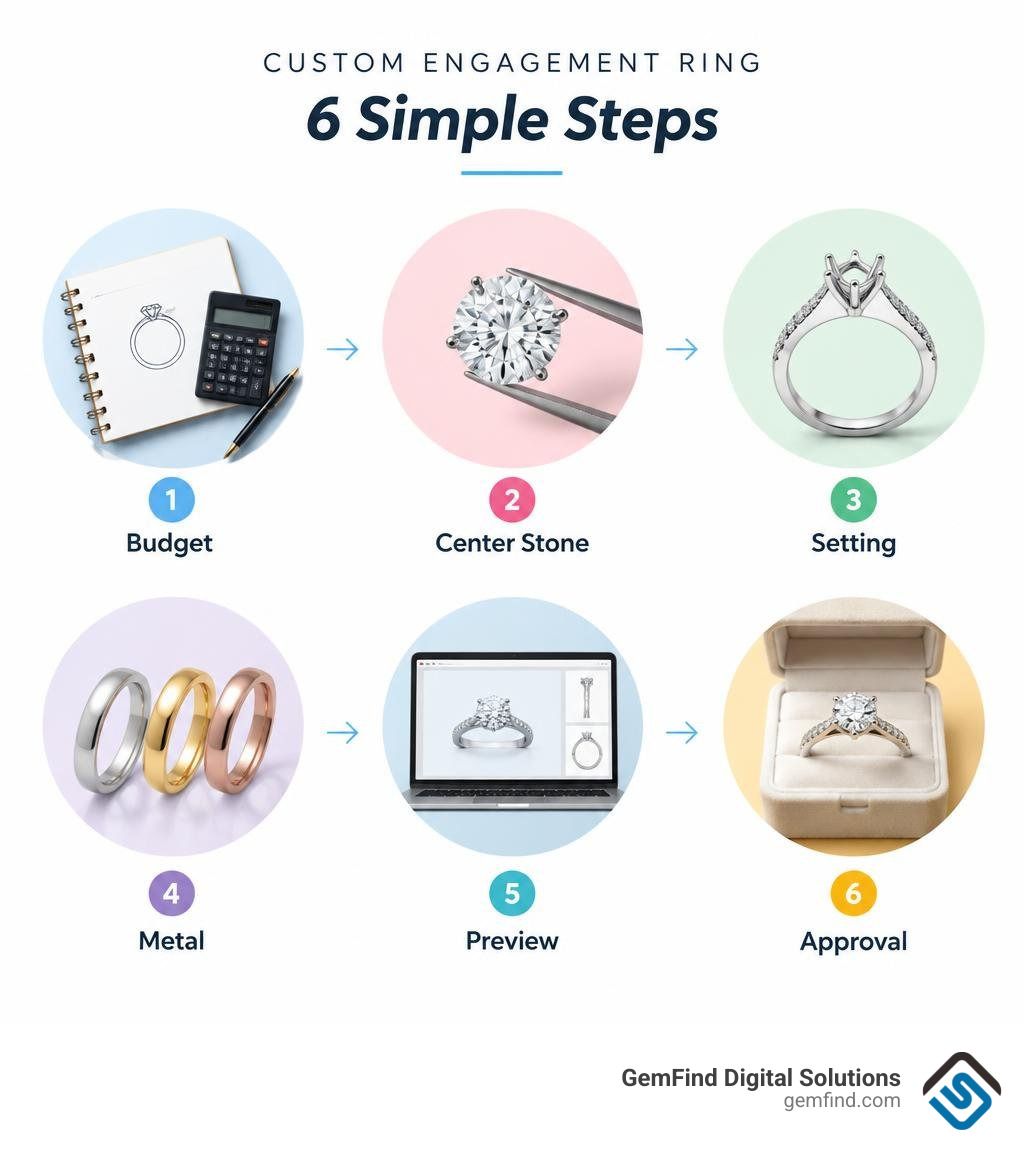
Custom engagement ring basics:
Designing a Custom Engagement Ring: Step-by-Step
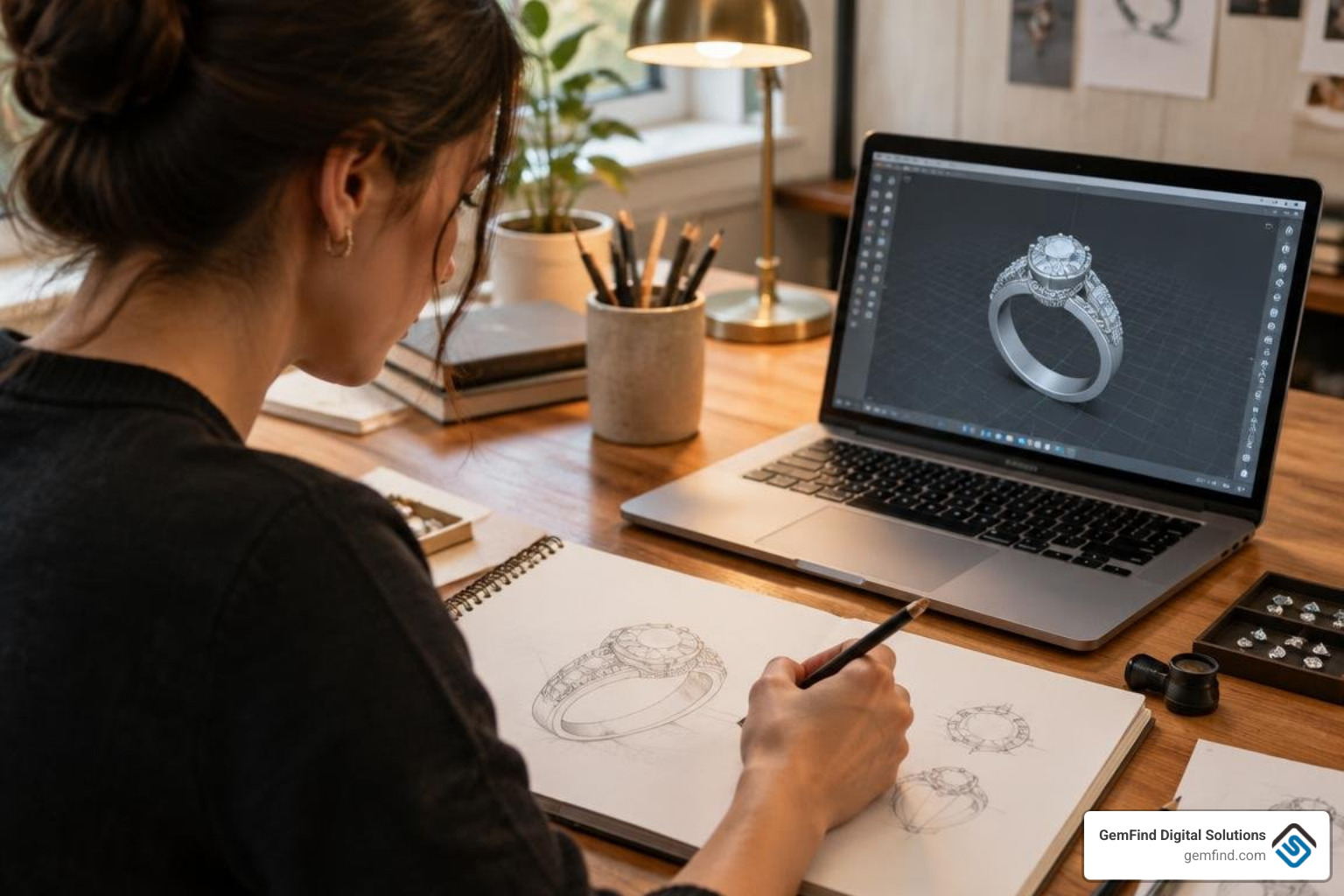
The journey to bring a personalized ring to life is an intimate collaboration between the client and the jeweler. Whether conducted inside a boutique showroom or through digital interfaces, partnering with a bespoke engagement ring maker replaces the guesswork of shopping pre-set jewelry cases with creative control. Modern digital tooling allows shoppers to explore hundreds of design combinations in real time before committing to physical fabrication.
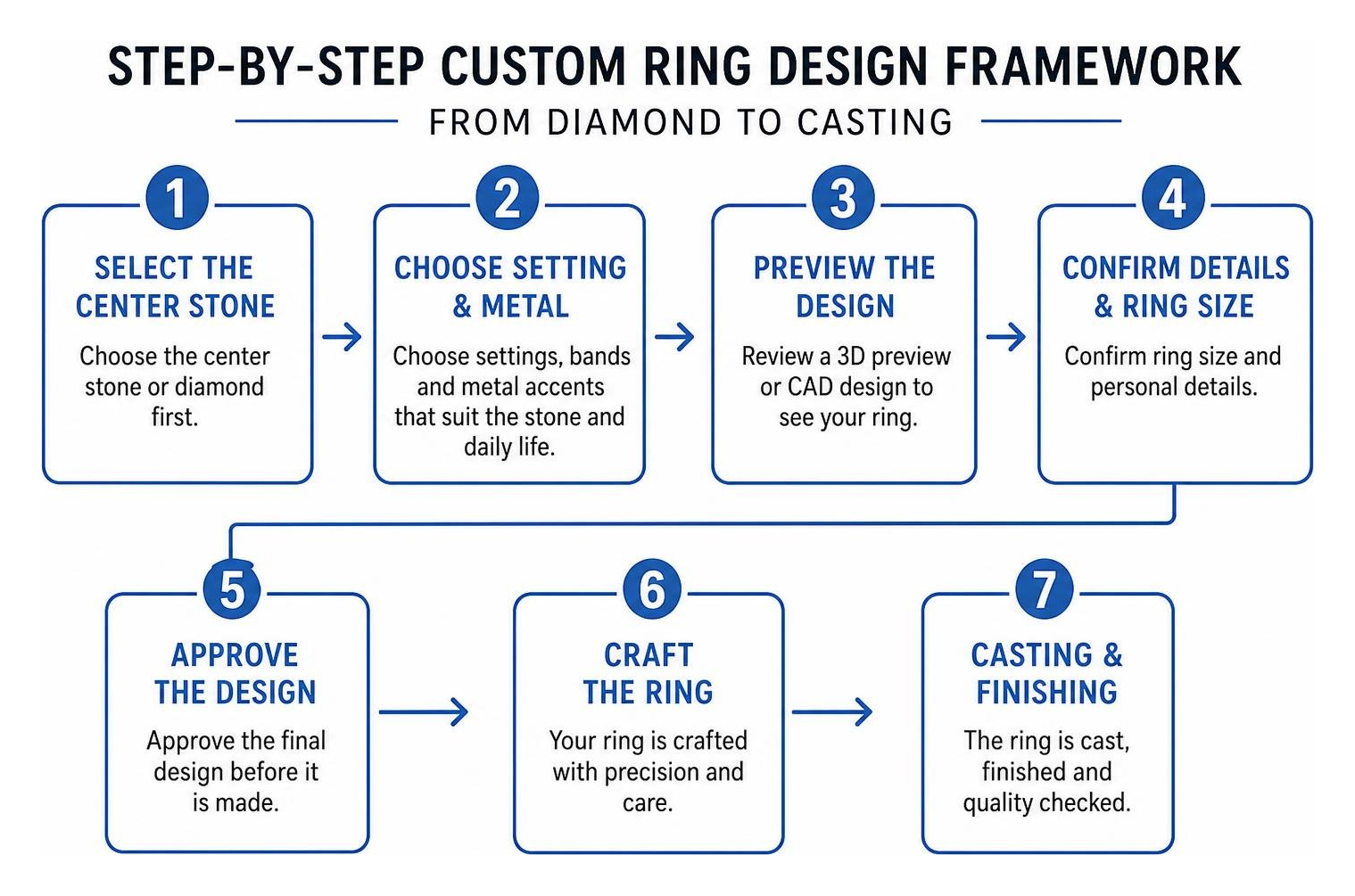
Step 1: Selecting the Center Stone or Diamond First
Most fine jewelers recommend establishing the center gemstone early in the process. Sourcing and mounting the center diamond first determines structural balance, prong configuration, and head height. Because a 2-carat oval cut demands different weight distribution and basket support than a 1-carat round brilliant, finalizing diamond dimensions upfront prevents costly adjustments to the mounting later. Using an interactive ring builder tool allows buyers to filter diamond inventory by cut, clarity, and carat weight while viewing live digital pairings.
Step 2: Choosing Settings, Bands, and Metal Accents
After identifying the main gem, clients select the mount profile, band width, and secondary accents. Band width directly impacts daily comfort and long-term metal integrity, with 1.8mm to 2.2mm remaining popular for delicate yet resilient wear. Couples planning ahead often employ a bridal set ring creator to ensure the engagement ring sits flush against future wedding bands without leaving awkward gaps or causing metal friction.
Step 3: Reviewing 3D CAD Renderings and Wax Models
Modern ring customization relies on computer-aided design (CAD) software. Once base specifications are logged, the jeweler creates an exact multi-angle digital rendering within 1 to 4 business days. Clients review these renderings to inspect head placement, prong style, and accent spacing. Retailers often provide high-resolution renders or physical wax models to ensure absolute quality assurance before precious metal casting and hand-setting take place.
Selecting Diamonds and Stones for Your Custom Engagement Ring
Understanding gemstone specifications ensures clients maximize aesthetic brilliance within their established budget. Gemological standards evaluate diamonds by the 4Cs: Cut, Color, Clarity, and Carat weight.
| Feature | Natural Mined Diamonds | Lab-Grown Diamonds |
|---|---|---|
| Origin | Formed deep in Earth's mantle over billions of years | Grown in controlled laboratory reactors via HPHT or CVD |
| Chemical & Physical Composition | 100% pure carbon lattice (Mohs hardness: 10) | 100% pure carbon lattice (Mohs hardness: 10) |
| Entry Price Point | Higher baseline; scales rapidly with carat size | Accessible entry points starting around $1,500 |
| Grading & Certification | Certified by GIA, IGI, and AGS | Certified by IGI and GIA |
| Market Value Over Time | Traditional historical resale performance | Lower price per carat, enabling larger stones on modest budgets |
Natural vs. Lab-Grown Diamonds and Ethical Sourcing
Choosing between natural and lab-grown stones centers on personal philosophy and budget allocation. Natural diamonds offer geological rarity, whereas lab-grown diamonds are chemically, physically, and optically identical to mined stones but allow buyers to purchase significantly larger diamonds for the same budget. Both options provide ethical peace of mind when backed by Kimberley Process compliance or certified laboratory audits. To balance diamond quality and hue effectively, review our diamond color grade comparison. Independent certifications from the Gemological Institute of America (GIA) or the International Gemological Institute (IGI) ensure optical grades are scientifically verified.
Popular Diamond Shapes and Incorporating Heirloom Stones
Diamond shape sets the stylistic tone for the entire piece. Oval cuts and radiant cuts remain in high demand for their elongating effect on the finger and generous surface area per carat. Emerald cuts offer vintage step-cut elegance, while cushion and old mine cuts deliver soft antique dispersion.
Clients frequently design around family stones. Repurposing an heirloom diamond into a modern setting preserves emotional heritage while updating structural security. Jewelers can seamlessly blend antique center stones with colored accent gems by incorporating custom gemstones such as sapphires, emeralds, or custom fancy-color diamonds.
Precious Metals and Setting Styles
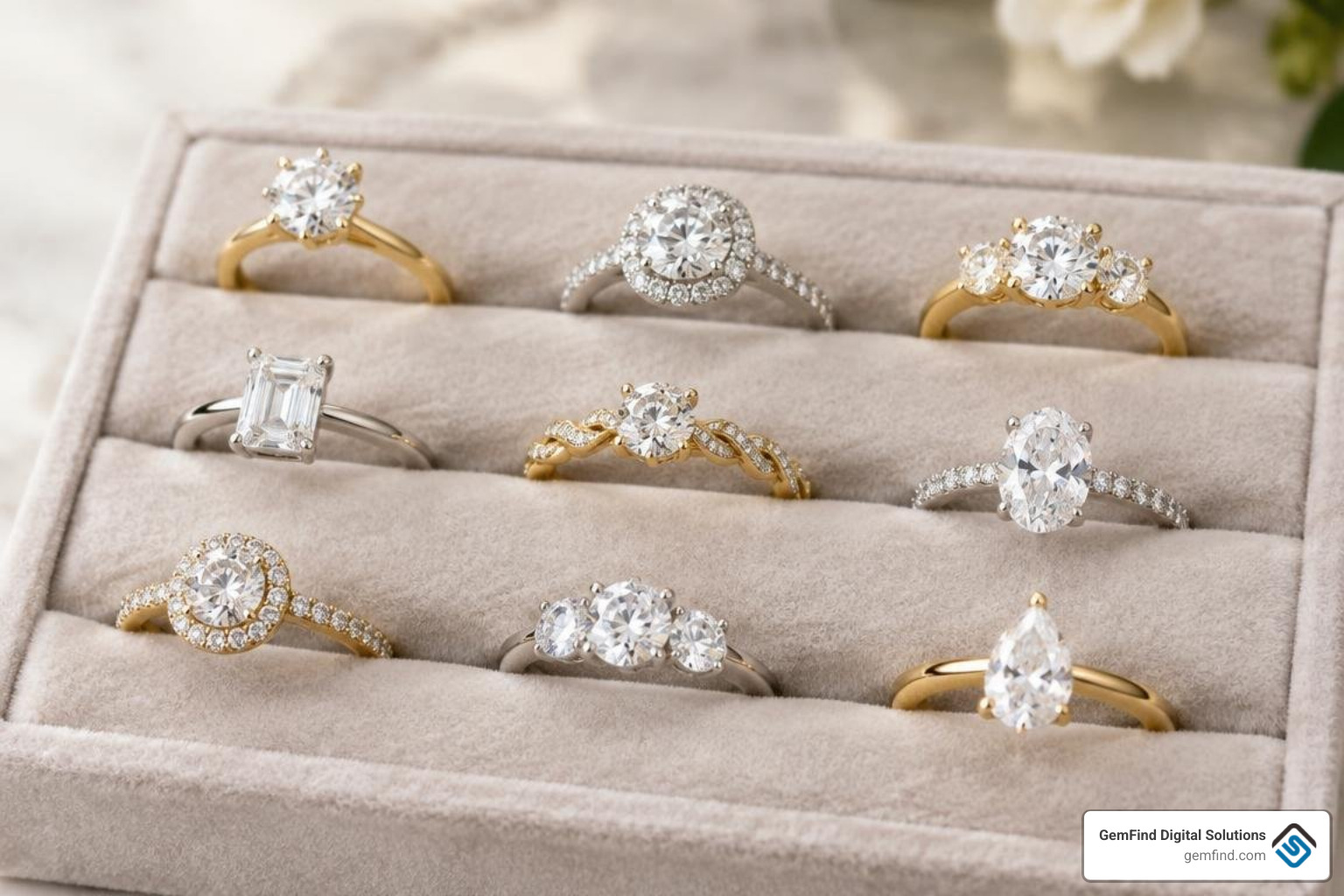
A ring's architectural framework defines its visual silhouette and everyday durability. For deeper guidance on holistic ring construction, review our custom jewelry design guide.
Precious Metal Options: Platinum, Yellow, White, and Rose Gold
- Platinum: Naturally white, hypoallergenic, and denser than gold. It develops a protective patina over time without losing metal volume, requiring minimal structural upkeep over decades of daily wear.
- 18K and 14K Yellow Gold: Warm and classic. 18K contains 75% pure gold for rich color, while 14K offers increased scratch resistance due to higher alloy content.
- 18K and 14K White Gold: Coated with rhodium to achieve a bright, silvery sheen. White gold requires occasional re-plating to maintain its luster.
- Rose Gold: Blended with copper alloys to produce romantic, pinkish tones that complement diverse skin tones.
- 100% Recycled Metals: A popular sustainable choice that prevents new mining without sacrificing structural purity or metallurgical strength.
Popular Setting Styles: Solitaire, Halo, Three-Stone, and Bezel
Setting architectures serve both functional and decorative purposes:
- Solitaire: Emphasizes the center stone with clean minimalism, available in low-basket or elevated cathedral profiles. Setting options range from standard prongs to tailored architectural mounts like the Donna Cathedral French Pavé Solitaire in Platinum ($3,450) or the Carrie Pavé in 18K White Gold ($2,515).
- Halo & Hidden Halo: Frames the primary gem with smaller pavé diamonds to expand perceived surface area. Explore classic and modern variations in our guide to halo engagement ring settings. Settings such as the Eartha Upper Hidden Halo in 18K White Gold ($2,610) or the Annie Halo Emerald Cut in 18K Yellow Gold ($5,990) highlight how halos add sparkle.
- Three-Stone: Represents a couple's past, present, and future. Premium designs like the Anita Classic Three Stone Round Setting in Platinum ($4,370) balance prominent side stones with substantial finger coverage.
- Bezel: Surrounds the diamond rim with a solid protective metal collar. The Agnes Bezel Solitaire Oval Setting in 18K Yellow Gold (starting from $1,805) provides modern protection against snags and everyday impacts.
- Vintage-Inspired: Combines milgrain borders, filigree, and hand-engraving. To explore historical design eras, read our vintage engagement ring styles guide. Settings like the Florence Vintage Scalloped Halo in Platinum ($4,550) showcase vintage artistry.
Personalized Details: Hidden Halos and Custom Engravings
Bespoke rings allow for intimate personal touches. Hidden halos—delicate diamonds encircling the under-gallery visible only from side angles—offer an unexpected sparkle beneath the center stone. Adding meaningful dates or secret coordinates along the inner shank is simple using custom ring engraving options.
Custom Ring Budgeting, Timelines, Sizing, and Care
Custom Engagement Ring Cost vs. Ready-Made Rings
A common misconception is that bespoke jewelry always carries an unreachable premium. While complex CAD modeling and artisan casting can add $500 to $1,000 in dedicated labor, custom design allows clients to distribute their budget directly where it matters most. By sourcing certified diamonds directly and tailoring the metal weight to budget parameters using a digital diamond ring creator tool, custom manufacturing often matches or beats the retail margins of mass-produced jewelry.
Production Timelines: From Initial Concept to Finished Ring
Fabrication timelines vary based on design complexity:
- Design & CAD Modeling: 1 to 4 business days.
- Casting, Assembly & Setting: 2 to 4 weeks. Specialized hand fabrication can span 5 to 8 weeks depending on the atelier's workflow.
- Domestic Cast-to-Order Manufacturing: Streamlined domestic facilities can complete standard custom orders in 8 to 12 business days, while ready-to-ship catalog modifications may deliver in as little as 1 to 3 weeks.
Sizing Strategies, Warranties, and Long-Term Maintenance
If sizing must remain a surprise, borrow an existing ring worn on the correct finger or use a physical ring sizer tool. Many jewelers provide a complimentary resize within 30 to 60 days of delivery, adjusting up to 1.5 standard US sizes without altering the structural setting.
Ensure the finished ring comes backed by a limited lifetime manufacturing warranty that covers periodic prong tightening, rhodium dipping, and professional cleaning. Complement this with private jewelry insurance to safeguard against loss, theft, or structural damage.
Frequently Asked Questions About Custom Engagement Rings
Is a custom engagement ring more expensive than a ready-made ring?
Not necessarily. While custom rings require specialized CAD modeling and casting fees, you retain complete authority over diamond quality, stone size, and metal density. Selecting an ethical lab-grown diamond or choosing a 14K gold alloy can keep total project costs well within pre-set retail budgets.
What if I don't know my partner's exact ring size?
Jewelers routinely accommodate size approximations. Selecting a standard US size 6 or 6.5 allows for a smooth proposal, after which the ring can be accurately measured on a calibrated mandrel and resized under the jeweler's post-delivery adjustment policy.
Are custom engagement rings returnable or refundable?
Because custom rings are individually cast and engraved to client specifications, full refunds are often subject to specific return windows, such as a 30- to 40-day inspection period, or may incur a standard 25% setting restocking fee to cover custom metal melting and labor. Always review policy terms prior to casting approval.
Conclusion
A bespoke ring represents the pinnacle of intentional jewelry design, blending personal romance with enduring craftsmanship. At GemFind Digital Solutions, our technology has empowered jewelry retailers and shoppers for over 25 years with intuitive digital tools and seamless Edge POS e-commerce integrations.
Ready to craft an unforgettable symbol of love? Design your custom engagement ring today with the RingBuilder tool.
— Anthony Arechiga, GemFind Digital Solutions


