

Why Automated Media Buying Matters for Jewelry Stores

Automated media buying uses software to place ads and adjust bids based on your goals, budget, and campaign results. Instead of reviewing every placement by hand, you set the rules and monitor what the system does. For a jewelry store, that can mean spending less time on routine bid changes and more time checking which ads bring in sales.
Automation does not guarantee a better return. It works best when you track real purchases, set budget limits, and review where your ads appear.
I'm Morgan Price, a strategic backlink outreach specialist with experience researching digital marketing topics for content teams. That work includes studying automated media buying tools and turning complex ideas into practical guidance.
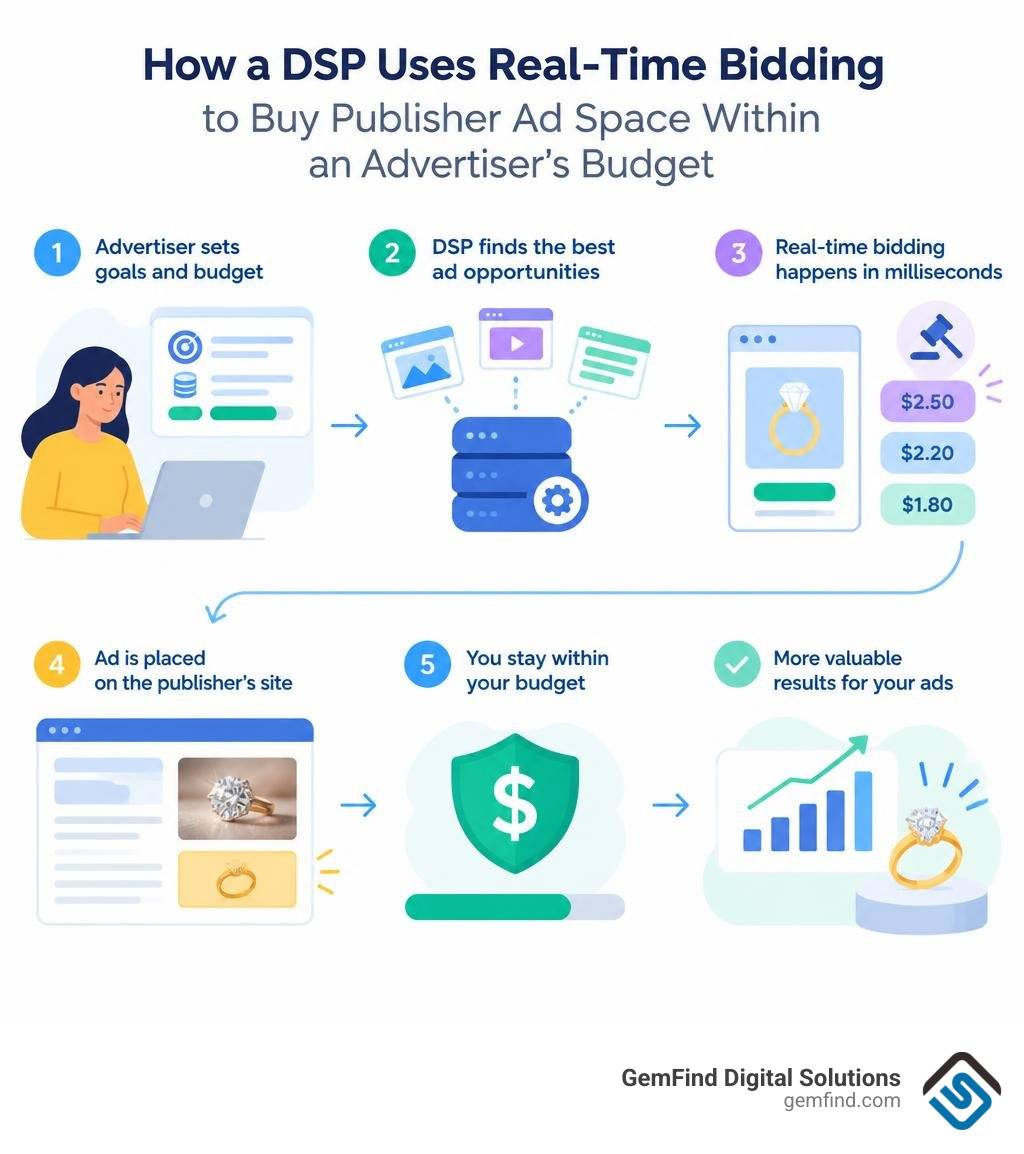
Quick look at automated media buying:
What Is Automated Media Buying and How Does It Work?
Automated media buying is the process of using algorithmic software, artificial intelligence, and machine learning models to purchase advertising space dynamically. Instead of relying on human media planners to manually email insertion orders or adjust daily bids across fragmented dashboards, an automated system evaluates millions of impressions every second to place the right ad in front of the right consumer at the lowest possible price.
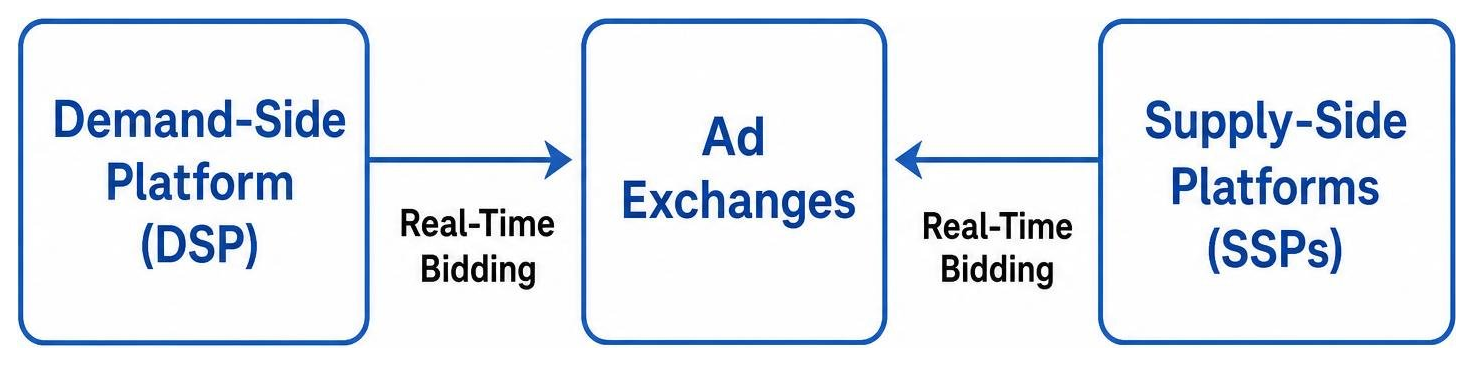
To understand the mechanics, we need to look under the hood of the modern programmatic ecosystem. The engine runs on a split-second exchange between buyers and sellers:
- Supply-Side Platforms (SSPs): Publishers list their available ad inventory across websites, mobile apps, connected television (CTV) streams, and digital billboards.
- Ad Exchanges: Digital marketplaces where ad impressions are put up for instantaneous auction.
- Demand-Side Platforms (DSPs): Systems used by advertisers and marketing teams to evaluate incoming bid requests from the exchange, check them against campaign targeting criteria, and place competitive bids in real time.
- Real-Time Bidding (RTB): When a user loads a webpage or opens a streaming app, an auction occurs in roughly 100 milliseconds. The DSP evaluates user signals, decides whether the impression fits your audience profile, calculates the optimal price, and serves the winning ad before the page fully loads.
Traditional Media Buying vs Automated Media Buying
For decades, media planning followed a slow, paper-heavy path. Marketers negotiated directly with sales reps, locked budgets into inflexible contracts, and waited weeks after a campaign ended to receive performance reports.
Automated buying replaces that friction with algorithmic precision. Here is how the two approaches compare:
| Feature | Traditional Media Buying | Automated Media Buying |
|---|---|---|
| Pace of Negotiation | Manual back-and-forth emails, insertion orders, and phone calls | Instantaneous auctions and direct programmatic software integrations |
| Bidding Speed | Static, locked rates set for months | Millisecond-level dynamic real-time bidding (RTB) |
| Optimization | Manual adjustments made days or weeks after launch | Autonomous 24/7 algorithmic reallocation and bid shading |
| Inventory Scope | Single publishers or narrow media kits | Millions of websites, CTV apps, audio streams, and DOOH screens |
| Data Usage | Broad demographic assumptions (e.g., age brackets) | Granular first-party CRM data, intent signals, and predictive modeling |
| Waste Control | High risk of paying for impressions outside your target region | Instant pausing of underperforming ads and negative keyword filtering |
If you want a deeper look into the broader ecosystem of programmatic purchasing, explore our comprehensive programmatic advertising guide for actionable setup strategies.
The Technology Stack: DSPs, White-Label Platforms, and AI Agents
The automation landscape in 2026 offers diverse deployment options tailored to different business needs:
- Enterprise DSPs: Platforms like Active Agent deliver comprehensive omnichannel DSP capabilities, unifying cross-device identity graphs, geo-targeting down to postal codes, and footfall attribution across digital out-of-home (DOOH) and connected screens.
- Direct Supply Path Solutions: Tools like the Transparent Omnichannel Media Buying Architecture by PubMatic streamline supply paths by connecting advertisers directly to premium publishers. This eliminates intermediate tech fees and returns more budget to working media.
- White-Label DSPs: Platforms such as Epom provide businesses with customizable, pre-built programmatic engines that connect to 50+ SSPs via API, avoiding years of proprietary software development while giving brands total control over bidding multipliers and pricing rules.
- Autonomous AI Agents: Modern solutions like Adsy leverage natural language prompts to structure audience segments, analyze over 10 million real-time audience signals in under 30 seconds, and autonomously balance bids across major ad networks with human-in-the-loop safety guardrails.
By combining these platforms with programmatic direct advertising, brands secure premium, guaranteed ad space without sacrificing the efficiency of automated workflows.
Core Benefits of Automated Media Buying Across Channels
Why are businesses pivoting their ad budgets toward automated buying engines? The short answer is operational leverage: machines analyze data faster and more accurately than any human team could ever manage manually.
According to eMarketer's 2026 AI Media Buying Analysis, AI-driven targeting tools and algorithmic media buying can lift conversion rates by up to 30% compared to traditional manual management. Automated platforms sift through audience intent signals, historical performance metrics, and contextual website data to deliver superior working media efficiency.
Real-Time Optimization and Waste Reduction
One of the largest hidden drains on an advertising budget is non-converting ad placements. Unmonitored Google Ads accounts can waste between 20% and 40% of their ad spend on irrelevant search terms and broad-match errors, whereas tightly managed, automated accounts keep wasted spend under 10% to 15%.
Automated buying platforms actively protect budgets through several automated mechanics:
- Bid Shading Algorithms: Automatically calculate the lowest possible bid required to win a second-price auction, preventing brands from overpaying for impressions.
- Negative Keyword and Placement Pruning: Bots continuously analyze search queries and web placements, cutting non-converting spend before it accumulates.
- ROAS Guardrails: If a particular campaign dips below a pre-set return threshold, the algorithm dials down spend or shifts funds to top-performing ad sets.
By integrating automated bidding rules alongside robust paid search analytics, businesses ensure that every dollar works toward qualified leads and confirmed sales.
Scalability for Growing E-Commerce and Retail Brands
For e-commerce stores and retailers managing hundreds of SKUs, manually updating campaigns is virtually impossible. Automated media buying bridges this gap by reading product catalogs, generating tailored copy, and managing SKU-level bids in real time.
Break-even return on ad spend (ROAS) depends directly on gross margins. To calculate it, divide 1 by your gross margin percentage. For instance, an e-commerce brand operating at a 40% gross margin requires a break-even ROAS of 2.5 times (1 divided by 0.40), while a retailer with a 25% margin needs a 4.0 times ROAS (1 divided by 0.25) just to cover product and ad costs. Automated tools can structure bidding tiers that adjust daily targets based on these margins, protecting profitability while scaling volume.
To discover how modern omnichannel tactics scale digital storefronts, review our guide to e-commerce marketing strategies.
Key Features to Evaluate in Media Buying Platforms and Services
Selecting the right automated media buying partner or platform requires careful technical evaluation. Consider the following core capabilities:
- Log-Level Data Access: Ensure the platform offers full transparency into bid logs, auction clearing prices, and publisher placement URLs rather than consolidated, opaque summaries.
- First-Party Audience Activation: The platform must ingest CRM data, custom lookalike seeds, and pixel events seamlessly.
- Algorithmic Guardrails: Built-in alerts, spend limits, and manual overrides ensure that human managers can step in whenever needed.
- Transparent Pricing Models: Compare flat-fee platforms against traditional agency models. While agencies often charge between $1,500 and $7,500 per month plus 10% to 20% of media spend, software-first tools often offer flat monthly pricing tiers that keep tech costs low.
Cross-Channel Capabilities: CTV, Display, Paid Search, and Social
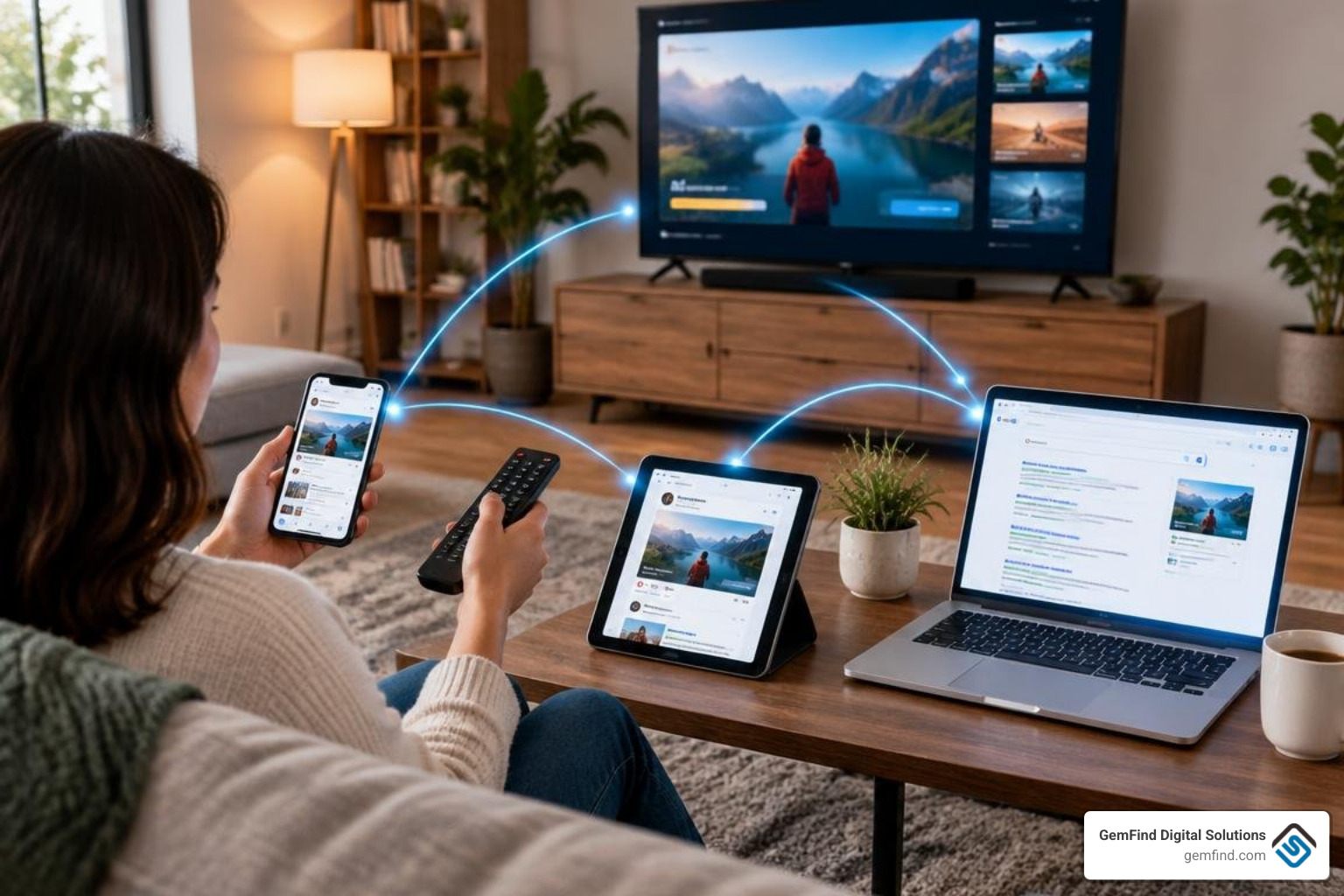
Modern buyers move across multiple screens throughout the day. Your automated buying engine should synchronize placements across every digital channel:
- Connected TV (CTV): Reach high-intent audiences on premier streaming platforms. Solutions like PubMatic's Activate provide up to 87% coverage of top CTV streaming platforms with transparent log-level reporting.
- Social Ecosystems: Automate campaign launches across Meta and Instagram using our comprehensive Meta Business Suite guide.
- Digital Out-of-Home (DOOH): Programmatically buy digital billboards and retail display networks based on real-time footfall patterns and location triggers.
- Contextual Display & Video: Place responsive banners and video ads on contextually relevant industry publications.
Advanced Ad Fraud Prevention and Brand Safety
Ad fraud remains a significant threat in digital advertising, wasting budget through bot traffic, click farms, and domain spoofing. Comprehensive automated media buying systems incorporate strict brand safety and fraud prevention protocols:
- Pre-Bid Filtering: Evaluates incoming auction requests against invalid traffic (IVT) databases and blacklists suspicious IPs before a bid is submitted.
- IAB Category Matching: Automatically verifies publisher content against standard Interactive Advertising Bureau (IAB) categories, ensuring your ads never appear beside brand-unsafe content.
- Viewability Scoring: Uses pre-bid predictive viewability metrics to avoid paying for ad units buried below the fold.
Implementing these guardrails ensures that your ad spend targets genuine potential customers across trusted websites.
Strategic Campaign Optimization: Dynamic Creatives, AI, and First-Party Data
Strategic media buying requires combining smart software with high-quality creative assets and reliable first-party data. Tailoring visual assets to match specific customer needs dramatically increases engagement, which is essential for high-consideration purchases like luxury goods and fine jewelry.
For specialized retail applications, check out our dedicated breakdown of jewelry store advertising to see how personalized creative drives showroom traffic.
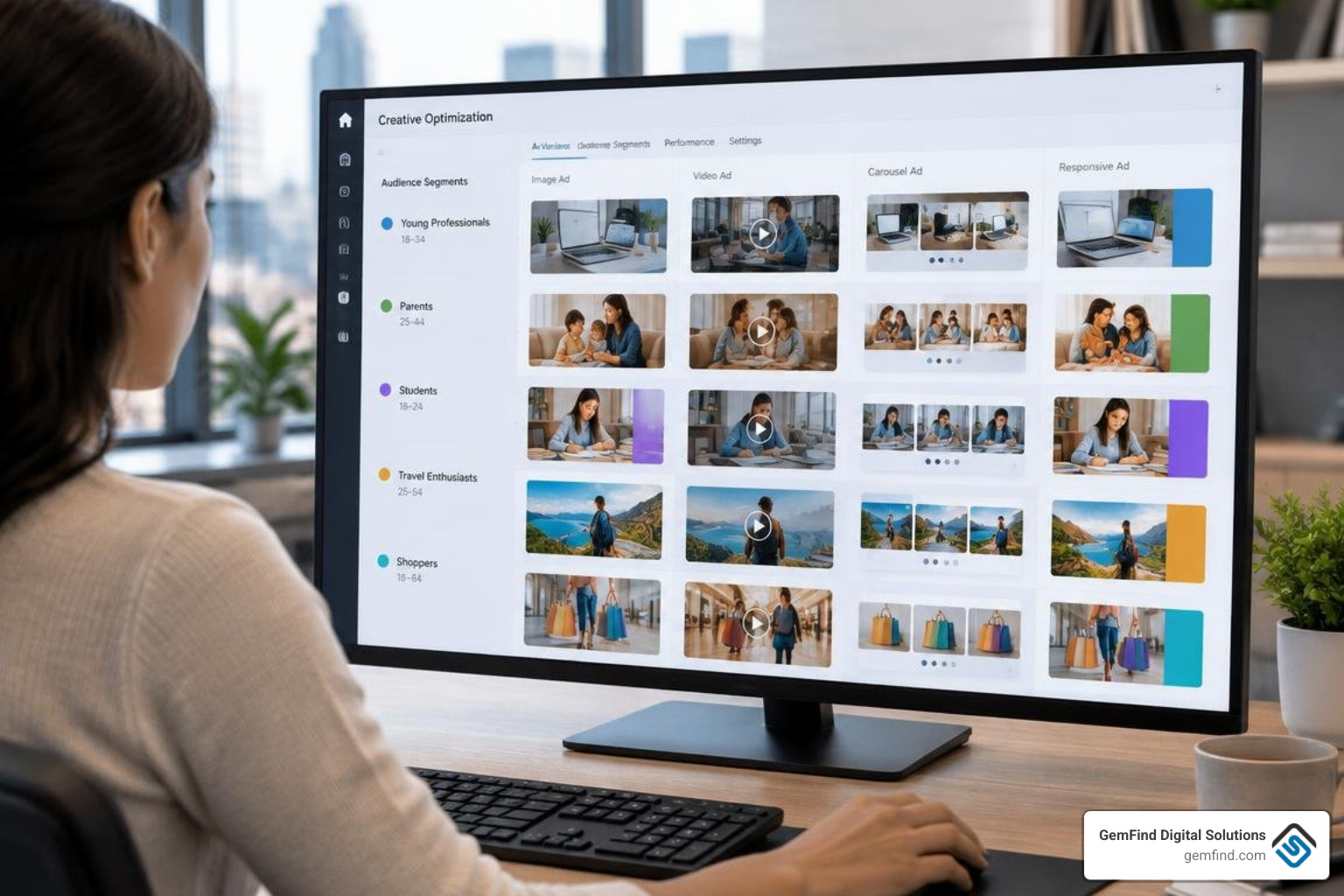
Dynamic Creative Optimization (DCO) and Predictive Analytics
Dynamic Creative Optimization (DCO) uses real-time audience data to assemble custom ad creative on the fly. Rather than showing a generic brand banner, DCO pairs visual assets, localized promotional copy, and product recommendations based on individual browsing history:
Paired with predictive machine learning, these systems anticipate demand surges (such as engagement ring searches ahead of the holiday season) and automatically scale daily budgets to capture seasonal volume.
Omnichannel Strategies in Automated Media Buying
A successful automated buying strategy connects all digital touchpoints into a unified customer journey:
- Unified Frequency Capping: Prevents ad fatigue by setting a global cap on how many times a user sees your ad across CTV, mobile, and display.
- Cross-Device Identity Graphs: Maps user activity across desktop, tablet, and mobile devices to maintain consistent brand messaging.
- Footfall Attribution: Tracks whether digital ad impressions correlate with actual physical store visits using privacy-compliant location data.
By synchronizing these channels, you create a cohesive marketing funnel that guides customers from initial discovery to final purchase.
Frequently Asked Questions About Automated Media Buying
What is the difference between automated media buying and programmatic advertising?
While often used interchangeably, automated media buying is the overarching method of using software and algorithms to purchase ad space directly from publishers or ad networks with minimal manual work.
Programmatic advertising is the broader technical infrastructure that makes automated buying possible across open exchanges, incorporating Demand-Side Platforms (DSPs), Supply-Side Platforms (SSPs), and millisecond Real-Time Bidding (RTB) auctions.
How do automated media buying systems protect against ad fraud?
Automated platforms protect campaigns by implementing pre-bid verification tools, monitoring viewability scores, and filtering out invalid traffic (IVT) in real time. They scan incoming bid requests for click farms, suspicious IP ranges, and unauthorized domain spoofing, ensuring your budget only funds impressions served to verified human users on brand-safe domains.
How much budget can automated media buying save compared to manual management?
Automated systems can save between 20% and 40% of campaign spend by eliminating non-converting search terms, applying real-time bid shading, and reallocating budget toward top-performing placements 24/7.
Additionally, using direct-to-supply platforms and flat-fee software models can reduce intermediary tech fees by over 20%, ensuring that more of your budget goes directly to working media.
Conclusion
Automated media buying has transformed digital advertising from a slow, manual process into a dynamic, algorithmic engine. By pairing real-time bidding, cross-channel DSPs, and dynamic creative optimization with first-party data, businesses can scale ad spend while reducing wasted budget.
However, software alone cannot replace strategic marketing leadership. Autonomous tools deliver their best results when guided by clear margin targets, conversion tracking, and human-in-the-loop oversight.
At GemFind Digital Solutions, we combine over 25 years of industry-specific digital marketing expertise, Shopify and Google Partner capabilities, and custom e-commerce integrations to help brands build profitable, automated advertising strategies. Ready to modernize your media buying? Contact our team today to turn automated ad technology into your strongest growth channel.


