


Custom Jewelry 3D Modeling: From Idea to Finished Piece
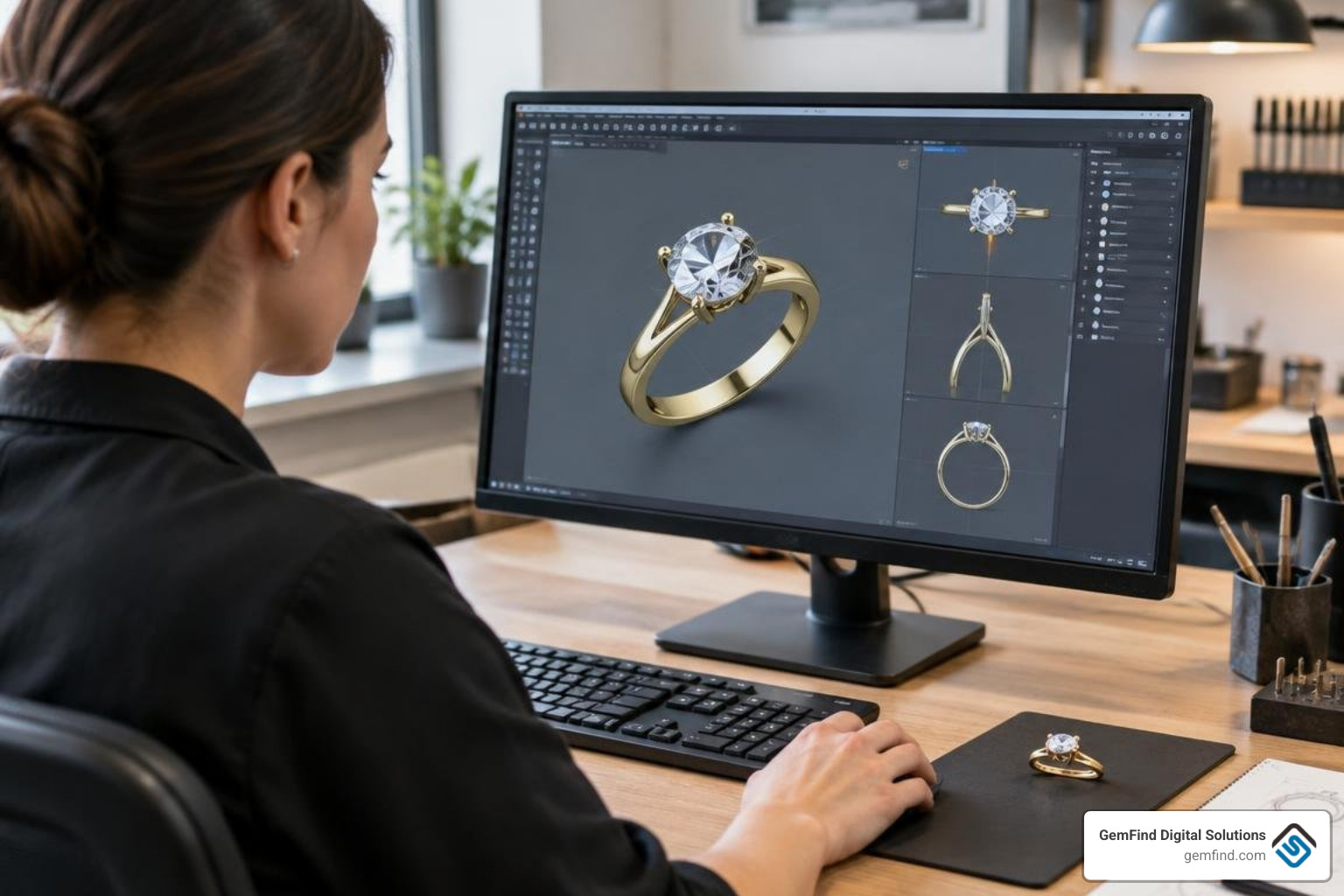
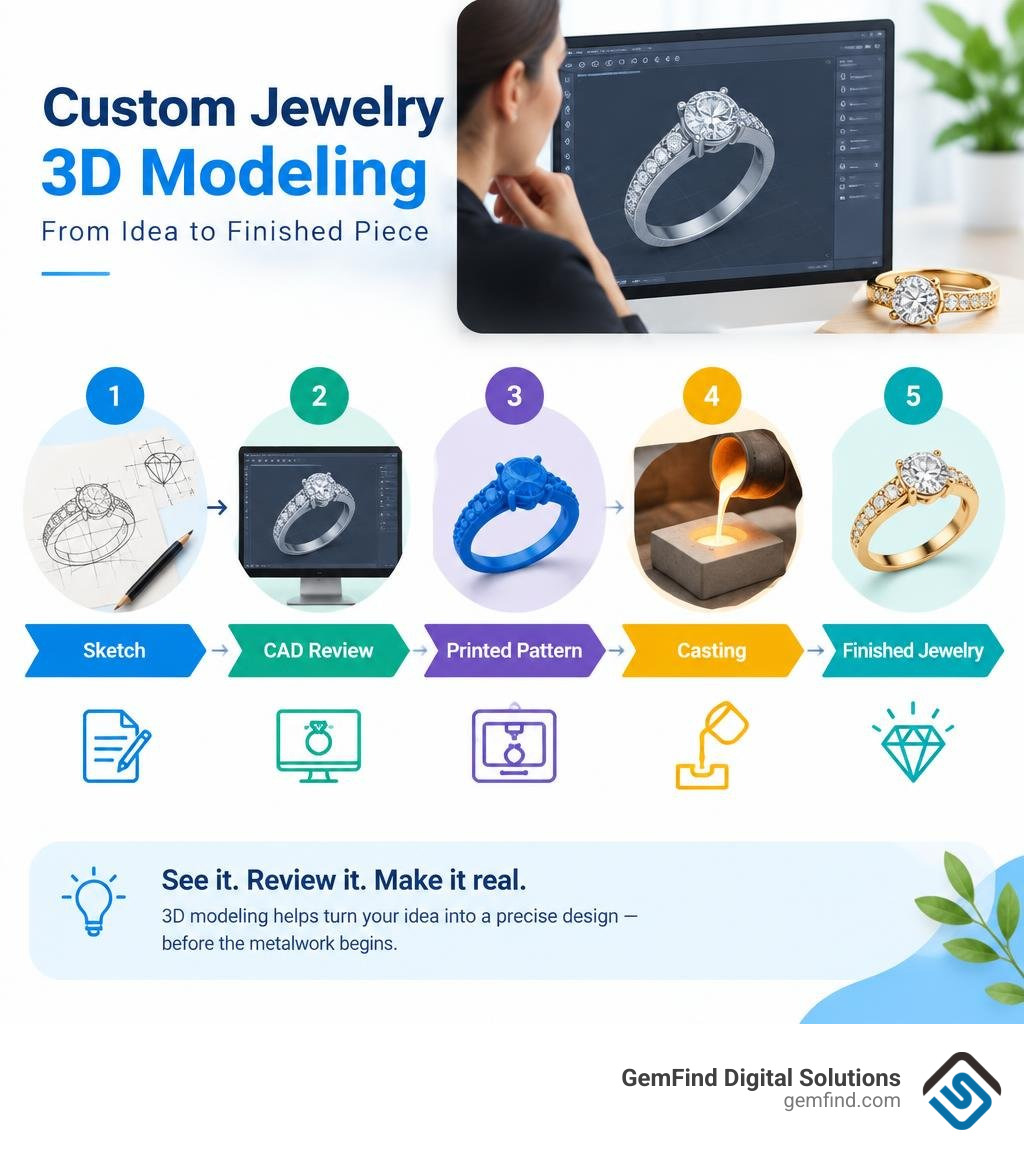
Custom jewelry 3D modeling uses software to build a precise digital design before a piece is made. To use it well, start with a clear sketch, ring size, and stone measurements. Review the 3D design with your customer, then check that it can be printed and cast before approving production. This gives customers a way to see and revise a piece before metalwork begins.
For a jewelry store, the model can also support a physical try-on piece and clear images for online sales. The digital work does not replace a jeweler's skill; it helps the jeweler and customer make decisions earlier.
I'm Anthony Arechiga, VP of Sales at GemFind Digital Solutions. Since 2007, I've worked with jewelry businesses on their online presence and sales, including how to present custom jewelry 3D modeling to customers.
Must-know custom jewelry 3D modeling terms:
The global 3D CAD software market was valued at USD 10.57 billion in 2022 and is projected to expand to USD 21.8 billion by 2033. In modern fine jewelry manufacturing, digital design is no longer an optional luxury—it is the backbone of retail competitiveness, custom bridal growth, and efficient boutique operations.
What Is Custom Jewelry 3D Modeling and How It Outperforms Traditional Carving
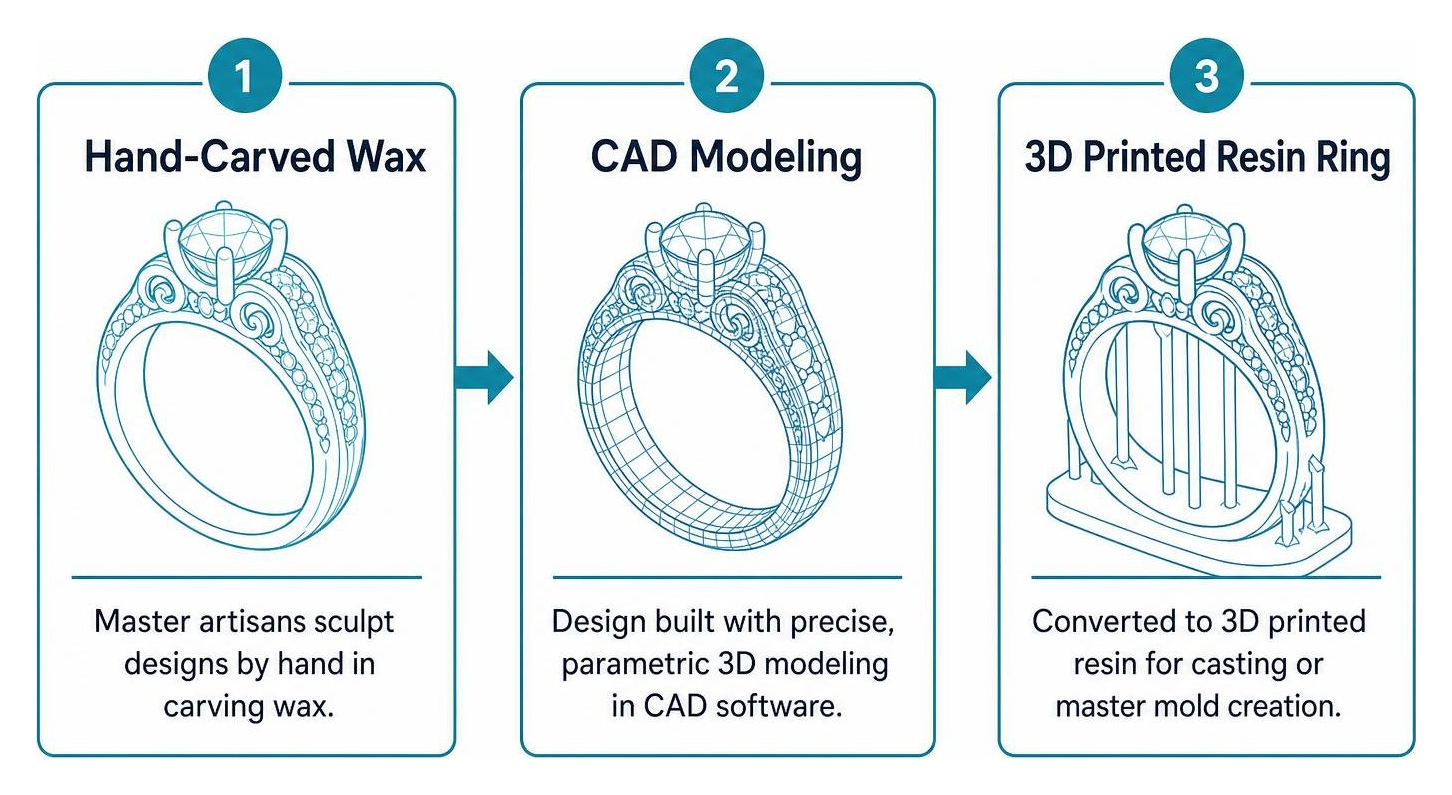
At its core, 3D modeling in jewelry is the process of building mathematically precise, three-dimensional geometry inside specialized Computer-Aided Design (CAD) software. This virtual asset represents every facet, prong, gallery rail, and wall thickness of a piece down to the fraction of a millimeter. Once designed, the file is converted into physical form using additive manufacturing (3D printing) for direct investment casting or master mold creation.
Traditional jewelry making relied on manual techniques where master artisans spent days translating 2D hand sketches into physical blocks of carving wax. While hand skills remain respected, manual carving inherently introduces human error, symmetry discrepancies, and labor bottlenecks that limit commercial scalability.
| Factor | Traditional Hand Wax Carving | Custom Jewelry 3D Modeling (CAD/CAM) |
|---|---|---|
| Creation Time per Ring | 3 to 8 hours of bench labor | 0.5 to 2 hours digital build + automated printing |
| Dimensional Tolerance | ±0.20 mm (subject to carver fatigue) | ±0.04 mm (laser/micro-projector accuracy) |
| Design Revisions | Requires destructive filing or carving from scratch | Instant parametric adjustments with zero raw material waste |
| Symmetry & Micro-Pavé | Difficult to balance complex geometric patterns | Perfect mathematical symmetry, mirrored axes, precise stone seats |
| Production Scaling | ~300 rings per month per artisan | 9,000+ patterns per month per automated machine |
| Production Cost | High bench labor costs | Slashes manufacturing overhead by over 70% |
Understanding historical custom wax carving techniques highlights how digital design liberates designers from physical carving constraints while maintaining high bench standards.
The Evolution from Hand-Carved Wax to Digital Precision
Lost-wax casting has anchored jewelry manufacturing for thousands of years. In classical workshops, the bench jeweler sculpted hard wax using specialized files, heated spatulas, and gravers. If an artisan slipped or miscalculated the girdle diameter of a rare sapphire, the entire block of wax was ruined.
Digital precision eliminates these physical limitations through parametric design and Non-Uniform Rational B-Splines (NURBS) surfacing:
- Flawless Symmetry: Mirroring functions allow half of a ring to be designed with intricate scrollwork, which then duplicates instantaneously across the X, Y, or Z axis.
- Micro-Pavé Precision: Prongs and stone seats can be engineered with exact tolerances (e.g., 0.1 mm offsets), preventing diamond breakage during bench setting.
- Complex Geometries: Hollowed lightweight frameworks, internal lattice structures, and intricate interlocking mechanisms that are impossible to carve manually can be generated in software effortlessly.
Key Benefits of Custom Jewelry 3D Modeling for Modern Studios
Switching to a digital-first workflow reshapes a studio’s operating economics and client interactions:
- Massive Labor and Cost Reductions: Automated 3D printing slashes production costs by over 70% compared to traditional labor-intensive hand-fabrication methods.
- Predictable Metal and Gem Calculations: Modern CAD tools calculate the exact cubic volume of the model, allowing jewelers to know the precise gold or platinum weight and gemstone carat requirements before casting a single gram of precious metal.
- Infinite Digital Archives: Finished designs are stored as digital files. If a client wants their custom engagement ring reproduced or adjusted into a matching wedding band years later, the digital asset can be recalled and resized in minutes.
- Faster Turnaround Times: By streamlining the initial concept-to-cast pipeline, studios can complete complex custom orders in a fraction of the time required by traditional methods.
To learn more about structuring your store's bespoke offerings, consult our ultimate guide to custom jewelry design.
Essential Software and Tools for Jewelry CAD Design
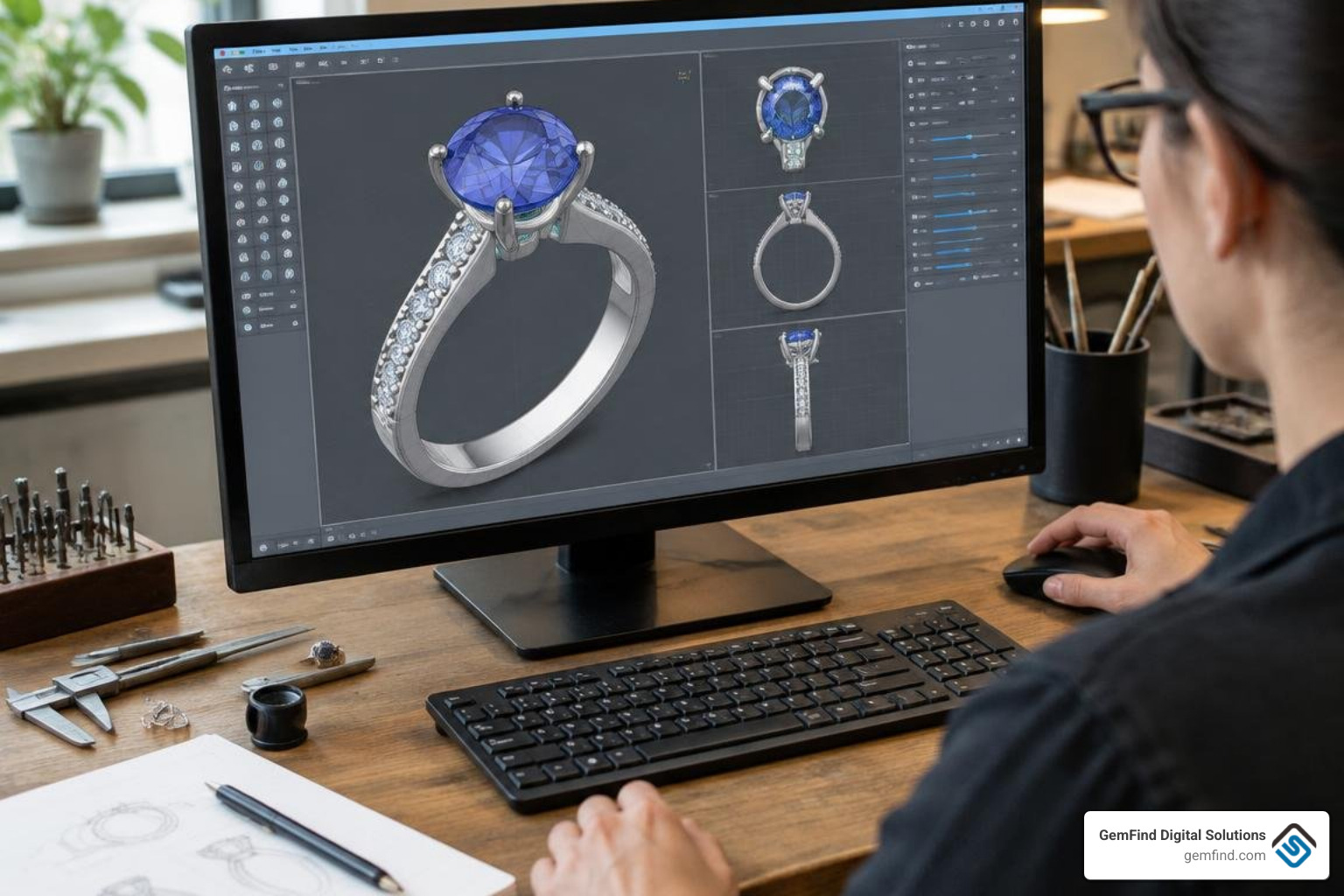
A CAD model must be more than a visual concept—it must be an engineered, production-ready manufacturing asset. A digital mesh on screen must account for thermal shrinkage, metal flow, and lapidary tolerances.
Specialized jewelry software provides native toolsets that automate ring sizing, diamond layout, prong creation, and weight calculations. You can explore our dedicated custom jewelry design software guide for an in-depth platform evaluation.
Industry-Standard 3D Modeling Programs
- Gemvision Matrix / MatrixGold: Built specifically for fine jewelry manufacturing, MatrixGold utilizes parametric history and dedicated builders for halos, pavé layouts, eternity bands, and prong styles.
- Rhinoceros 3D (Rhino): The gold standard for precision industrial modeling. Combined with jewelry plugins, Rhino delivers absolute control over NURBS surfaces and complex geometric continuity. You can explore visual examples through Rhino 3D jewelry modeling techniques to see how curves translate into metal shanks.
- ZBrush: An industry favorite for digital sculpting. When designing organic motifs, detailed animal heads, bas-relief family crests, or brutalist textures, ZBrush offers brush-based sculpting that mimics digital clay.
- JewelCAD: A longstanding CAD suite popular in global casting houses for rapid wireframe building and stone setting.
Design-for-Manufacturing Rules and File Preparation
Creating a file that renders well is completely different from creating a file that casts successfully. Jewelers must adhere to core Design-for-Manufacturing (DFM) rules:
- Minimum Wall Thickness: Precious metals require structural strength during casting and polishing. Maintain a minimum wall thickness of 0.8 mm to 1.2 mm for gold and silver, and at least 1.0 mm to 1.5 mm for high-wear areas on rings.
- Prong Sizing and Geometry: Prongs should extend 0.3 mm to 0.5 mm beyond the gemstone girdle in the digital file to give the diamond setter sufficient metal to push and bead over the stone.
- Shrinkage Compensation: Gold and silver contract as they cool from liquid to solid state. Scale your digital model up by 1.5% to 2.5% (depending on the alloy and investment technique) to account for casting shrinkage and abrasive polishing loss.
- Watertight, Non-Manifold Geometry: Slicers require "manifold" STL files with no open edges, intersecting self-surfaces, or reversed face normals. Designers often reference a library of 3D printable jewelry files to verify proper manifold standards.
The End-to-End Workflow: From Digital Mesh to Cast Metal
Moving a jewelry piece from software concept to polished gold involves an orchestrated series of digital and physical milestones:
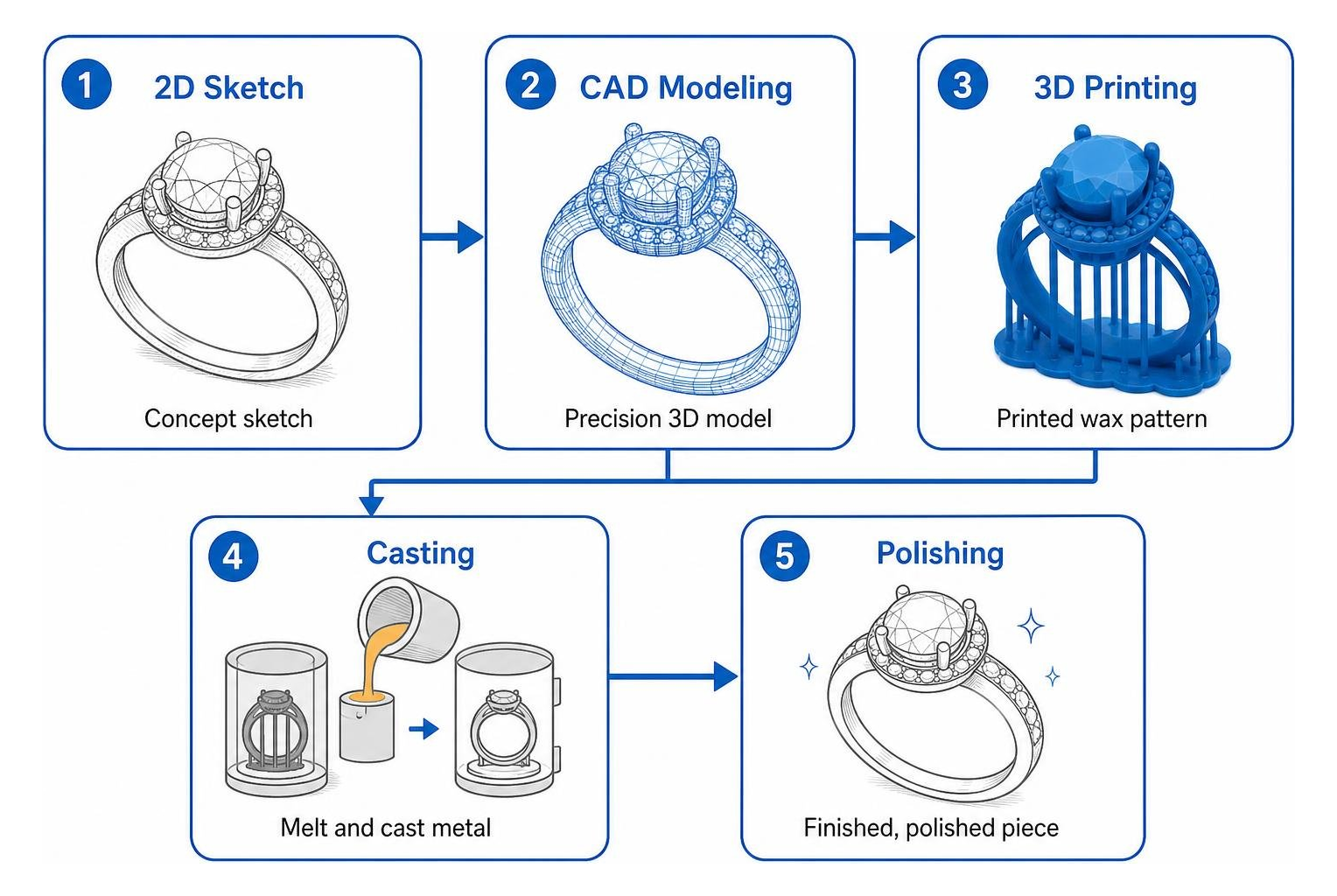
Step-by-Step 3D Printing and Post-Processing
- Digital Slicing: The finished CAD model is exported as an STL or 3DM file and imported into slicing software. The slicer divides the model into ultra-thin horizontal layers—typically between 15 and 25 microns—and generates support pillars for overhangs.
- Additive Printing: Industrial vat-photopolymerization printers (Stereolithography/SLA or Digital Light Processing/DLP) build the resin pattern layer by layer. High-precision wax jetting systems deposit micro-droplets of 100% castable wax.
- Solvent Washing: Liquid photopolymer resin patterns are submerged in an Isopropyl Alcohol (IPA) bath for approximately 3 to 5 minutes to remove uncured surface resin. Over-washing must be avoided to prevent surface degradation.
- Air Drying & UV Post-Curing: The parts are dried with compressed air and placed into a UV curing chamber. Post-curing solidifies the polymer chains, stabilizing dimensional accuracy and ensuring a clean burnout.
- Support Removal: Support structures are snipped away using fine flush cutters, and connection points are gently dressed with fine-grit sanding sticks.
Selecting the Right Castable Resins and Waxes
Choosing the correct print material is vital for a defect-free casting:
- Castable Wax Resins (e.g., Formlabs Castable Wax): Formulated with 20% to 40% liquid wax, these resins burn out cleanly with zero ash content. They offer high green strength, making them ideal for delicate filigree and thin pavé prongs.
- Heavy-Section Resins (e.g., True Cast, Clear Cast): Engineered with minimal thermal expansion to prevent cracking the investment plaster when casting thick signet rings, heavy pendants, or medallions (exceeding 3 mm to 5 mm thickness).
- 100% Solid Wax Jetting (e.g., Flashforge WaxJet 530): Utilizes real industrial casting wax paired with dissolvable support wax. Operating at 15-micron layer heights and ±0.04 mm accuracy, it eliminates internal expansion stresses during burnout.
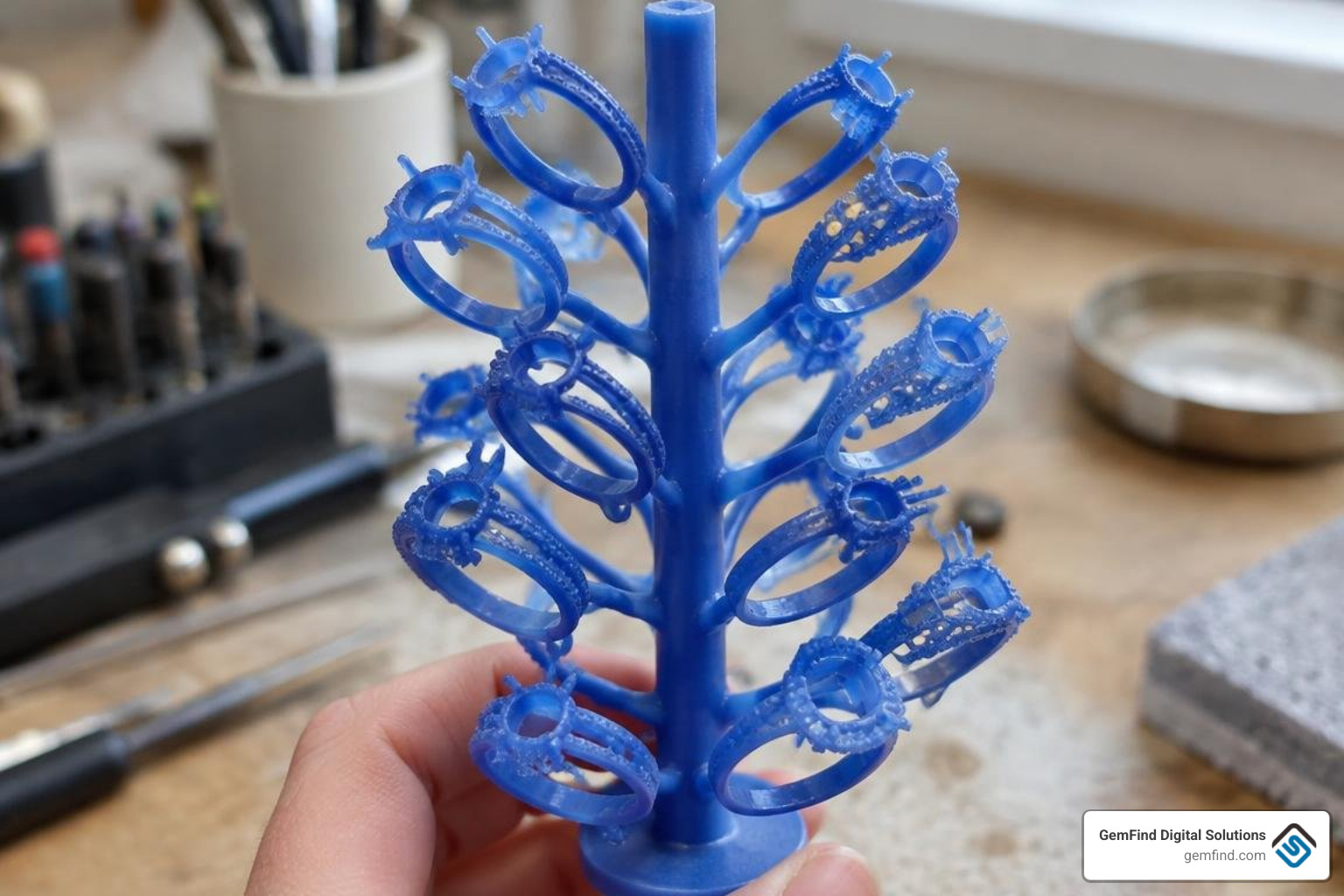
Lost-Wax Investment Casting and Finishing
Once the patterns are cured and inspected, the physical transformation begins:
- Spruing and Tree Assembly: Patterns are welded using heated wax to a central wax sprue trunk at 45-degree angles to ensure smooth metal fluid dynamics.
- Flask Investment: A steel cylinder flask is placed around the tree and filled with a slurry of specialized refractory investment plaster, then vacuum-degassed to eliminate air bubbles.
- Burnout Cycle: The flask is placed into a computer-controlled kiln. Over a 10 to 14 hour gradual heating ramp (up to 730°C / 1350°F), the resin/wax pattern vaporizes completely, leaving an empty ceramic cavity.
- Centrifugal or Vacuum Metal Induction: Molten gold, platinum, or silver is pulled into the incandescent flask under vacuum pressure or centrifugal force.
- Quenching, Cleaning, and Bench Polishing: The flask is quenched in water to disintegrate the investment plaster. The raw metal tree is cleaned in an acid pickle bath, the pieces are cut from the sprue, and master setters seat the diamonds before final multi-stage magnetic and lapidary polishing.
Business Impact: Mass Customization, Timelines, and Costs
Custom jewelry 3D modeling fundamentally alters retail economics. By shifting design modifications to the digital realm, jewelers eliminate raw material waste and shorten custom consultation cycles.
Studios can present on-trend concepts—such as those detailed in our custom engagement ring design trends—without investing upfront capital into metal inventory.
Streamlining Production with Custom Jewelry 3D Modeling Services
Independent retail jewelers do not need to operate large in-house CAD drafting departments to offer comprehensive custom design. Studios can partner with professional manufacturing hubs or leverage wholesale custom CAD and manufacturing to access on-demand CAD technicians, rapid SLA printing, and casting facilities with turnarounds as fast as 10 to 15 business days.
For online stores, integrating digital 3D models into interactive web configurators bridges the gap between imagination and purchase intent. For comprehensive guidance on building your digital storefront, explore our comprehensive guide to custom jewelry websites.
Integrating Physical Try-On Prototypes in Retail Sales
One of the most effective closing tools in modern bridal sales is the 3D-printed physical prototype:
- Eliminating Customer Hesitation: Customers can slip a durable, full-scale resin replica onto their finger, examining the profile height, stone proportions, and hand feel before committing to expensive diamonds and metal casting.
- In-Store and At-Home Kits: Studios can ship inexpensive resin models directly to remote clients for home try-on, unlocking national e-commerce reach for bespoke commissions.
- Visual Online Showcases: High-resolution photorealistic renderings generated from the CAD model provide assets for digital lookbooks and social media. Learn how to optimize your digital gallery through our guide on showcasing custom pieces online.
Frequently Asked Questions About Custom Jewelry 3D Modeling
How much does custom jewelry 3D modeling typically cost?
Custom jewelry 3D modeling design fees generally start around $100 to $250 for standard CAD drafting of rings and pendants. Complete bespoke projects—including CAD architecture, high-resolution rendering, resin prototyping, precious metal casting, gemstone setting, and finishing—typically start around $1,800 and scale upward based on precious metal weight and stone selection.
What resin is best for casting fine filigree and complex prongs?
For ultrafine filigree, delicate prongs, and micro-pavé galleries, high-wax photopolymer resins (such as Formlabs Castable Wax) or 100% jetting wax materials are recommended. These formulations offer sharp edge retention during printing and burn out cleanly with near-zero ash residue, preventing surface pitting in delicate cast metal sections.
How long does the end-to-end custom production process take?
Printing high-resolution wax or resin patterns on modern industrial equipment takes between 0.5 to 2 hours per ring batch. The entire end-to-end custom journey—from initial digital sketching and CAD approval to investment casting, stone setting, and final polishing—typically spans 3 to 4 weeks for independent custom studios, with select specialized trade manufacturers delivering within 10 to 15 business days.
Conclusion
Custom jewelry 3D modeling has redefined fine jewelry manufacturing, uniting digital precision with heritage casting traditions. By integrating 3D CAD modeling, rapid wax printing, and digital customer approvals, jewelers lower overhead, eliminate guesswork, and deliver one-of-a-kind bespoke creations with absolute accuracy.
GemFind Digital Solutions provides digital marketing, custom web design, and specialized digital tools tailored specifically for the jewelry industry. With over 25 years of industry experience as a certified Shopify and Google Partner, our team helps jewelers integrate edge-to-edge custom jewelry pipelines into their websites and showroom sales. Contact GemFind Digital Solutions today to elevate your custom jewelry operations and drive online sales.


